
“Unless commitment is made, there are only promises and hopes; but no plans.”
– Peter F. Drucker: Management Thinker
80 years ago last month, the largest sea borne invasion in history commenced. D-Day, June 6, 1944. It marked a pivotal moment in World War II when Allied forces launched Operation Overlord, aimed at liberating German-occupied Western Europe from Nazi tyranny. The operation launched from England crossed the English Channel onto the beaches of Normandy in northern France. It was a critical turning point in World War II.
Planning for D-Day was an immense undertaking that began as early as 1943. The operation involved extensive coordination between the United States, the United Kingdom, Canada, and other Allied nations. This planning included gathering intelligence, training troops, amassing supplies, and deceiving the Germans about the invasion’s location.
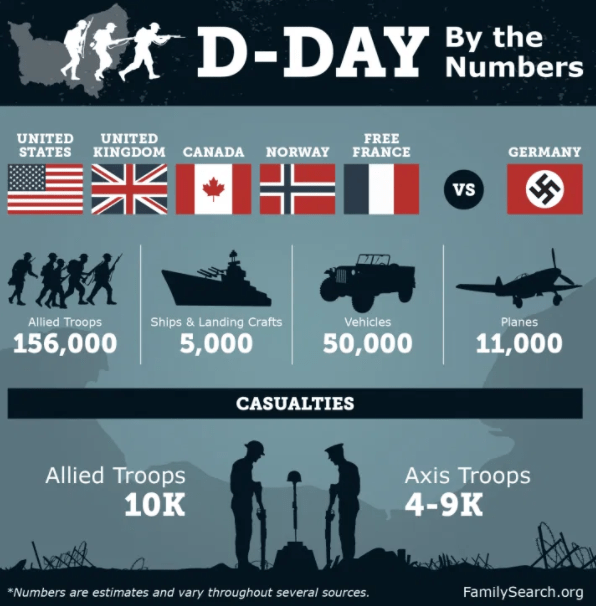
The scale of the D-Day invasion was unprecedented:
- Troops: Over 156,000 Allied troops landed on the first day.
- Military Equipment: This included 6,939 vessels: 1,213 naval combat ships, 4,126 landing ships and landing craft, and hundreds of auxiliary ships and merchant vessels.
- Aircraft: About 11,590 aircraft were available, playing crucial roles in airborne assaults and providing air cover and support for the troops landing on the beaches.
- Logistics: The operation involved detailed logistical planning to supply the massive number of troops, including food, ammunition, and medical supplies.
All this before computers! Many books have been written about D-Day. I cannot do justice to the sheer complexity of the undertaking, however I will try and provide a summary of the main lessons.
D-Day was a success. Within 12 months of the landing, Nazi Germany was defeated.
What factors contributed to the success of D-Day?
Here are three.
- Surprise and Deception: The Allies successfully deceived the Germans about the invasion’s location, leading them to believe it would occur at Pas de Calais. This deception, known as Operation Fortitude, was crucial in reducing German defences at Normandy.
- Air Superiority and Naval Support: The Allies had established air superiority, which was critical for both the initial landings and the subsequent campaign in Normandy. Naval bombardment also played a vital role in neutralising German defences.
- Allied Unity and Leadership: The operation exemplified the effectiveness of Allied unity and leadership. The coordination among nations and military branches was a key element in the operation’s success.
What are the three lessons from D-Day for Managers?
- The Importance of Planning and Preparation: D-Day demonstrated how meticulous planning and preparation can lead to success in complex operations. As managers we should value thorough preparation and the need to anticipate and mitigate potential challenges.
- Adaptability and Decision-Making: Despite the best planning, not everything went as expected on D-Day. The ability of commanders and soldiers to adapt to changing circumstances was crucial. In the business world, this highlights the importance of flexibility and decisive leadership in the face of unforeseen challenges.
- Teamwork and Collaboration: The success of D-Day was a result of unparalleled collaboration among the Allied nations. This underscores the importance of teamwork, joint effort, and effective communication in achieving common goals in any organisational context.
In conclusion, D-Day stands as a testament to strategic planning, international collaboration, and the resolve of the Allied forces. The lessons derived from this monumental event extend beyond military strategy, offering insights into leadership, teamwork, and the importance of planning, adaptability and resilience in the face of adversity. The successful execution of Operation Overlord not only marked a turning point in World War II but also serves as an enduring example of effective organisational and strategic planning.
@thenetworkofconsultingprofessionals
 5-Dimensionz