

— Confucius
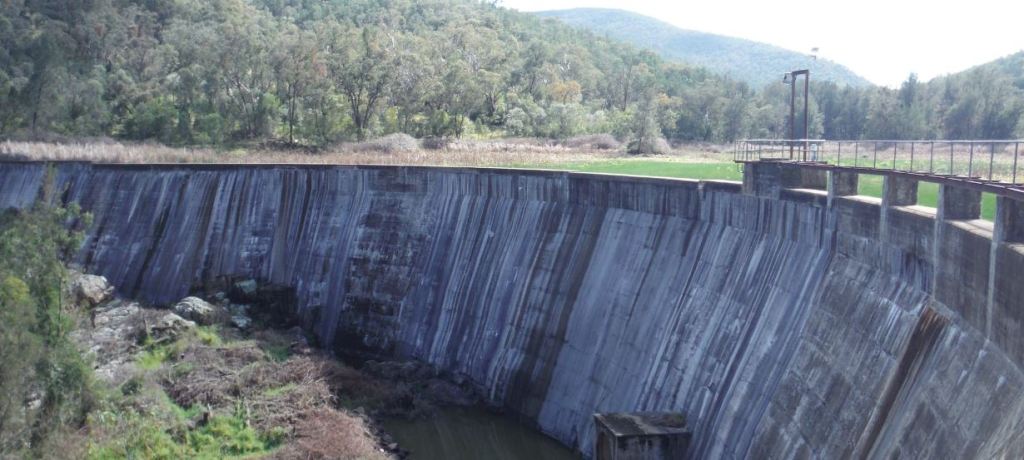
I grew up on a farm in northern NSW. Running through the property was a creek which had two significant dams on it. The first dam was called ‘the old Quipolly Dam’. This concrete span dam wall was built in the early 1930s to provide water for the town of Werris Creek, a town that did not exist until the coming of the railway in the mid-1870s. Being a major rail junction town, water was essential as steam engine locomotives require lots of water. The second newer dam bordered our property. It had an earth wall and was built in the late 1950s to replace ‘the old Quipolly Dam’.
By 1947, when my father moved onto our farm with his parents ‘the old Quipolly Dam’ had silted up. This was less than 15 years after it had been constructed. My father told me that during the 1940s drought rabbits had denuded the landscape. Without grass ground cover, heavy rain caused severe erosion. The sediment ended up in ‘the old Quipolly dam’ as silt. This seemed a logical explanation for the silting.
My father spent his whole life trying to eradicate rabbits on the farm. Trapping, poisoning, releasing calicivirus and myxomatosis viruses, ripping rabbit warrens and shooting them. As young boy I trapped and shot rabbits and every year we undertook a poisoning campaign.
So, the rabbits seemed to be a logical explanation.
Several years later I was doing some family history research and found an engineering research paper. It studied several small railway dams built between 1890 and 1932 in NSW that had silted up. One of dams studied was ‘the old Quipolly dam’. The research paper concluded that ‘the most extreme hydrological events are extreme floods following a long drought period’ and this led to where ‘large sediment loads are carried away into the reservoirs.’
So, were ‘the rabbits’ were responsible for the dams’ siltation problems?
Well, not exactly.
Whilst erosion was a contributing factor, the main reason was a design flaw in the dam’s walls. The basic design of the dam’s arch wall had not changed in over 40 years. This was despite the fact that several dams with curved concrete walls had silted up within 25 years, all before the construction of ‘the old Quipolly Dam’. The wall design did not consider the fundamental concepts of sediment transport. The dams did not have a large outlet for sediment ‘flushing’, resulting in a silt or sediment building up against the curved dam wall.
Rabbits and probably overgrazing that had denuded the landscape during a drought were not the underlying cause of the silting up of the dam, but a contributing factor only.
What do you think the management lesson is here?
Here are some to consider.
- Never take what you are told on face value.
We can all remember being told something in our working lives and then finding out this was incorrect. Remember the ‘weapons of mass destruction’ that Iraq had that were used as a pretext for invasion?
Perhaps another lesson is not to believe what bureaucracies or governments do or tell you. In this example, there were several dams of similar design that silted up well before ‘the old Quipolly Dam’ was built.
- Often, an explanation that seems logical may not be the cause of the problem. In this example, it was only a contributing factor.
As a logistics professional I am continually frustrated when allegedly logical transport solutions do not stand up to scrutiny. For example, a common theme pushed by politicians and special interest groups is that the construction of freeways increases pollution.
Really?
Think about it.
If we did not have freeways, cars, average speed would be lower, more stops and starts, traffic lights, slower travel times and more congestion and pollution.
Can you think of other examples in your working life where this has been the case?
#thenetworkofconsultingprofessionals
 5-Dimensionz