Exit Strategy…

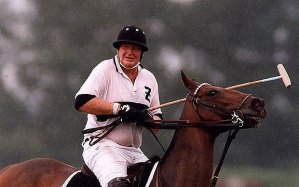
Kerry Packer

Exit Strategy…

“Always have your business ready for sale. You might not get more than one chance. Not everybody gets an Alan Bond in their life.”

Kerry Packer (late media owner and billionaire)

The late Kerry Packer sold his TV business to corporate raider Alan Bond for over $1billion in 1987 (far more than it was worth) then bought it back 3 years later for $250million. He was not expecting the sale but sold because it was too good an offer to refuse.

“Begin with the end in mind”. This is habit 2 in the late Steve Covey’s Seven Habits of Highly Effective People and it is important when you start or buy into a business.

What is your end game?

What do you want to achieve and where do you want to be in ‘X’ years’ time?

I bought into a business over 15 years ago with 3 other partners. In purchasing the business, the seller who was our former employer advised us to have an exit strategy with a time limit. This was noted and promptly forgotten.

As the business grew there were the usual tragedies and triumphs.  After 10 years I suggested we needed to get the business in a ‘sale ready’ condition. However with business partners with differing priorities this did not eventuate. It’s not that we needed or wanted to sell the business, just that it was because, like the late Kerry Packer said “You never know when a buyer will come along”.

Without warning a potential buyer did come along and we were not ready. It was a disaster. The potential purchaser viewed a somewhat disorganised and business and quickly lost interest.  An underlying issue was the lack of a shared vision in the management team and unclear agendas.

Did we learn anything from our first approach by a potential buyer?

A little bit, but not enough………..

Less than 2 years later we were approached by a large multi-national company wanting to buy the business. This time were a little better prepared. The negotiations dragged on for over 9 months and eventually it failed for a number reasons. These reasons included legal complexities to do with selling the business versus selling the company (this had significant financial implications), the final offer and performance guarantees.

I was disappointed that we had missed another opportunity.  At our debriefing meeting, I identified what I believed were the reasons for the sale falling through:

  • no professional assistance from a corporate advisor (the potential purchaser had an entire M&A department),
  • no legal or tax advice
  • no timeline.  

There were however, some positives that came out of this experience. The business had now been ‘tidied up’ and was in a more saleable position. After considerable discussion, it was then agreed to engage an advisor, seek financial and tax advice and agree on a timeline should a buyer emerge.

The engagement of the corporate advisor was critical. They helped take the emotion out of the process, kept to the plan, prepared professional sale documentation, co-ordinated the various parties including the accountant and lawyers and sought out potential buyers. The business was sold successfully to an offshore company with conditions and a price that far exceeded our expectations.

Our Alan Bond moment.

The corporate advisor uncovered and highlighted the Value Drivers of the business. For further insights into exiting a business I recommend reading a blog by exit expert Kerry Boulton.

In hindsight, perhaps the failed sales helped us……….you can be lucky and learn from your mistakes.

So is your business ready for sale (and are you?) just in case an ‘Alan Bond’ comes along with an offer too good to refuse?

What is your plan?

boer maak ‘n plan

In Afrikaans, the language spoken by the mainly Dutch immigrant descendants living in South Africa ‘boer maak ‘n plan’ means a ‘farmer makes a plan’.  The deprivations and harshness of farming in a foreign land brought resolve and the need to plan to get around or solve these problems.  Having travelled recently in Southern Africa I came across another similar saying in Zimbabwe where people often spoke about ‘making a plan’.

What does the saying really mean?

Not as it appears literally. The ‘hidden’ meaning is that you have an alternative plan (a plan B) when your first plan fails or is impossible to implement. In other words, you need to be flexible and adaptable to solve a problem.

How does this equate to being a manager or managing a business?

As business owners or managers, we need to plan in the first instance. As the saying goes, ‘if you fail to plan, you plan to fail’

However, having a rigid plan may not work if circumstances change. Let me give you an example?

Many years ago in our third party logistics business we were having difficulty in getting our trucks unloaded on time at a retailer’s distribution centre despite meeting their strict time slots. It was OK for the distribution centre to run late unloading you, however if you failed to arrive at the designated time slot you were ‘fined’. What made the situation even worse was that to make the early morning delivery time slots, trucks had to battle peak hour traffic to and from the distribution centre as well as the loading delays. This became an expensive experience – instead of 3 hours it was taking 6 hours to deliver and unload. It was further compounded by our fixed price delivery charge.

We had many meetings with distribution centre management and despite their assurances that the situation would improve, it did not.

What would solve our problem and be a ‘win’ for the distribution centre? Our Plan B.

Making some observations and talking to the receiving team at the distribution centre a plan emerged. All loads were hand unloaded (rather than on pallets) onto a conveyor with the individual cartons being scanned as they travelled up the belt. The distribution centre had a prime mover that was used for moving trailers around the receiving area.

We asked distribution centre management whether we could trial loading a 40’ container instead of an ordinary tautliner semi-trailer. We would bring the loaded container in early in the morning before peak hour, leave it in the receiving area for the distribution centre prime mover to move onto the unloading conveyor when it suited the receiving team. The empty container would then be picked up on the next early morning delivery. After a short trial, it was found that it was a win/win for both us and the distribution centre. Delivery time halved with a massive increase in margin for us and the distribution centre was able to utilise their receiving area far more efficiently.  

The success of the trial enabled us to purchase two second hand and obsolete hand semi-trailers for 10% of their replacement value and establish a unique closed loop delivery system that was extremely profitable.

We solved the waiting time problem and the peak hour travel problem which initially appeared to be unresolvable. We significantly increased our profits by having a Plan B.

Remember in any situation, you should always have a Plan B like the farmer faced with the unpredictability of the harsh African environment…….

Doing Your Homework

Doing Your Homework

“All of us, at certain moments of our lives, need to take advice and to receive help from other people”
Alexis Carrel

How often in your work or business life have you not done your homework and put yourself under unnecessary pressure?

I can remember an incident very clearly where I thought I could prepare a capital expenditure application for an environmental washing plant at a concrete plant located in regional Victoria, whilst sitting in my office in Melbourne. There had been great reluctance from head office to fix the environmental problem of disposing of concrete waste as it was costly. Nothing surprising about that! I gathered ‘letters of protest’ from neighbours, one of whom was an employee who lived behind the plant. Upon touring the area with my General Manager several weeks later, he brought out the application and stood near where I had said the washing plant was to be located and started asking questions. This was a very trying time as the document explained where the waste water was running – and it was up hill! Obviously not immediately obvious from my office in Melbourne!

I learnt two valuable lessons:

do your homework
and
there is no substitute for physically being on site

However, even the largest companies fail to do their homework. Several years ago Rio Tinto, a major international mining company was forced to write down $3B because their plan to barge coal down the Zambezi River was not physically possible and required government approval to dredge the river. Perhaps they could have learnt from history – David Livingston the famous African missionary and explorer was unable to navigate up the Zambezi in a small craft due to the Cahora Bassa rapids which he had not investigated previously. The Rio Tinto Managing Director lost his job primarily over this debacle.

Years later in our logistics business we had to convert a casual warehouse lease to a more formal non-casual lease. We were nervous that our landlord would want both a long term commitment and an increase in rent. The previous week our warehouse manager advised us that the owner had been on site several times over the past month with ‘unknown’ persons in suits and that there had been some cosmetic tidying up and painting on external parts of the building.

I did some more homework and discovered that the landlord was seeking to sell the property and he needed a permanent lease to interest a possible purchaser. This information changed the dynamics of the negotiations and we were able to negotiate a less than market rent, shorter fixed terms and lower annual increases and the owner was delighted – a real win/win.

Remember there is no substitute for doing your homework thoroughly……..

Management by Walking Around

Management by Walking Around

“The simple act of paying positive attention to people has a great deal to do with productivity”

Tom Peters

I was recently discussing how the first 6 months of a new job was going with an associate who I had known for many years. This was a senior role which required both senior management experience and technical expertise which was critical to the organisation and its members. The associate was quite happy with their new role, had autonomy and was able to work on projects unhindered. However, they were puzzled that in the head office of about 60 people where they worked they had never seen the Chief Executive Officer (CEO). That’s right, not even physically sighted the CEO, let alone met them.

This seems an extraordinary situation, but it’s true. It would hardly come as a surprise that in the previous 12 month period over 30 new people were employed to replace those who had left. It can be safely assumed that there was something seriously wrong with this organisation, and the statement ‘a fish goes rotten at the head first’ explaining organisational failure would appear true in this case.

Staff look for leadership, not aloofness.  Evidence clearly indicates that successful organisations have management teams that are engaged with their customers and staff.  One demonstration of this, is the concept ‘management by walking around’. This is not a ‘royal tour’ as experienced in one of my first jobs as a fresh faced junior.  At that time I worked for a large multi-national in the steel industry and whenever senior executives were about to ‘tour’ there was a frenzy of painting and clean up, much to the bemusement of staff. The tour was generally a 5 minute walk through accompanied by the plant manager before the entourage moved on to the next plant. Little wonder that the business had to merge later and divest its manufacturing to remain in business.   Early on in my career, I developed the practice of ‘walking the floor’ within an hour of arriving at work to talk to staff. It was amazing what an effect it had on morale, as problems were aired and often solved; giving staff a sense of satisfaction in their jobs.  It was also another way of providing feedback on performance and hearing about issues with customers and the suppliers. People like nothing better than being asked for their opinions in a considered and professional manner.

My suggestion is that if you are not managing by walking around then plan to start this as soon as you can.  It will work wonders, make your job easier and help with workforce engagement and increase profits! However, ensure that you are genuine in your approach. Your workforce will pick up  fake concern and self-serving behaviour immediately.  I can recall another CEO in a much smaller organisation who would stroll through the workplace, stopping and asking a plant operator the name of the person who they to next visit, then walking up to that person and saying ‘hello Mary’ as if they were some long lost friend, but not engaging in any meaningful dialogue before rushing off to the next person. You can imagine how he was viewed by staff and it later became a game to give him the wrong name and see what the reaction was!

Management by walking around makes great sense and makes for a better workplace providing it is done sincerely, in a considered and professional manner. So if you are not doing this, the best time to start is now…………………………

What is the cost of safety to a business?

What is the cost of safety to a business?

“The purpose is clear. It is safety with solvency. The country is entitled to both”

Dwight D Eisenhower, US President

Industrial safety, Occupational Health and Safety (OHS) and now Work Health and Safety (WHS) is becoming increasingly more prominent in the media and especially in state of Victoria where the government safety agency WorkSafe runs high profile media campaigns that tug at your emotions.

Many business owners see safety as an overhead cost that should be avoided where possible.

Is this good business practice?

Can poor safety be detrimental financially to your business?

Many business owners would see it as a risk worth taking. Is it?

Just recently a major transport company lost nearly $100m of business primarily due to their poor safety record, highlighted by a fatal accident that caused the death of two people in 2013.

A major multi-national company would not allow them to tender on a major contract because of their substandard safety. Poor safety is often a symptom of poor systems and management. If safety is poor it is likely that there are other major issues with the business. The ramifications go further. The holding company in the past month has had $239m wiped off its value and now 540 jobs will be axed. Clearly poor safety does not pay!

By way of example, I managed a major interstate transport division for a public company where the managing director was passionate about safety. The evidence was clear; vehicle servicing schedules, management of driver hours, no speeding trucks, clean trucks (a good sign of a well-managed transport business), driver training and rigorous selection.

The evidence of success for the division I managed was emphatic. Low driver turnover, high truck utilisation, high profitability and no fatal accidents in the 6 years I managed the business. How was it done?

It was quite simple. A management system was implemented where drivers’ performance was reviewed weekly (over 120 drivers), drivers were involved in managing their own performance, driver selection criteria was rigorous and maintenance schedules were strictly adhered to. Supervisors and drivers were involved and a culture from senior management that safety was paramount.

As a business owner or manager, next time you wish to cut corners for safety keep in mind the consequences…………….and remember to ask the question: “is the business at risk?”

Lessons for managers from Nelson Mandela

Lessons for managers from Nelson Mandela

“It always seems impossible until it’s done”

Nelson Mandela

What can Nelson Mandela teach us about being a good manager?

During December, I was planning to write a blog about what businesses should do over the Festive Season in preparation for the new calendar year. However, with the death of former South African president Nelson Mandela provided an opportunity to reflect on what Mandela could teach us in our roles as business owners, managers and supervisors. Mandela was an international hero and was universally revered around the world as a vital force in the fight for human rights and racial equality against great odds.

Despite over 25 years in gaol, Mandela came out of prison not seeking revenge. Instead he oversaw the relatively peaceful transfer of power in South Africa.

As Archbishop Tutu, stated:

“Could you imagine if he had come out of gaol a different man, very angry and baying for the blood of his former oppressors? We would not have made it to first base.”

Whilst I am tempted to list dozens of things Mandela could teach us as managers about leadership, it is always best to keep it simple – so here are my three top picks:

1. Integrity

Despite often being called a ‘living saint’ Mandela steadfastly refused to be recognised as such. In his books and speeches, Mandela went out of his way to point out the dangers of deifying him. He admitted to having many flaws, to having made many mistakes and to having had his integrity tested many times.

In 1985, Mandela was offered a conditional release from by President Botha if he renounced violence and obeyed the law (just racial laws). Mandela did not fall for this very transparent gesture. Whilst he desired freedom after decades in prison, he did not betray his principles, and his long struggle for democracy. Mandela replied as follows:

“What freedom am I being offered while the organisation of the people remains banned?  What freedom am I being offered if I must ask permission to live in an urban area?  Only free men can negotiate. Prisoners cannot enter into contracts.”

It was almost 5 more years before he was unconditionally released from prison. In the end, history showed that Mandela’s integrity overcame all obstacles when he  became the first democratically elected leader in South Africa. Integrity was combined with another important leadership trait…

2. Perseverance

Despite the seemingly impossible task of obtaining democratic rule in South Africa, Mandela managed to achieve what seemed impossible

 “Perseverance always overcomes resistance”.

How many times in our business life has this occurred? I can remember feeling that a business in which I was a significant shareholder would never sell after 2 failed attempts over 2 years. There were times I was told to ‘give up’, however, when least expected, an overseas buyer which exceeded expectations.

Opportunities often come when least expected, however this takes time, energy, and focus and perseverance.

3. Vision

Mandela had an over-riding vision of a multi-racial South Africa with a strong focus on the future, not the past. He never lost sight of this vision and did not compromise his goals. Whilst suffering in prison he was offered numerous inducements to compromise his position and be released early. He declined.

His actions and words left no doubt as to his vision. Leaders with vision have passionate and dedicated followers.

I can remember asking a managing director what his vision was for the company and the reply was ‘for me to be here next year’. Can you imagine being inspired by such a person?

Integrity, perseverance and vision are all are leadership traits that Mandela can teach us as successful managers. The outpouring of emotions at his funeral from ordinary people (not the dignitaries) is testament to these qualities.

Are these traits important in your job too?

Déjà vu All Over Again

Déjà vu All Over Again

The following advertisement for the International Commercial Truck, circa 1910, is on display in Maine’s Owls Head Transportation Museum:

“That the motor truck is an excellent substitute for the horse has been proven in every instance where businessmen have given it a fair trial. But the man who uses his motor truck simply as a substitute for horses neglects to make the most of his opportunities. The horse is not a machine – five to six hours’ actual work – fifteen to twenty-five miles – is its maximum day’s work. A motor truck can be used twenty-four hours a day if necessary, and it will travel the last hour and the hundredth mile just as fast as the first.  Businessmen who are using the motor truck in place of the horse and wagon equipment with the greatest success are men who have given this problem careful study. In most instances it was necessary to change the plan of routing – delays which were necessary to give horses rest were eliminated – plans were laid to keep the truck busy the entire day with as few delays as possible……….”

The use of new technology is the key to increasing productivity. However, often pre-conceived ideas or environmental pre-conditioning of our thoughts prevents us from realising the potential of new technology. There are some great examples. With the advent of the motor car in the late 19th century in England, the Locomotive Act 1865, otherwise known as the Red Flag Act stipulated that self-propelled vehicles have a man with a red flag or lantern walking at least 60 yards (55 m) ahead of each vehicle at walking pace to warn horse riders and horse-drawn traffic of the approach of the vehicle. On a recent visit to Japan I had to wait until 10.00 am for the ATM to open (which was when banks opened) to access my bank account. None of these examples make practical sense.

In an earlier career as a transport manager, I was confronted by the long distance truck drivers I was managing telling me that each driver must have their truck (even though it was owned by their employer). This limited the distance that could be travelled per week to less than 3,500 kilometres, due to legal driving hour restrictions and the driver’s physically being unable to safely drive much further each week. Breaking this thinking was difficult. However, multi-driver trucks were introduced, with drivers rostered to the legal driving hours and with the trucks operating 24 hours per day for over 6 days per week. The average distance travelled per truck exceeded 9,000 kilometres per week (with some trucks doing 12,000 kilometres). This high truck utilisation resulted in significant increase in company profitability as fixed costs were covered early in the working week. Correspondingly, the number of kilometres per driver increased. As they were paid by the distance travelled they were winners too!

The challenge for managers is to do away with pre-conceived ideas based on history and experience and objectively look at where new technology can increase productivity and lower costs. My former accountants (note that I said ‘former’ accountants) continued to increase their charges each year, charging me for postage, when they could have emailed me documents, charging my business a direct debit fee for paying our account rather than sending a cheque and so on. When I queried why our fees kept on increasing I was told it was because their costs kept on increasing. Clearly they were not passing on the savings of implementing new technology and were trapped into the ‘old way’ of thinking. Not only did they lose our business they lost other businesses I was associated with.

Remember change is inevitable and what we did yesterday will not be good enough for tomorrow. If you don’t recognise this I can guarantee that your competitors have.

Are you trapped in your ‘old ways’?

Are working in your business rather than on it?

Focus for Success

Focus for Success

“Vilfredo Pareto was an Italian economist who in 1906 observed that 80% of the land in Italy was owned by 20% population. He further developed his theory noting that 20% of the pea pods in his garden contained 80% of his peas”

Do you hear today people say “Things are not what they used to be” and “Years ago there were more opportunities”?

Do you really think this is the case?

I would venture that the real issue is that today we face too many opportunities and we have too little focus. We get busier and busier and seem to achieve less and less, fighting bushfires rather than preventing them in the first place.

The reasons for this are many.

Often we place our attention on things ‘we enjoy doing’ rather than what we should be doing. We are in our comfort zone. For example, a manager meets with the people they like or get on with, avoiding dealing with those who are difficult or are problematic. A sales person calls on those clients and prospective clients who are close by or are easy to deal with. We are all guilty of doing this.

Have your heard of the Pareto Principle? This is often called the 80/20 rule where:

80% of sales come from 20% of our customers

20% of our customers give us 80% of our problems

20% of our customers demand 80% of our valuable time

80% of sales come from 20% of our products

Time, expertise and money are a limited resources.

Therefore it is important to try and apply Pareto’s Principle in our business and work life to get the best return. I once worked for a transport company who identified a market niche and specialised in this niche. They were extremely focussed on staying in this niche and were not tempted to expand outside this niche. The company had less than 6 customers, the profitability was many multiples of the industry average and was eventually sold for an exceptional profit.

What was the lesson?

I think it is obvious. Identify the areas that give you the greatest return for your time and resources and do not be distracted by other issues. Focus on what is important and not what you like doing. This requires discipline and is more easily said than done.

Here are some practical applications:

To reduce costs, identify which 20% of your customers are using 80% of the resources. With those who are not top profit generators, charge them for the resources they consume.

To maximise personal productivity, realise that 80% of your time is spent on the many trivial activities. Analyse and identify which activities produce the most value to your company. Then focus and concentrate on the vital few (20%). With the ‘left overs’ delegate or discontinue doing them.

To increase profits, focus your attention on the vital few customers (top 20%). Identify and rank your customers in order of profits. Then focus your sales activities on them. The 80/20 Rule predicts that 20% of the customers generate 80% of the revenues, and 20% yield 80% of the profits, however these two groups are not necessarily the same 20%.

If you wish to use the Pareto Principle to your advantage, the first step is to get started. Put your ideas down on paper – do not think too hard about it as you may become distracted. Once down on paper you can then work through your list and prioritise. A great tool to use is the 4 Segments diagram below…………. it makes decision making so much easier.


Achieve

Do you want it?

If YES then achieve it.

Preserve

Do you have it and want it?

If YES then keep it.

Avoid

Do you want it?

If NO, then avoid it?

Eliminate

Do you have it and don’t want it?

If YES, then eliminate it.

Now it’s up to you…………..

Beware the Operations hero…

Beware the Operations hero…

Effective leadership is putting first things first. Effective management is discipline in carrying it out.

Stephen R Covey

Did you hear about the transport operations manager who worked all night to get the freight loaded  on the trucks and out on time? Or the warehouse manager who worked all weekend to relocate stock in the warehouse to make it more efficient?

If you were running these companies, what would you do?

(a) recognise them in the company newsletter

(b) promote them; or,

(c) reprimand them?

As  managers and business owners, most of us  would probably choose (a) or (b) wouldn’t we?

But is it really the right thing to do?

I recall working for a major transport company  many years ago. The company was characterised by a ‘can do’ culture where anything would be done to get the load out – in particular working long hours for at least 6 days per week. The operations managers like our examples above were treated as heroes. They embodied the values prized by the organisation – tough, persistent, and long hours of work. These managers were celebrated and promoted.

However, when you probed the situations in greater depth, it was clear that the real underlying problem was that these operations heroes had not been doing a good job of managing their day-to-day activities, in particular planning and training. In other words, the more mundane tasks were often not recognised. If these tasks had been done the crisis would have been prevented. However, by celebrating the ‘heroic’ actions, the company’s top management was telling the organisation that it was okay to not do the quiet, unobserved day-to-day work, as long as they responded forcefully to the problems that inevitably resulted. The quiet achievers were not recognised (nor rewarded).

The message was –  crisis response is more important than crisis prevention.

The transport company was subsequently taken over as it struggled to  provide the required returns to its shareholders. The top management left. Subsequently a new management team was installed that reorganised operations. The new top managers understood the importance of crisis prevention, and developed a new focus on planning, both daily and in the long term. One of the biggest problems was that the middle and upper-middle managers who were in place had been promoted for managing a crisis not for their management skills. They were not skilled in crisis prevention, and importantly, their personalities were more suited to the action-oriented crisis response than the more systematic and analytical process of crisis prevention. They soon followed top management out of the company.

We also see this in sales. When a major customer has a problem, the alarm sounds and everyone rushes to fix the problem. The sales manager is celebrated as a hero as they have saved the account and maintained the relationship.  Picture the leader on a white stallion leading his troops in a cavalry charge – noise action and recognition. By contrast, the sales reps who are skilled at maintaining and slowly growing major accounts often remain in the shadows, unappreciated and unrecognised.

In effective companies, sales leaders understand the process of quiet, steady account development. This involves mapping a customer’s buying process, understanding how to increase a customer’s profitability, and seamlessly involving operations managers with their customer counterparts to reduce the costs for both customer and supplier. This is a long, steady process, but it creates customer relationships with high sustainability, profitability and growth.

The question is: who is the real sales hero? The second question is:  are the operations managers – the ones who quietly drive major sales increases and cost reductions – the real operations heroes?

In my experience, most of these “heroes” are skilled at managing a crisis that was avoidable. Often their companies were suffering problems that should not have occurred in the first place due to poor management and systems. The real heroes in an organisation are those managers who have the wisdom and insight to develop systematic information, processes, and behavioural drivers that enable their managers and staff to coordinate their activities  to achieve more together. The result is that their management teams form effective coordinative processes and develop a culture of profitability. Effective leaders are not those on the white charger but the opposite. They are not dramatic, romantic, heroic or exciting – just very effective.

Like teaching, one of the truisms of management is that you get what you expect. If you celebrate the mythical operations and sales heroes, you will get mediocre performance and continual crises punctuated by occasional ‘heroic’ displays. A good manager must have the foresight to systematically create the conditions that enable your managers to improve performance and prevent crises thus creating a great business.

As a manager you have a choice…………