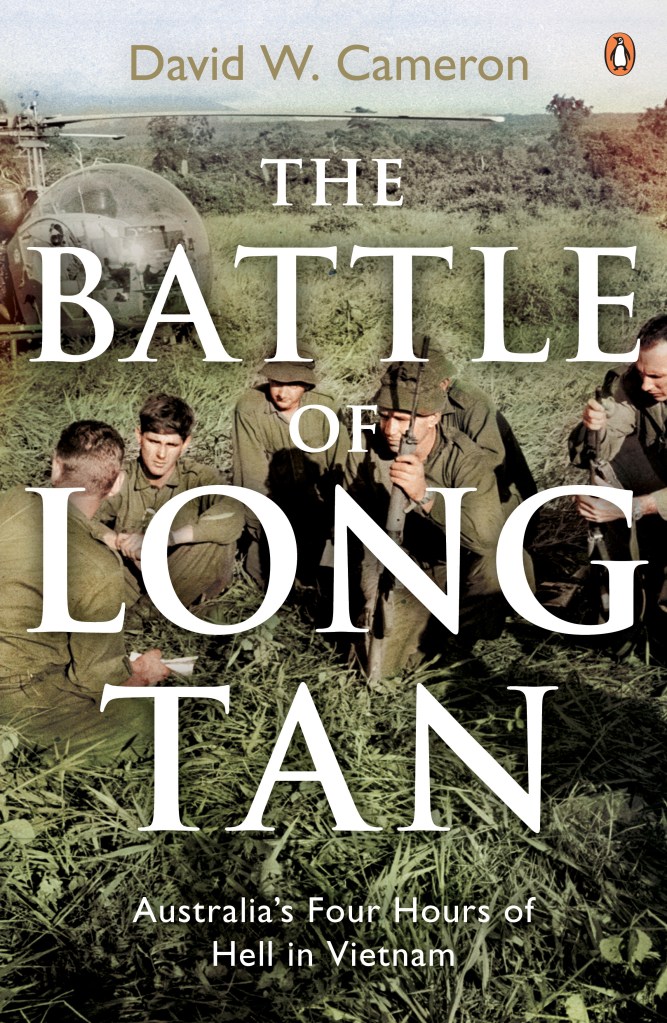
60 years since Long Tan…

“Nothing could prepare you for it.”

— Second Lieutenant Dave Sabben, D Company veteran

What was Long Tan?

It was a battle in a rubber plantation in South Vietnam on 18 August 1966. It was fought between the Australian Army and the Viet Cong, a communist guerilla force near the Australian base at Nui Dat.

I once worked with veteran of the battle. He was an officer at the Australian base at the time, and he described to me the circumstances and how it unfolded. Initially surprise, panic, uncertainty, fear, determination and finally success. The battle is remembered for the bravery and determination of the Australian soldiers, who fought against overwhelming odds to defend their position and protect their comrades.

What happened?

The battle began when a company of 108 Australian soldiers, led by Major Harry Smith, encountered a much larger force of Viet Cong guerrillas and North Vietnamese regular soldiers. The Australian soldiers were outnumbered and outgunned, but they managed to hold off the attackers for several hours. With superior training, discipline, and firepower the Australians were able to fend off the enemy attacks, which came in waves throughout the afternoon and into the evening. They also received artillery support from a nearby Australian base and close air support from American helicopters.

Despite suffering heavy casualties, the Australian soldiers were able to repel the Viet Cong attackers and inflict significant losses on the enemy. By the end of the battle, the Australian soldiers had killed an estimated 245 enemy soldiers, while suffering 18 killed and 24 wounded.  

Why was it important?

It demonstrated the effectiveness of the Australian troops and their ability to operate successfully in a hostile jungle environment, especially as the first Australian regular troops had arrived just over a year previously. It is remembered for the bravery and determination of the Australian soldiers, who fought against overwhelming odds. The success was due to a combination of factors, including superior training, discipline, and firepower, as well as effective use of artillery and air support.

Are there leadership lessons from this episode?

1.            The Importance of Preparation and Adaptability

The success at Long Tan was not just a result of their actions during the battle but also their rigorous training and preparation beforehand. We can learn from this by emphasising the importance of preparing our teams for various scenarios and fostering adaptability to respond effectively to unexpected challenges.

2.            Effective Communication and Decision-Making

Throughout the battle, Australian Army leaders maintained clear and effective communication, both within their ranks and with supporting artillery units. This facilitated precise, coordinated actions crucial to their success, in particular the use of artillery and helicopters. In the modern business environment how important is effective communication and decision-making, especially under pressure?

3.            Leveraging Available Resources Strategically

The strategic use of artillery fire was a key element of the Australian forces’ defence strategy, demonstrating the importance of leveraging available resources. How often do we as managers identify and utilise their teams’ strengths and assets strategically, ensuring that resources are allocated efficiently to maximise impact?

Can you think of any other lessons for managers?

Note: We remember those who sacrificed their lives on that day 60 years ago to protect their mates.

@thenetworkofconsultingprofessionals
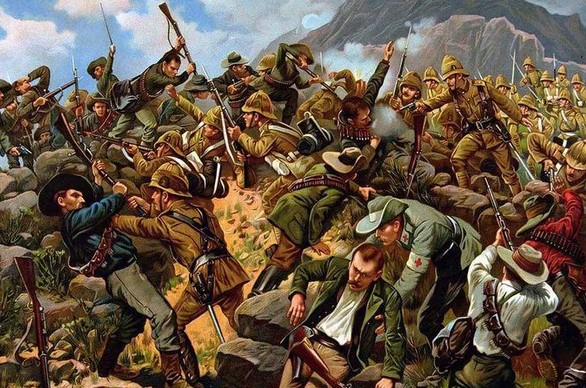
Lessons from Spion Kop…

“History gives answers only to those who know how to ask questions.”

Hajo Holborn, German-American historian (1902-1969)

I grew up on a farm in the state of NSW, Australia. I learnt many management lessons from farm life. The bordering property, a hilly, rough and timbered farm was established in the early 1900s was called “Spion Kop”. Certainly, an unusual name for an Australian farm.

Where did this name originate from?

In NSW alone there are five mountains called Spion Kop. The clue was in the time of establishment of the property – in the early 1900s. This was the time of the Boer War. Australia did not become an independent nation until 1901, and in a fervour of British Empire patriotism landmarks and people’s names reflected back to this war. I had a Great Uncle, born in 1900 called Baden Powell Hull, named after the ‘hero’ of the siege of Mafeking in the Boer War in modern day South Africa, Baden Powell the founder of the Scout’s movement.

Anyway, I digress. The Battle of Spion Kop was a pivotal encounter in the Boer War which took place in January, 1900. In English, the term ‘spion kop’ an Afrikaans word means ‘spy hill’ or ‘lookout hill’. This clash, near Ladysmith in South Africa, pitted the British Empire forces against the Boers of the Transvaal and Orange Free State.

Who were the commanders and what were their Tactics?

  • British Commanders: General Sir Redvers Buller led the overall British campaign, with Lieutenant-General Sir Charles Warren in direct command at Spion Kop. The British aimed to relieve the Siege of Ladysmith and decided to take the strategically important hill of Spion Kop. Their plan involved a direct assault and securing the hilltop. However, due to inadequate reconnaissance, the British were unaware of the hill’s true geography and the strength of Boer positions.
  • Boer Commanders: The Boer forces were commanded by Generals Louis Botha and Piet Joubert. Botha was particularly instrumental during the battle. The Boers, adept in guerrilla warfare, utilised the terrain to their advantage. They engaged in defensive tactics, occupying higher ground surrounding Spion Kop and targeting the British with sniper and artillery fire.

What was the outcome of the Battle of Spion Kop?

  • Territorial Outcome: The British initially captured Spion Kop but failed to secure it due to intense Boer resistance and misjudgements about the terrain. This led to their eventual retreat and a strategic victory for the Boers.
  • Casualties: The British suffered heavy losses, with approximately 1,000 casualties (dead, wounded, or captured). The Boers had significantly fewer casualties, estimated at around 300.

Lessons for Modern Managers

  1. Importance of Information and Planning: The British lack of reconnaissance reflects the critical need for managers to gather comprehensive information and plan accordingly. Understanding the market, competition, and operational environment is key to strategic success.

I remember an instant very clearly where I thought I could prepare a capital expenditure application (Capex) sitting in my office in Melbourne for an environmental washing plant for a concrete plant located in regional Victoria. Being somewhat clever I gathered ‘letters of protest’ from neighbours, including an employee whose letter that had been embellished. Upon touring the area with my General Manager several weeks later, he brought out the Capex and standing near where I had said the washing plant was to be located started asking questions. The document explained where the wastewater was running – and it was up hill, which was obviously not immediately obvious from my office in Melbourne! The General Manager ‘smelt a rat’. He wanted to talk to the owner of the house most affected by the wastewater (who happened to be the employee). I remained calm and said he was probably not home – well he wasn’t home he was only 20 metres away in batch office. Keeping calm and a straight face I survived the interrogation and with the General Manager saying “I’m not convinced”. Lesson learnt.

  1. Leadership and Decision Making: The British command structure at Spion Kop, was confusing and orders were conflicting. This underscores the necessity of clear, decisive leadership in management. Leaders must communicate effectively, make informed decisions, and ensure team alignment.

In a previous blog, I described a major transport company where managers were recognised for their ability to react to a ‘crisis’, a ‘can do culture’ rather than being recognised for their management skills. The business was full of ‘operations heroes’. In such an environment, being a manager there was a challenge. I took a different approach, and empowered my supervisors, implemented a culture of discipline, and provided clear reporting responsibilities with significant success. The branch became the most profitable in the company, with the lowest damage and labour turnover.

  • Adaptability and Innovation: The Boers’ successful use of guerrilla tactics against a conventionally superior force highlights the value of adaptability and innovation in management. Modern managers should be flexible, ready to adjust strategies in response to changing circumstances, and open to innovative approaches.

In our former logistics business, we had issues with waiting time at a retailer’s distribution centre. Cartons were hand unloaded, which is very time consuming rather than being unloaded on pallets using a forklift. I came up with the idea of using standard shipping containers on a trailer and leaving them on site. This allowed the retailer to unload in their own time. This was successful and proved beneficial to the retailer by being more flexible with scheduling unloading times and eliminated waiting time for us. This led to us purchasing two cheap second-hand van trailers which were used instead, improving our margins and giving us flexibility in loading for delivery.

Do you think there are other lessons we can learn as managers from the Battle of Spion Kop?

While the Boers’ tactics of utilising terrain and guerrilla warfare led to their victory, the British suffered due to poor reconnaissance, ineffective leadership, and rigid tactics. These historical insights remain profoundly relevant for today’s managers, emphasising the importance of thorough preparation, effective communication, and the ability to adapt to evolving situations.

Do you think there are other lessons?

Post Note: over 20 years ago I visited the actual Spion Kop in South Africa. A bare hill overlooking the surrounding countryside, it was very eerie with lines of British graves marked by white stones and a cross.

@thenetworkofconsultingprofessionals
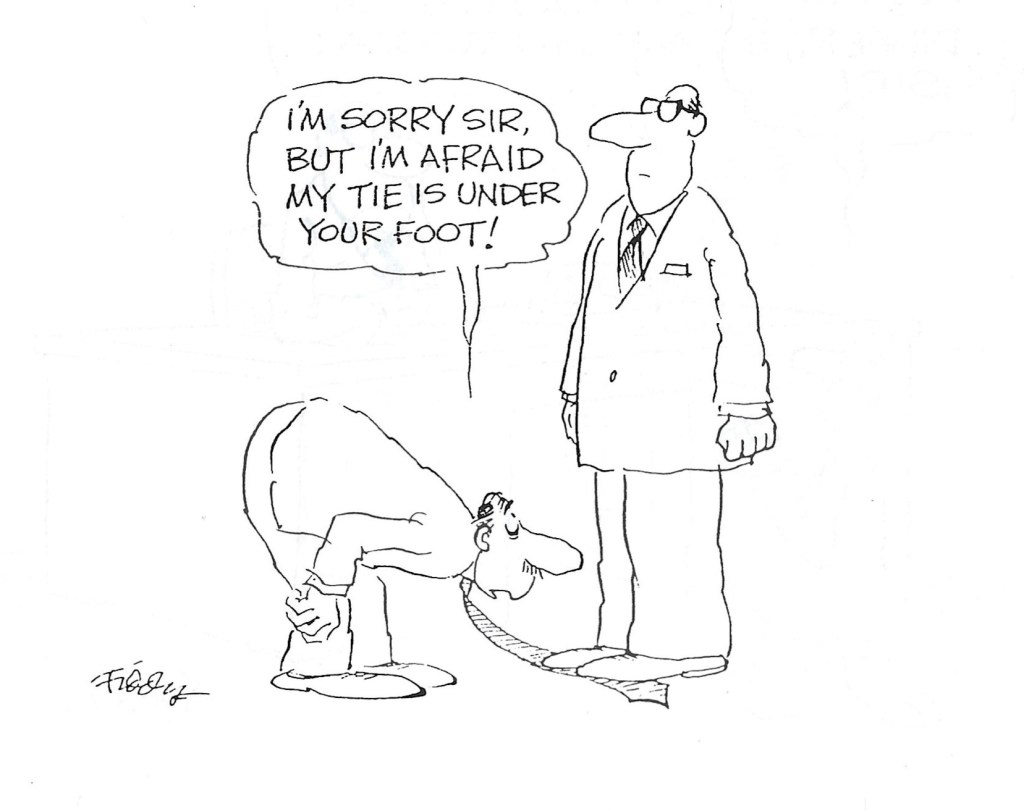
A lesson from a politician!

“Success has many fathers, failure is an orphan”

In a previous post I wrote about the New Zealand Railways in the 1980s. They were poorly managed and lost a farmer’s tractor. This was despite directives to find the tractor from the Government Minister. Eventually, the farmer found his tractor on a railway siding. The messages in this case were that successful organisations need clear goals, and poor culture ‘kills’ an organisation.

The Minister at the time was Richard Prebble. He started as a Labour politician in NZ and following his ministerial experience as Minister for State-Owned Enterprises in the David Lange Labour Government, he went on to help form right wing ACT Party. Whilst a Minister, he was known in Wellington for often saying:

“I’ve been thinking…”

He went on to write a book with that title. Apparently, this became almost as famous (or infamous) as the quote by Sir Humphry Appleby, the head of the Department of Administrative Affairs in the BBC comedy, “Yes Minister” who stifled any initiatives for change with the quip:

“That’s courageous” which was meant as a warning that if the Minister implemented the policy, he would lose the election.

Prebble’s quote indicated he was about to challenge the status quo, particularly in State Owned Enterprises (SOE) and make changes. Unusually for many politicians and many managers, Prebble believed that that everyone can make a contribution to the problem-solving process. He took the view that giving employees information was a form of respect and their experience would help in produce a strategy for success. This was the approach he implemented in the railways and it started a turnaround in the loss-making enterprise.

From my experience and observations, the usual course of action to success both careerwise and politically, is to take credit for successes and find someone else to take the blame for failure. Unusually for a politician, Prebble reversed this. As the responsible Minister, he earnt the loyalty and respect of the managers in the NZ railways by allowing them to announce all the positive news whilst he announced the bad news, such as redundancies and closures.

How often have you worked for managers who take credit for the good decisions you have made and leave you to take the blame for the bad ones?

As a manager, do you do this?

Is that way to develop your staff?

Do they respect this type of behaviour?

@thenetworkofconsultingprofessionals

What is the Rule of 3?

“If you want something stuck in someone’s head, put it in a sequence of three”
Brian Clark – travel writer and digital nomad

Several years ago, I engaged some consultants to review our logistics business. Investigations were made, systems, processes, customers and people were reviewed and a report completed. The single most important lesson I obtained from the review was what they called ‘the rule of three’.

What is that you might ask?

Basically, the assumption is that most people can remember three things. Anymore and the message is quickly lost. Therefore, in formulating any plan or message keep it simple (the KISS principle). Break it down into three actions, messages or goals so it’s easy to remember.

Examples are everywhere from well-known stories to famous quotations;

 Three Little Pigs, the Three Blind Mice, and the Three Wise Men

“Friends, Romans, Countrymen”

“Blood, sweat, and tears”

“Sex, Lies, and Videotape”

Sadly, there are many examples of the opposite, often found in plans compiled by government bureaucracies, consultants and many politicians. One good example is the Australian Government’s Closing the Gap plan for improving the lives of Indigenous Australians. It has ‘19 national socio-economic targets across 17 socio-economic outcome areas’. There is little wonder that only five of the nineteen targets are ‘on track’.

The recent election of Donald Trump as US President is an example of the successful use of the ‘rule of three’. This is not an endorsement of Trump, his character nor methods, but is an example of the success of ‘the rule’. The Republican Party’s message was clear and simple:

  1. Economy – Are you better off than four years ago?
  2. Border Security – over 2 million illegal immigrants entered the country in 4 years
  3. State of the Country – Is the country heading in the right direction?

In breaking down the Economy in message (1) above, it was the cost of living which was further divided into three – petrol, food and housing. A simple message – clear, concise and memorable.

Have you thought about using the ‘rule of three’ to better communicate to your staff or compile a plan of action?

@thenetworkofconsultingprofessionals

What can we learn from the three little pigs?

“Little pig, little pig, let me come in” – the Big Bad Wolf

We can all remember the fairy tale of the Three Little Pigs from our childhood. The story of the Three Little Pigs has its roots in European folklore, with versions of the tale appearing in various cultures over the centuries. The version we’re most familiar with, however, gained popularity in the English-speaking world through the works of Joseph Jacobs in the late 19th century.

Are there lessons from this tale for us today as managers?

Once upon a time, there were three little pigs each with their own approach to building homes. The first little pig, not one to shy away from whimsy, built his house of straw, quickly and with minimal effort. The second little pig, slightly more diligent, chose sticks as his construction material, hoping for a home that was both swift and sturdy. Lastly, the third little pig, known for his practicality and foresight, opted for the timeless strength of bricks.

Enter the huffing and puffing Big Bad Wolf who is determined to test the structural integrity of these homes. He successfully blows down the straw and stick houses. This leaves the first two pigs in a precarious situation and they escape and see refuge in the third little pig’s house. As a team they stand up to the wolf as the brick house proves impenetrable, and the wolf’s efforts are thwarted.

What themes for managers are there in the story of the three little pigs?

Here are three.

Lesson 1: Strategic Decision-Making

In the world of the Three Little Pigs, the choice of building materials represent strategic decision-making. The first little pig, motivated by a desire for quick results, opted for the flimsy straw. The second little pig, slightly more prudent, chose sticks for a balance of speed and stability. However, it was the third little pig’s foresight in selecting bricks that ultimately proved to be a game-changer.

For managers in today’s competitive environment, this lesson underscores the importance of strategic decision-making. Choosing the right “bricks” or tools for your business—whether it’s technology, talent, or strategic partnerships—requires careful consideration. While speed is often crucial, it should not come at the expense of long-term stability. The third little pig’s approach reminds managers to think strategically and invest time and resources in durable solutions that withstand the “huff and puff” of industry challenges.

Lesson 2: Resilience

The Big Bad Wolf, represents the challenges and setbacks that businesses often face. The straw and stick houses succumbed to the wolf’s breath, highlighting the vulnerability of hastily-made decisions and insufficiently fortified strategies. It was the brick house, standing firm against the wolf’s onslaught, that demonstrated the power of resilience.

In the corporate landscape, challenges are inevitable. Economic downturns, technological disruptions, and unforeseen crises can all test the resilience of an organisation. The lesson for managers is clear: build a resilient business that can weather the storms. Invest in robust strategies, contingency plans, and a culture that encourages adaptability. When the Big Bad Wolf comes knocking, a resilient organisation can stand firm, its metaphorical brick walls unyielding in the face of adversity.

Lesson 3: Collaboration and Teamwork

While the individual choices of the three little pigs played a pivotal role in the fairy tale, it was their collective efforts that truly triumphed. Facing the common threat of the Big Bad Wolf, the pigs realised the power of collaboration and they teamed together in the brick house showing the strength that comes from unity.

In the modern workplace, collaboration is an essential ingredient for success. Managers should foster a culture of teamwork and open communication, where individual strengths complement each other. Just as the three little pigs achieved more together than they could have individually, teams that collaborate effectively can navigate challenges, innovate, and achieve shared goals.

Apart from sound strategic planning, building resilience and embracing collaboration can you think of other lessons for managers from the story of the three little pigs?

@thenetworkofconsultingprofessionals
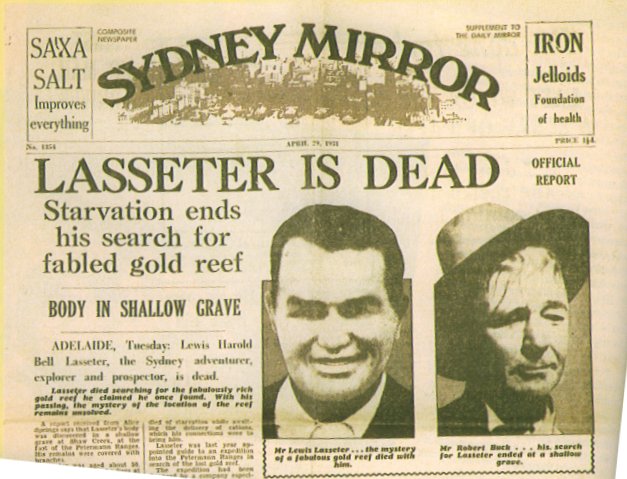
The legend of Lasseter’s Gold Reef…

“Truth, like gold, is to be obtained not by its growth, but by washing away from it all that is not gold” Leo Tolstoy – Russian writer

As a young boy I remember reading the book by Ion Idriess called “Lasseter’s Last Ride” about the 1930 search for a fabled reef with gold “as thick as plums in a pudding” in the deserts of Central Australia. A rich gold reef waiting to be discovered! I was hooked. And I was not the first. Lasseter’s Reef continues to fascinate even today. Since the fateful 1930 expedition where Lasseter died alone in the desert, many expeditions have been undertaken, and none have discovered the fabled reef.

Who was Harold Bell Lasseter?

Lasseter was born in 1880 in Victoria, Australia. In 1903 Lasseter married while living in the USA. In the USA he changed his name to Harold Bell Lasseter, ‘Bell’ being the surname of a popular American author of a book about a lost gold reef! Returning 5 years later he allegedly spent his time inventing and working in various jobs around Australia. Lasseter twice enlisted in the Australian Imperial Force (AIF) during World War I and was discharged both times without leaving Australia, once for being AWOL and for the second time for being engaged in a brawl. In 1927 he married again whilst still married to his first wife. In 1929 he claimed to have submitted the original design for the Sydney Harbour Bridge and sought compensation for his work. It was rejected. In around 1930 at the onset of the Great Depression, he began lobbying the government and trade union officials to mount an expedition to find a gold reef in the desert that he claimed he had discovered years earlier. Lasseter has been described as a bigamist, fantasist, an eccentric, a swindler, a crank and a difficult character with a reputation as a con man.  

The ‘discovery’ of Lasseter’s Reef

Lasseter claimed that in 1897 while travelling alone in the deserts of Central Australia he had come across a rich gold reef whilst travelling from a false ruby strike in South Australia. His horse had died, and he was miraculously rescued by an Afghan camel driver who nursed him back to health. Three years later with a surveyor called Harding, he relocated the reef, took the bearings but failed to peg the claim. Unfortunately, their watches were incorrect, and this made their bearings incorrect. Sadly, Harding died just before Lasseter left for America in 1903.

Testing the Story

Lasseter would have only been 17 when he ‘discovered’ his reef in the deserts of Central Australia. This is highly unlikely, and the false ruby strike was in 1887, not 1897! If Harding was a surveyor, he would not have made the error of the watches having the incorrect time or failing to peg the claim. Harding was in fact not a surveyor but a cattle thief (in Australian slang a ‘cattle duffer’). His ‘death’ was convenient. In the 1930-31 expedition Lasseter was unable to discover his reef and had a major falling out with the leader and some members of the expedition. He left them and died a lonely death in the desert.

Postnote:

It is highly unlikely, given the character of Harold Lasseter himself that the reef exists. Despite this, expeditions continue to be mounted. Never let the truth get in the way of a good story, especially about hidden treasure. In an ironic twist in Alice Springs, there is a casino and hotel called Lasseter’s!

Are there any management lessons with the story of Lasseter’s lost gold reef?

Here are three worth considering:

  1. Be aware of charlatans! We all meet them in our personal life and in business. It would appear that Lasseter was indeed a con man or a delusional liar. Despite this, people were willing to believe his story of his fabulous gold reef. Simple but hard questions would have revealed the implausibility of his story. How often are we as managers do we believe what we want to believe?
  2. Do your homework. The most basic research would have highlighted that Lasseter’s story was fantasy. Checking the dates of when he ‘discovered’ his reef would have revealed the implausibility of his story
  3. Be Aware of Myths that become Reality. A lie repeated enough becomes reality. Once again check the facts and test the logic.

Can you think of any other lessons from the myth of Lasseter’s Reef?

@thenetworkofconsultingprofessionals

Sporting trivia from 75 years ago…

DID YOU KNOW? Rhodesia (now Zimbabwe) beat the All Blacks 10-8 in Bulawayo on 27 July 1949, and drew 3-3 with them three days later?

Last year the Rugby World Cup was held in France, with the South African Springboks triumphing over the New Zealand All Blacks 12-11. The All Blacks are considered the pinnacle of national Rugby excellence but 75 years ago they were defeated by a provincial side in southern Africa. The provincial side remains undefeated against the All Blacks, the only team in history to do so.

The team represented Northern Rhodesia (now Zambia) and Southern Rhodesia (now Zimbabwe). The first match, played in Bulawayo in front of 10,000 people, resulted in a surprising defeat for the All Blacks 10-8. At the time the All Blacks were (and still are) one of the most formidable teams in international rugby. The significance of this defeat was made more poignant in the return match three days later with a 3-3 draw in Salisbury (now Harare). And for my New Zealand readers, 1949 remains the worst years in All Black history, with losses of 4-0 to the Springboks and 2-0 to the Wallabies.

What were the factors contributing to the defeat?

  1. Complacency of the All Blacks: The All Blacks, being a top team, might have underestimated Rhodesia, leading to complacency. The All Blacks were surprised by the dash of the Rhodesians, who played a different, open, and attacking brand of Rugby, as distinct from the safety-first South African teams.
  2. Local Conditions: The All Blacks were possibly not fully acclimatised to the local conditions in Rhodesia. Local knowledge and adaptation to specific environments can be crucial in determining the outcome of a contest.
  3. Psychological Advantage: The Rhodesian team, motivated by the opportunity to make history, may have had a psychological advantage. They had everything to gain and nothing to lose, which can be a powerful motivator.

The Rhodesian rugby team’s victory over the New Zealand All Blacks in 1949 is a noteworthy event in the annals of sports history, particularly rugby.

Here are three lessons for managers that go beyond the realm of sports, offering valuable insights for managers in various fields.

  1. Never Underestimate the Underdog: In business, as in sports, complacency can be a downfall. Always respect your competitors, regardless of their size or perceived strength.
  2. Adaptability: The ability to adapt to different environments and conditions is crucial. Managers must be flexible and responsive to changing situations, whether in market conditions, consumer preferences, or competitive landscapes.
  3. Motivation and Team Spirit: The Rhodesian team’s victory underscores the importance of motivation and team spirit. In management, fostering a strong team culture and keeping the team motivated, especially during challenges, can lead to significant achievements.

The Rhodesia vs. All Blacks games of 1949 serve as a timeless reminder of the unpredictable nature of sports and, by extension, the competitive world of business. They highlight the importance of preparation, respect for all competitors, adaptability, and leadership.

Note: Rhodesia RFU were treated as a province of South Africa for rugby reasons. Their players were eligible for selection by the South African team. Many were selected to play for the Springboks. Rhodesia never won another game against a touring side before being reconstituted as Zimbabwe in 1980.

@thenetworkofconsultingprofessionals
Lions roaming Australia…

“Any fact is better established by two or three good testimonies than a thousand arguments”.

Nathanial Emmons – influential American theologian

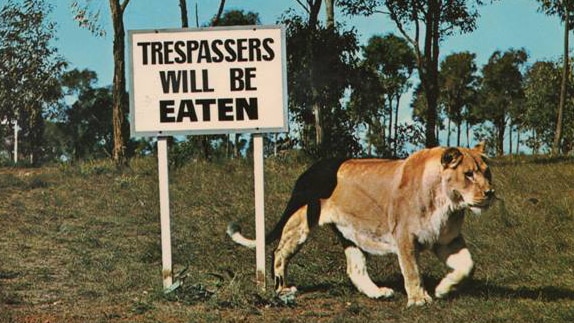
Before the opening of open range zoos in Australia, there was an African Lion Park located on the edge of suburban Sydney. It was owned and managed by the famous Bullen circus family. Families could drive through the park and get close to lions. As a kid I can remember visiting and reading the signs warning you that if you got out of your car you could be eaten!

How exciting a visit was for young children! As a visitor you had the chance to see lions rubbing up against your car and even licking the windows!

Interestingly, the park also provided a disposal service for the local community for their unwanted livestock. Classified advertisements ran in the local newspapers for the removal of sick or injured sheep, cows and horses. The park closed in 1991 but the lions remained!!!

Now, Australia is renowned for its dangerous creatures from the sharks, spiders, jelly fish, snakes to crocodiles. In 1995, the inhabitants in the townships of Warragamba and Silverdale close to the lion park were reportedly ‘terrorised’ by lions. In Australia, surely this was an urban myth!

Well, facts can be stranger than fiction.

So, what happened and was it true or just an urban myth?

Yes, three lions escaped. The local police received a call from a startled motorist who saw a lion cross the road and they had to attend to a “lion wandering the streets”. Two of the lions were recaptured and returned to the park. However, one lion continued to wander the streets and after killing a dog was shot and killed by the park’s owner in a suburban street.

How did the lions escape?

Even though the park was closed, lions could still be heard roaring and been seen being fed from the boundary fence. Living next to a defunct lion park were two 12-year-old boys. Now boys will be boys. One day on the park’s boundary fence, they kicked in a rusted grate on a stormwater culvert and wandered in. They did some exploring, fished for yabbies and then headed back home back through the culvert and broken grate. The thought of lions escaping was apparently furthest from their minds, and alas that occurred.  

So, this was not an urban myth!

Is there a lesson about urban myths here for us as managers?

Years ago, a colleague related the story of a business owner who re-employed a person to run the business who had sacked the week before for non-performance. Sometimes facts can be stranger than fiction even if they sound like an urban myth or an episode of Utopia the ABC TV series that parodies how bureaucracies work. A great example is the Harold Holt Memorial Pool in Melbourne. The local Council named the pool after Prime Minister Harold Holt, who drowned while swimming in the surf near Melbourne and whose body has never been found!

When it comes to your own corporate myths, I am not suggesting that you make up stories. Instead, make an effort to find and share them. These stories can be a vehicle to connect and engage with current employees and customers. Without the ongoing sharing of the story, the actual event will be lost or forgotten, and companies will start to lose their corporate memory.

For example, in 1998 there was the shopping trolley story involving Roger Corbett, the then CEO of Woolworths Australia a supermarket company. Apparently, he came across an empty Woolies trolley and then pushed it all the way from Sydney’s Circular Quay near the Opera House to the Town Hall supermarket. At the time, Corbett was creating a culture of attention to detail and cost reduction. Although he retired in 2006, the story is still shared today. It has become an urban myth in the company.

Another business urban myth is the story set in 1960s about Sir Frank Packer, millionaire media owner and father of media baron Kerry Packer. The story goes that Sir Frank, a pugnacious, autocratic and often difficult businessman found himself in an elevator of his Sydney office building with a shabbily dressed man, and was outraged. Packer tells the man he’s a disgrace to his firm, fires him, and hands him $1,000 to buy a new suit. The ‘fired’ man just grins — he was a freelance photographer who stopped by to visit a friend who worked in the building. The story apparently circulated when Sir Frank believed his employees were not meeting his dress standards.

Does your organisation have stories that could be used to enhance and build a positive and constructive culture?

It could be worth exploring.

#thenetworkofconsultingprofessionals

Sometimes being a rocket scientist doesn’t help…

“Reach for it, you know. Go push yourself as far as you can”

Christa McAuliffe – astronaut on the doomed Challenger

38 years ago this month on 28 January 1986, on a cold morning watched by thousands of onlookers and millions live on TV, the Space Shuttle Challenger lifted off from Kennedy Space Centre in Florida at 11:38 AM EST. To everybody’s horror just 73 seconds into its flight the shuttle broke apart, leading to the tragic death of all seven crew members. This event is etched in our collective memory, not only for its heartbreaking impact but also for the profound lessons it imparts to managers, business owners, and leaders across various fields.

What caused this disaster?

The primary cause of the Challenger disaster was the failure of the O-ring seals in its right solid rocket booster (SRB). These O-rings were not designed to handle the unusually cold conditions on the day of the launch. The low temperatures compromised the O-rings’ elasticity, preventing a proper seal. This failure allowed pressurized burning gas from within the solid rocket motor to reach the outside and impinge upon the adjacent SRB aft field joint attachment hardware and external fuel tank, leading to the structural failure of the SRB attachment and the destruction of the Challenger.

Engineers at Morton Thiokol, the contractor responsible for the solid rocket boosters, had raised concerns about the O-rings in cold weather. However, these concerns were not adequately communicated to or heeded by the key decision-makers at NASA. The organisational culture at NASA, which at the time prioritised schedule and budget over safety, played a significant role in the decision to proceed with the launch, despite these known risks.

Furthermore, this design flaw was compounded by a failure in communication and decision-making processes within NASA and between NASA and its contractors.

What lessons can we as managers learn from this disaster?

Here are three lessons:

  1. Importance of a Safety Culture: The Challenger disaster underscores the critical need for organisations to prioritise safety over other objectives, including schedule pressures or financial concerns. Creating a culture where safety is paramount can prevent catastrophic outcomes.
  2. Effective Communication and Heed Expert Opinion: Effective communication and respecting the expertise of team members is vital. The concerns of the engineers about the O-rings were a missed opportunity that highlight the importance of listening to and acting on expert advice, especially when it pertains to potential risks.
  3. Ethical Decision Making: The Challenger incident serves as a stark reminder of the ethical responsibilities of decision-makers. Ethical decision-making involves considering the wider implications of actions and prioritising the well-being of all stakeholders, including employees and the public.

In conclusion, the Challenger disaster, serves as a sombre reminder of the consequences of overlooking safety, underestimating risks, and the critical importance of ethical leadership. For managers and business owners, it is a call to reflect on their practices, to ensure that the lessons from this event are not just remembered, but integrated into how they lead and make decisions.

#thenetworkofconsultingprofessionals

A great business model or trashing your brand?

(c) The Sydney Morning Herald (Sept 2023)- illustration by Matt Golding

Several years ago in my management blog, I described Elvis Business Model (EBM) as an ‘ideal business’ model. In 1977, the year Elvis Presley tragically died he had less than $US1 million in the bank, but by 2016 his estate had earned more than $US27 million.

The recent corporate history of Qantas ‘the spirit of Australia’ has now provided what may be a better business model. Let’s call it FKBM – the flying kangaroo business model.

In August 2023 Qantas announced a record pre-tax annual profit of nearly AU$2.5 billion up from a loss of almost AU$2 billion the previous year. Following the pandemic years, many travellers were prepared to tolerate, perhaps even forgive their poor customer service, long call centre delays, lost luggage and cancelled or delayed flights. But two years on, trust and esteem for the airline is running at an all-time low.

Now at the time of writing, the Australian Competition & Consumer Commission (ACCC) is taking the action against Qantas for engaging in false, misleading or deceptive conduct by advertising and selling tickets for flights that it had already cancelled sometimes months ahead. This often led to customers having less time to make alternative arrangements and paying higher prices for new flights. These credits exceeded $570 million! Tickets are now averaging 60% above pre-COVID prices. Coupled with this, an international rival of Qantas, Qatar Airlines recognised for its high level of customer satisfaction was refused additional flights into Australia by the current Australian Government. Competition was reduced providing the opportunity to increase prices.

What an excellent business model!

Collecting money for already cancelled flights, thereby having access to this cash certainly helped finance the business, then make it difficult to redeem the credits (this was partially reversed) and later having the government of the day restrict international competition, thus allowing you to charge higher prices.

So, how far has Qantas fallen in Skytrax Best Airline survey?

As Qatar has a significantly better ranking than Qantas, having the government refuse to increase their landing rights is certainly ‘beneficial’.

So, is FKBM the way forward?

Well, no, not really.

Firstly, Qantas has alienated its customers. Judging by the high number of customer complaints this is certainly the case. Many have said they will never fly with them again. The brand has been trashed.

However, it goes further than this.

Qantas has had a difficult relationship with its employees, from shutting down the airline in 2011 in a dispute with staff to sacking thousands of employees during the pandemic and outsourcing maintenance which saved the airline over $100m per year. The High Court of Australia ruled last month that Qantas had unlawfully outsourced the jobs of sacked workers. Whilst not all of this is Qantas’ fault, its restrictive trade union work practices which inflated costs did not help. Businesses cannot reliably add value when the relationship between management and other employees is broken. If a company’s employees have little or no faith in their brand, how are customers be expected to?

Employee disfunction morphs into broken promises to customers, suppliers and other stakeholders further depleting goodwill. Although not all stakeholders are adversely affected – Qantas shareholders and senior management have certainly benefited from good dividends and bonuses. However, if you are a customer, a worker, or you live in a regional area or are a taxpayer you might not agree. It is not helped when the public see the CEO walk away with millions of dollars in bonuses.

Trust is a highly emotive, particularly when viewed through a brand lens. A brand is a belief and values system which acts as the bedrock for guiding management on how to re-engage with its many stakeholders whether they be an employee, shareholder or customer. Businesses cannot be successful without customers. When it comes to convincing customers to believe what you are saying, there is no one size fits all approach.  A good start would be to engage and have faith in your employees. It flows on from there.

Do you think the FKBM is a good long-term strategy?

If not, why not?

How important is employee engagement in ensuring good customer service?

Is excellent customer service vital for long term business success?

Note: On an international flight over 4 months ago, Qantas mislaid my luggage and I had to purchase clothing to continue my travels. Qantas ‘offered’ to pay compensation and I completed the requested form. Despite over 10 emails (Qantas ‘customer service’ claims not to have received my emails), and several phone calls including a promise to return my call within 5 working days which has not been returned, the compensation has not been forthcoming. I am one of many who have experienced Qantas’ poor service levels firsthand. Have you?