
“He had been the last Prime Minister to act as if Britain was still a world power; and the first Prime Minister to have to face the reality that she was not” – 1977 obituary of Sir Anthony Eden, British PM during the Suez Crisis
It’s 70 years this month since the Suez Crisis…
The 1956 Suez Crisis is an excellent case study in leadership, strategy, and organisational failure. The behaviour of the key players, Gamal Abdel Nasser (Egypt), Anthony Eden (Britain), Guy Mollet (France), David Ben-Gurion (Israel), and Dwight D. Eisenhower (USA) offers sharp, practical lessons for managers today.
It was a major international confrontation that arose from Egypt’s nationalisation of the Suez Canal, which was controlled by British and French interests. To assert sovereignty and finance development projects such as the Aswan High Dam, Egyptian President Nasser announced the nationalisation of the canal in July 1956. Earlier the USA and Britain had refused to help fund the Aswan Dam.
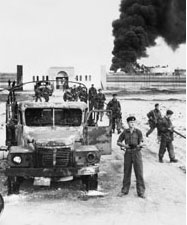
Fearing loss of influence and economic control, Britain and France secretly colluded with Israel to regain the canal and weaken Nasser. On 30 October 1956, Israel invaded Egypt’s Sinai Peninsula, followed immediately by British and French military intervention in the Canal area under the guise of separating the combatants. The French and British forces comprehensively defeated the Egyptian troops within a week, taking back the Suez Canal. Britain announced a cease fire on 6 November 1956.
Why it failed?
At the time, the Soviet Union was ruthlessly crushing the 1956 Hungarian Uprising. The USA condemned the Soviet’s barbaric actions. US President Eisenhower was concerned with dissociating the USA from European colonialism and, combined with the possibility that the Soviets would intervene to assist Nasser, pressured Britain and France to accept a United Nations ceasefire. The USA voted for a U.N. resolution publicly condemning the invasion and approving the creation of a U.N. peacekeeping force. Financial pressure was also applied to Britain. Following World War II Britain was bankrupt and needed an International Monetary Fund bailout. The USA threated not to support the loan. In summary, in the midst of the Cold War, Washington had publicly censured two of its most important allies, France and Britian.
What was the outcome?
Although a military success, the outcome had long running consequences.
Egypt retained the Suez Canal, with Nasser becoming a hero to the Arabs in the Middle East. His overconfidence set the stage for further Middle East instability and lay the foundations for the 1967 Six-Day War with Israel. It also contributed to an increase in Soviet influence and signalled a major demise in British and French power. Furthermore, it can be argued that the USA’s actions assisted the rapid de-colonisation of Africa and Asia in the late 1950s and 1960s. The Suez Crisis was the last gasp of two fading world powers and signalled the dominance of USA and marked a turning point in post-war global leadership.
Are there any lessons for managers in the Suez Crisis?
Lesson 1: Transparency and Trust Are Critical
Once exposed, the secret collusion between Britain, France, and Israel severely undermined their credibility. The lack of transparency damaged trust, particularly with the USA, and weakened their moral and diplomatic position at the United Nations.
This illustrates a fundamental management principle. Decisions made without openness risk long-term reputational harm. Leaders who communicate openly and with trust are more successful in building and sustaining successful organisations.
Lesson 2: Beware of the Law of Unintended Consequences
Although Nasser was militarily defeated, his influence in the Arab world was enhanced. He was recognised as its unofficial leader. His overconfidence undoubtedly led to the Six Day War and defeat with a flow on effect still being felt in the Middle East today.
As managers we need to consider that our actions today can result in unforeseen consequences well into the future. A current example is the Australian Government’s policy of tobacco excise. In a campaign to reduce smoking, the government imposed punitive excise on cigarettes over time. The costs became so prohibitive that it opened up a black market for illegally imported cigarettes. This resulted in criminal gangs fighting over territory and torching tobacco shops with a significant loss of government revenue (in the $billions). It is estimated 60% of todays market is supplied by illegal tobacco.
Lesson 3: Leaders Must Adapt to Changing Realities
British Prime Minister Anthony Eden operated as though Britain was still a dominant world power. But the world had changed. Britain’s economic dependence on the United States, the requirement for an IMF bailout and the new Cold War environment meant unilateral action was no longer practical. Eden and the French President’s strategic decisions did not align with reality.
Managers can also fail when they rely on outdated assumptions. Markets change, technologies evolve and power relationships shift. Organisations that continue using yesterday’s strategies often lose relevance and influence. I had a client whose business supplied parts to the automotive industry in Australia. Despite warnings that the industry was highly likely to close, he refused to believe this and is no longer in business.
The lesson is that leaders must continually reassess their environment, recognise changing power dynamics and adapt quickly. Past success does not guarantee future success. How many major companies that were market leaders 30 years ago still exist today?
@thenetworkofconsultingprofessionals

