
Despair Inc (c)
“By 2005 or so, it will become clear that the Internet’s impact on the economy has been no greater than the fax machines”
– Paul Krugman (1998) – former economics professor at MIT
Traditionally at this time of year just before Christmas as managers and business owners we typically look back over the past 12 months and reflect on what went well and what did not. We should also give thought to the future, both for the next 12 months and the long term.
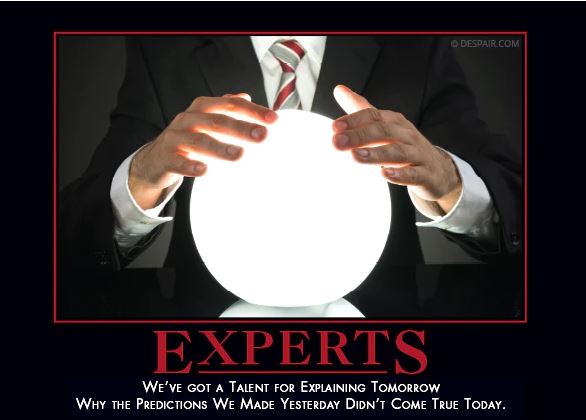
Should we rely on the prediction of so called “experts”?
Predicting the future is fraught with danger. Apart from the Krugman quote, here are three others about the future:
- Aircraft in the military. Ferdinand Foch, a French general and military theorist famously said, “Airplanes are interesting toys but of no military value.”
Military aircraft have become a cornerstone of modern military operations, revolutionising warfare with their capabilities in reconnaissance, combat, and logistics.
- Mobile Phones. A McKinsey & Co. report predicted that the mobile phone market would only reach about 900,000 by 2000.
The proliferation of mobile phones far exceeded these expectations. By 2022, there were an estimated 8 billion mobile phone subscriptions worldwide
- World Population Unable to Feed Itself. In 1968, Paul Ehrlich predicted that unchecked population growth would lead to the situation that “mankind will breed itself into oblivion.”
The world population has increased to over 8 billion, up from 3 billion when Ehrlich made his predictions and widespread hunger is far less than it was in 1968 and global life expectancy has increased from 63 years to other 72 years.
With the benefit of hindsight, these predictions by often self-appointed ‘experts’ are laughable. Ehrlich was an entomologist, not a demographer. McKinsey & Co it could be argued, were management consultants who had little experience running businesses. As for Foch, he was the French Marshall in charge of the Western Front in World War I. The trench warfare and ensuing stalemate hardly makes him a military success story.
What lessons can we glean from these examples?
Apart from the obvious about being sceptical about future predictions from ‘experts’ here are three lessons:
- Always remain open to emerging technologies. What may seem impractical or irrelevant at one time can evolve to become a game-changer. Businesses should stay informed, adaptable, ready to embrace new technologies that could transform their industry.
- Do not under-estimate consumer demand due to technological changes. Businesses need to recognise the potential for exponential growth in new markets, especially when driven by innovative technologies.
- Be open to the transformative power of disruptive technologies. Businesses should be prepared to adapt to transformative technologies and take advantage of them.
The business environment is shaped by unpredictability and innovation. As these examples illustrate, expert predictions are often wrong. As business owners and managers, we need to cultivate flexibility, remain open to new possibilities, and continuously reassess their strategies in light of emerging trends and technologies
What other lessons can you think of?
@thenetworkofconsultingprofessionals

