A title does not mean you are a leader!

MT 2

A title does not mean you are a leader!

“Power is like being a lady. If you tell people you are, you aren’t.”

Margaret Thatcher: British Prime Minister

What makes a leader, how do they act and how do you recognise a leader?

Leadership is always a topical subject. Not everyone in a leadership position is a ‘natural’ leader.

Here are some questions that are often asked:

  1. Can we improve our image by managing perceptions?

Perceptions can become reality if managed well.

Few people could argue that Margaret Thatcher was not a leader. You may not agree with her, however there was no doubt that she was in charge. She never used her gender as a prop, although she was the only female in her first cabinet. Unfortunately, today we too often see managers use their title to impress and claim that they are in charge, yet intuitively you know, that in reality, they are poor and ineffective leaders.

  1. Is the use of titles an excuse to tell people who they are or who they think they are thereby hiding their personal inadequacies?

Maybe they are intellectually dishonest, or living in a fantasy world or are not authentic leaders?

  1. Who are they reassuring?

Politicians are notorious for using props to explain away their failings. They are just excuses for poor performance.

We have all had experiences where we have witnessed or worked for managers who are protected by a title. I can remember working with a person who always let slip in the first two sentences of a conversation that he was the managing director. Whilst there may be good reasons for mentioning the fact that you are the managing director early in the conversation, most people will probably identify it as a prop and not a sign of ‘being in charge’. Interestingly in this example, he was considered by staff and many customers as ‘a bit of a joke’ with little or no self-awareness. Props such as your position, background, perceived social position, or using race or gender as excuses can be signals that tell others that you are inauthentic and not really in charge.

How often to you go into an organisation and recognise that the real leader in charge is not the one protected by their title?

Whether it is in a meeting or simply walking the floor of a warehouse it is often quite easy to spot who is really in charge. The clues are normally in how they conduct themselves, whether it is how they walk, their demeanour, their gestures and postures or just quite confidence. They appear in control and look the part. On the other extreme, I know a business owner who is often dressed in jeans, scruffy track shoes and a t-shirt. He does not look the part. This is the first step in managing perception. I know he has failed to obtain business through his appearance. Perception became reality.

Genuine leaders can manage perception and do not need to use a title as a prop.  There is a significant business risk if the person with the managerial title is not seen as really being the leader in charge.

As leaders within or in an organisation, it is critical that this be recognised. Initially ask yourself some questions:

  1. Do I look and act the part?
  2. If not, how do I give the perception of being in charge and a leader?

The ball is in your court………..

A humorous example of poor leadership and using titles as a prop is found in the BBC TV series episode of Faulty Towers “A Touch of Class”. It’s worth watching. Basil Fawlty the hotel proprietor, who is in reality, not in charge of the hotel fawns over a guest with a title only to find that the titled guest is actually a fraudster wanted by the police.

Constant renewal – lessons from the farm

Bathurst-Burr-2

Constant renewal – lessons from the farm

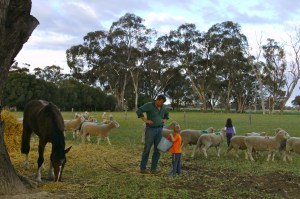
I grew up on a farm in north western New South Wales, Australia. In my opinion it was one of the best groundings in life you can have. Many things observed and experienced as a child growing up on the farm can be related to business.

One experience that comes to mind is the problem of weeds.  This can be related to continuing to improve both your management performance and your business.

On our farm, weeds, specifically burrs and thistles were a major problem. In particular there was a burr called a Bathurst burr. Bathurst burr is amongst the most common and economically serious weeds in Australian agriculture. It readily adheres to the wool of sheep. Wool contaminated by Bathurst burrs is a substantial cost to the wool grower as additional processing is required to separate the burrs from the wool. The burr was first introduced to the city of Bathurst, Australia’s first settled inland city in about 1850. It was trapped in the tails of horses imported from Valparaiso in Chile. Perhaps it should have been called Chile burr!

As my father was a woolgrower, Bathurst burr was a major issue.  As children we were often sent out with a hoe to chip Bathurst Burr along the outside of the cultivation paddocks and roadside. Call it character building. However, compared to other properties in the district our farm had relatively small amounts of this burr.

Why was this so?

It was not from our childhood efforts chipping weeds along the roadside!

It was due to my Dad, who was constantly on the lookout for burrs. When horse riding whenever he saw a Bathurst burr, he would dismount from his horse and pull it out. As children we were fascinated by this obsession of eradicating Bathurst burrs and would often point them out to him if he missed one (this was very rare as being an Aussie bushman he had excellent eye sight).

By comparison, my school friend Graham who also lived on a farm had a different experience. I can remember his father’s place having far more burrs than ours. Like my father, his father would often send him out chipping burrs. However, his father became ill, involving hospitalisation and was unable to walk around his farm and keep burrs under control.

What was the difference?

It was because of the constant attention to keeping the burrs under control – often on a daily basis.

And this is the lesson for managers and business owners. Managing is not about platitudes, big schemes and projects. It is about constant attention to detail, continuing seeking ways to improve……… everyday.

As a manager are you keeping the burrs in your organisation under control?

A New Beginning

Tim

A New Beginning

‘To say it is life changing is an understatement — it is a new life, not life changing’

Tim Boyle (Australia’s first kidney and lower intestine transplant recipient)

This is a quote from colleague and friend Tim Boyle, who became Australia’s first kidney and lower intestine transplant recipient in October, 2015.

Twelve years ago Tim received the news that his lower intestine was no longer working and had it removed. Although he could eat, he could only process 10% of his intake as nutrition and had to be fed via an intravenous drip. Less than 2 years ago his kidneys failed which meant each week he spent up to 50 hours attached to medical machines.

You can read his story in the links in the website Daily Mirror and on SBS.

Despite these setbacks, Tim remained optimistic for the future and was committed to his young family and continued to build his business. Although he had time to catch up for coffee, produce a monthly newsletter and write a book we noticed a slow decline in his health and in the last few months this became a rapid decline. Although he acknowledged this decline we ‘outsiders’ noticed a more rapid decline and feared for his future.

Tim’s journey and his quote got me thinking. How does this relate to business?

Many businesses are like Tim’s health. Slow decline not noticed by those in the business, whether it be the owners or employees but noticed by those outside. Complacency and accepting the current situation in business can be fatal. This can catch up on you without realising the true situation and can result in business failure.

It’s now January and the start of a new calendar year and it is time as Tim stated “it is a new life”. In Australia, January is the summer holiday period where staff are either on holidays or tend to be more relaxed. For business owners and managers it is time for reflection on the previous year and to plan for the next. Time for a new beginning…………

So what should you be doing?

What you should not be doing is relaxing and allowing the status quo to continue……it could be fatal to your business.

Here are some 5  suggestions to get you thinking (and acting!)……….

  1. Learn lessons from last year – write down what you have learned, good and bad and act on them for the next year
  2. Set goals for the next 12 months – write them down, be positive and ensure they are realistic and will make you look back in 12 months with a sense of achievement
  3. What bad habits should you eliminate? – we all have bad habits that if we change will make us, our staff and customers more productive, engaged and motivated
  4. Thank your staff and customers – in particular those who helped you and the business in the past year. Hopefully you would have done this before Christmas
  5. Clean up anything left over from the previous year – there is nothing better than starting the new year with a ‘clean slate’. Leftover tasks stop you moving forward with energy and enthusiasm for the new year deserves.

So let January be a period to commence the new year with a positive plan and outlook for the next 12 months, leaving the old year behind…………..

And think of Tim and remember this year is an opportunity for ‘a new life’………..

Post Note:

If you haven’t done so, why not consider becoming an organ donor? It is really easy to do but unfortunately most people don’t only because they haven’t thought about it. In Australia we have long waiting lists due to lack of donors and it truly saves lives. Tim waited 4 years and was unlikely to see Easter. Luckily ground breaking surgery with a different donor blood was successful.

Go to www.donatelife.gov.au for all details.

Never, never, never give in

“Never give in. Never give in. Never, never, never, never—in nothing, great or small, large or petty – never give in, except to convictions of honour and good sense”

Winston Churchill

Winston Churchill was known for his inspiring speeches. Unlike most politicians today, he wrote many of his speeches himself. In business, as leaders and managers we could do far worse than be inspired by some of Churchill’s famous speeches.

Never giving in? Often in the face of adversity it is easier not to make the extra effort to achieve the outcome required. As I reflect on my journey of establishing and managing a business, Churchill’s ‘never give in’ speech resonates.

Back when the business was just starting out, we were given a 3 month contract with a major Australian retailer to manage their Christmas overflow. This effectively doubled our existing business and would have prevented the business from failing. After we had signed the contract we then received a phone call saying ‘sorry, we’ve decided not to use you’.

Large Australian retailers are notoriously ruthless in dealing with suppliers, especially small ones. Although we had a contract we were in no financial position to seek redress for them breaking the contract. If we had taken legal action we would have been out of business before the matter was addressed and, we could not afford it anyway. With our backs to the wall, we went back and negotiated successfully with the retailer’s manager and convinced him that the honourable action was to adhere to the contract. This gave us our first big start in the business.

Several years later, our largest customer owed us a six figure sum and was reluctant to pay. Failure to pay would have meant our business would have collapsed unless we were able to secure a bank loan to cover working capital. This was something we were reluctant to do as our houses had been mortgaged to establish the business. Negotiations were not fruitful in reducing the debt owed to us and we became extremely worried. We kept the pressure up without success. Luckily the customer decided to cease using our services but they needed to move their stock. This presented the lever we needed to get paid. Put simply, “no payment no stock” and our business was saved (post note: 12 months later the customer went broke). Never, never give in had saved our business on a number of occasions.

Finally, successfully selling our business was our last example of ‘never, never, never give in’. After 2 failed sales attempts in 12 months it looked as though the business would never be sold and we would not receive a reward for our 15 years of hard work (and worry!). Seven prospective business brokers were interviewed to assist in selling the business and were rejected for one reason or another. It looked like another failure. However, I encouraged one of the brokers to try another approach. After weeks of trying to convince all my partners to use his company’s services, he was appointed to sell the business. This proved a decisive. The broker had international experience and was able to sell the business to an international buyer well above expectations.

I recently read a great blog about not giving in where the author states “Anything worthwhile is worthwhile sticking with until it is done” this applies to not only business but life itself.

In business as in management, staying power or persistence will often win out in the end………sometimes when you least expect it.