…it only took 74 days!

“Any leader has to have a certain amount of steel in them, so I am not that put out being called the Iron Lady”

Margaret Thatcher – British Prime Minister

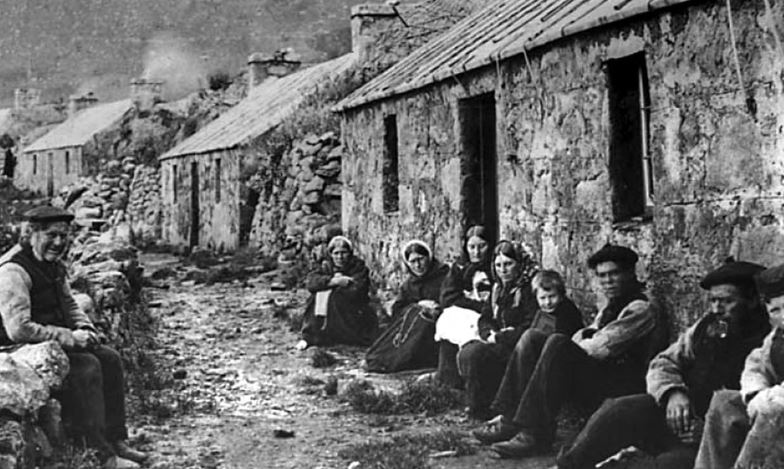
The Falklands War in 1982 between Britain and Argentina lasted only 74 days, culminating in a British victory. This short and bloody conflict has some excellent lessons for managers and leaders.

Background:

Just over 41 years ago this month, on 2 April 1982, the Argentinian fascist military dictatorship decided to invade the British Overseas Territory of the Falkland Islands. They hoped to bolster their dwindling legitimacy by mobilising the long-standing patriotic feelings of Argentines towards the islands, as well as diverting public attention from their ongoing human rights violations against their own citizens and the country’s chronic economic problems.

The islands, 12,000 kms away from Britain are a windswept treeless, damp and cold group of islands. The Falklands had a population of around 2,000 people and its major industry was sheep farming.

In the face of cuts to the military budget by the British Government, the Argentinian military junta miscalculated. They thought that Britain would not respond militarily. However, within three days of the invasion, the British Government under the leadership of Margaret Thatcher had assembled a military task force to retake the islands.

The logistics challenges for the British were immense and the risk of failure high. The Argentinians had 10,000 troops dug in on the islands and were protected by mine fields. Their air force, located on bases on the Argentinian mainland, outnumbered the carrier based British planes by eight to one.

Outcome:

On 13 June 1982, the Argentinian forces on the islands surrendered. Despite the logistics challenges, and setbacks such as the loss of almost all their troop-carrying helicopters on the Atlantic Conveyor the British forces triumphed. The loss of the Atlantic Conveyor meant that the British troops with 80 kgs on their backs had to walk 80 kms in freezing and wet conditions to attack the capital of the Falklands, Port Stanley.

Here are three leadership traits displayed in the Falklands War:

  1. Decisive decision making

The British assembled a military task force within three days of the invasion, despite the fact that the Falklands were over 12,000 kms away from London. This was an example of decisive decision making. In our logistics business, we had a toxic manager who was having a detrimental effect on employee morale and customer satisfaction. One of our partners refused to recognise this situation. When the partner was overseas, we terminated the manager. Within a month, the business he had been managing turned around. Following this action, several supervisors came up to me and said how were pleased that action had been taken. They had been waiting for management action to fix ‘the problem’!

2. Clear purpose

Throughout the crisis, Thatcher’s message was clear and simple. In her communications, there was no doubting her intentions and the purpose was very clear. The British were not going to allow the invasion of British territory by a fascist military dictatorship to succeed.

In my experience, employees respond positively to strong and decisive leadership, especially when there is clear purpose. For example, I was engaged by a business owner to review his business, then introduce standard procedures and managerial disciplines. This message was made very clear to the staff. The culture must change. We would create a work environment through a disciplined and inclusive approach, where employees’ experience, expertise and opinions were valued. The incumbent general manager tried to thwart this approach and was “forced” to leave the business. The staff were relieved. Morale improved almost immediately. They became engaged, as they were now valued and could look forward to the future.

3. Communicate a positive message.

Admiral Sir Henry Leach, Chief of the Defence Force who was instrumental in convincing Thatcher that the islands could be recapture, was asked by her why it was important to retake them.

He said:

“Because if we do not, or if we pussyfoot in our actions and do not achieve complete success, in a few months from now, we will be living in a completely different country whose word counts for nothing.”

Following that advice, Thatcher’s message was positive, and she took the high moral ground.      

  1. We are a democracy
  2. We are not going to have a nasty military junta taking over British territory
  3. We can retake the islands

When I was managing a national vehicle transport company in regional NSW, I was confronted with an unsolvable problem. A private vehicle arrived in our transport depot from Melbourne, several days late. The vehicle owner was arriving in Cairns in far north Queensland the same day. This was three days drive away from Cairns by truck, so he was not going to have his car for the first couple of days of his holidays. Confronted with this problem, I phoned him just as he was boarding the plane in Melbourne offering a solution. A hire car would be provided when he arrived in Cairns until his car arrived. It was a positive message given with authority to solve his problem. The customer continued to use our services for many years.

The British armed forces faced with what were seemingly impossible odds were ultimately successful.

 Do you think that the leadership traits of being decisive, having a clear purpose communicated positively, had a significant bearing on the successful outcome?

‘Real’ leadership is important in any organisation, whether it’s a crisis like the Falklands or not. In my experience, I have found that employees respond positively to good leadership.

#thenetworkofconsultingprofessionals

Are you prepared for a ‘black swan’ event?

“The problem with experts is that they do not know what they do not know.”

― Nassim Nicholas Taleb, author of The Black Swan: The Impact of the Highly Improbable

What is a black swan event?

The phrase “black swan” derives from a Latin expression; “rara avis in terris nigroque simillima cygno” – “a rare bird in the lands and very much like a black swan”.

A black swan event is a rare event that is positive or negative, is deemed improbable yet has massive consequences and could not have been predicted even with the help of sophisticated modelling techniques. For example, an event that has a severe impact on the economy, social conditions, and overall well-being of a nation. The recent COVID pandemic has been called a ’black swan’ event or Russia’s invasion of Ukraine.

A characteristic of a black swan event is low probability and high impact. Often it becomes rationalised in hindsight, as if it could have been expected. Once again, the COVID example comes to mind. The so-called experts had been ‘predicting’ that the world was overdue for a worldwide pandemic as the last deadly one was the Spanish Flu pandemic, over 100 years ago. However there had also been other pandemics that were not as deadly as the Spanish Flu, namely the Hong Kong Flu in 1968 and the 1957 Asian Flu.

Apparently, the phrase was commonly used in 16th century London as a statement of impossibility. It derives from the presumption that all swans must be white as there were no records of swans having feathers that were NOT white. Therefore, a black swan was impossible or at least non-existent. However, in the late 17th century, Dutch explorers became the first Europeans to see black swans, in Western Australia.

Did this change the meaning of the term ‘black swan’ event?

Yes and no.

Nassim Taleb in his book The Black Swan: The Impact of the Highly Improbable said that black swan events have three characteristics:

1. Low predictability based on prior information

2. High consequence, and sometimes catastrophic impact

3. Explained in hindsight as if it were actually predictable

The main idea in Taleb’s book is not to attempt to predict black swan events, but to build robustness against negative ones that occur and to be able to exploit positive ones.

As a business, how can you prepare for a ‘black swan’ event?

This is a challenge for all business managers and leaders.

Some of the possible strategies for dealing with a black swan event include having a business continuity plan and testing it, diversification into unrelated industries, for example a mining company who is reliant on one commodity could move into other commodities, develop alternative supply chains and having adequate insurance cover.

The critical aspect for business to minimalise the impact is to build robustness in the business.

#thenetworkofconsultingprofessionals

What if………..

“what if, but what is”

Gary West coach of Anna Meares – Australian Olympic Gold Medal Cyclist

In mid-2012, I was in England attending a management training program which coincided with the London Olympics. Sadly, I did not attend any events.  However, one night over a cold beer in my hotel room I watched two women cyclists, the 2008 gold medal winner Victoria Pembleton and the 2008 silver medallist Anna Meares, slog it out in the women’s sprint. It was an intense battle of stamina and wills and in the mesmerising trussell Anna Meares eventually triumphed.

So, who is Anna Meares?

Anna was Australia’s first female cycling gold medallist. She was an 11 times world cycling champion and the only Australian athlete to win medals at four consecutive Olympics.

Meares, was a daughter of a coalminer and grew up in Blackwater central Queensland hundreds of kilometres from the nearest bike track.  When her elder sister Kerrie showed promise as a cyclist the family moved to the coastal city of Rockhampton as it had a bike track.

  • Athens 2004 – gold medal in women’s 500-metre time trial, bronze medal in 200m sprint
  • Beijing 2008 – silver medal in women’s sprint
  • London 2012 – gold medal in the women’s in and bronze medal in the women’s team sprint
  • Rio de Janeiro 2016 – bronze medal in the keirin

These results are remarkable but there is something that is exceptional about her Olympic record.  In January 2008 seven months out from the Beijing Olympics, Meares broke her neck after crashing in the World Cup competition, fracturing her C2 vertebra, dislocating her right shoulder and tearing her ligaments and tendons. She went within 2 mm of becoming a paraplegic or worse death. Within 10 days she was back on her bike. With intensive rehabilitation she was able to fight her way back and qualify for the 2008 Beijing Olympics. Not only did she manage to qualify, but she also won a silver medal. From a broken neck to a silver medal in seven months – a truly remarkable performance.

Whilst her dedication and intense training to get fit enough to qualify and win a medal is testament to her intense focus and a clear goal (link here) there is something that is more compelling. It was her attitude. She did not focus on ‘what if’ but ‘what is’. Meares do not dwell on what might have happened if she’d been more seriously injured. Her coach made her appreciate her current situation. She was thankful and became more determined and focussed.

As managers, Anna Meares provides us with a great lesson.

Focus on what you can achieve – what’s in front of you. Don’t dwell on what you can’t control.

Four years later in London, Meares went on to win a gold and a bronze medal in Rio.

#thenetworkofconsulting professionals

A Winter Olympics story ….doing a Bradbury

Doing a Bradbury…

“I don’t think I’ll take the medal as the minute and a half of the race I actually won. I’ll take it as the last decade of the hard slog I put in”

Steven Bradbury – Gold Medal Winner 2002 Winter Olympics

With the end of the 2022 Winter Olympics comes a great story from the past.

So, who was Steven Bradbury and why did he become famous?

In 2002 Bradbury was the first athlete from Australia, and also the Southern Hemisphere to win a Winter Olympic Gold Medal. He was a former short track speed skater, a four-time Olympian and was also a member of the short track relay team that won Australia’s first Winter Olympic medal, a Bronze Medal in 1994.

So apart from being the first Australian athlete to win a Winter Olympics Gold Medal what was he famous for?

It was in the manner of his win. Bradbury slipped into the 1,000m speed skating final when two of his competitors in the semi-final crashed and another was disqualified. In the final, in the last lap as his competitors jostled for medal positions, Bradbury drifted further and further behind. With just metres from the finish line, a pile-up took out every other skater and avoiding the collision, he glided past to claim the Gold Medal.

His win entered the Australian colloquial vernacular in the phrase “doing a Bradbury” meaning an unexpected or unusual success.

However, there is more to this than chance. Bradbury was from tropical Queensland, not a state conducive to winter sports. He travelled the world, living hand to mouth to complete internationally, and competed in four Winter Olympics. At one stage he needed to borrow $1000 from his parents to repair his car so he could get to training. He supported himself by making skating boots in a home workshop. The years of hard work and training included nearly bleeding to death when a skate blade cut an artery requiring 111 stiches in 1994. Also in 1998, he fractured his vertebrae.

What are the lessons here for business owners and managers?

  • Hard work and sacrifice pay off.

In our logistics business there were times when a key customer left putting the business under pressure. However, with the previous hard work in networking and business development they were quickly replaced. Success can be a matter of luck, but it rarely is.  

  • Having a goal and vision

Bradbury’s goal was to win an Olympic medal on his own. The 2002 Olympics was his last chance. Despite his setbacks he hung in there, even when it looked increasingly unlikely that he would be successful, he succeeded and achieved his goal.

  • Being in the race

Yes, Bradbury’s tactic was to hang in there. This paid off as his rivals slipped, crashed and went spinning wildly across the ice. We had a customer in our logistics business who tendered for a lucrative post office franchise at an Australian airport. He was 5th or 6th in line, and eventually won the tender as his competitors were one by one, disqualified as being unsuitable, for reasons ranging from having a criminal record to no experience.

The Stephen Bradbury saga is a great story that resonates.  

Can you think of some other lessons?

#thenetworkofconsultingprofessionals

Do you a have business risk management plan?

16. Example of Risk Matrix V4

Do you a have business risk management plan?

‘The kinds of errors that cause plane crashes are invariably errors of teamwork and communication’

 Malcolm Gladwell – Canadian author and journalist

Being in business is a risk, and it is a challenge for businesses to manage that risk. Risk varies from business to business, from industry to industry and from country to country. Every business will have inherent risks. A business that handles cash, for example, is more susceptible to theft than a quarrying business with stockpiles of raw materials.

What is business risk?

It is an event or situation that has a negative effect on your business. This can range from additional costs caused by the risk to situations that threaten the business itself. Risks can never be completely eliminated. However, they can be managed and controlled.

There are two broad types of risk:

  • internal risks that are primarily related to what happens inside the business
  • external risks where events and actions affect the business from the outside.

As business owners and managers, it is our responsibility to manage business risk. For example, workplace safety is a managerial responsibility and a serious incident can have a substantial negative impact on the business.

How can business risks be identified?

  • The first step is identifying all the risks that could potentially negatively affect the business. Discuss these initially with the management team, dividing them into internal and external risks. For example, in a mining company, external risks could include country or sovereign risk, weather risk, exchange rate risk and economic risk. Internal risks could include operational risk, safety, people, customers, events such as power outages and fire, and reputational risks.
  • The second step, after identifying the risks, is to assess each of the risks. In my experience, the most effective method is to develop a risk matrix where severity or consequence is rated against the likelihood of the event occurring. Effective communication and consultation with the management team and other stakeholders will improve the quality of the risk assessment. For example, involve an expert in IT to help assess the risk of data breaches and system breakdowns.

Risk Management Matrix

  • The third step, after assessing and ranking the risks, is to develop a risk management plan. There is an international standard (IEC/ISO 31010for risk management, which covers identification, analysis, evaluation, monitoring and reviewing risk. This process is very detailed and involves other disciplines such as finance, safety and human resources.

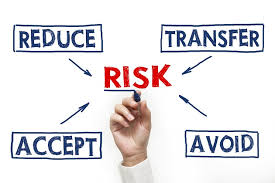
The management of risks falls into four main areas:

  1. Avoidance – eliminate the risk. A good example is decommissioning dangerous machinery.
  2. Reduce – actions that mitigate the risk. In warehousing, where the risks of manual handling injuries are high, place limits on carton weights and have regular ‘toolbox’ safety meetings to reinforce the importance of using equipment safely and reporting heavy or awkward stock items.
  3. Share – transfer, insure or outsource. Some obvious examples include insuring against events such as fire and accidents, and outsourcing transport services to a third party who have managerial expertise in this area.
  4. Retain – accept the risk and have a plan to manage it. In transport, this could include improved selection of drivers, driver training and ensuring vehicles are maintained to the highest standard.

The risk management plan should have the identified risks listed in a risk register. It should include the following:

  1. Responses – actions to mitigate the risk
  2. Contingency plan – plan if mitigation strategy fails
  3. Risk rating – severity, likelihood and residual
  4. Trigger – what is likely to trigger the risk occurring
  5. Owner-manager or person responsible.

Although not all risks can be eliminated – and some risks are inherent in the industry or business – having a plan, monitoring and reviewing the risks regularly, and updating the plan when required is good practice. The collapse of McAleese Transport  is an example of how poor management of mitigating risks can have severe implications on a business and its employees. In conclusion, the risk management plan should include a crisis management plan.

What are the risks in your business?

Can you categorise the risks easily into consequence and likelihood?

Are they in your risk management plan?

Management lessons from the fall of the Berlin Wall…

Management lessons from the fall of the Berlin Wall…

“The Wall will be standing in 50 and even in 100 years”

Erich Honecker – East German head of state, January 19th 1989

Over thirty years ago, the Berlin Wall came down. The Berlin Wall was a guarded concrete barrier that cut off West Berlin from the surrounding Communist State of East Germany. Over 140 kilometres long, it was built in 1961 to prevent East Germans from escaping to West Berlin. From the early 1950s to 1961, nearly 20% of the East German population left the country for West Germany.

On 9th November 1989, with crowds mounting in East Berlin the East German authorities announced the end of travel restrictions and opened up several checkpoints for visits to West Berlin.  Thousands swept through the checkpoints. Soon Berliners from the East and West began dancing on top of the wall and breaking off pieces of the wall. The fall of the Berlin Wall triggered a revolutionary wave that ultimately redrew the map of Europe, bringing down the Iron Curtain and setting millions of people free. Within two years, the Soviet Union and its empire also fell.

For 28 years the wall kept people in, and kept people out, separating and dividing families and friends, dividing Germany and the European continent. Over 5,000 people had escaped over this time and sadly an estimated 200 plus people died trying to escape from East Berlin to West Berlin. No one tried to escape from the West to the East.

My father believed that he would never see the dismantling of the Berlin Wall in his lifetime. I can clearly remember him saying this to us at the family Christmas in 1989. The current thinking at the time was that Communism’s rise was inevitable. Very few ‘experts’ predicted or expected that eventually Communism would collapse, let alone so quickly, and that Russia would lose its status as a world super-power.

What are the three management lessons from the fall of the Berlin Wall?

  1. The power of a vision. On 12th June 1987 US President Ronald Reagan stood at the Brandenburg Gate and demanded “Mr. Gorbachev, tear down this wall.” His words were largely ignored by the international media. Many so-called foreign policy experts dismissed Reagan’s demand as naïve and sensationalist.

There are few things more powerful for a business than having a clear and concise vision. Amazon’s vision is “To be Earth’s most customer-centric company, where customers can find and discover anything they might want to buy online, and endeavours to offer its customers the lowest possible prices”. Amazon’s current market penetration and size is testament to their vision.

  1. Things can get better rather than worse. The worst-case scenario may not happen, particularly when people put their minds to achieving positive change. Very often we are subjected to negative media stories. We regularly hear people spreading such sentiments inside organisations.

Never under estimate what positive outcomes can be achieved with great leadership and teamwork. Everyday we are subjected to non-positive messages that make us believe our future is not in our hands. Like the East Berliners in 1989, by believing that we can escape from a prison-like environment, whether physical or mental, we can set ourselves free and make positive change.  The dismantling of the Berlin Wall is a reminder of how the seemingly impossible can became the inevitable and if there is the will to make it happen.

  1. Predicting the future is dangerous. Sadly, we tend to lean on so-called ‘experts’ who advise us and write books predicting the future. However, the fall of the Berlin Wall and the associated collapse of Communism caught almost everyone by surprise. We should be sceptical of people who claim they can predict the future.

In the late 1800s The Times predicted that “In 50 years, every street in London will be buried under nine feet of manure”. This became known as the “Great Horse Manure Crisis of 1894”.  The invention of the motor transport and Henry Ford’s assembly line production of motorcars at affordable prices changed this ‘expert’ prediction. By 1912, less than 20 years after this prediction there were more cars than horses in London. Furthermore, they were cheaper to own and use than a horse.

What are the 3 concluding messages from the fall of the Berlin Wall?

  • Change is evitable.
  • Things do not remain the same.
  • Whatever you are doing today will not be good enough for the future.

Certainly, the failure of Communism to adapt and change assisted in its downfall. This is the same for organisations. Many of the great corporations of times past no longer exist.

So, what is your business doing to recognise the evitability of change?

What should you be changing so your business not only survives but thrives?

One small step…

One small step…

“I believe that this Nation should commit itself to achieving the goal, before this decade is out, of landing a man on the moon and returning him safely to earth.”
John F Kennedy – USA President

Over 50 years ago on 20th July, 1969, the whole world watched as Neil Armstrong became the first human to step onto the surface of the moon. It was witnessed by a global audience of over an estimated 600 million people. This was an amazing one-fifth of the world’s population.

The importance of this event at the time was indescribable. At the time, our family did not own a TV. In 1969, TVs in Australia were expensive, costing well over one month’s average wage. My parents had decided to rent a TV to watch the moon landing. This was how important this event was. At the time I was in primary school. The school also hired a TV and we all watched the event live on a grainy screen, and importantly for me as a 10 year old, lessons were cancelled for the day. In those days there was no the audio-visual equipment or computers in schools. Everybody was talking about man landing on the moon.

What are the management lessons from this historic event?

President Kennedy’s 1961 speech is one of the best examples of a vision statement, as within the decade, man had landed on the moon and returned safely.  However, it is important to remember that the moon landing was the result of decades of work by hundreds of thousands of people working across the disciplines of science, technology, and engineering, peaking at a cost of 4.41% of the Federal US budget in 1966.

How important is it for an organisation to have a vision?

A vision is a picture or an idea. It helps focus us on the future, provides inspiration and assists in overcoming the obstacles that inevitably appear along the way. A vision is a target. It should be aspirational, perhaps like the concept of a BHAG (Big Hairy Audacious Goal) in Jim Collins’ book Built to Last: Successful Habits of Visionary Companies, and be successfully communicated throughout the organisation.

Another example of the power of an aspirational vision is Rotary International’s End Polio Now program. In 1979 Clem Renouf, the Australian President of Rotary International read about in the Readers Digest how smallpox had been eradicated. After discussing this with a medical expert, he asked what other diseases could be eradicated. He was told that polio was one such disease. Renouf then proposed a vision where the world could be polio free. At the time, more than 350,000 people were infected by polio each year across 125 countries. Later that year Rotary’s Board of Directors passed a resolution for a program for “the eradication of poliomyelitis and the alleviation of its consequences” throughout the world.  Subsequently, in 1985 the End Polio Now program was adopted with the aim of eradicating polio worldwide. With so many countries where polio was still endemic, this was a challenging vision, a BHAG.

Rotary initiated the program and together with the support of UNICEF, WHO and other organisations such as the Bill and Melinda Gates Foundation have now almost achieved Clem Renouf’s original vision. in 2018, only 33 cases of polio were reported in just two countries, Afghanistan and Pakistan. At times there were difficulties in overcoming cultural suspicion, low levels of education, training staff to manage and administer the program, political insurgencies and geographical remoteness. However, despite these obstacles, the original vision ensured the program continued and it is now almost complete.

What other lessons are there for managers in man landing on the moon and the ending polio program?

Apart from an inspiring vision, it demonstrated the importance of having a plan behind the vision. Furthermore, the moon landing is a lesson in perseverance and determination. In less than 10 years from Kennedy’s vision speech, Apollo 11 landed on the moon and the astronauts returned safely to earth. Great strides were made in technological advances in rockets, computers and other space-age materials and innovations. The Apollo Program required integrated circuits which lead to the development of micro-electronics connecting the world. This gave us pocket calculators, home computers, mobile phones, iPads and other high-tech devices. An inspiring vision can lead to other remarkable and beneficial outcomes. Today we can see the positive impact of Apollo Program everywhere.

There are a number of websites and other sources that provide methodologies on how to create a vision statement for your organisation. As can be demonstrated from the above two examples, strong and clear visions are powerful tools and can provide a framework for the future. The future can be positively changed for the better. This is the case with any organisation.

Visions should be compiled into a vision statement in a suitable form to communicate to staff, customers, suppliers and other stakeholders. Vision statements define goals and assist in creating a path for the future. Just look at the Apollo Program and End Polio Now.

Does your organisation have a vision statement?

If not, do you think that the organisation would benefit from having a vision statement followed by a well-constructed plan behind the vision?

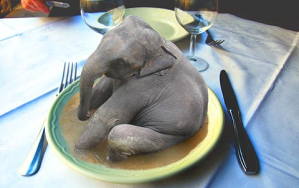
How do you eat an elephant?

How do you eat an elephant?

“There is only one way to eat an elephant: a bite at a time.”

Desmond Tutu – Noble Prize laureate, anti-apartheid campaigner

In using this old African proverb, what did Desmond Tutu mean?

How often are we confronted with tasks or challenges that seem insurmountable?

The first action in confronting a major project is to set the goal…………that is, eating the elephant.

However, in order to reach the goal of eating an elephant you need to plan and set incremental time bounded goals. In this case, it’s eating the elephant one bite at a time. Setting goals is an important discipline for business owners and managers. Furthermore, setting goals also helps in creating a meaningful, satisfying, and successful life.

What has eating an elephant got to do with business?

Small goals have several advantages in giving you:

  1. something that is tangible and achievable on which you can focus
  2. the satisfaction of achieving the small goals
  3. the way to achieving your major goal

A junior IT employee I once employed was daunted by the number of tasks he had to complete. He said he felt helpless and was not enjoying his role as he ‘was not getting anywhere’. We devised a simple plan that visibly showed progress. Using a simple exercise book, he listed the jobs to be done, both large and small. When he completed a task, it was crossed off the list and dated. He immediately had a visible and simple method of tracking his progress. This resulted in a significant improvement in his job satisfaction and productivity.

Job satisfaction, like life satisfaction, is higher if you see life or your job as a series of small milestones or goals along the way. Remember life, and this includes your working life is not a destination but a journey.

Whilst the practice of goal setting is important, there are certain ways to set goals that will increase the chance of success, including using the acronym, SMART for setting goals:

Specific – be very clear on what you wish to achieve. It also helps to visualise your goals. Using the elephant analogy, an African elephant weighs around, 5,000 kilograms.

Measurable – set a goal where you can measure your progress toward achieving it. Record the kilograms of the elephant you eat each week. As Peter Drucker, the famous management thinker said, “what gets measured gets done.”

Attainable – your goals need to be reasonable and realistic. You then have a better chance of success. With the elephant example, eating 100 kilograms per week would be unrealistic whereas 10 kilograms is achievable. This moves you towards your final goal, which is eating the elephant. However, at 10 kilograms per week it would take you nearly 10 years to eat the elephant by yourself. This brings us to the next consideration.

Relevant – set a goal that has meaning, whether personal or for your career or business. There is little point in having goals that have no meaning as you are wasting both time and resources. Also, you are unlikely to be motivated when the going gets tough. Due to the time involved in eating the elephant by yourself, it is not relevant or practical, even if you like elephant meat!

Time-Bound by setting a timeline or deadline you are forced to commit. This includes the small goals along the way that lead up the major goal. In meeting both the relevance and time criteria, to eat the elephant before it becomes rotten, you could enlist 100 of your fellow villagers and it would be completed in only 5 weeks!

Note: 10 kgs per person per day multiplied by 100 villagers and 5 weeks equals 5,000 kgs

Often when I sit in front of a client, they are daunted by the task to improve their business’ performance.

How do we solve the apparently daunting task?

By using the ‘eating the elephant, one bite at a time’ approach. We break down the business plan into initially, 3 year goals, then 1 year goals and more importantly 90 day ‘bite size’ goals with actions that add up to complete the business plan.

Goals are dreams with realistic and achievable deadlines.

Motivational coach Zig Ziglar stated that “a goal properly set is halfway reached.” If we remember, setting a goal is just like eating an elephant, bite by bite, and bit by bit, we can reach firstly, our smaller goals before the final goal.

What is going to be your approach when you are confronted with a daunting task?

Blitzkrieg – lessons for managers?

German_tanks_invade_Poland_1939_large

Blitzkrieg – lessons for managers?

“You can’t outrun the future if you don’t see it coming. Individuals who get startled by the future weren’t paying attention”.

Gary Hamel – London Business School Professor

What is blitzkrieg?

Blitzkrieg roughly translated from German means “lightening war” and was a method of warfare used by Nazi Germany in successfully invading northern Europe in World War II (1). At the beginning of World War II, France had the largest army in Europe, and the most tanks and aircraft but was defeated comprehensibly by the Nazi war machine in a matter of weeks in 1940. To be successful, Nazi German did not fight France on their terms or in more traditional ways, instead they used ‘blitzkrieg’.

So how did the Germans successfully invade France in World War II?

Following World War I, the French built a series of defensive forts on their eastern frontier with Germany called the Maginot Line, to protect them against invasion.  Although outnumbered, the Germans used a combination of tanks, motorised infantry and aircraft in a combined offensive mobile approach using excellent radio communications. They bypassed the Maginot line and attacked France through the Ardennes which the French considered ‘tank proof’.

By comparison, the French relied on static forts and viewed tanks as a defensive weapon to support their infantry. Also, few of the heavy tanks had radios and furthermore they were unreliable.

What are the lessons from blitzkrieg that can be used in business?

In summary it was ‘old war’ v ‘new war’ and broke the ‘old thinking’.

The German approach meant challenging the traditional ways by doing things differently which required planning to get around a superior enemy, without fighting on the enemy’s terms, and by using:

  • speed and efficiency – mobile infantry and tanks supported by aircraft
  • new technology – extensive use of radios

There are many examples of companies who failed to change which resulted in their demise. For example, although Kodak invented the digital camera it failed to commercialise it. Nokia the leading mobile phone business at the time invented the smart phone, however its delay in commercialising it meant the company was overtaken by Apple and Samsung. I had a client whose business relied for the majority of its revenue on providing engineering services to a major vehicle manufacturer in Australia. The owner proudly told me that he could always rely on this company as he had dealt with them for over 30 years. Within 2 years of this statement, vehicle manufacturing ceased and his business folded.

As business owners and managers, we must always be thinking of new ways of doing things, embracing new technologies and seeking outside assistance where appropriate ……….

Here are three questions you can ask yourself:

  1. how can I get customers from my competitors but not compete on the same terms?
  2. where is my business vulnerable to new technologies?
  3. are any of my new or existing competitors competing differently in the market?

This is your challenge!

After all, ignoring emerging trends or becoming overly absorbed in the present is naïve or even reckless.

  1. Note: the use of Blitzkrieg as an example of a management technique and is not to be misinterpreted as support for the evil actions of Nazi Germany which resulted in over 30 million deaths in World War II.

Further lessons from the farm…

Further lessons from the farm…

“Farming looks mighty easy when your plough is a pencil and you’re a thousand miles from the corn field”

Dwight D. Eisenhower – President USA

Each year I write a blog about ‘lessons from the farm’. In 2016 it was about  constant renewal and in 2017 it was about being careful in assessing opportunities and watching for hidden problems.  Growing up on a farm in country New South Wales, Australia provided me with a great grounding for life. It certainly gave me the experience and a sense of perspective to be successful, academically and in business and to handle difficult issues when they arose.

Being a farmer is more than a job, it’s a way of life. It is full of life lessons that you can use as a manager or business owner.  Farming is unpredictable – as a farmer you are at the mercy of the weather, whether it be droughts, storms or floods, as well as fluctuating commodity prices.

So what lessons can a farming life provide?

Here are 3 lessons from my childhood…

  1. Always be optimistic. As a farmer, you tend to always look on the bright side of life even when the problems seem insurmountable. Whether it’s a crippling drought or a flood, or a tractor that breaks down in the middle of the sowing season, there is always tomorrow, next week or next year. I witnessed my father struggling financially to hand-feed sheep during a drought believing that prices would improve. Later on, wool prices increased and this made his efforts worthwhile.
  2. Deal with disappointment. Often on the farm, despite giving your best effort, things don’t work out. The weather can be unpredictable, crops can be ruined and animals can be lost to drought, flood or fire. This taught me that life is not easy and you deal with disappointment by being resilient. You must keep continuing on. In a period of severe drought, with no farm income and four hungry boys to feed, as a family we dealt with this difficult period by my mother breeding Corgi pups for city people.
  3. You reap what you sow. Despite the unpredictability of mother nature, in farming generally you get out of it what you put in. Proper preparation of the land before sowing a crop will be more likely to produce a successful crop. The lesson is that when you dedicate your time to doing a job correctly, without cutting corners, you are more likely to get your desired results. In business and in life, the results you get are based directly on the efforts you put into it. Over 40 years ago, my father saw a gap in the market for low fat drought hardy beef cattle. He began breeding Limousin cattle from France, initially through artificial insemination using semen from the best French bulls. Within 10 years his cattle were winning national beef competitions in Australia.

These lessons from the farm serve as good examples of lessons for life. Life is often not easy, whether with family, business or your career. I found myself facing difficult issues in business, whether it was the loss of a major customers, slow paying customers or staff issues. In one year we lost our 2 largest customers in circumstances beyond our control. This threatened the viability of the business. It was similar to the farmer’s livelihood being threatened by mother nature. We knuckled down, believed that the future would improve, dealt with the disappointment and worked hard at marketing our services. Within 2 years our business had grown 50%.

Can you think of examples where you overcame adversity and grew?

Using lessons from the farm is a good reference point for action.