
“Facts do not cease to exist because they are ignored.”
Aldous Huxley – British Author
In a previous blog I used the backdrop of the remote isolated and windswept island of St Kilda off the west coast of mainland Scotland and the suburb of St Kilda in Melbourne, Australia. The moral of the story was THAT as managers, we should never accept things at face value. Once again, I’m going to use the island of St Kilda as a backdrop for another lesson for managers.
Background
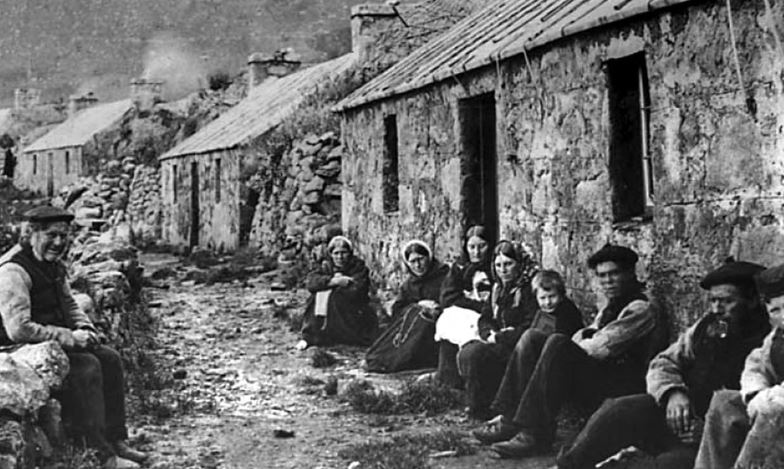
On St Kilda the climate was so extreme, and the wind was sometimes so strong that the islanders’ sheep and cattle could be blown over the cliffs. During the 19th Century, the island’s population was around 100 people. With increasing contact with the outside world in the 19th and early 20th centuries, the island’s population gradually declined. In September 1852, 36 emigrants from St Kilda left for Melbourne. Sadly, only 17 survived the journey, the others succumbing to diseases they had no immunity to due to their isolated existence. The island never fully recovered from this event, both physically and psychologically.
After the World War I, most of the young men left the island. The population fell from 73 in 1920 to only 37 in 1928. In 1930, the last of the island’s inhabitants were evacuated to mainland Scotland, ending hundreds of years of isolation, poverty, and deprivation.
What caused the demise of the population of St Kilda?
Obviously, increasing contact with the outside world provided the opportunity for the islanders to see that an easier and better standard of living could be achieved if they left the island. However, one of the main reasons can be traced back to the mid-19th Century with the arrival of Rev John Mackay, a minister in the new Free Church of Scotland. Mackay was a religious zealot. He introduced a routine of three two to three-hour services on Sunday. No work was permitted or conversation, only recitation from the Bible was allowed.
Although Rev Mackay left the island in 1889 his legacy lived on. Mackay denied the islanders outside influences and being the only English speaker on the island (the islanders spoke Gaelic) he was able to keep them in a state of ignorance, combining this with religious zealotry.
Linked to societal ignorance, one of the sadder aspects of St Kilda’s life was the horrendous infant mortality rate. One out of every two babies born would not survive their first year of life, dying of infant tetanus. When a child was born on the island, fulmar (sea bird) oil, was applied to the baby after the umbilical cord had been cut. The oil was not stored in sterile conditions.
In 1891, two years after Rev Mackay left a midwife arrived from Glasgow. She brought improved midwifery skills, hygienic nursing practices and education and the practice of dipping the umbilical cord in fulmar oil ceased. This reduced childhood tetanus, and it was virtually eliminated. Unfortunately, by this time the situation on the island was irreversible. The population was stagnant, and many wanted to leave.
What can we learn as managers from this sad story of the demise of the people of St Kilda?
Organisations and businesses have similar characteristics to small communities like St Kilda. In particular, family-owned businesses often fail to bring in new blood and ideas and this can lead to a gradual demise of the business. Often when new blood comes into an organisation, the owner and the family refuse to change and this undermines the newcomer’s position. I witnessed a former client who claimed he wanted to ‘step back’ from the day to day running of the business. Sadly, he failed to share information, didn’t communicate in a constructive and rational way, and often made decisions behind the new manager’s back. Despite claiming he wanted to ‘step back’, he couldn’t let go and didn’t know how to. He then fired the incumbent because he claimed he had “failed”. Employees on experiencing professional management and then seeing a return to the old behaviors, started to leave. People join organisations but leave due to bad managers.
In my experience, keeping people ignorant is never a wise strategy for managers. I have found that often sharing information can improve performance. When I was managing a major trucking business, despite ‘advice’ to the contrary, I shared weekly driving performance statistics with the linehaul drivers. Driving performance improved, with reduced speeding and fuel consumption and fewer accidents.
All organisations have life cycles and they need to be regenerated with ideas and people externally.
Postscript: I do want to stress that many factors contributed to the decline and death of the community of St Kilda, with health-related problems being one of the main causes. I visited the islands in mid-2023 and it was a very interesting trip – history, birds and landscape. I would recommend a visit – a real step back in time.
#thenetworkofconsultingprofessionals
 5-Dimensionz
Very interesting and true, even with my little bookkeeping business I find, sharing knowledge goes a long way to not only helping me step back a little, but also giving our 5 bookeepers confidence to grow. In saying that, it takes alot of work to learn to let go and share!I don’t always comment, but I really enjoy these posts of yours.Sent from my Galaxy
Thanks Sandra – ignorance is not bliss! Yes, it does take time and effort to share, but it is worthwhile in the end and is critical in team building and is a sign of sound leadership.
Thanks Sandra – ignorance is NOT bliss for staff. It certainly takes time and effort to share knowledge and it is worthwhile in the end as it makes management much easier.
Maybe St Kilda football club should relocate to Tasmania.
Mike, would that mean that there would be a 2nd stadium proposed for Tasmania?
Just imagine the political fallout considering the current controversy with the proposed stadium in Hobart.
St Kilda have been disappointing fans since 1966, so why change a ‘winning’ formula?
Thanks David