
Andy Paul – sales author
Introduction
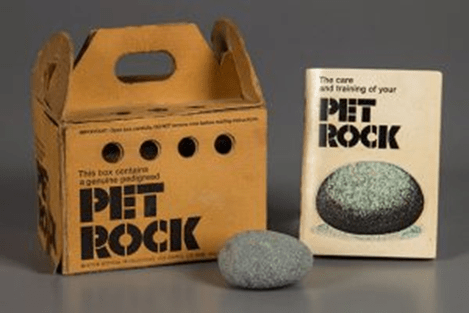
Fifty years ago in 1975, Gary Dahl an advertising executive and entrepreneur from California came up with the idea of a “pet rock”. Few can rival the unexpected business success story of this quirky phenomenon known as the “Pet Rock”.
The Birth of an Idea
The concept was simple yet absurdly ingenious: a smooth, ordinary-looking rock was marketed as a low-maintenance, no-hassle pet. Dahl’s inspiration reportedly came during a conversation with friends about the hassles of traditional pet ownership, such as feeding, grooming, and training. He famously quipped, “I have a pet that doesn’t require any of that! A pet rock!”
Dahl’s idea was to offer people a humorous alternative to the responsibilities of caring for a living pet. He saw an opportunity to capitalise on the countercultural ethos of the 1970s, which embraced whimsical and anti-establishment ideas. Dahl believed that people would be willing to pay for a simple, amusing concept that poked fun at the conventional norms of pet ownership.
The Launch and Marketing
Each rock was carefully selected for its smoothness and appeal, placed inside a small cardboard box with breathing holes, and nestled on a bed of straw. The packaging was intentionally tongue-in-cheek, featuring a detailed “instruction manual” on how to care for your new “pet.” The manual humorously advised owners to ensure their pet rock received enough sunlight and encouraged them to name it.
Dahl’s marketing strategy was equally tongue-in-cheek and relied heavily on humour. He conducted interviews and promotional events, emphasising the simplicity of owning a pet rock compared to traditional pets. The novelty of the concept, combined with his witty advertising, caught the attention of the media and the public.
The Unexpected Phenomenon
What followed was nothing short of astounding. The Pet Rock quickly gained popularity, capturing the imagination of a broad audience. Despite its absurdity, the concept struck a chord with people seeking a light-hearted diversion from the complexities of life. The Pet Rock became a cultural sensation, gracing the pages of magazines and newspapers, and even making appearances on television talk shows.
Dahl’s entrepreneurial success with the Pet Rock was fuelled by several key factors:
- Timing: The Pet Rock emerged during a time when American society was experiencing a countercultural wave. People were open to unconventional and humorous ideas, making the concept of a pet rock particularly appealing.
- Simplicity: Dahl’s marketing emphasised the simplicity of owning a pet rock, offering a humorous contrast to the responsibilities of traditional pet ownership.
- Novelty: The Pet Rock was a novelty item that captured the public’s attention due to its uniqueness. It was something people had never seen before.
- Effective Marketing: Dahl’s witty and humorous marketing campaigns helped create buzz around the product and contributed to its success.
The Sales and Revenue
The Pet Rock’s popularity translated into impressive sales figures. At its peak, millions of Pet Rocks were sold, with an estimated 1.5 million sold in the first six months alone. Priced at $3.95 each, the revenue generated from the sale of Pet Rocks reached approximately $6 million, a significant sum in the mid-1970s.
The Decline and Lessons Learned
As with many fads, the Pet Rock’s popularity was short-lived. Within a year, the craze had begun to wane. The initial novelty had worn off, and the Pet Rock was no longer a hot commodity. Dahl’s business venture was a classic example of a short-lived trend, and he wisely recognised the decline in demand.
However, the story of the Pet Rock offers several valuable lessons for business owners and managers. Here are four lessons:
- Timing Is Crucial: The success of the Pet Rock was greatly influenced by the cultural context of the 1970s. Dahl’s timing was impeccable, as he tapped into the counterculture of the era. Understanding the timing of your product or service’s launch can significantly impact its success.
- Innovation and Uniqueness: The Pet Rock was a groundbreaking novelty item. Its uniqueness and innovation set it apart and captured the public’s imagination. Business owners should strive to offer products or services that stand out in the market.
- Effective Marketing: Dahl’s clever marketing strategies played a pivotal role in the Pet Rock’s success. Humour, irony, and effective storytelling can make a significant impact on how a product is perceived and received by consumers.
- Understanding Trends and Fads: Dahl recognised that the Pet Rock was a fad, and he wisely adapted to the changing market. Recognising when a trend is on the decline and having an exit strategy is crucial for long-term business sustainability.
In concluding, business owners and managers can glean valuable lessons from the Pet Rock phenomenon. Timing, innovation, effective marketing, and understanding market trends are all essential components of a successful business venture. While the Pet Rock may have been a short-lived craze, its legacy endures as a reminder that even the most unconventional ideas can find their place in the market when the timing is right.
What do you think?
@thenetworkofconsultingprofessionals
 5-Dimensionz