
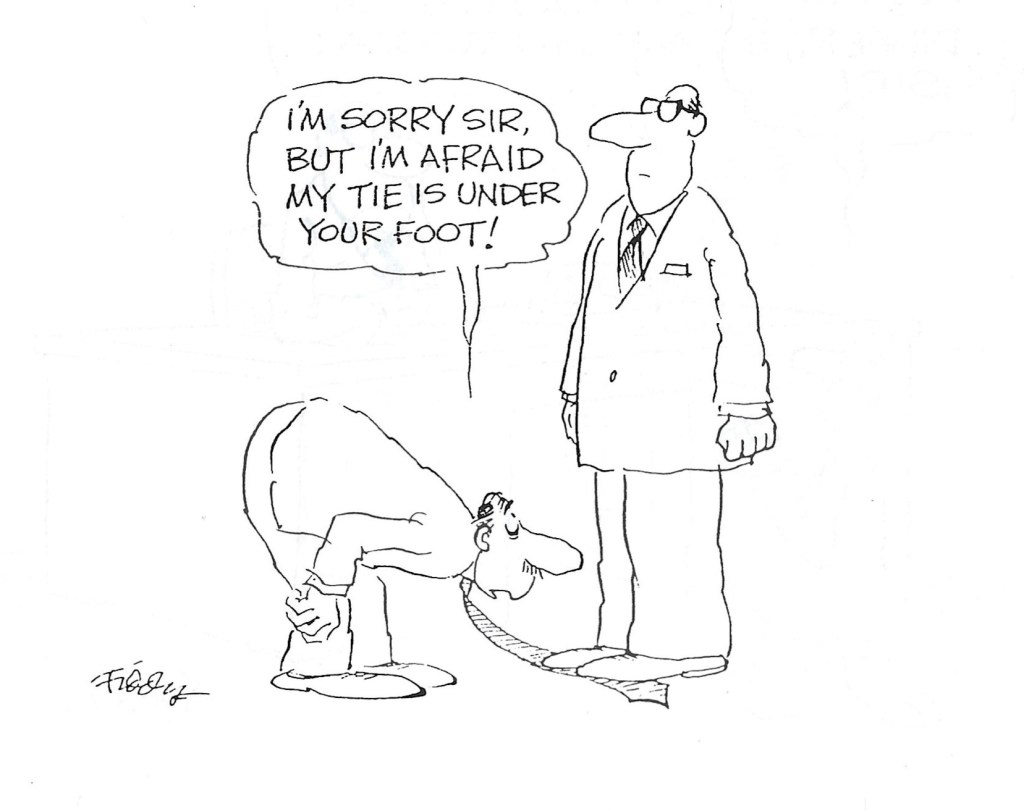
“Success has many fathers, failure is an orphan”
In a previous post I wrote about the New Zealand Railways in the 1980s. They were poorly managed and lost a farmer’s tractor. This was despite directives to find the tractor from the Government Minister. Eventually, the farmer found his tractor on a railway siding. The messages in this case were that successful organisations need clear goals, and poor culture ‘kills’ an organisation.
The Minister at the time was Richard Prebble. He started as a Labour politician in NZ and following his ministerial experience as Minister for State-Owned Enterprises in the David Lange Labour Government, he went on to help form right wing ACT Party. Whilst a Minister, he was known in Wellington for often saying:
“I’ve been thinking…”
He went on to write a book with that title. Apparently, this became almost as famous (or infamous) as the quote by Sir Humphry Appleby, the head of the Department of Administrative Affairs in the BBC comedy, “Yes Minister” who stifled any initiatives for change with the quip:
“That’s courageous” which was meant as a warning that if the Minister implemented the policy, he would lose the election.
Prebble’s quote indicated he was about to challenge the status quo, particularly in State Owned Enterprises (SOE) and make changes. Unusually for many politicians and many managers, Prebble believed that that everyone can make a contribution to the problem-solving process. He took the view that giving employees information was a form of respect and their experience would help in produce a strategy for success. This was the approach he implemented in the railways and it started a turnaround in the loss-making enterprise.
From my experience and observations, the usual course of action to success both careerwise and politically, is to take credit for successes and find someone else to take the blame for failure. Unusually for a politician, Prebble reversed this. As the responsible Minister, he earnt the loyalty and respect of the managers in the NZ railways by allowing them to announce all the positive news whilst he announced the bad news, such as redundancies and closures.
How often have you worked for managers who take credit for the good decisions you have made and leave you to take the blame for the bad ones?
As a manager, do you do this?
Is that way to develop your staff?
Do they respect this type of behaviour?
@thenetworkofconsultingprofessionals
 5-Dimensionz