“WHEN A MAN’S JOURNEY IS OVER WE REFLECT ON HIS LIFE & WE KNOW THE WORLD HAS MORE GOODNESS AND LOVE BECAUSE HE LIVED”
ANN TYLER
Andrew Bruce Mills (1956-1996)
Leadership Under Fire: Management Lessons from the Port Arthur Massacre
This thirty years ago month, Australia was changed forever by the Port Arthur massacre in Tasmania. Thirty-five people were killed and many more physically and psychologically wounded. It was a national tragedy that reshaped gun laws and public safety. However, it also offers lessons for leaders and managers about responsibility, courage, preparedness, and the human impact of leadership decisions.
Management thinking is often shaped by quarterly targets, efficiency metrics, and strategic plans. Yet true leadership is revealed not in comfort, but in crisis.
So what lessons are there for us as leaders from this tragedy?
Often the actions of the newly elected Prime Minister John Howard, are cited as examples of sound and inspiring leadership in a crisis. However, for me, sadly, there is a more personal aspect.
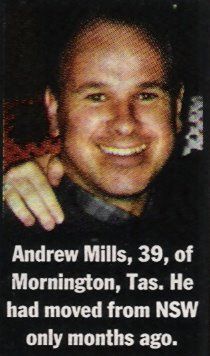
Among the victims was Andrew Mills, who had moved from Melbourne to Tasmania for a quieter life. I had worked with Andrew in the Newcastle BHP Steel Works, where we were graduate cadets and then later as Personnel Officers in different production areas. Andrew was a good friend; honest, intelligent, community minded, ethical and always willing to help others. We kept in touch well after we had both left BHP. To hear of his death whilst reading the newspaper and the circumstances of his death was confronting and extremely distressing.
Andrew was in the wrong place at the wrong time. He was tragically killed while helping others escape. In particular, he stood up and pushed others out of the line of fire but was shot at close range. These actions were in Andrew’s character. His actions stand as a powerful reminder that leadership is not defined by title, but by choice. When the chaos erupted, he chose to help others rather than prioritise his own safety. That choice cost him his life.
Crises such as the Port Arthur massacre force us to confront uncomfortable truths about how individuals, organisations, and systems behave under extreme pressure—and what managers can learn to better protect, support, and lead people when it matters most
From this tragedy of Andrew’s death and his actions, here are three core lessons that emerge for managers:
Lesson 1: Leadership Is An Action, Not A Position
For managers, this underscores a critical truth: leadership is situational. It emerges in moments where values collide with fear, and where responsibility outweighs self-interest.
In workplaces, crises rarely look like Port Arthur. However when they do arise they come in other forms: safety incidents, ethical breaches, cyberattacks, customer harm, or sudden organisational shocks. In these moments, people do not look to job descriptions; they look to behaviour.
Andrew’s legacy is an example that leadership is not about authority—it is about responsibility to others.
Lesson 2: Preparedness Is a Moral Obligation for Managers
The Port Arthur massacre was a major tragic crisis that showed how unprepared people were for such an event. At the time, active shooter scenarios were extremely rare, and emergency response planning was limited. However, since then, Australia has invested heavily in prevention, regulation, and emergency preparedness.
The lesson here is that for managers, preparedness is not merely a compliance exercise. It is an ethical duty. When people come to work, they place a degree of trust in their organisation to keep them safe. Too often, risk planning is treated as paperwork rather than practice. Fire drills are rushed. Safety briefings are skimmed. Crisis plans sit untested.
Whilst preparedness does not eliminate tragedy, it can reduce harm, save lives, and give people clarity when fear would otherwise take over. Risk management is a living system, not a static document.
Lesson 3: Management Actions Always Have Human Consequences
From a national perspective, the Port Arthur massacre led to major changes in Australian gun laws. At the time, these decisions were difficult, controversial, and extremely risky politically. The gun reforms demonstrated that leadership must prioritise long-term human safety over short-term discomfort.
As managers, we face many choices daily, from decisions about workloads, staffing levels, safety controls, and culture that directly affect peoples’ wellbeing. Our staff, customers and suppliers are all affected by our decisions. Ignoring human consequences rarely avoids risk—it simply delays it.
Can you think of any other lessons from the tragic death of Andrew Mills?
In conclusion, if we ignore the profound lessons of this tragic event, it not only dishonours those who died, including Andrew Mills, but also diminishes the legacy of courage and sacrifice they left behind. Andrew’s instinct to help others reflects the highest standard of service and humanity, demonstrating the power of empathy and selflessness that we should all aspire to emulate. His actions remind us that, in dire situations, it is essential to rise above our own fears and uncertainties, prioritising the well-being of others. As Andrew Mills showed, true leadership is indeed defined by the ability to choose others over oneself; it demands a profound commitment to compassion and service. Furthermore, genuine leadership is revealed not merely in routine operations or day-to-day responsibilities, but in those critical moments of crisis when one’s character is tested and the impact of one’s decisions can alter the course of countless lives. It is in these moments that we must reflect on what it means to lead and serve, ensuring that the lessons of sacrifice guide us toward a more compassionate future.

 5-Dimensionz