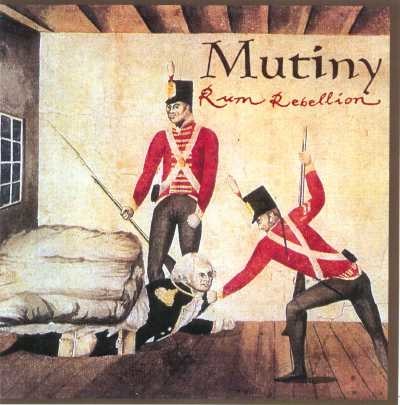
The most famous mutiny in history…

“To function efficiently, any group of people or employees must have faith in their leader”

– William Bligh: of mutiny on the Bounty fame

The above quote is rather ironical, considering Bligh was the subject of the most famous historical maritime mutiny, the Mutiny on the Bounty. It was made famous or infamous in three films in 1935, 1962 and 1984. None of these films were sympathetic to Lieutenant William Bligh, the officer in charge (note that he was not a Captain). Interestingly, Bligh was also the subject of another less well-known mutiny, when as Governor of NSW he was overthrown in a military coup in what was known as the Rum Rebellion.

Bligh’s mission was to transport breadfruit plants from Tahiti to feed slaves on plantations in the West Indies. A little known and important fact was that the Bounty had no marines onboard. During this period, it was customary to have marines onboard a naval vessel to ensure discipline and to separate the ordinary sailors from the officers as well as to protect the crew from hostile natives. The Bounty had been converted into a ‘floating greenhouse’ to house the breadfruit so there was no room for a party of marines. Bligh, as only a Lieutenant rather than a Captain, had to rely on his ability to control the sailors onboard. Also, there were no other officers onboard the Bounty.

Bligh was a very experienced sailor, coming from a family with a long naval tradition. He went to sea as a cabin boy at the age of seven and travelled with Captain Cook as the chief navigator on Cook’s third and final voyage. His navigation skills would become extremely useful in the future. Historical reports state that Bligh was a strict disciplinarian and was given to outburst of ‘towering rage’ and ‘bad temper’, which obviously did not endear him to the crew. Strict discipline was, however, not unusual for the times.

Setting sail in 1787, the Bounty was to travel to Tahiti around Cape Horn. However, after terrible storms and weather experienced trying to round Cape Horn, Bligh was forced to sail to the pacific ‘the long way’, across the Atlantic, around the Cape of Good Hope, into the Indian Ocean, through the Great Southern Ocean under Australia and into the Pacific. After this unscheduled extended voyage, the Bounty arrived in Tahiti. Here it stayed for five months to allow the breadfruit trees to mature to be able to be transported. During the stay many of the crew were mostly idle and formed romantic relationships with the local women whilst enjoying the tropic climate of this Pacific paradise.

The Bounty left for the West Indies in April 1789. Later in the same month, the crew led by Fletcher Christian mutinied. Bligh and 18 loyalists were cast adrift in 7m open boat. Considering the circumstances, with their holiday cut short, it is perhaps not surprising that the crew mutinied!

Following the mutiny, the Bounty returned with the mutineers to Tahiti. Meanwhile, the boat with the 18 loyalists was so overloaded, it required constant bailing to remain afloat. Over the next 47 days and over 6,700 kms, Bligh and crew sailed to Timor in the Dutch East Indies. Bligh, ever the disciplinarian ensured severe rationing of food and water – 28g of water and 40g of biscuits per crew member per day. Despite exposure, malnutrition and dehydration the boat arrived without any loss of life, apart from a crew member killed by natives in Tonga. The success of the journey is testament to Bligh’s navigational skills, sheer will power, determination and disciplined leadership.

What do you think are lessons for leaders from the mutiny on the Bounty?

Here are three.

  1. Leadership and Team Dynamics: The Mutiny on the Bounty underscores the critical role of leadership and its impact on team dynamics. Managers should prioritise fostering positive leadership qualities, such as fairness, respect, and effective communication, to create a harmonious and productive work environment.

2.            Addressing Employee Dissatisfaction: Understanding and addressing employee dissatisfaction is essential. In Bligh’s case, his tyrannical leadership contributed to the mutiny. Managers should encourage open channels of communication and actively seek feedback to prevent grievances from festering.

3.            Crisis Management and Adaptability: Bligh’s remarkable journey in the open boat highlights the importance of crisis management and adaptability. Managers should equip themselves with the skills and resilience needed to navigate unexpected challenges, providing stability and direction during crises.

Can you think of any others?

How do you think Bligh should be remembered?

Bligh’s reputation was a mixture of admiration for his survival and navigational skills, and criticism for his leadership approach. He is remembered as a figure of resilience, skilled navigation, and unwavering dedication to his duties, albeit with a leadership style that sometimes clashed with the needs and expectations of those he led. William Bligh’s life is a study in contrasts—his unparalleled navigational achievements and resilience in the face of adversity stand against the backdrop of his leadership controversies. His story offers invaluable lessons on the importance of adaptability, empathy, and the ability to lead under the most challenging conditions.

@thenetworkofconsultingprofessionals

“Leadership Lessons from the Pied Piper of Hamelin: A Tale Beyond the Pied Piper’s Pipe”

“Once upon a time, there was pretty little town named Hamelin. Though Hamelin was charming, it had two faults. Its townspeople were very stingy, and there were too many rats.”

Introduction:

There’s nothing like a fairy tale to start the new year!

My mother was a teacher, and she placed great importance on reading. Before we could read, Mum would read to us every evening before going to bed. One of the stories that fascinated me was the story of the Piped Piper of Hamelin. Afterall, what happened to those children?

Was there any truth in this fairy tale?

The Origins of the Pied Piper:

The Pied Piper of Hamelin finds its roots in the town of Hamelin, Lower Saxony, Germany. The earliest known reference to this story dates back to the 14th century in the form of a stained-glass window in the Church of Hamelin. The tale was later popularised by the Brothers Grimm in their collection of fairy tales during the 19th century. One prevailing theory suggests that the story is a distorted account of a tragic event that unfolded in Hamelin during the Middle Ages.

The Historical Basis: (https://www.youtube.com/watch?v=fm22vddWPRQ)

In 1284, as the story goes, Hamelin suffered from a rat infestation, a common problem in medieval Europe. A mysterious figure, possibly a rat-catcher or pied piper, was hired to rid the town of the vermin. The Piper succeeded, but when the townspeople reneged on their payment, he enacted a terrible revenge. In a vengeful display, he played his pipe, leading the town’s children away, never to be seen again.

While the historical accuracy of this story remains speculative, there are some lessons that managers can draw from this age-old tale.

Three Leadership Lessons from the Pied Piper:

  1. Fulfilling Commitments and Honouring Agreements:

One of the central themes of the Pied Piper story revolves around the breach of an agreement. The townspeople, having benefited from the Piper’s service, reneged on their promise to compensate him for his efforts. For managers, this underscores the importance of honouring commitments and agreements in the business world. Whether it’s fulfilling contractual obligations or maintaining promises made to employees, clients, or stakeholders, a leader’s credibility hinges on their ability to uphold commitments.  Businesses thrive when leaders prioritise integrity and deliver on their promises.

  • Effective Communication and Influence:

The Pied Piper’s magical pipe had the power to captivate and influence both humans and animals. In the corporate landscape, effective communication is a leader’s proverbial pipe. Managers must master the art of conveying ideas, inspiring teams, and navigating through challenges. Just as the Piper’s melody led the children away, a leader’s ability to communicate persuasively can guide a team toward shared goals. Communication is a powerful tool for leaders. Whether it’s conveying a vision, addressing concerns, or leading change initiatives, effective communication is key to garnering support and fostering a collaborative environment.

  • Consequences of Short-Term Thinking:

In the Pied Piper tale, the townspeople’s shortsightedness led to dire consequences. By neglecting to honour their agreement with the Piper, they set in motion a chain of events that brought tragedy to their doorstep. Similarly, managers in the business world must be mindful of the long-term consequences of their decisions. Short-term gains at the expense of ethical considerations or sustainable practices can lead to reputational damage and diminished success in the long run. Leaders must adopt a holistic and forward-thinking approach. Prioritising ethical business practices, sustainability, and long-term strategic planning contributes to the enduring success and positive impact of an organization.

Can you think of any other lessons for managers in the tale of the Pied Piper of Hamelin?

@thenetworkofconsultingprofessionals

What is the ‘Peter Principle’?

“In a hierarchy, every employee tends to rise to his level of incompetence.”

Laurence J. Peter – Canadian Educator and Author

What is the ‘Peter Principle’?

It is a concept in management developed by Laurence J. Peter, a Canadian educator who wrote a book in 1969 called The Peter Principle. His theory was that people in a hierarchy tend to rise to a level of incompetence. This was primarily due to their success in previous jobs however the skills in the previous job do not translate into the skills required in the new job. For example, a great engineer will be promoted from working as an engineer to management, where they do not possess management or leadership skills.

A variation of the Peter Principle is the Dilbert Principle. This is a satirical concept of management developed by Scott Adams the creator of the comic strip Dilbert. Here incompetent employees are intentionally promoted to prevent them from causing harm. In other words, getting them out of the way so they do not interfere with outcomes.

We have all worked for organisations where it would appear that both these ‘principles’ are at work!

Perhaps we are living proof of the Peter or Dilbert Principle?

I can certainly remember working for and with such managers. From the Managing Director’s son who got lost coming to work after living in the city for over 12 months to the Managing Director’s brother, who needed a phone call each morning to make sure he was at work. These were more probably cases of nepotism in combination with the Peter Principle.

A slight deviation from the Dilbert Principle is promoting ‘problem’ employees to get them out of the way. In an earlier career I worked for a manager who treated his staff appallingly and was not respected by them. Senior management knew this, so they removed the problem from the factory floor and promoted him! Another manager who I reported to, and was incompetent was offered a promotion and sent overseas to get him out of the way. He was later dismissed.

Managers will claim they always seek to hire people who are smarter than themselves. In many instances this does not happen, as this threatens their careers or dents their egos. Instead, they hire less capable people, so they are not threatened from below.

The Peter Principle can lead to disaster if an incompetent person is in a position of authority. The mismanagement of the COVID pandemic by public health officials in Victoria which resulted in hundreds of preventable deaths when the virus ‘escaped’ from hotel quarantine is one example. In an earlier blog senior management in a transport business caused the death of innocent people when a truck crashed into their car.

Can you think of examples of both the Peter Principle or the Dilbert Principle in your work life?

So how do organisations solve these problems?

I will cover this in a future management blog.

@thenetworkofconsultingprofessionals

80 years ago last month….

“Unless commitment is made, there are only promises and hopes; but no plans.”

– Peter F. Drucker: Management Thinker

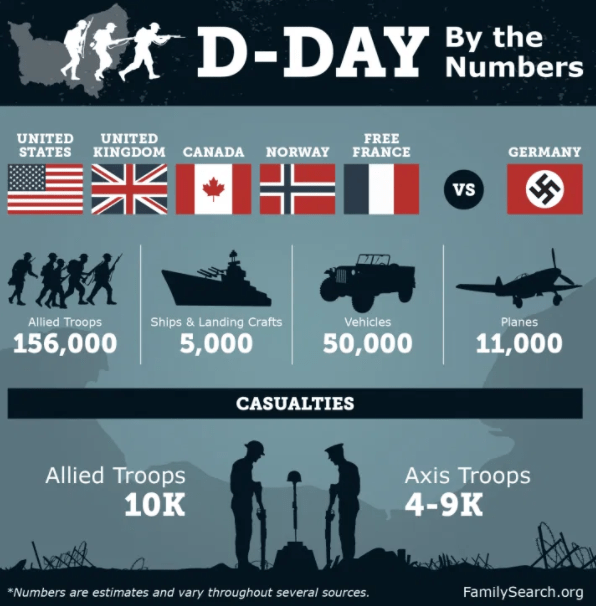
80 years ago last month, the largest sea borne invasion in history commenced. D-Day, June 6, 1944. It marked a pivotal moment in World War II when Allied forces launched Operation Overlord, aimed at liberating German-occupied Western Europe from Nazi tyranny. The operation launched from England crossed the English Channel onto the beaches of Normandy in northern France. It was a critical turning point in World War II.

Planning for D-Day was an immense undertaking that began as early as 1943. The operation involved extensive coordination between the United States, the United Kingdom, Canada, and other Allied nations. This planning included gathering intelligence, training troops, amassing supplies, and deceiving the Germans about the invasion’s location.

The scale of the D-Day invasion was unprecedented:

  • Troops: Over 156,000 Allied troops landed on the first day.
  • Military Equipment: This included 6,939 vessels: 1,213 naval combat ships, 4,126 landing ships and landing craft, and hundreds of auxiliary ships and merchant vessels.
  • Aircraft: About 11,590 aircraft were available, playing crucial roles in airborne assaults and providing air cover and support for the troops landing on the beaches.
  • Logistics: The operation involved detailed logistical planning to supply the massive number of troops, including food, ammunition, and medical supplies.

All this before computers! Many books have been written about D-Day. I cannot do justice to the sheer complexity of the undertaking, however I will try and provide a summary of the main lessons.

D-Day was a success. Within 12 months of the landing, Nazi Germany was defeated.

What factors contributed to the success of D-Day?

Here are three.

  1. Surprise and Deception: The Allies successfully deceived the Germans about the invasion’s location, leading them to believe it would occur at Pas de Calais. This deception, known as Operation Fortitude, was crucial in reducing German defences at Normandy.
  2. Air Superiority and Naval Support: The Allies had established air superiority, which was critical for both the initial landings and the subsequent campaign in Normandy. Naval bombardment also played a vital role in neutralising German defences.
  3. Allied Unity and Leadership: The operation exemplified the effectiveness of Allied unity and leadership. The coordination among nations and military branches was a key element in the operation’s success.

What are the three lessons from D-Day for Managers?

  1. The Importance of Planning and Preparation: D-Day demonstrated how meticulous planning and preparation can lead to success in complex operations. As managers we should value thorough preparation and the need to anticipate and mitigate potential challenges.
  2. Adaptability and Decision-Making: Despite the best planning, not everything went as expected on D-Day. The ability of commanders and soldiers to adapt to changing circumstances was crucial. In the business world, this highlights the importance of flexibility and decisive leadership in the face of unforeseen challenges.
  3. Teamwork and Collaboration: The success of D-Day was a result of unparalleled collaboration among the Allied nations. This underscores the importance of teamwork, joint effort, and effective communication in achieving common goals in any organisational context.

In conclusion, D-Day stands as a testament to strategic planning, international collaboration, and the resolve of the Allied forces. The lessons derived from this monumental event extend beyond military strategy, offering insights into leadership, teamwork, and the importance of planning, adaptability and resilience in the face of adversity. The successful execution of Operation Overlord not only marked a turning point in World War II but also serves as an enduring example of effective organisational and strategic planning.

@thenetworkofconsultingprofessionals


Gritty leadership from 75 years ago…

“I am ready to try an airlift. I can’t guarantee it will work. I am sure that even at its best, people are going to be cold and people are going to be hungry. And if the people of Berlin won’t stand that, it will fail. And I don’t want to go into this unless I have your assurance that the people will be heavily in approval.”

Lucius D. Clay, June 1948

Military Governor of the United States Zone, Germany (1947 to 1949)

The Berlin Airlift. 75 years ago this month the Berlin Airlift ‘officially’ finished.

What was it?

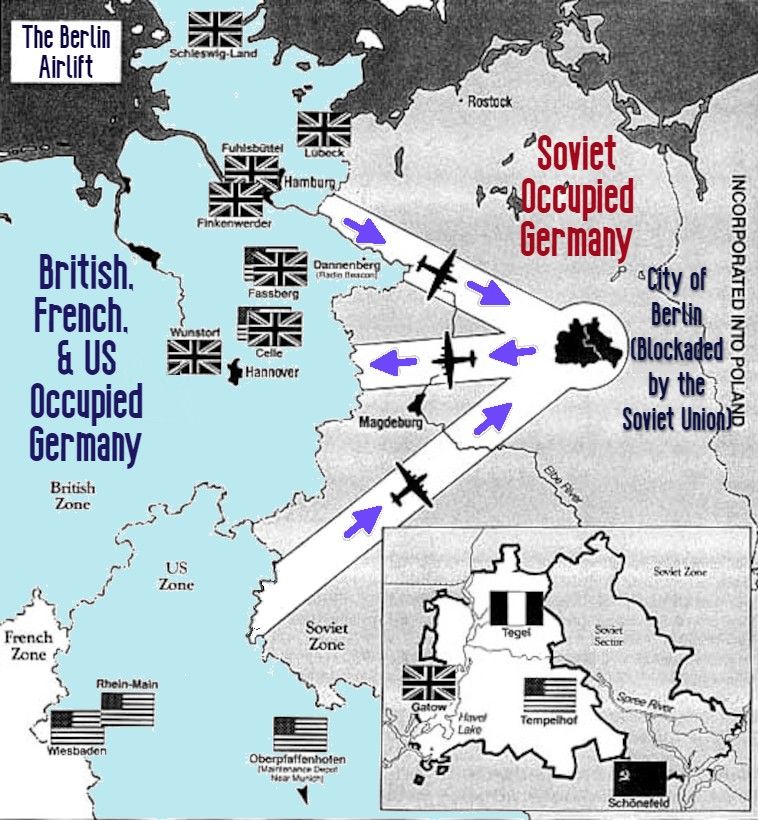
After World War II, Germany was divided into four zones, Soviet Russia, Britain, France and the USA. Berlin was also divided into four zones but lay within the Soviet Russian zone. On 24 June 1948, Soviet forces blockaded all road, rail and water routes into Berlin’s Allied-controlled areas. This stifled the vital flow of food, coal and other supplies. More than 2 million Berliners were relying on the aid, which included much-needed food, fuel and medicine and would otherwise starve and freeze. Two thirds of what was needed was coal.

However, the Russians could not block the Allied airspace. On 24 June 1948. The Allies established an airbridge and began an airlift that lasted officially until 12 May 1949 when the Soviet Union lifted the blockade. The airlift continued until September after the lifting of the blockade as the Allies wanted to make sure that it was not reintroduced.

Why did it occur?

The blockade was an attempt by Soviet Russia to gain control over the entire city by cutting off all land and water routes to West Berlin, which was then under the control of the Western Allies.

Logistics of the Berlin Airlift

The success of the airlift depended on meticulous planning and execution. The planes were scheduled to land and take off at precise intervals, ensuring a continuous flow of supplies. This required exceptional coordination among pilots, ground crews, and logistics teams. To maximise efficiency, the cargo planes followed specific flight paths and adhered to strict timetables. This was all before the use of computers, GPS tracking and scheduling which we have today.

The airlift involved transporting a wide range of supplies, including food, coal, medicine, and machinery. Each type of cargo required different handling and storage conditions, which added complexity to the logistics operation.

Berlin Airlift – Facts & Figures

  • One aircraft landing per minute
  • Over 200 million miles flown
  • Each aircraft unloaded in 20-30 minutes
  • 2000 tonnes of food required per day
  • 400,000 tonnes of food, supplies and coal
  • Over 200,000 kms flown
  • 277,804 flights completed
  • 93 lives lost

The airlift cost the United States $350 million; the UK £17 million and Western Germany 150 million Deutschmarks.

What are three lessons for business leaders in the example of the Berlin Airlift?

  1. Innovative Problem-Solving: Leaders had to think creatively and act decisively to overcome the blockade. This required innovative strategies, such as the airlift, which had never been attempted on such a scale.
  2. Resilience and Determination: Leaders demonstrated resilience and determination in the face of adversity. The operation continued for over a year, and the leaders remained committed to their mission despite the challenges.
  3. Precision and Coordination: The operation demonstrated the critical role of precision and coordination in logistics. Timely delivery and efficient turnaround were essential for the success of the airlift.

In conclusion, the Berlin Airlift was not only a remarkable logistical achievement but also a powerful example of international cooperation, innovative problem-solving, and leadership under pressure. It provided invaluable lessons in both logistics management and leadership that are still relevant today.

What do you think?

Note: 39 British, 31 American and 13 German civilians lost their lives in the Berlin Airlift. They are remembered on the Berlin Airlift monument at Tempelhof. The pilots came from the USA, Britain and France and also from Australia, Canada, South Africa and New Zealand.

@thenetworkofconsultingprofessionals
The Valley of Tears…

“On 6 October 1973, the Yom Kippur war broke out between a coalition of Arab states and Israel. At 6 A.M. that morning, Kissinger, asleep in the Waldorf, was taken by surprise by the Arab attack – as were the CIA and the rest of the world”.

Alistair Horne – British Historian

Fifty years ago next month, on 6th October 1973 the combined forces of Egypt and Syria attacked Israel, the Sinai in the west and the Golan Heights in the northeast. This became known as the Yom Kippur War. The surprise attack occurred on the Jewish Yom Kippur holiday when most of the Israeli military were on leave.

Egypt’s prime reason for the attack was to force Israel to negotiate a peace treaty for the return of the Sinai. The Egyptians did not advance any further than a narrow strip of the Sinai that could be protected by SAM missile batteries. However, the Syrians had different aims, to retake the Golan Heights taken in 1967 Six Day War and destroy Israel. With the unexpected success of the Six Day War, Israel was arrogant, complacent, overconfident, and believed that their intelligence would anticipate any assault.

In particular, the battle of the Golan Heights has some important lessons for managers and leaders.

More than 1,400 Syrians tanks, 28,000 troops and 600 artillery pieces poured into the Golan Heights, opposed by just 180 Israeli tanks, 3,000 troops and 60 artillery pieces. Syrian intelligence had estimated that due to the Yom Kippur holiday it would take 20 hours for the Israeli reservists to reinforce the Golan Heights, however instead it took 10 hours.

By 5pm on 7th October with the Israelis under sustained pressure, the Syrians at the instruction of their President, unexpectedly halted their advance on the road to Galilee. The bridges over the Jordan River were virtually undefended and the road to Israel was open to the invading force.

Despite the overwhelming numbers, the Israeli forces manage to hold the advance in time for the reservists to arrive. In what became known as the ‘valley of tears’, the Syrian armoured forces suffered horrendous losses against a far numerically inferior foe, turning the tide of the battle for the Golan Heights.

So, what happened?

The Syrians were numerically superior, armed with up-to-date Soviet weaponry and night vision equipment which the Israelis did not have. When their lead tanks were destroyed, the Syrian tanks refused to stop, move off the roads or bypass the destroyed vehicles. This caused roadblocks and made them easy targets for the highly trained Israeli tank crews.

The Syrians refused to manoeuvre unless ordered by higher command. Syrian forces demonstrated a critical lack of adaptability and comprehensive training. This was in direct comparison to the Israeli forces, who despite being outgunned and outnumbered, changed their tactics.

The most famous of the adaptability of tactics was a young Lieutenant Zvi Gringold, known affectionately as ‘Lieutenant Zvicka,’. He became a legend and was awarded Israel’s highest decoration. His hit-and-run tactics initially destroyed 10 Syrian tanks and he was credited with single-handedly holding at bay 50 Syrian tanks. The Syrians thought they were up against a large Israeli force and withdrew. Throughout the night and following day, Gringold continued to engage the Syrians and destroyed another 30 tanks. These tactics were copied by other Israeli tank commanders.

The tide in the battle for the Golan Heights began to turn as arriving Israeli reserve forces were able to contain the Syrian advance.  The arrival of the reservists was the beginning of the end for Syria. After four days the Israelis succeeded in pushing the Syrians out of the Golan Heights and began their march towards the Syrian capital, Damascus.

What are the lessons for leaders here?

Lesson 1: Remote and authoritarian leadership often fails. The Syrian advance was unexpectedly halted by the Syrian Dictator President Assad, but the road into Israel was virtually undefended. Clearly the best decisions are often made close to the battlefield and in business close to ‘the coal face’ as the managers have a better understanding of the situation.

How often do decrees from head office seem remote and unrealistic?

Lesson 2: Decentralised leadership is far more effective and allows managers to react to the situation. In this case,case, as demonstrated by ‘Lieutenant Ziva’ the Israelis adapted their tactics to meet the situation, despite the overwhelming numerical superiority of the Syrians.

In our former logistics business, we gave our supervisors the authority to manage customers face-to-face on a daily basis, without always referring to the Warehouse Manager. This enabled them to manage the usual crises that occur in logistics in a proactive and ‘customer centric’ way, resulting in customers staying with the business over the long term.

Lesson 3: Over confidence and arrogance are dangerous. With the overwhelming success of the 1967 Six Day War, the Israelis were arrogant. They ignored the intelligence and were caught short. As Andy Gove, the founder and former CEO of Intel said; “only the paranoid survive”. Gove warned against the ‘inertia of success’.

Can you think of any businesses that were initially successful but failed because they were complacent and arrogant?

Kodak dominated the photographic film industry with over 50% of the global market share. It ignored the market disruption caused by digital cameras. Ironically, a Kodak engineer in 1975 invented the digital camera, but it was ignored by management. In 2012, Kodak filed for bankruptcy.

#thenetworkofconsultingprofessionals

Management lessons from a long-forgotten battle…

“Arrogance, ignorance, and incompetence. Not a pretty cocktail of personality traits in the best of situations”

Graydon Carter – US Journalist

70 years ago this month, the colonies of French Indochina were lost when the Communist Viet Minh guerilla army defeated French forces in Vietnam in the Battle of Điện Biên Phủ.

Background

Following the Japanese surrender in World War II, the Viet Minh, a Vietnamese Communist guerilla army declared independence from France. France did not recognise the new government, and the first Indochina War began when the French navy bombarded the port city of Haiphong in northern Vietnam in November 1946, killing thousands of Vietnamese civilians. The war continued for another seven years and by 1953 it was at a stalemate. It had not been going well for the French. The war was unpopular, costly, and the French political environment was unstable. During the seven years of war, there were 16 changes of government in France and 13 changes of prime minister. Clearly, domestic political instability helped undermine the war effort.  

Setting

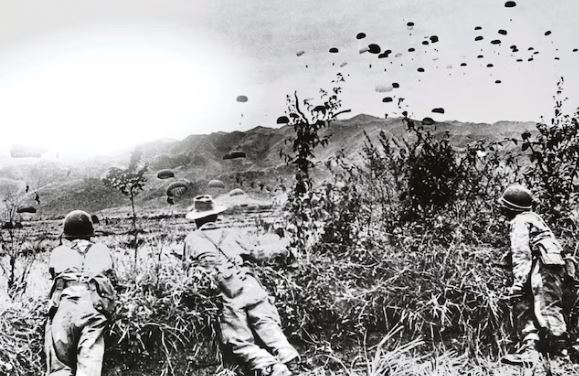
A French needed a solution to break the stalemate, so negotiations could be conducted. The French plan was to create a military situation which would bring the Viet Minh to the negotiating table. In late 1953, 2,000 French paratroopers were dropped deep in Viet Minh held territory in north-western Vietnam at a town called Điện Biên Phủ to establish a heavily fortified base.

The aim was to cut the Viet Minh supply lines from Laos and provide a base from which to attack them in the countryside. The French strategy was to draw out the Vietnamese and destroy them with superior firepower. They believed they held all the military advantages – the military equipment, the planes, trained soldiers, and the artillery. This strategy was called the hérisson (‘hedgehog’) concept. It was based on the success of the 1952 Battle of Nà Sản, where a fortified French camp supplied only by air repeatedly beat back the Viet Minh who suffered heavy losses. By repeating this strategy at Điện Biên Phủ on a much larger scale, using superior artillery and air support, the French believed they could defeat the Viet Minh in set piece battle. But the Viet Minh were fighting a guerilla war.

Outcome

In March 1954, the battle of Điện Biên Phủ began with a massive artillery bombardment by the Viet Minh. They were strategically positioned in caves and dugouts in the hills above the base. This lasted until May when 16,000 troops French were soundly defeated.

With over 50,000 Viet Minh troops surrounding the base, roads to supply the French garrison were cut which necessitated being supplied by air. The French believed that the Viet Minh had no anti-aircraft capacity and limited artillery. This proved to be incorrect, and the planes were forced to fly higher and higher, which resulted in supplies often falling into the Viet Minh’s hands.

The Viet Minh leader, General Giáp had learnt from the losses at Nà Sản. He spent months planning the transporting and stockpiling ammunition, and placing heavy artillery and anti-aircraft guns in tunnels in the hills around the French base. Furthermore, thousands of local peasants who supported the Viet Minh, including many women, provided labour, built roads, cleared jungle, transported food by foot and on bicycles and hauled equipment. Over 300,000 people were involved in the Viet Minh logistical effort.

With tenacious fighting on the ground resulting in horrendous causalities, the Viet Minh dug trenches and gradually encroached on the French base, finally cutting the runway. This forced the French to deliver supplies and reinforcements by parachute. As key positions were overrun, the perimeter contracted. While at times, the French repulsed Viet Minh assaults, airpower and superior military equipment did not win the day. The siege ended with a humiliating defeat for the French with 2,293 killed. The Viet Minh suffered horrendous casualties with over 8,000 Viet Minh fighters killed and an estimated 15,000 wounded.

Are there management lessons from the Battle of Điện Biên Phủ for managers today?

Here are three to consider:

1. Do your homework and understand your competitorsknow your enemy

The French underestimated their enemy. The French did not know the number of Viet Minh troops or how many artillery pieces they possessed and, furthermore the French believed that the Viet Minh had no anti-aircraft capability. Not only did they misjudge their enemy, but the French also discounted the huge material support received from the Communist Bloc, in the form of left-over stockpiles of Soviet-made and captured American heavy artillery and anti-aircraft artillery from the Korean War. By comparison, Giáp knew the strength and weaknesses of the French from his spies in the camp, and from the hills overlooking the French base. Unlike the battle of Nà Sản, the Viet Minh controlled the high ground, a major strategic oversight by the French. Clearly, the French did not do their homework, were arrogant and had no Plan B.

2. Technological superiority does not guarantee success

The French strategy was to defeat the Viet Minh in a set piece battle using their superior military technologies and resources – artillery, aircraft, trucks and tanks. Artillery and tanks had been dismantled and delivered by air and then reassembled on the ground. This strategy did not suit a guerrilla war, where having the support of the general population is critical. The Viet Minh’s supply chain did not rely on the use of modern technologies such as aircraft, but instead thousands of peasants carried food, ammunition and the dismantled artillery pieces into hidden and protected positions in the hills above the base. It was a triumph of logistical planning.  

Technology can make you vulnerable. The Viet Minh’s artillery closed the airstrip halfway through the siege, necessitating parachute resupply. The efficient anti-aircraft artillery forced the planes higher, and a high proportion of the supplies fell into the Viet Minh’s hands, including ironically the French Commander’s new general’s stars dropped with a bottle of champagne.

My experience in niche logistics business was when our biggest competitor decided to invest millions of dollars in state-of-the-art equipment and take out a long-term lease on an expensive warehouse. Their major customer, a major retailer was slow to use their services, and they eventually ran out of money and were bankrupted.

3. Be prepared to change your plan when conditions or the situation changes

Giáp’s initial strategy was based on the Communist Chinese “Fast Strike, Fast Victory” model. The aim was to attack the French garrison command centre with overwhelming force to a secure victory. However, the Viet Minh found out that the French knew about this plan, and their technological superiority combined with well dug in troops would have made this strategy fail. Instead, Giáp changed to a siege strategy. This helped ensure success. By mid-1953, the First Indochina War was in its seventh year and for either side there was no obvious prospect of victory. The French had tried a variety of tactics to defeat the Viet Minh, which failed. Exhausted and devoid of ideas, they had no long-term vision or overall strategy, which was in stark contrast to the Viet Minh. They simply defended their positions and reacted to attacks when they occurred.

A road transport client of mine, experienced a drop in revenue by 75%. However, he became far more profitable by changing their strategy, ditching difficult and unprofitable customers.

Do you think there are any other lessons for managers?

#thenetworkofconsultingprofessionals
…it only took 74 days!

“Any leader has to have a certain amount of steel in them, so I am not that put out being called the Iron Lady”

Margaret Thatcher – British Prime Minister

The Falklands War in 1982 between Britain and Argentina lasted only 74 days, culminating in a British victory. This short and bloody conflict has some excellent lessons for managers and leaders.

Background:

Just over 41 years ago this month, on 2 April 1982, the Argentinian fascist military dictatorship decided to invade the British Overseas Territory of the Falkland Islands. They hoped to bolster their dwindling legitimacy by mobilising the long-standing patriotic feelings of Argentines towards the islands, as well as diverting public attention from their ongoing human rights violations against their own citizens and the country’s chronic economic problems.

The islands, 12,000 kms away from Britain are a windswept treeless, damp and cold group of islands. The Falklands had a population of around 2,000 people and its major industry was sheep farming.

In the face of cuts to the military budget by the British Government, the Argentinian military junta miscalculated. They thought that Britain would not respond militarily. However, within three days of the invasion, the British Government under the leadership of Margaret Thatcher had assembled a military task force to retake the islands.

The logistics challenges for the British were immense and the risk of failure high. The Argentinians had 10,000 troops dug in on the islands and were protected by mine fields. Their air force, located on bases on the Argentinian mainland, outnumbered the carrier based British planes by eight to one.

Outcome:

On 13 June 1982, the Argentinian forces on the islands surrendered. Despite the logistics challenges, and setbacks such as the loss of almost all their troop-carrying helicopters on the Atlantic Conveyor the British forces triumphed. The loss of the Atlantic Conveyor meant that the British troops with 80 kgs on their backs had to walk 80 kms in freezing and wet conditions to attack the capital of the Falklands, Port Stanley.

Here are three leadership traits displayed in the Falklands War:

  1. Decisive decision making

The British assembled a military task force within three days of the invasion, despite the fact that the Falklands were over 12,000 kms away from London. This was an example of decisive decision making. In our logistics business, we had a toxic manager who was having a detrimental effect on employee morale and customer satisfaction. One of our partners refused to recognise this situation. When the partner was overseas, we terminated the manager. Within a month, the business he had been managing turned around. Following this action, several supervisors came up to me and said how were pleased that action had been taken. They had been waiting for management action to fix ‘the problem’!

2. Clear purpose

Throughout the crisis, Thatcher’s message was clear and simple. In her communications, there was no doubting her intentions and the purpose was very clear. The British were not going to allow the invasion of British territory by a fascist military dictatorship to succeed.

In my experience, employees respond positively to strong and decisive leadership, especially when there is clear purpose. For example, I was engaged by a business owner to review his business, then introduce standard procedures and managerial disciplines. This message was made very clear to the staff. The culture must change. We would create a work environment through a disciplined and inclusive approach, where employees’ experience, expertise and opinions were valued. The incumbent general manager tried to thwart this approach and was “forced” to leave the business. The staff were relieved. Morale improved almost immediately. They became engaged, as they were now valued and could look forward to the future.

3. Communicate a positive message.

Admiral Sir Henry Leach, Chief of the Defence Force who was instrumental in convincing Thatcher that the islands could be recapture, was asked by her why it was important to retake them.

He said:

“Because if we do not, or if we pussyfoot in our actions and do not achieve complete success, in a few months from now, we will be living in a completely different country whose word counts for nothing.”

Following that advice, Thatcher’s message was positive, and she took the high moral ground.      

  1. We are a democracy
  2. We are not going to have a nasty military junta taking over British territory
  3. We can retake the islands

When I was managing a national vehicle transport company in regional NSW, I was confronted with an unsolvable problem. A private vehicle arrived in our transport depot from Melbourne, several days late. The vehicle owner was arriving in Cairns in far north Queensland the same day. This was three days drive away from Cairns by truck, so he was not going to have his car for the first couple of days of his holidays. Confronted with this problem, I phoned him just as he was boarding the plane in Melbourne offering a solution. A hire car would be provided when he arrived in Cairns until his car arrived. It was a positive message given with authority to solve his problem. The customer continued to use our services for many years.

The British armed forces faced with what were seemingly impossible odds were ultimately successful.

 Do you think that the leadership traits of being decisive, having a clear purpose communicated positively, had a significant bearing on the successful outcome?

‘Real’ leadership is important in any organisation, whether it’s a crisis like the Falklands or not. In my experience, I have found that employees respond positively to good leadership.

#thenetworkofconsultingprofessionals

What can an early Australian explorer teach us about leadership?

“Difficulties are just things to overcome.”

Ernest Shackleton – British Antarctic Explorer

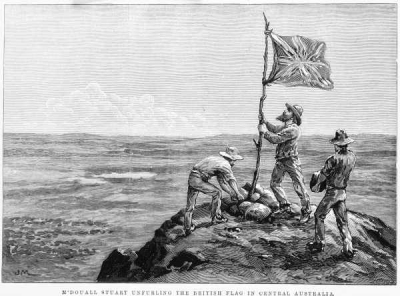
McDouall Stuart in central Australia

As a primary school student, I was enthralled by the exploits of the early Australian colonial explorers from Blaxland, Lawson and Wentworth who first crossed the Blue Mountains, to Oxley, Burke and Wills, Kennedy and then Leichardt, who disappeared without trace. One particular explorer stood out, John McDouall Stuart.

In an earlier blog, I wrote about management lessons from the failed and tragic Burke and Wills expedition. The contrast between Stuart who was a dour alcoholic, careful, physically small and a shy Scot to Robert O’Hara Burke who was a moody, impulsive, eccentric and physically intimidating Irishman, could not have been starker.

Leaving from Adelaide, Stuart successfully crossed Australia from south to north through the harsh desert interior and returned, without losing any member of his expedition.

So how did he do it?

Trained as a civil engineer, Stuart accompanied the famous explorer Captain Charles Sturt in 1844 to search for the inland sea in central Australia. This expedition returned to Adelaide, exhausted and suffering from scurvy after discovering two of the harshest deserts in Australia, the Simpson Desert and Sturt’s Stony Desert; but failing to find the island sea. The conditions were so horrendous, the lead fell out of their pencils, and the screws fell out of their wooden equipment boxes as they shrank in the heat. The horses became lame and many died. Sturt became nearly blind and the second in charge, James Poole died of scurvy.    

Over the next nearly 20 years Stuart led five expeditions into the centre of Australia before his final and successful expedition in late 1861. Each subsequent expedition explored further and further into the harsh desert interior, finding the geographic centre of the continent and finally solving the riddle of the inland sea. On his fifth expedition Stuart reached Newcastle Waters north of what is now known as Tennant Creek in the Northern Territory. They were forced back from reaching the northern coastline near Darwin due to the lack of water and inhospitable scrub.

His sixth and final expedition was successful, reaching the north coast on July 1862 and arriving back in Adelaide in December 1862. The crossing did not come easily.  The men were sick with scurvy and malnourished, many of the horses were abandoned as they became too weak to continue, and Stuart himself had to be carried on a stretcher between two horses on the final leg of the return journey. In contrast to Burke, and despite these hardships, no person ever died on any of the expeditions he led.

Returning as a hero, Stuart was awarded a gold medal by the Royal Geographical Society to add to a gold watch he had previously been awarded. The only other person to ever receive both a watch and medal was the missionary and African explorer, Dr David Livingstone such was his prestige. Stuart and his group were given a special welcome in Adelaide as heroes and crowds lined the streets, ironically on the day that Burke and Wills were buried in Melbourne. The government proclaimed a holiday.

Sadly, nearly blind and very sick, he died less than four years later.

What are three lessons for managers we can learn from John McDouall Stuart?

How does this compare this to the infamous and failed Burke and Wills expedition?

1. Planning – there is no substitute for sound planning. In contrast to Burke and Wills, his rivals in crossing Australia, he carefully planned his expeditions using a smaller and more mobile team. Being a qualified surveyor, he used these skills in planning his expeditions, combined with the experience gained from previous exploratory expeditions.

2. Experience – in contrast to Burke and Wills, Stuart was an experienced bushman. He spent nearly 20 years gaining experience in exploring the central Australian desert. Stuart travelled lightly and with small numbers of men on horses. There were no bullock drays and flocks of sheep to slow them down. They could travel far more quickly than all the explorers before them, and they followed the water courses. Stuart did not keep to a predetermined route and he used experience gained from the Aborigines. In the harsh Australian desert, he observed bird and animal movements which he used to discover water. Furthermore, the small party did not need large amounts of water.

3. Persistence – it took Stuart six attempts to cross Australia. Unlike Burke, he did not put his expedition members in danger.  When it became too difficult the expedition returned home. Persistence paid off in the end, although it could be argued to terrible effect on his physical health. Overnight success is very rare – there is no substitute for hard work and staying the distance.

Stuart’s exploits can be summed up in the following quote by T.G.H. Strehlow, an Australian anthologist who specialised in Central Australian Aboriginal culture:

“In Stuart, Australia possessed a man cast in the mould of a hero – a man whose amazing persistence, indomitable courage, and unfailing common sense enabled him to succeed in a mighty task in which most others would have failed”

Do you agree with these lessons?

What other lessons can we learn from the success of John McDouall Stuart?

#thenetworkofconsultingprofessionals

What if………..

“what if, but what is”

Gary West coach of Anna Meares – Australian Olympic Gold Medal Cyclist

In mid-2012, I was in England attending a management training program which coincided with the London Olympics. Sadly, I did not attend any events.  However, one night over a cold beer in my hotel room I watched two women cyclists, the 2008 gold medal winner Victoria Pembleton and the 2008 silver medallist Anna Meares, slog it out in the women’s sprint. It was an intense battle of stamina and wills and in the mesmerising trussell Anna Meares eventually triumphed.

So, who is Anna Meares?

Anna was Australia’s first female cycling gold medallist. She was an 11 times world cycling champion and the only Australian athlete to win medals at four consecutive Olympics.

Meares, was a daughter of a coalminer and grew up in Blackwater central Queensland hundreds of kilometres from the nearest bike track.  When her elder sister Kerrie showed promise as a cyclist the family moved to the coastal city of Rockhampton as it had a bike track.

  • Athens 2004 – gold medal in women’s 500-metre time trial, bronze medal in 200m sprint
  • Beijing 2008 – silver medal in women’s sprint
  • London 2012 – gold medal in the women’s in and bronze medal in the women’s team sprint
  • Rio de Janeiro 2016 – bronze medal in the keirin

These results are remarkable but there is something that is exceptional about her Olympic record.  In January 2008 seven months out from the Beijing Olympics, Meares broke her neck after crashing in the World Cup competition, fracturing her C2 vertebra, dislocating her right shoulder and tearing her ligaments and tendons. She went within 2 mm of becoming a paraplegic or worse death. Within 10 days she was back on her bike. With intensive rehabilitation she was able to fight her way back and qualify for the 2008 Beijing Olympics. Not only did she manage to qualify, but she also won a silver medal. From a broken neck to a silver medal in seven months – a truly remarkable performance.

Whilst her dedication and intense training to get fit enough to qualify and win a medal is testament to her intense focus and a clear goal (link here) there is something that is more compelling. It was her attitude. She did not focus on ‘what if’ but ‘what is’. Meares do not dwell on what might have happened if she’d been more seriously injured. Her coach made her appreciate her current situation. She was thankful and became more determined and focussed.

As managers, Anna Meares provides us with a great lesson.

Focus on what you can achieve – what’s in front of you. Don’t dwell on what you can’t control.

Four years later in London, Meares went on to win a gold and a bronze medal in Rio.

#thenetworkofconsulting professionals