Another parable for managers…

“You reap what you sow” – Anon

In a previous blog, I wrote about the parable of the talents. In summary, a parable is a short but simple fictitious story that illustrates a moral attitude or a religious principle. In ancient Greece and Rome, parables were employed by rhetoricians, politicians and philosophers. In ancient Israel, parables were uttered by prophets and wise women and men. Many of these appear in the Bible in oldest books of the Old Testament. Jesus also told parables to his disciples, and they appear in the New Testament.

In the Parable of the Sower by Jesus from the New Testament in Matthew 13:3-23 offers some lessons for today’s managers.

A farmer went out into a field to sow some seeds. As he scattered them across the ground, they fell on different types of soil, each representing a unique fate for the seeds. Some seeds fell along the path, where they were quickly snatched up by birds. Others landed on rocky ground, where they sprouted quickly but, lacking deep roots, withered under the sun’s heat. A few seeds fell among thorns, which grew up and choked them. But then, there were those that fell on good soil, where they produced a crop – a thirty, sixty, or a hundred times what was sown.

Certainly, the Parable of the Sower is one of those stories that resonates even today. Not only does it unveil truths about human nature and growth, it also offers lessons for today’s managers, providing an analogy of the conditions necessary for professional and business growth and the obstacles, that can prevent it.

Here are three lessons for today’s managers:

Lesson 1: Know Your Terrain

The first lesson is all about understanding your market and the conditions you’re operating in. Just as the sower faced different types of soil, business leaders encounter various market conditions. Some are hard and unyielding, like the path where seeds were easily eaten by birds. This can be likened to entering a highly competitive market with little chance of penetration. Then, there’s the rocky ground—initial excitement without sustainability, akin to launching a product without adequate support or a clear value proposition, leading to quick failure.

But there’s also fertile ground out there, markets or niches ripe for innovation, where if your seed—your product or service—lands, it can flourish.

The key?

Research, understanding, and adaptability. Just as a wise farmer tests the soil, savvy business leaders must analyse their market, understanding its needs, challenges, and opportunities.

Example in Today’s Business Environment

Consider the tech industry, where startups often face the “rocky ground” of rapid scaling without establishing a strong foundation, leading to burnout and collapse. In contrast, companies that find their “good soil,” like niche markets hungry for innovation, can experience exponential growth. Think of Zoom, which, by focusing on reliable, user-friendly video communication, became indispensable in the fertile ground of remote work necessitated by the global pandemic.

Lesson 2: Cultivation is Key

The parable also teaches us the importance of nurturing and protecting your ventures. The seeds that fell among thorns and were choked represent businesses that, while having potential, get overrun by external pressures—be it competition, market changes, or internal conflicts.

For business owners and managers, this means not just planting seeds but cultivating them—investing in your team, fostering a strong company culture, and staying vigilant against threats. It’s about creating an environment where your business can grow, unencumbered by the “thorns” that might seek to choke its potential.

Example in Today’s Business Environment

A prime example is the rise of small businesses and startups that prioritise company culture and employee well-being. Companies like Salesforce and Google, despite their size, focus heavily on maintaining environments that nurture their employees’ growth and creativity, effectively keeping the thorns at bay.

Lesson 3: Patience Yields Prosperity

Finally, the parable underscores the virtue of patience. Not all seeds will bear fruit immediately, if at all, but those that fall on good soil and are tended with care can yield a harvest beyond expectations. For businesses, this means having the patience to see initiatives through, to allow strategies to unfold, and to understand that not every venture will succeed—but those that do, can succeed spectacularly.

Innovation and growth often require time. The “overnight successes” we see are usually years in the making, built on perseverance, adaptation, and learning from failures. The message here is clear: be patient, be persistent, and keep sowing your seeds.

Example in Today’s Business Environment

Consider the story of Dyson. It took James Dyson over 5,000 prototypes and 15 years to create the first bagless vacuum cleaner. Yet, his persistence paid off, revolutionising the industry and leading to a company valued in billions. This is the epitome of patience yielding prosperity, illustrating the truth that the most fruitful harvests often take time to cultivate.

Can you think of any other lessons?

In conclusion, the parable teaches today’s managers the importance of understanding your market, nurturing your business, and having the patience to see your efforts come to fruition. In a world that’s constantly changing, these lessons remain as relevant as ever.

@thenetworkofconsultingprofessionals
Gritty leadership from 75 years ago…

“I am ready to try an airlift. I can’t guarantee it will work. I am sure that even at its best, people are going to be cold and people are going to be hungry. And if the people of Berlin won’t stand that, it will fail. And I don’t want to go into this unless I have your assurance that the people will be heavily in approval.”

Lucius D. Clay, June 1948

Military Governor of the United States Zone, Germany (1947 to 1949)

The Berlin Airlift. 75 years ago this month the Berlin Airlift ‘officially’ finished.

What was it?

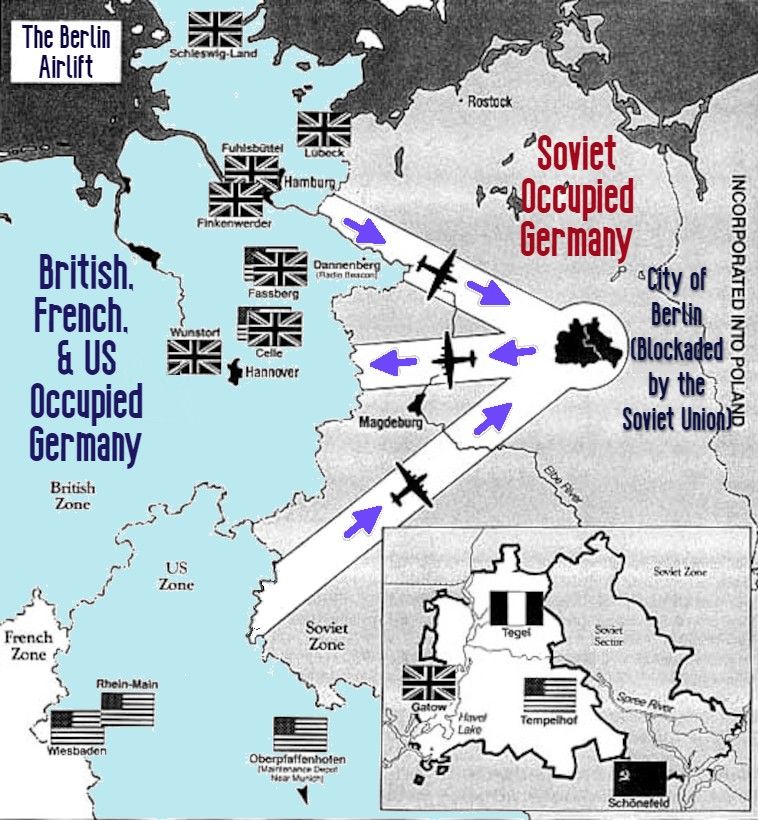
After World War II, Germany was divided into four zones, Soviet Russia, Britain, France and the USA. Berlin was also divided into four zones but lay within the Soviet Russian zone. On 24 June 1948, Soviet forces blockaded all road, rail and water routes into Berlin’s Allied-controlled areas. This stifled the vital flow of food, coal and other supplies. More than 2 million Berliners were relying on the aid, which included much-needed food, fuel and medicine and would otherwise starve and freeze. Two thirds of what was needed was coal.

However, the Russians could not block the Allied airspace. On 24 June 1948. The Allies established an airbridge and began an airlift that lasted officially until 12 May 1949 when the Soviet Union lifted the blockade. The airlift continued until September after the lifting of the blockade as the Allies wanted to make sure that it was not reintroduced.

Why did it occur?

The blockade was an attempt by Soviet Russia to gain control over the entire city by cutting off all land and water routes to West Berlin, which was then under the control of the Western Allies.

Logistics of the Berlin Airlift

The success of the airlift depended on meticulous planning and execution. The planes were scheduled to land and take off at precise intervals, ensuring a continuous flow of supplies. This required exceptional coordination among pilots, ground crews, and logistics teams. To maximise efficiency, the cargo planes followed specific flight paths and adhered to strict timetables. This was all before the use of computers, GPS tracking and scheduling which we have today.

The airlift involved transporting a wide range of supplies, including food, coal, medicine, and machinery. Each type of cargo required different handling and storage conditions, which added complexity to the logistics operation.

Berlin Airlift – Facts & Figures

  • One aircraft landing per minute
  • Over 200 million miles flown
  • Each aircraft unloaded in 20-30 minutes
  • 2000 tonnes of food required per day
  • 400,000 tonnes of food, supplies and coal
  • Over 200,000 kms flown
  • 277,804 flights completed
  • 93 lives lost

The airlift cost the United States $350 million; the UK £17 million and Western Germany 150 million Deutschmarks.

What are three lessons for business leaders in the example of the Berlin Airlift?

  1. Innovative Problem-Solving: Leaders had to think creatively and act decisively to overcome the blockade. This required innovative strategies, such as the airlift, which had never been attempted on such a scale.
  2. Resilience and Determination: Leaders demonstrated resilience and determination in the face of adversity. The operation continued for over a year, and the leaders remained committed to their mission despite the challenges.
  3. Precision and Coordination: The operation demonstrated the critical role of precision and coordination in logistics. Timely delivery and efficient turnaround were essential for the success of the airlift.

In conclusion, the Berlin Airlift was not only a remarkable logistical achievement but also a powerful example of international cooperation, innovative problem-solving, and leadership under pressure. It provided invaluable lessons in both logistics management and leadership that are still relevant today.

What do you think?

Note: 39 British, 31 American and 13 German civilians lost their lives in the Berlin Airlift. They are remembered on the Berlin Airlift monument at Tempelhof. The pilots came from the USA, Britain and France and also from Australia, Canada, South Africa and New Zealand.

@thenetworkofconsultingprofessionals
Lessons from the Great Train Robbery…

“There’s a difference between criminals and crooks. Crooks steal. Criminals blow some guy’s brains out. I’m a crook”

Ronnie Briggs – Great Train Robber

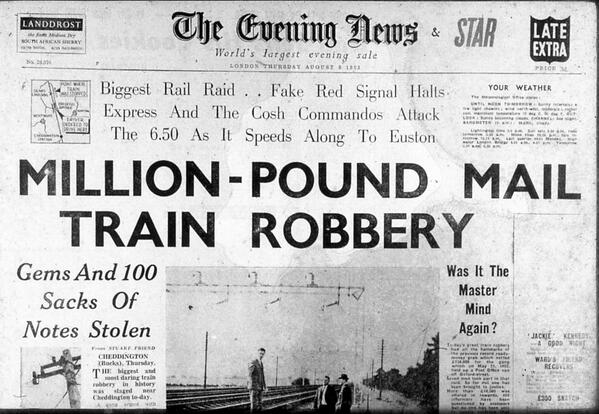
Sixty years ago, this month on 8th August 1963 the Glasgow–London Royal Mail Train was held up by 15 men, wearing helmets, ski masks, and gloves. The train was carrying mostly used bank notes to be destroyed. This was known as the Great Train Robbery.  The ringleader, Bruce Reynolds was a known burglar and armed robber. Just over £2,600,000 (£50m today) was stolen in an audacious and apparently well-planned heist aided by inside information. It only took 15 minutes. No firearms were used, although the train’s driver was seriously injured when bashed with a metal bar.

Before the Great Train Robbery, Reynolds had organised a gang and conducted a successful £62,000 airport robbery. Flush with this success, Reynolds began searching for ‘the next big one’. Upon identifying the opportunity, Reynolds realised that he needed help from the London underworld as his original gang could not do the job alone.

The train was stopped when the robbers turned off a green track signal with batteries and turned on a red signal. Approximately 120 mail bags were taken from the train to a farm hideaway, where it was divided up. During the robbery, one of the gang told the postal staff on the train not to move for 30 minutes. This information suggested to the police that the hideout was within a 30-mile radius.

On hearing on the radio that the police were narrowing the search, the robbers hurriedly left the farm the day after the robbery. Only five days after the robbery a local farm worker had noted suspicious vehicles at a neighbouring farm and advised the police. When two police came to the farm, they found the Landrovers and truck used in the robbery, plus bedding, food, post office bags, banknote wrappers and a monopoly board. Part of the plan was to burn down the farmhouse. However, the robbers in their haste left fingerprints on a tomato sauce bottle and the monopoly board. Apparently, the robbers had played monopoly with real money from the heist!

The robbery had attracted far more police attention than anticipated by the robbers. It also captured the imagination of the public and the media. A reward of £250,000 was offered. A breakthrough came when an informant gave the police a list of names. Some of the names were matched to the fingerprints from the farm. With this and other evidence, by Christmas 12 robbers had been caught, convicted and sentenced up to 30 years jail.

Only three of the robbers remained at large. Reynolds and two others went abroad to Mexico and lived the highlife. By 1968 Reynolds had spent most of his ill-gotten gains. He planned another large robbery and returned to England where he was arrested. Ronnie Biggs escaped from prison in 1965, fled first to Paris, then after undergoing plastic surgery travelled to Australia, and finally to Brazil in 1970. He remained at large as there was no extradition treaty between Brazil and the UK. In 2001 after suffering several strokes, he returned voluntarily to the England and was rearrested.

Are there any lessons here for managers in this ‘crime of the century’ (apart from the obvious lessons of crime not paying and it’s not a good idea to play Monopoly with real money)?

The robbery was well planned and executed with military precision. But by Christmas in 1963, 12 of the robbers had been arrested. Hardly a sign of success!

Here are three lessons I think we can take away from the Great Train Robbery:

  • 1. Have a vision.  

Reynolds as the leader was the brains behind the daring heist. Following the ‘success’ of the airport robbery, Reynolds wanted a bigger challenge. In the dialogue from a movie of the robbery, Reynolds was quoted as saying:

“You’ve got to dream big.  What are we here for if we don’t make our mark? It was never just about the cash.  It’s the buzz.  Building the team, finding the job, planning the job, carrying it out. It’s the camaraderie. Trusting other men with everything you know. With your life.”

Although this is a fictional quote it is probably is an accurate depiction of what occurred. Reynolds had clear vision – in other words a vision statement! The power of vision is very powerful. An ingredient of a successful business is to have a very clear vision.

  • 2. Plan thoroughly.

With a clear vision, Reynolds meticulously prepared and planned the robbery. He realised that the scope was beyond his immediate circle’s skills and quickly expanded the size and skills of the gang.  He was faced with needing specific skills to ensure success. This included how to fake the train signals to stop the train and how to drive the train once it was held up. Sound planning allowed the initial success of the robbery – in 15 minutes.

  • 3. You cannot plan for all eventualities and you should have a plan B.

Despite the meticulous planning, the robbers did not plan for all eventualities. In reality, in business it is also not possible to plan for all eventualities. However, you should always have a Plan B. A contingency plan if ‘things go wrong’. When calm leadership was required, the gang panicked when they heard that the police were searching within a 30-mile radius of the robbery. They left the farm and didn’t adequately cover their tracks. In other words, despite the planning there was poor execution which resulted in the robbers being caught.

In concluding, there is nothing like a good story to demonstrate a point and the Great Train Robbery certainly does this!

What do you think?

Note: I am not condoning the robbery that left the train driver seriously injured. Just using a well-known story as an example for managers. The robbery was a success, but many things went wrong after that.  The amount stolen was so much more than expected that it sparked a major investigation plus “crime of the century” publicity. The police response was swift and successful. An example of sound management and leadership.

#thenetworkofconsultingprofessionals

Management lessons from a long-forgotten battle…

“Arrogance, ignorance, and incompetence. Not a pretty cocktail of personality traits in the best of situations”

Graydon Carter – US Journalist

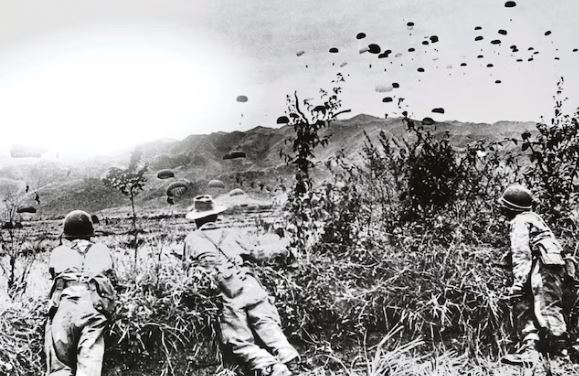
70 years ago this month, the colonies of French Indochina were lost when the Communist Viet Minh guerilla army defeated French forces in Vietnam in the Battle of Điện Biên Phủ.

Background

Following the Japanese surrender in World War II, the Viet Minh, a Vietnamese Communist guerilla army declared independence from France. France did not recognise the new government, and the first Indochina War began when the French navy bombarded the port city of Haiphong in northern Vietnam in November 1946, killing thousands of Vietnamese civilians. The war continued for another seven years and by 1953 it was at a stalemate. It had not been going well for the French. The war was unpopular, costly, and the French political environment was unstable. During the seven years of war, there were 16 changes of government in France and 13 changes of prime minister. Clearly, domestic political instability helped undermine the war effort.  

Setting

A French needed a solution to break the stalemate, so negotiations could be conducted. The French plan was to create a military situation which would bring the Viet Minh to the negotiating table. In late 1953, 2,000 French paratroopers were dropped deep in Viet Minh held territory in north-western Vietnam at a town called Điện Biên Phủ to establish a heavily fortified base.

The aim was to cut the Viet Minh supply lines from Laos and provide a base from which to attack them in the countryside. The French strategy was to draw out the Vietnamese and destroy them with superior firepower. They believed they held all the military advantages – the military equipment, the planes, trained soldiers, and the artillery. This strategy was called the hérisson (‘hedgehog’) concept. It was based on the success of the 1952 Battle of Nà Sản, where a fortified French camp supplied only by air repeatedly beat back the Viet Minh who suffered heavy losses. By repeating this strategy at Điện Biên Phủ on a much larger scale, using superior artillery and air support, the French believed they could defeat the Viet Minh in set piece battle. But the Viet Minh were fighting a guerilla war.

Outcome

In March 1954, the battle of Điện Biên Phủ began with a massive artillery bombardment by the Viet Minh. They were strategically positioned in caves and dugouts in the hills above the base. This lasted until May when 16,000 troops French were soundly defeated.

With over 50,000 Viet Minh troops surrounding the base, roads to supply the French garrison were cut which necessitated being supplied by air. The French believed that the Viet Minh had no anti-aircraft capacity and limited artillery. This proved to be incorrect, and the planes were forced to fly higher and higher, which resulted in supplies often falling into the Viet Minh’s hands.

The Viet Minh leader, General Giáp had learnt from the losses at Nà Sản. He spent months planning the transporting and stockpiling ammunition, and placing heavy artillery and anti-aircraft guns in tunnels in the hills around the French base. Furthermore, thousands of local peasants who supported the Viet Minh, including many women, provided labour, built roads, cleared jungle, transported food by foot and on bicycles and hauled equipment. Over 300,000 people were involved in the Viet Minh logistical effort.

With tenacious fighting on the ground resulting in horrendous causalities, the Viet Minh dug trenches and gradually encroached on the French base, finally cutting the runway. This forced the French to deliver supplies and reinforcements by parachute. As key positions were overrun, the perimeter contracted. While at times, the French repulsed Viet Minh assaults, airpower and superior military equipment did not win the day. The siege ended with a humiliating defeat for the French with 2,293 killed. The Viet Minh suffered horrendous casualties with over 8,000 Viet Minh fighters killed and an estimated 15,000 wounded.

Are there management lessons from the Battle of Điện Biên Phủ for managers today?

Here are three to consider:

1. Do your homework and understand your competitorsknow your enemy

The French underestimated their enemy. The French did not know the number of Viet Minh troops or how many artillery pieces they possessed and, furthermore the French believed that the Viet Minh had no anti-aircraft capability. Not only did they misjudge their enemy, but the French also discounted the huge material support received from the Communist Bloc, in the form of left-over stockpiles of Soviet-made and captured American heavy artillery and anti-aircraft artillery from the Korean War. By comparison, Giáp knew the strength and weaknesses of the French from his spies in the camp, and from the hills overlooking the French base. Unlike the battle of Nà Sản, the Viet Minh controlled the high ground, a major strategic oversight by the French. Clearly, the French did not do their homework, were arrogant and had no Plan B.

2. Technological superiority does not guarantee success

The French strategy was to defeat the Viet Minh in a set piece battle using their superior military technologies and resources – artillery, aircraft, trucks and tanks. Artillery and tanks had been dismantled and delivered by air and then reassembled on the ground. This strategy did not suit a guerrilla war, where having the support of the general population is critical. The Viet Minh’s supply chain did not rely on the use of modern technologies such as aircraft, but instead thousands of peasants carried food, ammunition and the dismantled artillery pieces into hidden and protected positions in the hills above the base. It was a triumph of logistical planning.  

Technology can make you vulnerable. The Viet Minh’s artillery closed the airstrip halfway through the siege, necessitating parachute resupply. The efficient anti-aircraft artillery forced the planes higher, and a high proportion of the supplies fell into the Viet Minh’s hands, including ironically the French Commander’s new general’s stars dropped with a bottle of champagne.

My experience in niche logistics business was when our biggest competitor decided to invest millions of dollars in state-of-the-art equipment and take out a long-term lease on an expensive warehouse. Their major customer, a major retailer was slow to use their services, and they eventually ran out of money and were bankrupted.

3. Be prepared to change your plan when conditions or the situation changes

Giáp’s initial strategy was based on the Communist Chinese “Fast Strike, Fast Victory” model. The aim was to attack the French garrison command centre with overwhelming force to a secure victory. However, the Viet Minh found out that the French knew about this plan, and their technological superiority combined with well dug in troops would have made this strategy fail. Instead, Giáp changed to a siege strategy. This helped ensure success. By mid-1953, the First Indochina War was in its seventh year and for either side there was no obvious prospect of victory. The French had tried a variety of tactics to defeat the Viet Minh, which failed. Exhausted and devoid of ideas, they had no long-term vision or overall strategy, which was in stark contrast to the Viet Minh. They simply defended their positions and reacted to attacks when they occurred.

A road transport client of mine, experienced a drop in revenue by 75%. However, he became far more profitable by changing their strategy, ditching difficult and unprofitable customers.

Do you think there are any other lessons for managers?

#thenetworkofconsultingprofessionals

…it only took 74 days!

“Any leader has to have a certain amount of steel in them, so I am not that put out being called the Iron Lady”

Margaret Thatcher – British Prime Minister

The Falklands War in 1982 between Britain and Argentina lasted only 74 days, culminating in a British victory. This short and bloody conflict has some excellent lessons for managers and leaders.

Background:

Just over 41 years ago this month, on 2 April 1982, the Argentinian fascist military dictatorship decided to invade the British Overseas Territory of the Falkland Islands. They hoped to bolster their dwindling legitimacy by mobilising the long-standing patriotic feelings of Argentines towards the islands, as well as diverting public attention from their ongoing human rights violations against their own citizens and the country’s chronic economic problems.

The islands, 12,000 kms away from Britain are a windswept treeless, damp and cold group of islands. The Falklands had a population of around 2,000 people and its major industry was sheep farming.

In the face of cuts to the military budget by the British Government, the Argentinian military junta miscalculated. They thought that Britain would not respond militarily. However, within three days of the invasion, the British Government under the leadership of Margaret Thatcher had assembled a military task force to retake the islands.

The logistics challenges for the British were immense and the risk of failure high. The Argentinians had 10,000 troops dug in on the islands and were protected by mine fields. Their air force, located on bases on the Argentinian mainland, outnumbered the carrier based British planes by eight to one.

Outcome:

On 13 June 1982, the Argentinian forces on the islands surrendered. Despite the logistics challenges, and setbacks such as the loss of almost all their troop-carrying helicopters on the Atlantic Conveyor the British forces triumphed. The loss of the Atlantic Conveyor meant that the British troops with 80 kgs on their backs had to walk 80 kms in freezing and wet conditions to attack the capital of the Falklands, Port Stanley.

Here are three leadership traits displayed in the Falklands War:

  1. Decisive decision making

The British assembled a military task force within three days of the invasion, despite the fact that the Falklands were over 12,000 kms away from London. This was an example of decisive decision making. In our logistics business, we had a toxic manager who was having a detrimental effect on employee morale and customer satisfaction. One of our partners refused to recognise this situation. When the partner was overseas, we terminated the manager. Within a month, the business he had been managing turned around. Following this action, several supervisors came up to me and said how were pleased that action had been taken. They had been waiting for management action to fix ‘the problem’!

2. Clear purpose

Throughout the crisis, Thatcher’s message was clear and simple. In her communications, there was no doubting her intentions and the purpose was very clear. The British were not going to allow the invasion of British territory by a fascist military dictatorship to succeed.

In my experience, employees respond positively to strong and decisive leadership, especially when there is clear purpose. For example, I was engaged by a business owner to review his business, then introduce standard procedures and managerial disciplines. This message was made very clear to the staff. The culture must change. We would create a work environment through a disciplined and inclusive approach, where employees’ experience, expertise and opinions were valued. The incumbent general manager tried to thwart this approach and was “forced” to leave the business. The staff were relieved. Morale improved almost immediately. They became engaged, as they were now valued and could look forward to the future.

3. Communicate a positive message.

Admiral Sir Henry Leach, Chief of the Defence Force who was instrumental in convincing Thatcher that the islands could be recapture, was asked by her why it was important to retake them.

He said:

“Because if we do not, or if we pussyfoot in our actions and do not achieve complete success, in a few months from now, we will be living in a completely different country whose word counts for nothing.”

Following that advice, Thatcher’s message was positive, and she took the high moral ground.      

  1. We are a democracy
  2. We are not going to have a nasty military junta taking over British territory
  3. We can retake the islands

When I was managing a national vehicle transport company in regional NSW, I was confronted with an unsolvable problem. A private vehicle arrived in our transport depot from Melbourne, several days late. The vehicle owner was arriving in Cairns in far north Queensland the same day. This was three days drive away from Cairns by truck, so he was not going to have his car for the first couple of days of his holidays. Confronted with this problem, I phoned him just as he was boarding the plane in Melbourne offering a solution. A hire car would be provided when he arrived in Cairns until his car arrived. It was a positive message given with authority to solve his problem. The customer continued to use our services for many years.

The British armed forces faced with what were seemingly impossible odds were ultimately successful.

 Do you think that the leadership traits of being decisive, having a clear purpose communicated positively, had a significant bearing on the successful outcome?

‘Real’ leadership is important in any organisation, whether it’s a crisis like the Falklands or not. In my experience, I have found that employees respond positively to good leadership.

#thenetworkofconsultingprofessionals

The Great Emu War

“The incompetent leading the unwilling to do the unnecessary.”
Evan Wright – American author

Military failure is everywhere. As managers and leaders, we can learn from classic instances of so-called military incompetence. There are many examples from the disastrous Allied landing at Gallipoli in World War I, to operation Barbarossa, the failed Nazi invasion of Soviet Union in World War II and to the 1954 Battle of Dien Bien Phu in French Indochina which resulted in catastrophic defeat for the French.

However, few examples could be more humorous, without loss of human life and just as instructive for managers on ‘what not to do’ as the Great Emu War of 1932.

What are the characteristics of an emu?

They are an enormous bird second in size to the African ostrich. They cannot fly and have an average height of over 2 metres, very strong legs, can run up to 50 kph, and naturally flock in large numbers.

Background to ‘the conflict’

Following the end of World War I, the Australian government ‘rewarded’ returning soldiers with farm land. In Western Australia the veterans or ‘soldier settlers’ were allocated farmland which was very marginal for the growing wheat. Very few were experienced in agriculture. To add to the farmers’ challenges a severe drought hit, and 20,000 starving emus came in from the desert and commenced in destroying the existing wheat crop. Furthermore, this occurred in the Great Depression with a background of rising unemployment and falling wheat prices

The veterans lobbied their local parliamentary representatives to provide assist to rid the country of the emu ‘menace’. A Western Australian Senator, Sir George Pearce, recommended that the veterans and troops should tackle the problem head-on and hunt the birds. The government needed to show support for the famers. As the saying goes, “never waste a good crisis”.

What better opportunity for politicians than to provide a well-publicised effort to protect the former veterans who were ‘doing it tough’ and call in the army?

So certain that the operation would be a success, a cinematographer was hired from Fox Movietone to cover the hunt.

On the first day of ‘war’ less than 50 birds were killed out of the thousands shot at. The biggest misconception about the Emu War is that it was a massive assault staged by the Australian military. It was just three soldiers, a small truck, two Lewis machine guns, and 10,000 rounds of ammunition. A machine gun was mounted on the truck, but the truck could only travel a 30 kph over rough land, no match for an emu who could run at 50 kph and the truck could only chase one emu at a time. Furthermore, the soldiers couldn’t stabilise a machine gun on the vehicle or shoot with any accuracy.

The Great Emu war lasted less than six weeks – 986 emus were killed, and 9,860 rounds of ammunition was expended. Ten rounds per dead emu – not a great kill ratio although the only loss for the soldiers was their pride!

A more effective plan was later introduced. Rather than use brute-force the government set aside money for bounties. The farmers did the hard work of tracking and shooting the emu menace. Two years later in 1934, nearly 58,000 bounties were claimed.

What lessons are there for us as managers in the ‘great emu war’?

Here are three worth considering.

  1. Be aware that politicians do not have the answers for problems of business. Many, in particular politicians today have no business or managerial experience. Governments overpromise and under deliver. The management of the COVID pandemic is a good example.  
  2. Technology is not the answer. Technology is an enabler and not the magic bullet to solve the problem. Having a motor vehicle and machine guns did not solve the problem as it was not clearly defined.
  3. The most successful solutions involve the parties directly involved in the problem. By offering bounties, the farmers had a direct incentive to make it work – and they made money out of the bounties and reduced the number of emus attacking their crops.

#thenetworkofconsultingprofessionals

Are you prepared for a ‘black swan’ event?

“The problem with experts is that they do not know what they do not know.”

― Nassim Nicholas Taleb, author of The Black Swan: The Impact of the Highly Improbable

What is a black swan event?

The phrase “black swan” derives from a Latin expression; “rara avis in terris nigroque simillima cygno” – “a rare bird in the lands and very much like a black swan”.

A black swan event is a rare event that is positive or negative, is deemed improbable yet has massive consequences and could not have been predicted even with the help of sophisticated modelling techniques. For example, an event that has a severe impact on the economy, social conditions, and overall well-being of a nation. The recent COVID pandemic has been called a ’black swan’ event or Russia’s invasion of Ukraine.

A characteristic of a black swan event is low probability and high impact. Often it becomes rationalised in hindsight, as if it could have been expected. Once again, the COVID example comes to mind. The so-called experts had been ‘predicting’ that the world was overdue for a worldwide pandemic as the last deadly one was the Spanish Flu pandemic, over 100 years ago. However there had also been other pandemics that were not as deadly as the Spanish Flu, namely the Hong Kong Flu in 1968 and the 1957 Asian Flu.

Apparently, the phrase was commonly used in 16th century London as a statement of impossibility. It derives from the presumption that all swans must be white as there were no records of swans having feathers that were NOT white. Therefore, a black swan was impossible or at least non-existent. However, in the late 17th century, Dutch explorers became the first Europeans to see black swans, in Western Australia.

Did this change the meaning of the term ‘black swan’ event?

Yes and no.

Nassim Taleb in his book The Black Swan: The Impact of the Highly Improbable said that black swan events have three characteristics:

1. Low predictability based on prior information

2. High consequence, and sometimes catastrophic impact

3. Explained in hindsight as if it were actually predictable

The main idea in Taleb’s book is not to attempt to predict black swan events, but to build robustness against negative ones that occur and to be able to exploit positive ones.

As a business, how can you prepare for a ‘black swan’ event?

This is a challenge for all business managers and leaders.

Some of the possible strategies for dealing with a black swan event include having a business continuity plan and testing it, diversification into unrelated industries, for example a mining company who is reliant on one commodity could move into other commodities, develop alternative supply chains and having adequate insurance cover.

The critical aspect for business to minimalise the impact is to build robustness in the business.

#thenetworkofconsultingprofessionals

A management lesson from Colonial Australia

“The roads are rare to travel, and life seems all complete;

The grind of wheels on gravel, the trot of horses’ feet,

The trot, trot, trot and canter, as down the spur we go —

The green sweeps to horizons blue that call for Cobb and Co”

From the poem – “The lights of Cobb and Co” by Henry Lawson

Who or what was Cobb & Co?

Cobb & Co was a coach company established in 1853 in Melbourne, Australia by a small group of Americans to service the Victorian goldfields. This was before the advent of railways. The company won mail contracts, gold escort, passenger and mail service contracts based on reliable and efficient schedules. The company pioneered transport routes, delivering mail, gold and passengers throughout the country and contributed greatly to social growth and the expansion of pastoral settlement across Australia.

The business grew rapidly up until the early 20th Century. At its peak, its coaches travelled 44,800km each week, over 11,200 km of regular routes with over 6,000 horses were harnessed every day. Its network of tracks extended further than those of any other coach system in the world. The network extended from far north Queensland to Victoria and South Australia in the south, covering all of eastern Australia, an area larger than Western Europe. The logistics of operating without the information technology of today defies belief.

In 1924, the last coach trip was completed between Yuleba and Surat in Queensland. Two years before the last trip, Qantas launched its first mail and passenger flight, signally the changes in transport technology such as railways, aeroplanes and motor vehicles. This meant Cobb & Co’s days were numbered.

Cobb & Co’s operational success mirrored my earlier days managing an interstate vehicle transport operation.

What are the lessons for managers today in the rise of Cobb & Co’s?

  • Technology

Cobb & Co: Coach design. The existing coaching companies used English vehicles that were heavy and had stiff metal springs. They were totally unsuitable for the rugged Australian landscape. Cobb & Co imported coaches from the American West, that were light weight, had leather straps as suspension systems and were far better suited to Australian conditions. This resulted in a faster and smoother ride.

Transport Company: The vehicle transport business was so successful that at the time it transported over 60% of all locally manufactured vehicles in Australia. Supported by on-board computers which were in their infancy, the significant difference to the competition was a revolutionary designed car carrying trailer that transported 10 cars instead of 8, with a revolutionary sliding axle and fifth wheel allowing the truck to travel off B-Double routes which the opposition could not match. Whereas Cobb & Co had the best coach design, we had the best technology in trailer design for vehicle transport.

  • Planning and Efficiency

Cobb & Co: The ability to regularly change horses provided the competitive edge over the company’s rivals.  Horse changing stations were placed every 16-32 km along their routes, whereas their competitors had much greater distances. Fresh horses meant the coaches could maintain high speeds across long distances. This allowed the business to grow quickly and win lucrative mail and gold escort contracts combined with the rapid increase in rural settlement across Australia. Horses, harnesses, stables, grooms and stock feed supplies were organised; booking offices were set up in major towns and inns, shanties and post offices were used to service the passengers enroute.

Transport Company: With motor car manufacturing sites in Melbourne and Adelaide and a strategically located hub based in rural NSW, the transport company was through careful planning and geographically located drivers was able to run trucks continuously for over 6 days per week. Drivers changed over every 10 hours, keeping within the legal driving hours whilst more than doubling the number of kilometres travelled per week that was considered the industry average. This was before GPS technology. Much like the change-stations in the Cobb & Co network of over 130 years ago.

  • People

Cobb & Co: The success of Cobb & Co was largely due to its people, from its coachbuilders to grooms, innkeepers, horse breeders, managers and drivers. The drivers, with their extraordinary skills with horses established the company’s reputation and ensured the service operated to the highest possible standard in all weathers, whether on bush tracks or well-maintained roads. At each changing station the grooms were responsible for 8-10 horses and their equipment.  Two kms out from the change station, the driver would sound a bugle alerting the groom, who would have a fresh horse team harnessed by the time the coach arrived.

Transport Company: If there is anything that makes a business successful, it’s the people. Like Cobb & Co we had a team that was prepared to ‘think outside the square’, customer and service focussed, understood what could be achieved and successfully planned the daily and weekly operations. This was backed up by choosing, training and rewarding our driving team who like Cobb & Co were proud of their position in the industry.

Post Note: Cobb & Co eventually failed through a combination of factors. If you are interested in the history of Cobb & Co, I would recommend the book Wild Ride: The Rise and Fall of Cobb & Co by Sam Everingham

#thenetworkofconsultingprofessionals
The Atlantic Conveyor Affect…

“It’s OK to have your eggs in one basket as long as you control what happens to that basket”
Elon Musk – billionaire businessman

Just over 40 years ago on 2nd April 1982, Argentina invaded the British overseas territory of the Falkland Islands. They are an island archipelago in the South Atlantic Ocean located over 12,000 kilometres away from the British Isles. The Falklands were a community of just 1,800 people, primarily rural sheep farmers, the majority of whom were of British descent.

In the face of this challenge, the British government under the leadership of Margaret Thatcher organised a Task Force of over 100 ships, including naval vessels, merchant ships, and a submarine all carrying supplies, military equipment and troops. An extraordinary feat considering the tight time frame and the huge distances involved.  

At the time Argentina was ruled by a brutal military dictatorship. Argentina had claimed sovereignty over the islands for many years and the ruling military junta did not believe that Britain would attempt to regain the islands by force. With falling popularity and failing economy, the junta saw the invasion as a diversion from their domestic problems.

On 21st May 1982 British forces landed on the islands. On 25th May the container ship, Atlantic Conveyor, a ship requisitioned by the Royal Navy was hit by two Exocet missiles fired by the Argentinian air force, killing 12 of the crew including captain. Due to the presence of both fuel and ammunition that were stored below decks, the incendiary effect of the unburnt propellant from the missiles caused an uncontrollable fire and the vessel sank three days later.

What else was lost?

Apart from fuel and ammunition the Atlantic Conveyor was carrying seven Westland helicopters, four Boeing Chinooks, and a Westland Lynx. Only one Chinook one Westland Wessex were saved. Almost all the Task Force helicopters were on this ship.

Did this influence the plan to retake the islands by the British forces?

Yes, the plan to ferry troops by helicopter could not be carried out, resulting in a significant change of strategy. The loss of these helicopters meant that British troops with the onset of winter had to march on foot across the wet and semi-frozen ground to recapture the island’s capital, Stanley. However, despite this setback, Stanley was captured on 14 June 1982 – the war having lasted only 74 days.

So, what do you think is the main management lesson from the sinking of the Atlantic Conveyor?

Do not put all your eggs in one basket. Having most of the helicopters on one ship making it vulnerable to a missile attack was a very poor decision!

Can you think of other management lessons from the sinking of Atlantic Conveyor?

#thenetworkofconsultingprofessionals

Lessons from 55 years ago……

“Before anything else, preparation is the key to success.”

Alexander Graham Bell – inventor of the telephone

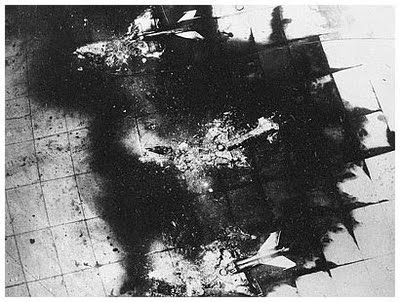
Egyptian Airforce destroyed on the ground

As a very young boy at Primary School, I vividly remember the Middle-East Six-Day War in 1967. Our school Principal announced at Assembly that he was deeply concerned about it leading to another World War and we should all pray. As a farm boy, I caught the local school bus, which in those days also delivered the mail, newspapers and bread to local farms. I distinctly remember glancing at the newspaper headlines and viewing the photos over that week of the newspapers that lay stacked at the front of the bus near the driver. Within a week the news vanished. Israel had defeated the Arab armies of Egypt, Jordan and Syria.

Next month it is 55 years since the Six-Day War.

Are there some lessons for managers from this significant historical event?

The war between Israel, Egypt, Jordon and Syria was fought between June 5 and June 10 1967 and resulted in an overwhelming victory to Israel and included the capture of the Sinai Peninsula and Gaza Strip from Egypt, the Golan Heights from Syria, and the West Bank and the Arab section of Jerusalem from Jordan. In summary, the war was a pre-emptive strike by Israel within an environment of mounting tensions with its Arab neighbours, where war unfortunately seemed inevitable. Israel was geographically challenged, lacked strategic depth, was politically and economically isolated and was numerically inferior in population and the size of its military.

So how did Israel succeed so spectacularly against such overwhelming odds?

Israel had been planning for war for many years, and central to this was the use of their air force. This involved a pre-emptive strike to destroy the Arab air forces on the ground. The plan had been worked out and practiced for several years with Israeli pilots flying repeated practice missions against mock Egyptian airfields in the Negev Desert.

At 7:14 a.m. the entire Israeli Air Force (IAF) of nearly 183 planes, with the exception of just 12 fighters assigned to defend Israeli air space, took off, flying under the radar with the goal of bombing 11 Egyptian airfields while the Egyptian pilots were eating breakfast.  Israel needed to destroy the Arab air force on the ground as their bombers could devastate Israeli cities. Amazingly, Israel had no bombers to use in the attack and the raid was carried out entirely by fighter planes. Most of Egypt’s planes never left the ground. By 11:05 a.m., 293 Egyptian planes were destroyed. Israeli fighters then attacked the Syrian and Jordanian air forces. By the end of the first day, most of the Egyptian, half the Syrian and all of the Jordanian air forces had been destroyed on the ground. By the end of the Six-Day War, the Arabs had lost 450 aircraft, compared to 46 for Israel.

So how was success achieved?

Logistics, superior training, planning and better intelligence.

The Israeli ground crews had practiced the rearming and refueling of returning aircraft. They achieved this in less than eight minutes, thereby enabling the strike aircraft of the first wave to fly in the second wave and meant an aircraft could fly five missions per day. By comparison, NATO aircraft could only fly three missions per day.

The IAF pilots were highly skilled and had been training for years. They practiced low level flying which required exceptional skills over the Mediterranean at under 30 metres so as to avoid radar detection. Furthermore, every pilot had photographs of their targets and had been practicing on mock targets in the Negrev Desert.

The IAF, using the “concrete dibber” anti-runway bombs which created huge craters made it impossible for the Egyptian aircraft to take off. This made the aircraft ‘sitting ducks’ and they were later destroyed on the ground.

Dawn was always considered the best time for an air attack from the east as the sun was in the defenders’ eyes. This was when the Egyptian air force was on high alert. However, Israeli intelligence found that 7.45 a.m. was when all the Egyptian air force was on the ground and the pilots were having their breakfast. This is when the IAF first attacked.    

Within six hours after the first IAF aircraft had soared into the morning sky, Israel had laid the foundation to winning the Six-Day War. Although the pre-emptive strike was a gamble, it paid off.

Careful preparation and some luck had been rewarded

What other lessons are there for managers here?

1. Planning – never underestimate how important planning is and doing your homework. The IAF did their homework on their enemies, knowing when they were most vulnerable and where the planes were located. Sound intelligence laid the groundwork for success.

2. Logistics – efficient use of available resources. The IAF was able to increase the utilisation of their aircraft well above what was considered ‘the norm’. Furthermore, as the IAF lacked bombers a new strategy of using bombs to effectively ground the rival air forces made them vulnerable to attack from the air by fighter jets.

3. Practice – leaving very little to chance the IAF practiced and practiced minimising the risk of failure. As the saying goes, practice makes perfect. There is no substitution for practicing to improve performance and increase the chances for success.

What other lessons do you think there are for managers?

#thenetworkofconsultingprofessionals