What’s the Dunning Kruger effect?

“One of the painful things about our time is that those who feel certainty are stupid, and those with any imagination and understanding are filled with doubt and indecision.”
Bertrand Russell – British philosopher

What is the Dunning-Kruger effect?

In 1999 two social psychologists David Dunning and Justin Kruger identified a cognitive bias based on a bank robber who believed that lemon juice would make his face invisible, as lemon juice makes ink invisible. Setting off to rob his first bank, bank robber McArthur Wheeler waved at the CCTV cameras as he entered and left the bank. He was arrested soon after and exclaimed “But I wore lemon juice!”.

Similar events have occurred in South Africa where bank robbers and shoplifters have attached bottles of muti (traditional African medicine) to their belts thinking that this made them invisible. However, this is more a story of witchcraft rather than incompetence or over-estimating their abilities.

The Dunning-Kruger Effect is where individuals who have limited knowledge, competence or ability, wrongly imagine themselves to be very good at something they are obviously not!

In history there are many examples of the Dunning-Kruger effect. Hitler is but one example. He considered himself a great artist, but twice failed entry to Vienna’s Academy of Fine Arts. The admissions committee decided his drawing skills were “unsatisfactory”. Hitler also thought he was a military genius, and believed he could be the only man apart from Genghis Khan to successfully invade Russia. Sadly, this delusion led to the unnecessary deaths and suffering of tens of millions of people.

Does Dunning-Kruger effect have any relevance for us as managers?

Of course it does!

There are two effects:

  1. Not only are people incompetent, and this
  2. Incompetence robs them of the ability to realise how incompetent they are!

To put in bluntly, at the extreme end of the Dunning-Kruger Effect, stupid people do not realise they are stupid. A little knowledge can be a dangerous thing!

This can have unfortunate consequences. Hitler is but an extreme example.

Many incompetent managers suffer from the Dunning-Kruger effect. A lack of self-awareness is a common sign, although not all managers who lack self-awareness suffer from the Dunning-Kruger Effect. Managers who overestimate their abilities often are unable to recognise their own limitations. This leads to mistakes and poor decision making. Believing themselves to be experts in the field, they are often unwilling to seek feedback or ask for help,

Do you have any examples in your work life of the Dunning-Kruger effect?

I certainly do!

Here are three examples to consider.

  1. Over-estimate their own skills and achievements. For example, a dictatorial manager who is a poor communicator, micromanages and fails to listen. They believe they are a natural leader and refuse to acknowledge the negative impact their management style is having on their team.  This lack of self-awareness breeds frustration and low morale and can lead to a toxic work environment. Ultimately this harms the organisation’s success. I once assisted a fellow consultant in an organisation where the CEO thought because he had a PhD that he was the smartest person in the organisation and overestimated his success, despite evidence to the contrary. Morale was poor and the business was losing money.
  2. Don’t recognise the skills and knowledge of others. The manager who ‘knows best’ and fails to consult with their team. This can manifest in a variety of ways, such as being very vocal about one’s views, even in the face of evidence to the contrary, or being unwilling to consider alternative perspectives, believing they are the only one who truly understands the situation. This thwarts team building and staff development. In the example above, the CEO made the statement that there were ‘no real managers’ in the organisation and they were in reality ‘just clerks’. He never consulted them, asked for their opinions or sought their considerable expertise and experience. After he exited the business, we sought to engage the staff through a series of workshops seeking their input. The turnaround in morale was immediate.
  3. Resistance to Feedback and Constructive Criticism.  People exhibiting the Dunning-Kruger Effect may be resistant to feedback and constructive criticism. They may see any criticism of their views or actions as a personal attack, leading to defensiveness and an unwillingness to listen to others’ perspectives. Also, they refuse to recognise their own mistakes. This lack of insight often leads to poor team morale. I can remember a situation when I was in business where one of our partners refused to accept any feedback when we brought in an external consultant to review the business. His reaction was to sack the consultant.  

Encourage Self-Reflection and Self-Assessment

If you recognise the Dunning-Kruger Effect in yourself, how should you deal with it?

  • Encourage Self-Reflection

One key strategy for dealing with the Dunning-Kruger Effect is to encourage self-reflection and self-assessment. People who are aware of their own limitations and weaknesses are more likely to seek help and feedback, leading to better decision making and personal growth.

  • Provide Constructive Feedback

Another strategy is to provide constructive feedback to people who may be exhibiting the Dunning-Kruger Effect. It’s important to approach feedback in a non-judgmental way, focusing on specific behaviours or actions rather than criticising the individual as a whole.

  • Promote a Growth Mindset

A growth mindset can also help to combat the Dunning-Kruger effect. People who believe that their abilities can improve with effort and practice are more likely to seek feedback and learn from their mistakes, leading to personal and professional growth.

In conclusion by understanding the signs of the Dunning-Kruger Effect, we can better recognise it in ourselves and others, and take steps to address it. By encouraging self-reflection, providing constructive feedback, promoting a growth mindset, and fostering a culture of humility and openness, we can overcome the limitations of the Dunning-Kruger Effect and achieve our personal and professional goals.

What do you think?

@thenetworkofconsultingprofessionals

The legend of Lasseter’s Gold Reef…

“Truth, like gold, is to be obtained not by its growth, but by washing away from it all that is not gold” Leo Tolstoy – Russian writer

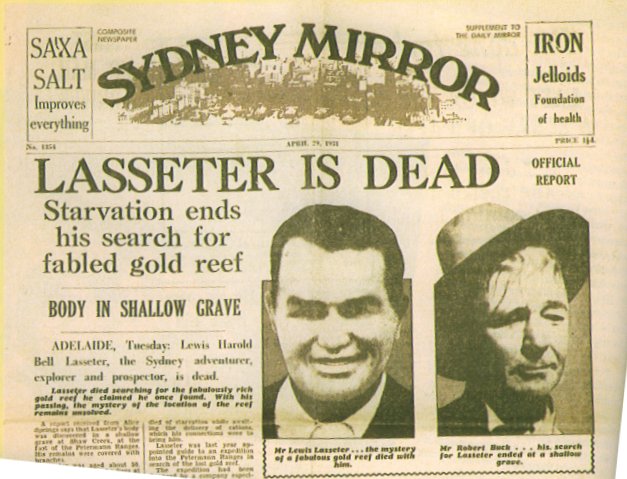
As a young boy I remember reading the book by Ion Idriess called “Lasseter’s Last Ride” about the 1930 search for a fabled reef with gold “as thick as plums in a pudding” in the deserts of Central Australia. A rich gold reef waiting to be discovered! I was hooked. And I was not the first. Lasseter’s Reef continues to fascinate even today. Since the fateful 1930 expedition where Lasseter died alone in the desert, many expeditions have been undertaken, and none have discovered the fabled reef.

Who was Harold Bell Lasseter?

Lasseter was born in 1880 in Victoria, Australia. In 1903 Lasseter married while living in the USA. In the USA he changed his name to Harold Bell Lasseter, ‘Bell’ being the surname of a popular American author of a book about a lost gold reef! Returning 5 years later he allegedly spent his time inventing and working in various jobs around Australia. Lasseter twice enlisted in the Australian Imperial Force (AIF) during World War I and was discharged both times without leaving Australia, once for being AWOL and for the second time for being engaged in a brawl. In 1927 he married again whilst still married to his first wife. In 1929 he claimed to have submitted the original design for the Sydney Harbour Bridge and sought compensation for his work. It was rejected. In around 1930 at the onset of the Great Depression, he began lobbying the government and trade union officials to mount an expedition to find a gold reef in the desert that he claimed he had discovered years earlier. Lasseter has been described as a bigamist, fantasist, an eccentric, a swindler, a crank and a difficult character with a reputation as a con man.  

The ‘discovery’ of Lasseter’s Reef

Lasseter claimed that in 1897 while travelling alone in the deserts of Central Australia he had come across a rich gold reef whilst travelling from a false ruby strike in South Australia. His horse had died, and he was miraculously rescued by an Afghan camel driver who nursed him back to health. Three years later with a surveyor called Harding, he relocated the reef, took the bearings but failed to peg the claim. Unfortunately, their watches were incorrect, and this made their bearings incorrect. Sadly, Harding died just before Lasseter left for America in 1903.

Testing the Story

Lasseter would have only been 17 when he ‘discovered’ his reef in the deserts of Central Australia. This is highly unlikely, and the false ruby strike was in 1887, not 1897! If Harding was a surveyor, he would not have made the error of the watches having the incorrect time or failing to peg the claim. Harding was in fact not a surveyor but a cattle thief (in Australian slang a ‘cattle duffer’). His ‘death’ was convenient. In the 1930-31 expedition Lasseter was unable to discover his reef and had a major falling out with the leader and some members of the expedition. He left them and died a lonely death in the desert.

Postnote:

It is highly unlikely, given the character of Harold Lasseter himself that the reef exists. Despite this, expeditions continue to be mounted. Never let the truth get in the way of a good story, especially about hidden treasure. In an ironic twist in Alice Springs, there is a casino and hotel called Lasseter’s!

Are there any management lessons with the story of Lasseter’s lost gold reef?

Here are three worth considering:

  1. Be aware of charlatans! We all meet them in our personal life and in business. It would appear that Lasseter was indeed a con man or a delusional liar. Despite this, people were willing to believe his story of his fabulous gold reef. Simple but hard questions would have revealed the implausibility of his story. How often are we as managers do we believe what we want to believe?
  2. Do your homework. The most basic research would have highlighted that Lasseter’s story was fantasy. Checking the dates of when he ‘discovered’ his reef would have revealed the implausibility of his story
  3. Be Aware of Myths that become Reality. A lie repeated enough becomes reality. Once again check the facts and test the logic.

Can you think of any other lessons from the myth of Lasseter’s Reef?

@thenetworkofconsultingprofessionals
Which European country first ‘discovered’ Australia?

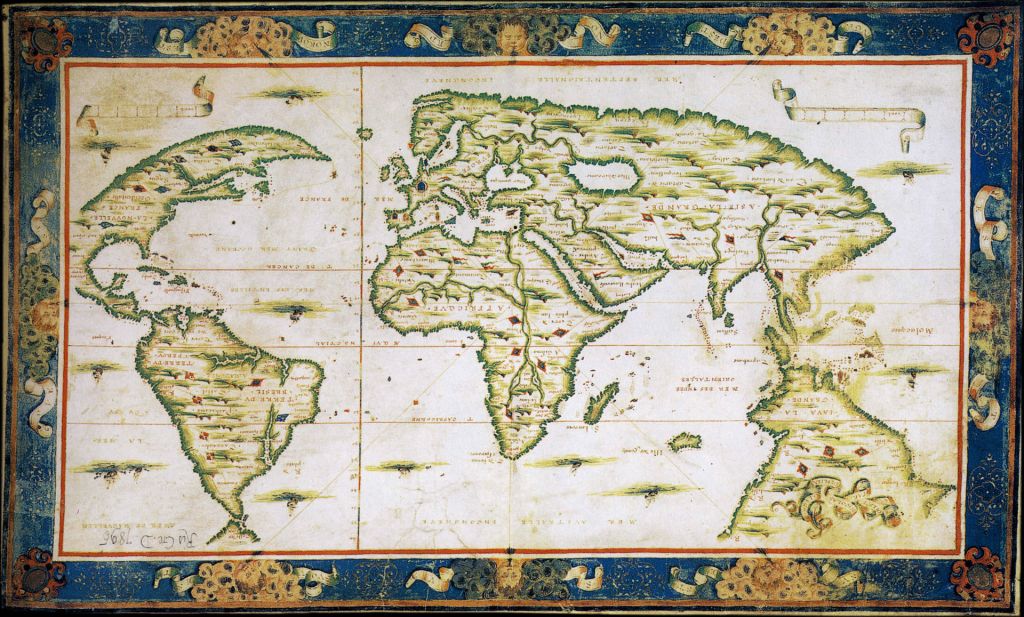
Below is a world map prepared in Dieppe, France showing a large land mass to the south of Indonesia, 50 years before Janzoon ‘discovered’ Australia in 1606

“History is a set of lies agreed upon” – Napoleon Bonaparte

Which European nation first discovered Australia? Was it the Dutch, Spanish or Portuguese?

Several books have been written about the ‘hidden’ discovery of Australia by the Spanish and Portuguese. However, there is no conclusive evidence that these two nations discovered Australia before the Dutch in 1606. Unsurprisingly the ‘evidence’ of the Portuguese being the first Europeans to visit Australia is extremely thin. The ‘evidence’ was ‘conveniently’ lost in the Great Lisbon Earthquake of 1755 and when India annexed the Portuguese colony of Goa in 1961. The Portuguese arrived in Timor in 16th Century and it is less than 250 nautical miles from the Australian continent so it is plausible that they ‘discovered’ northern Australia.  

However, the legend persists that the Portuguese were the first European visitors to Australia. One of the enduring legends is that of the Mahogany Ship, a wreck in the sand dunes in south-west Victoria, on the opposite side of the Australian continent to Timor, the nearest Portuguese colony. In the 1830s or 1840s a wreck was apparently sighted by some residents of the area. Even the position of the wreck was recorded. Mysteriously extensive searches using sophisticated technology and the offer of a $250,000 reward by the Victorian state government have failed to locate the wreck.

So, does the Mahogany Ship exist?

Highly unlikely!

Apparently, the original ‘discoverer’ of the wreck was not in Victoria at the time of ‘the discovery’, and he was a criminal with a history of dishonesty. In 1876 a Captain Mason wrote a letter claiming that he’d seen the wreck and that it could have been mahogany or cedar, and the mahogany story stuck. The suggestion of a mahogany ship fuelled the theory it could be Spanish or Portuguese, as it was a timber used by their shipbuilders for centuries.

Furthermore, a large majority of “eyewitness” accounts of the Mahogany Ship conveniently emerged after the wreck had been supposedly swallowed up by the sand dunes around 1880. A 1977 a book called “The Secret Discovery of Australia” further added fuel to the legend. Sealers inhabited the southwest area of Victoria during the period in which the wreck was ‘discovered’. The original ‘discoverer’ was a sealer whose boat capsized and as he walked back through the dunes with his companion they came upon the wreck. There probably was a wreck. If there was it was more than likely a sealers’ boat or possibly a boat stolen by escaped convicts in Tasmania. Timber allegedly from the wreck has been tested and identified as eucalyptus, not mahogany.

So, like many legends, the Mahogony Ship story has been built on half-truths, mistakes, exaggerations and lies and takes on the form of an ‘urban myth’. This has not stopped the local council in Warrnambool from erecting a Portuguese Explorer’s Memorial in a local park linking it to the legend of the Mahogony Ship! Never let the truth get in the way of a good story.

For more than 28 years the Portuguese speaking communities of Victoria have been coming to the city of Warrnambool to celebrate what they believe to be the discovery of Australia by Portuguese navigators. The Warrnambool Portuguese Cultural Festival is held every two years and celebrates the historical ties between Portugal and Australia, based on the legend of the mysterious Mahogany Ship.

“We are very happy to have the Portuguese community here every two years; we want the festival to get bigger and better. We also want to keep the Mahogany Ship buried in the dunes, we don’t want to dig it out and spoil the mystery, this is great for our city,” said Cr Robert Anderson, Mayor of Warrnambool.

Are there lessons here for managers in the legend of the Mahogany Ship?

  1. Don’t believe everything you are told by customers, staff or owners
  2. Go back to first principles to determine what are the facts – are they actually facts?
  3. There is nothing like telling a story to sell an idea even if it is not correct. The romantic idea of Australia’s first European visitors being Portuguese not British has certainly helped fuel the legend. The local council has profited through the story – it brought visitors to the area.

Note: the first recorded European visit was Dutchman Willem Janzoon in 1606 who landed on Cape York and chartered 300 km of coastline.

#thenetworkofconsultingprofessionals

Necessity is the mother of invention

“Our need will be the real creator” – Plato Greek Philosopher

Despite relatively low litter rates, in 2019 the Victorian State Government implemented a state-wide ban on lightweight plastic shopping bags. The Government explained this as a global problem, as plastics in the environment break up into smaller and smaller pieces over time.  Plastic bags can easily be blown into open spaces and waterways and pose a danger to marine life.

I was outraged. We reused shopping bags for bin liners and put ‘doggy poo’ in them when we walked our dog. We were recycling plastic bags and not allowing them into the environment. I considered that our household was doing our bit in helping the environment and recycling plastic bags.

Interestingly, the two major supermarkets who in Australia have over 50% market share displayed predictable oligopolistic behaviours. They immediately implemented the ban and then sold ‘reusable’ plastic shopping bags to customers, never missing an opportunity to make money.

In regard to the ‘doggy poo’ problem, we soon found alternatives to shopping bags. The plastic covering for bread, which previously were thrown into the rubbish bin made better ‘doggy poo’ bags than the now banned shopping bags.

The lesson here was that necessity made us find an alternative to shopping plastic bags. This happens in business. Here is an example and is another “lesson from the farm”.

I grew up on a farm in rural NSW, Australia. My father grew wheat and bred sheep and cattle. Ewes lambed in spring. One important task was to check them each morning to see if any were in difficulty, if lambs were not with their mothers or if lambs had been attacked by crows. So, each morning my father had to ‘catch a horse’ (go and round up his horse), saddle it and ride over a kilometre to the paddock where lambing was occurring, then ride around the flock to check them. This took well over two hours, a considerable part of the day. This was in the mid-1960s.

He gave it some thought and came up with the idea of using a motorbike. A bike didn’t need to be caught and saddled each morning, be fed and was far quicker than a horse. Placing an advertisement in the local newspaper he found a person wishing to sell a World War II era motorbike. Dad purchased it, and quickly learnt to ride it, especially in rough paddocks. He saved the equivalent of a day a week each week. Five years later Honda released their Honda 90 Ag Bike – necessity was the mother of invention!

Can you think of any examples in your organisation of necessity forcing innovation?

#thenetworkofconsultingprofessionals

The Valley of Tears…

“On 6 October 1973, the Yom Kippur war broke out between a coalition of Arab states and Israel. At 6 A.M. that morning, Kissinger, asleep in the Waldorf, was taken by surprise by the Arab attack – as were the CIA and the rest of the world”.

Alistair Horne – British Historian

Fifty years ago next month, on 6th October 1973 the combined forces of Egypt and Syria attacked Israel, the Sinai in the west and the Golan Heights in the northeast. This became known as the Yom Kippur War. The surprise attack occurred on the Jewish Yom Kippur holiday when most of the Israeli military were on leave.

Egypt’s prime reason for the attack was to force Israel to negotiate a peace treaty for the return of the Sinai. The Egyptians did not advance any further than a narrow strip of the Sinai that could be protected by SAM missile batteries. However, the Syrians had different aims, to retake the Golan Heights taken in 1967 Six Day War and destroy Israel. With the unexpected success of the Six Day War, Israel was arrogant, complacent, overconfident, and believed that their intelligence would anticipate any assault.

In particular, the battle of the Golan Heights has some important lessons for managers and leaders.

More than 1,400 Syrians tanks, 28,000 troops and 600 artillery pieces poured into the Golan Heights, opposed by just 180 Israeli tanks, 3,000 troops and 60 artillery pieces. Syrian intelligence had estimated that due to the Yom Kippur holiday it would take 20 hours for the Israeli reservists to reinforce the Golan Heights, however instead it took 10 hours.

By 5pm on 7th October with the Israelis under sustained pressure, the Syrians at the instruction of their President, unexpectedly halted their advance on the road to Galilee. The bridges over the Jordan River were virtually undefended and the road to Israel was open to the invading force.

Despite the overwhelming numbers, the Israeli forces manage to hold the advance in time for the reservists to arrive. In what became known as the ‘valley of tears’, the Syrian armoured forces suffered horrendous losses against a far numerically inferior foe, turning the tide of the battle for the Golan Heights.

So, what happened?

The Syrians were numerically superior, armed with up-to-date Soviet weaponry and night vision equipment which the Israelis did not have. When their lead tanks were destroyed, the Syrian tanks refused to stop, move off the roads or bypass the destroyed vehicles. This caused roadblocks and made them easy targets for the highly trained Israeli tank crews.

The Syrians refused to manoeuvre unless ordered by higher command. Syrian forces demonstrated a critical lack of adaptability and comprehensive training. This was in direct comparison to the Israeli forces, who despite being outgunned and outnumbered, changed their tactics.

The most famous of the adaptability of tactics was a young Lieutenant Zvi Gringold, known affectionately as ‘Lieutenant Zvicka,’. He became a legend and was awarded Israel’s highest decoration. His hit-and-run tactics initially destroyed 10 Syrian tanks and he was credited with single-handedly holding at bay 50 Syrian tanks. The Syrians thought they were up against a large Israeli force and withdrew. Throughout the night and following day, Gringold continued to engage the Syrians and destroyed another 30 tanks. These tactics were copied by other Israeli tank commanders.

The tide in the battle for the Golan Heights began to turn as arriving Israeli reserve forces were able to contain the Syrian advance.  The arrival of the reservists was the beginning of the end for Syria. After four days the Israelis succeeded in pushing the Syrians out of the Golan Heights and began their march towards the Syrian capital, Damascus.

What are the lessons for leaders here?

Lesson 1: Remote and authoritarian leadership often fails. The Syrian advance was unexpectedly halted by the Syrian Dictator President Assad, but the road into Israel was virtually undefended. Clearly the best decisions are often made close to the battlefield and in business close to ‘the coal face’ as the managers have a better understanding of the situation.

How often do decrees from head office seem remote and unrealistic?

Lesson 2: Decentralised leadership is far more effective and allows managers to react to the situation. In this case,case, as demonstrated by ‘Lieutenant Ziva’ the Israelis adapted their tactics to meet the situation, despite the overwhelming numerical superiority of the Syrians.

In our former logistics business, we gave our supervisors the authority to manage customers face-to-face on a daily basis, without always referring to the Warehouse Manager. This enabled them to manage the usual crises that occur in logistics in a proactive and ‘customer centric’ way, resulting in customers staying with the business over the long term.

Lesson 3: Over confidence and arrogance are dangerous. With the overwhelming success of the 1967 Six Day War, the Israelis were arrogant. They ignored the intelligence and were caught short. As Andy Gove, the founder and former CEO of Intel said; “only the paranoid survive”. Gove warned against the ‘inertia of success’.

Can you think of any businesses that were initially successful but failed because they were complacent and arrogant?

Kodak dominated the photographic film industry with over 50% of the global market share. It ignored the market disruption caused by digital cameras. Ironically, a Kodak engineer in 1975 invented the digital camera, but it was ignored by management. In 2012, Kodak filed for bankruptcy.

#thenetworkofconsultingprofessionals

Rewriting history…

“Who controls the past controls the future. Who controls the present controls the past”

George Orwell – British author

My great great grandfather William and his wife Jane emigrated to Australia from the Orkney Islands, north of Scotland in the late 1850s. Initially he worked as indentured shepherd on a squatters run (sheep station) before conditionally purchasing land on which to farm. According to family ‘history’ he carried a newspaper clipping of the sinking of the ‘Dunbar’ in his wallet.

The ‘Dunbar’ was a sailing ship that operated on the Britain to Australia route in the 1850s. It was the pride of the Dunbar company fleet. It was modern (for those days) and fast. On the evening of 20th August 1857, the ‘Dunbar’ was wrecked whilst attempting to enter Sydney Harbour during a storm. There was only one survivor and 121 perished, many of whom were prominent and wealthy Sydney residents returning from England. The impact on the small Sydney community was immense. Many of the citizens viewed the wreck from the cliffs near the entrance to Sydney Harbour, witnessing bodies washing up and sharks feeding on the carcasses along with the wreck debris. An inquest was held within a week of the sinking. After only one day it found that the cause of the tragedy was an ‘error of judgement’ and ‘did not attach any blame to Captain Green or his officers’. However, this did not stop the politicians and the local media of the day in particular, from blaming the dead captain for the tragedy. It was far better to blame the dead captain than the contributing factors of the inadequate pilot service, lack of lights at the entrance to the harbour or the poor location of the Macquarie lighthouse.

So why did William carry this clipping in his wallet?

Because he and his wife were booked to sail on ‘The Dunbar’ and escaped certain death?

An interesting family story, but was it true?

The ship William and Jane sailed on, the ‘John Bunyan’ left Liverpool on 9th August 1857 and arrived in Sydney on 27th October 1857. The ‘Dunbar’ left Plymouth on 31st May 1857 and was wrecked on 20th August 1857. There are two inconsistencies here. The ‘Dunbar’ left Plymouth over two months before the ‘John Bunyan’ sailed from Liverpool. It is extremely unlikely that William and Jane would have been in England two months before they sailed. They were poor immigrants from the wet and windy Orkneys. They could not have survived this period of time waiting in England. The second inconsistency was that they left from Liverpool, a far closer port to Scotland than Plymouth which is located in the south of England.

So, the story was simply ‘family folklore’.

What are the lessons here for managers?

Don’t believe everything that you are told?

Check your facts and get to the source and question everything?

How often in organisations, is a person used as a scapegoat to ‘rewrite’ the organisation’s ‘history’ and justify new management?

In the book 1984 by Eric Blair (better known as George Orwell), the ‘hero’ of the novel, Winston Smith was introduced to the concept of ‘re-writing’ history when working at the Ministry of Truth. The Party understood that by rewriting the events of the past and controlling the narrative of history, they could maintain their position of authority. Captain Green of the ‘Dunbar’ was made a scapegoat for the tragedy. This often happens in organisations and in politics.

Note: There may be another explanation for the newspaper clipping story. The Captain and Second Officer were both from Orkney. They could have been known to my ancestors, although that is unlikely as they were from different islands – or perhaps they ‘felt lucky’ that they did not suffer the same fate as the passengers and crew on the ‘Dunbar’. By the time my ancestors arrived in late October 1857, Sydney was enmeshed in the ‘Dunbar’ tragedy – there had been wide media coverage, several books had been written, paintings completed, and artifacts from the wreck sold. They certainly would have known about the tragedy.

Who knows?

#thenetworkofconsultingprofessionals

A management lesson from Erik the Red and the Vikings

“Wisdom is welcome wherever it comes from” – an old Viking saying

The Viking series on TV has become a very popular program with tales of murder, treachery, and intrigue. In real life the Vikings were the first recorded explorers to set off into the unknown with colonial ambitions. This is distinct from empire builders such as the Persians and Romans who massed large invading armies. The Vikings originated in Scandinavia and plundered their way through Europe, into the Middle East and through to the edge of Asia. They also explored and settled in the north Atlantic from Iceland, then Greenland through to North America.

The Vikings were primarily feudal farmers, where the ownership of land and animals was important. As the population grew in the settlements along the Scandinavian fiords, this placed a strain on resources. Combined with harsh winters there seemed little alternative but to search for further settlement elsewhere. In the north Atlantic, the first place settled was Iceland, followed by Greenland and then North America. This was over 500 years before Columbus “discovered” America.

The Viking settlement in Greenland provides some lessons for managers today. Greenland was settled in the 10th Century by Erik the Red. Apparently a violent man, Erik was initially banished from Norway to Iceland for unlawful killing, then banished again from Iceland for the same offence. The long winters, anda propensity to drink in excess, combined with a violent temper were clearly a recipe for disaster. Exiled from Iceland, Erik sailed west and “discovered” and settled in Greenland. It was called Greenland as initially it could sustain traditional Viking farming, having been settled in the Medieval Warm Period. The colonies in Greenland continued for another 400 plus years, then disappeared.

So, what happened?

The Norse colonists failed to adapt to the changing climate. With the beginning of the Little Ice Age in the early 14th Century, their farming techniques did not change. Cattle were preferred, but sheep and goats were better suited to the climate. Forests were felled for heating and to smelt iron. Like Iceland where the Vikings settled earlier, the soil proved shallow and was prone to erosion. Timber and iron were critical in maintaining their lifestyle and technological superiority over the local Innuits.

Furthermore, as the climate cooled the annual trade ships from Norway were abandoned as the pack ice prevented the longboats from reaching Greenland. At the same time a more aggressive Innuit tribe arrived in Greenland, armed with bows and arrows. Competing for the scarce resources they were able to hunt seal and whale more efficiently in kayaks than the Vikings, who failed to adjust to the changes. Inevitably fighting ensured, crops failed, the soil eroded, trade with Norway ceased and by the 16th Century the Greenland colony disappeared.  

What are the management lessons?

  • Adapt or Die: The Vikings failed to adapt to the multiple challenges posed by the climate and the Inuit threat. As a consultant, I once had a client whose business was based on supplying engineering services and products to the Australian motor vehicle manufacturing industry. Despite my protestations that he had all his eggs in the one basket and there was a high risk that vehicle manufacturing was likely to cease in Australia he refused to change his business plan. Their largest customer ceased manufacturing in 2017 and the business folded.
  • Know your Competitors: The Vikings failed to understand the threat the Inuits posed as competitors, and either ignored them, or failed to accommodate them through trade and technology transfer. There was a sense of European cultural superiority As noted earlier with the example of the auto engineering business who supplied a major auto manufacturer in Australia, the owner refused to acknowledge that the competitors to his business were offshore.
  • Isolation is Bad Practice: As the climate cooled the trading ships from Iceland and by extension, the rest of Viking Europe failed to arrive due to the Arctic ice. The trade ceased and the Greenlanders became isolated and inward looking. They eventually disappeared. Just like the example of the engineering company who cut themselves off from the real world and went out of business, the Vikings of Greenland were no different.

Can you think of any other management lessons from the history of the Vikings?

#thenetworkofconsultingprofessionals

The Atlantic Conveyor Affect…

“It’s OK to have your eggs in one basket as long as you control what happens to that basket”
Elon Musk – billionaire businessman

Just over 40 years ago on 2nd April 1982, Argentina invaded the British overseas territory of the Falkland Islands. They are an island archipelago in the South Atlantic Ocean located over 12,000 kilometres away from the British Isles. The Falklands were a community of just 1,800 people, primarily rural sheep farmers, the majority of whom were of British descent.

In the face of this challenge, the British government under the leadership of Margaret Thatcher organised a Task Force of over 100 ships, including naval vessels, merchant ships, and a submarine all carrying supplies, military equipment and troops. An extraordinary feat considering the tight time frame and the huge distances involved.  

At the time Argentina was ruled by a brutal military dictatorship. Argentina had claimed sovereignty over the islands for many years and the ruling military junta did not believe that Britain would attempt to regain the islands by force. With falling popularity and failing economy, the junta saw the invasion as a diversion from their domestic problems.

On 21st May 1982 British forces landed on the islands. On 25th May the container ship, Atlantic Conveyor, a ship requisitioned by the Royal Navy was hit by two Exocet missiles fired by the Argentinian air force, killing 12 of the crew including captain. Due to the presence of both fuel and ammunition that were stored below decks, the incendiary effect of the unburnt propellant from the missiles caused an uncontrollable fire and the vessel sank three days later.

What else was lost?

Apart from fuel and ammunition the Atlantic Conveyor was carrying seven Westland helicopters, four Boeing Chinooks, and a Westland Lynx. Only one Chinook one Westland Wessex were saved. Almost all the Task Force helicopters were on this ship.

Did this influence the plan to retake the islands by the British forces?

Yes, the plan to ferry troops by helicopter could not be carried out, resulting in a significant change of strategy. The loss of these helicopters meant that British troops with the onset of winter had to march on foot across the wet and semi-frozen ground to recapture the island’s capital, Stanley. However, despite this setback, Stanley was captured on 14 June 1982 – the war having lasted only 74 days.

So, what do you think is the main management lesson from the sinking of the Atlantic Conveyor?

Do not put all your eggs in one basket. Having most of the helicopters on one ship making it vulnerable to a missile attack was a very poor decision!

Can you think of other management lessons from the sinking of Atlantic Conveyor?

#thenetworkofconsultingprofessionals

Can we learn anything as managers from the 1975 film, Monty Python and the Holy Grail?

Can we learn anything as managers from the 1975 film, Monty Python and the Holy Grail?

“I am invincible!” said the Black Knight

This British comedy film concerns the legend of King Arthur travelling throughout Britain seeking men to join the Knights of the Round Table in the search for the Holy Grail.  In medieval British legend, the Holy Grail was the cup that Jesus used at the Last Supper. Beliefs at the time said it could heal wounds, deliver eternal youth and grant everlasting happiness. Today, it is a term used to describe a goal or object that is elusive and can never be found or achieved.

It is one of my favorite movies which I must admit I have watched at least 10 times and has a cult following. In watching it again last month, I realised that it had some important lessons for us as managers.

  1. The Black Knight. 

King Arthur approaches the Black Knight who says: “none shall pass”. Despite pleas to be reasonable King Arthur is forced into a joust, resulting in the Black Knight losing all his limbs in the ensuing sword fight. He refuses all offers by King Arthur to cease the one-sided contest. One of my former business partners refused to accept that a manager was having detrimental effects on morale and profitability, despite being presented with the facts. It was only when the partner went on holidays that we were able to take action and dismiss the manager.

What is the lesson for managers here?

Clearly, the stupidity of the Black Knight resulted in him losing all his limbs. Stubbornness, refusal to face facts, bloody mindedness, denial and continuing poor decision making is not a sound managerial strategy. Managers should be realistic when confronted with facts, however unpalatable.

  1. The Man called Dennis. 

King Arthur approaches some peasants on the way to a castle on the horizon and mistaken calls one of the peasants an “old woman”. He then makes excuses for not knowing the peasant’s name (Dennis), age (not old he’s 37) or the fact that he was a man.

Can you spot the poor management here?

Managers should make the effort to know their staff. It’s the attention to detail and often the small things that are important and appreciated. I remember witnessing a manager whom the staff had no respect for walking around a warehouse pretending to know their names and be interested. It became a game to get him to call the person the wrong name.

  1. The Rabbit Cave

King Arthur and his Knights are directed to a cave by Tim the Enchanter. Inside the cave are the directions to the site of the Holy Grail. The entrance to the cave is littered with bones and is guarded by a killer rabbit. Tim warns the Knights that rabbit is a killer and they ignore his advice. They choose to ignore, they attack, which results in the deaths of several knights.

As managers, what can we learn here?

Why did the Knights attack despite being warned and seeing the bones outside the cave? Because they didn’t listen to advice and ignored the evidence. Often as managers we make these fundamental errors, sometimes because our egos get in the way or we don’t wish to face the facts. When managing a transport business, I remember discounting the option that theft from motor vehicles was occurring in our depot even though the evidence seemed to suggest otherwise. A private investigator proved me wrong

In conclusion, the final lesson is within the film itself. Faced with budget constraints, the use of real horses was deemed prohibitive. Instead the Knights ‘travel’ on invisible horses with the sound of the horses’ hooves clopping coming from the clapping coconuts. The idea came from an old radio technique of  using coconut halves as sound effects for horses. Yes, as managers we should all be prepared to compromise, improvise and find solutions that could be just as suitable and more affordable. In our logistics business we were confronted with excessive waiting costs at a retailers’ distribution centre and could not recoup the costs. After some experimentation initially with shipping containers we negotiated a drop-out system for a van trailer, thereby eliminating waiting time and significantly increasing our returns.

#thenetworkofconsultingprofessionals

Does your organisation suffer from Komodo Dragon Syndrome?

Does your organisation suffer from Komodo Dragon Syndrome?

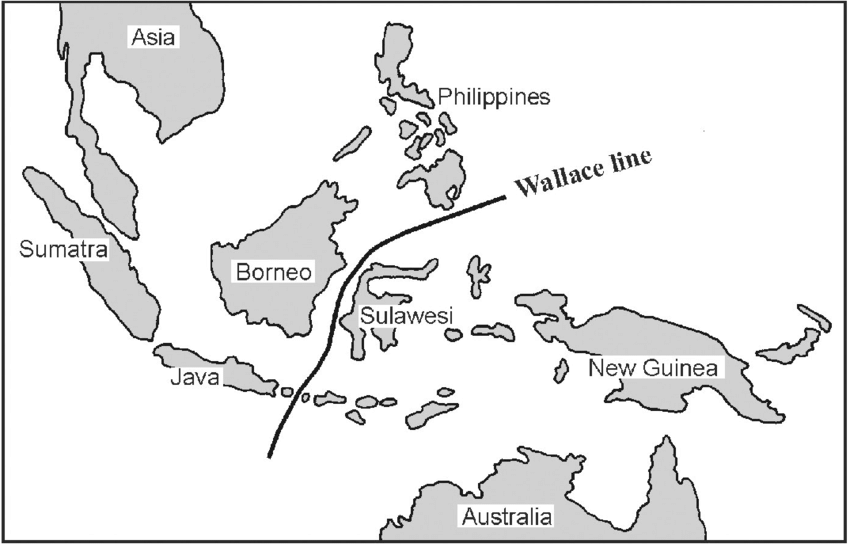
“Dragons are creatures of legend, but in a world as fantastic as Indonesia, myths become reality. On a small, 22 mile long island among the thousands of Indonesian isles lives the planet’s only living dragon -the Komodo (Varanus komodoensis)”

Extract from Wild Indonesia

In 1910, in eastern Indonesia on the island of Flores a Dutch colonial administrator, Lieutenant J.K.T. van Steyn van Hensbroek received word of a “land crocodile” living on the nearby island of Komodo. Intrigued, he decided to visit Komodo to investigate. He returned with a photo and a skin. The reptile was not a crocodile, but a large monitor lizard. In 1912, it was recognised as new to science and the first formal description of the lizard was published. It became known as the Komodo Dragon, the world’s largest living lizard.

So, what is Komodo Dragon Syndrome?

Komodo dragons are endemic to eastern Indonesia. They are found only on the northern coast of Flores and on three nearby islands including the island of Komodo. The Komodo Dragon can grow to over 3 metres in length and weigh up to 130 kgs. They are territorial, can run at up to 20 kph, are carnivores and have very sensitive forked tongues that sense prey and food, such as rotting flesh kilometres away. With a powerful tail, large claws and serrated teeth they have a fearsome reputation. Their bite is toxic due to the bacteria in their salvia and glands in their mouth produce a venom that prevents blood clotting and leads to unconsciousness.  Known to occasionally eat humans, they predominantly eat deer and pigs, which they ambush and bite, and wait then for them to succumb to their toxic bite.

No, it’s not about a fierce venomous predatory reptile.

The Dutch had been in Indonesia as a colonial power since the early 17th Century with the establishment of the Dutch East India (VOC) Company in 1602. The VOC was one of the world’s first multi-national companies. By 1800 however, due to mismanagement, corruption and fierce competition from the English East India Company, the VOC was bankrupt and was nationalised by the Dutch state.

The Dutch had been in Indonesia for over 300 years and had not found the Komodo Dragon, the world’s largest and most dangerous lizard. Even Lt van Steyn van Hensbroek, the ‘discoverer’ of the Komodo Dragon who was living on the island of Flores where it also lived, went to the island of Komodo to find it.

This defies explanation.

How could such an animal remain ‘undiscovered’ for so long?

This is what I call Komodo Dragon Syndrome, where the management can be so inward looking that something so obvious can be missed.

Perhaps the Dutch colonial administrators were ostrich managers or were so blinded by their colonial superiority and preconceived ideas that they failed to see what was virtually right under their noses.

The message is, to avoid suffering from Komodo Dragon Syndrome, we as managers need to ask questions, be inquisitive and manage by walking around.

Are you being complacent?

Too comfortable in your position, inward looking and missing the obvious?

Perhaps you have Komodo Dragon Syndrome.

#thenetworkofconsultingprofessionals