A time for reflection…

“There is always more to be done, more that should be done, always more than can be done”

Andy Grove – CEO Intel

Christmas is a time for reflection – appreciating what you have achieved in the year, celebrating with your family or friends, resting and enjoying the holiday break before starting the new year, energised and refreshed.

As business owners and managers, we are ALWAYS under pressure and have restrictions on our time. There is always more to be done, as Andy Gove’s quote says, “You can never get time back!” We can accumulate money, friends, customers and businesses, but we cannot accumulate time.

So how do we get ‘more time’?

A simple exercise to get your time back and get better results

As business owners and managers, we are under constant pressure and time commitments. As Andy Grove’s quote says, there is always more to be done and sadly, we are costrained by the amount of time we have.

There are only 1,440 minutes in the day.

Having a to-do list does not always mean we can allocate our time effectively. Many of us spend time on things we like doing, rather than on what we should be doing!

As a manager, do you know the difference between effectiveness and efficiency?

The difference can be summarised as follows …

Being effective is about doing the right things, while being efficient is about doing things right.

I worked with a business partner who had a to-do list that he compiled daily at the start of each day. He would work on the easy tasks, such as answering emails but not the more difficult ones. He may have been efficient at creating a to-do list, but he was certainly not effective. The important things including having difficult conversations with customers, were not being done.

For us, as managers there is a difference between being effective and being efficient.

  1. Effective – producing the intended or expected result
  2. Efficient – performing in the best possible manner with the least waste of time and effort

As managers, to ensure effective and efficient use of time, we need to minimise reactive attention and maximise focused attention. This means that we should do this when we have the most energy and can focus. Lower energy tasks can be attended to later.

Here are my recommendations:

  • Select the time during the day when you have the most energy and can focus. For me, I’m a morning person so it’s the first 2-3 hours of the day.
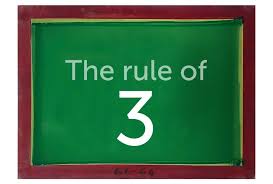
  • Decide on what your most important tasks for the day are. Draw up a list and prioritise them into three categories. I’m a big fan of the ‘rule of three’ :
    • Write down the things that only you can do
    • Write down the things you hate doing
    • Write down the things that you shouldn’t be doing

Once you have done this, prioritise the tasks you need to do to ensure effectiveness and delegate those tasks that you shouldn’t be doing. Also, this includes “eating the frog”which is the worst task for the day. It’s amazing the sense of satisfaction when you complete such a task, as it often triggers endorphins, making you positive and energised. Also delegate.

Now that you have categorised your daily tasks, the next challenge is to determine what we should focus as an effective manager. It should not be tasks that we like doing, but tasks that will have the most impact on your business. Activities such as administrative tasks and meetings can be completed in a ‘lower energy’ period of the day.

Do you think these suggestions have merit?

Everybody has their own way of prioritising daily tasks. Time is a limited resource. Remember you only have 1440 minutes in a day so it’s important use them effectively.

In conclusion, I encourage you to look back at everything you did during your last day or week and consider the percentage of time you spent on activities in each of the three categories. You are most likely to be shocked by how little time you spend on the important activities that will actually help your business grow!

Merry Christmas and a Happy New Year.

@thenetworkofconsultingprofessionals

Another parable for managers…

“You reap what you sow” – Anon

In a previous blog, I wrote about the parable of the talents. In summary, a parable is a short but simple fictitious story that illustrates a moral attitude or a religious principle. In ancient Greece and Rome, parables were employed by rhetoricians, politicians and philosophers. In ancient Israel, parables were uttered by prophets and wise women and men. Many of these appear in the Bible in oldest books of the Old Testament. Jesus also told parables to his disciples, and they appear in the New Testament.

In the Parable of the Sower by Jesus from the New Testament in Matthew 13:3-23 offers some lessons for today’s managers.

A farmer went out into a field to sow some seeds. As he scattered them across the ground, they fell on different types of soil, each representing a unique fate for the seeds. Some seeds fell along the path, where they were quickly snatched up by birds. Others landed on rocky ground, where they sprouted quickly but, lacking deep roots, withered under the sun’s heat. A few seeds fell among thorns, which grew up and choked them. But then, there were those that fell on good soil, where they produced a crop – a thirty, sixty, or a hundred times what was sown.

Certainly, the Parable of the Sower is one of those stories that resonates even today. Not only does it unveil truths about human nature and growth, it also offers lessons for today’s managers, providing an analogy of the conditions necessary for professional and business growth and the obstacles, that can prevent it.

Here are three lessons for today’s managers:

Lesson 1: Know Your Terrain

The first lesson is all about understanding your market and the conditions you’re operating in. Just as the sower faced different types of soil, business leaders encounter various market conditions. Some are hard and unyielding, like the path where seeds were easily eaten by birds. This can be likened to entering a highly competitive market with little chance of penetration. Then, there’s the rocky ground—initial excitement without sustainability, akin to launching a product without adequate support or a clear value proposition, leading to quick failure.

But there’s also fertile ground out there, markets or niches ripe for innovation, where if your seed—your product or service—lands, it can flourish.

The key?

Research, understanding, and adaptability. Just as a wise farmer tests the soil, savvy business leaders must analyse their market, understanding its needs, challenges, and opportunities.

Example in Today’s Business Environment

Consider the tech industry, where startups often face the “rocky ground” of rapid scaling without establishing a strong foundation, leading to burnout and collapse. In contrast, companies that find their “good soil,” like niche markets hungry for innovation, can experience exponential growth. Think of Zoom, which, by focusing on reliable, user-friendly video communication, became indispensable in the fertile ground of remote work necessitated by the global pandemic.

Lesson 2: Cultivation is Key

The parable also teaches us the importance of nurturing and protecting your ventures. The seeds that fell among thorns and were choked represent businesses that, while having potential, get overrun by external pressures—be it competition, market changes, or internal conflicts.

For business owners and managers, this means not just planting seeds but cultivating them—investing in your team, fostering a strong company culture, and staying vigilant against threats. It’s about creating an environment where your business can grow, unencumbered by the “thorns” that might seek to choke its potential.

Example in Today’s Business Environment

A prime example is the rise of small businesses and startups that prioritise company culture and employee well-being. Companies like Salesforce and Google, despite their size, focus heavily on maintaining environments that nurture their employees’ growth and creativity, effectively keeping the thorns at bay.

Lesson 3: Patience Yields Prosperity

Finally, the parable underscores the virtue of patience. Not all seeds will bear fruit immediately, if at all, but those that fall on good soil and are tended with care can yield a harvest beyond expectations. For businesses, this means having the patience to see initiatives through, to allow strategies to unfold, and to understand that not every venture will succeed—but those that do, can succeed spectacularly.

Innovation and growth often require time. The “overnight successes” we see are usually years in the making, built on perseverance, adaptation, and learning from failures. The message here is clear: be patient, be persistent, and keep sowing your seeds.

Example in Today’s Business Environment

Consider the story of Dyson. It took James Dyson over 5,000 prototypes and 15 years to create the first bagless vacuum cleaner. Yet, his persistence paid off, revolutionising the industry and leading to a company valued in billions. This is the epitome of patience yielding prosperity, illustrating the truth that the most fruitful harvests often take time to cultivate.

Can you think of any other lessons?

In conclusion, the parable teaches today’s managers the importance of understanding your market, nurturing your business, and having the patience to see your efforts come to fruition. In a world that’s constantly changing, these lessons remain as relevant as ever.

@thenetworkofconsultingprofessionals

Lessons for managers from Fawlty Towers…

Guest: “Is there anywhere they do French food?”

Basil: “Yes, France, I believe. They seem to like it there. And the swim would certainly sharpen your appetite. You’d better hurry, the tide leaves in six minutes.”

Introduction:

Fawlty Towers: The Setting and Popularity Explained:

“Fawlty Towers” was a classic humorous British sitcom, set in a hotel in the seaside town of Torquay. Here the eccentric and perpetually flustered Basil Fawlty runs a struggling hotel with his wife Sybil.

The show’s popularity can be attributed to a combination of sharp writing, impeccable comedic timing, and the brilliant performances of its cast, especially John Cleese as Basil Fawlty. The comedic chaos ensues as Basil interacts with the guests, his staff, and various unexpected situations

Main Characters and Their Idiosyncrasies:

  1. Basil Fawlty (John Cleese): The bumbling and irritable owner of Fawlty Towers, Basil is a study in mismanagement and social awkwardness. His exaggerated attempts to maintain an air of sophistication and control often result in disastrous consequences.
  2. Sybil Fawlty (Prunella Scales): Basil’s wife, Sybil, serves as the voice of reason in Fawlty Towers. However, her condescending and authoritative demeanour, coupled with her obliviousness to Basil’s antics, adds to the comedic tension.
  3. Manuel (Andrew Sachs): The lovable but linguistically challenged Spanish waiter, Manuel, is a perpetual source of confusion and frustration for Basil. His attempts to understand and execute orders often lead to comical misunderstandings.
  4. Polly (Connie Booth): The sensible and resourceful maid, Polly, is often caught in the crossfire of Basil’s misadventures. Her calm and collected demeanour provides a stark contrast to the chaos unfolding around her.

However, beyond the laughter, “Fawlty Towers” offers valuable insights into the world of management, in particular where ‘actions have consequences’. Manuel struggles with the English language result in frequent misunderstandings and chaotic scenarios. Basil’s attempts at managing the hotel are consistently inept. Furthermore, Basil’s social awkwardness and constant attempts to appear sophisticated often backfire.

There are plenty of lessons for today’s managers.

Here are three of them:

  1. Effective Communication Is Key:

Fawlty Towers recurring theme of communication breakdowns serves as a cautionary tale for managers. The show highlights the importance of clear and effective communication to avoid misunderstandings and chaos in the workplace.

  1. Leadership Requires Competence and Adaptability:

Basil Fawlty’s inept management style showcases the pitfalls of leadership without competence and adaptability. His attempts to cut corners, impress guests with grandiose schemes, and maintain an outdated status quo result in frequent disasters.

  1. Maintaining Professionalism Amidst Challenges:

While Fawlty Towers is a comedic farce, it underscores the importance of maintaining professionalism even in the face of challenges. Basil’s social awkwardness and unprofessional behaviour create a chaotic atmosphere in the hotel, impacting both staff and guests.

Can you think of any other lessons for managers?

In conclusion, “Fawlty Towers” remains a timeless classic, not only for its comedic brilliance but also for the insights it offers into the world of management. Through the misadventures of Basil Fawlty and company, today’s managers can learn that effective communication, leadership competence, adaptability, and maintaining professionalism amidst challenges are timeless lessons.

Postnote: John Cleese together with Anthony Jay (who co-wrote  the timeless “Yes, Minister” TV series) founded Video Arts, a company that created training videos for businesses using humour and great examples of what ‘not to do’ in managing businesses and people. Apparently, this was on the basis of “their observation that people learn very little when they are bored and nothing when they are asleep.”

@thenetworkofconsultingprofessionals

Vanishing Stripes: The Tragic Tale of the Tasmanian Tiger and Lessons for Business

 “Cowardly, as stealing down on the sheep at night and wantonly killing many more than it could eat, as being worthless for its skin” – description of the Thylacine in the 1880s in The Hobart Mercury newspaper!

Many years ago, I was flicking through a photo album of my grandparent’s honeymoon in Tasmania in the late 1920s. In the album was a photo of a Tasmanian Tiger, or Thylacine at the Hobart Zoo, the last of the species to die in captivity in 1936. I was fascinated that they had seen an animal, that is now extinct.

What was the Tasmanian Tiger?

It was not a tiger, but a marsupial carnivore with a slender body, dog-like head, and distinct dark stripes across its back. Native to Tasmania, it once roamed the Australian mainland but disappeared from there around 3,000 years ago, probably due to the introduction of the dingo which was a more effective and efficient hunter. Confined to Tasmania, it was the largest carnivorous marsupial of modern times.

What happened to it?

As European settlers moved into Tasmania in late 18th and early 19th century, being a carnivore, it developed a reputation as a livestock killer. Whether this was justified is open to debate. However, it was seldom seen and historical reports suggested it roamed in open grasslands rather than dense forest.

While human activities played a significant role in the extinction of the Tasmanian Tiger, other contributing factors included intensive hunting, habitat destruction, and diseases introduced by the European settlers. More importantly, government and bureaucratic incompetence played a critical part. In particular, in the 19th and early 20th centuries the Tasmanian government implemented bounties to protect the livestock industry. The indiscriminate killing of Tasmanian Tigers led to a significant reduction in their population, accelerating their path towards extinction. Furthermore, legislation was enacted to safeguard the Thylacine, but the measures were implemented too late and proved insufficient to counter the threats it faced. While the last known Tasmanian Tiger died in 1936, the lack of understanding of Thylacine biology also prevented successful breeding.

Do you think there are any lessons for managers in the extinction of the Tasmanian Tiger?

Here are three to consider:

  1. Adaptability in the Face of Change:

The demise of the Tasmanian Tiger is, in part, a story of failure to adapt to changing circumstances. Businesses, like species in the natural world, must be adaptable to thrive. The introduction of new technologies, shifts in consumer behaviour, and evolving market dynamics require businesses to embrace change, innovate, and remain agile.

Example: Blockbuster Video’s failure to adapt to the rise of online streaming is a stark reminder of the consequences of not embracing change. In contrast, Netflix, recognising the shifting landscape, evolved its business model to dominate the streaming market.

  1. Sustainable Practices for Long-Term Success:

The extinction of the Tasmanian Tiger emphasises the importance of sustainable practices for long-term survival. In the business world, sustainability extends beyond environmental considerations to encompass ethical business practices, social responsibility, and long-term planning.

Example: Patagonia, a renowned outdoor apparel company, has embraced sustainability as a core principle. Their commitment to environmental and social responsibility has not only earned them customer loyalty but also positioned them as a leader in the sustainable business movement.

  1. Government Policies and Business Impact:

The tragic tale of the Tasmanian Tiger underscores the impact of government policies on the fate of a species. In the business regulatory frameworks, industry standards, and government policies can profoundly influence the success or failure of enterprises.

Example: The Australian government introduced bans on tobacco advertising, implemented laws on plain packaging with graphic health warnings and removed visible displays of tobacco at point of sale and implemented high taxes on tobacco products. Daily smoking rates declined from 24% of adults in 1991 to 11% today. However, cigarettes became so expensive at over $40 per pack (compared to an average of $10 in the USA) it provided an opportunity for organised crime to smuggle illegal cigarettes into Australia resulting in arson and murder in ‘tobacco turf wars’ which continue to this day. Government actions and their reliance on tobacco taxes created opportunities for organised crime.

In conclusion, the extinction of the Tasmanian Tiger is a reminder that human actions, bureaucratic incompetence, coupled with environmental pressures helped sealed its fate. In the world of business, lessons from the demise of the Tasmanian Tiger include the need to embrace adaptability, foster sustainable practices and ensure you understand the implications of government policies when planning for the future.  

Can you think of any other lessons for businesses?

@thenetworkofconsultingprofessionals

What’s the Dunning Kruger effect?

“One of the painful things about our time is that those who feel certainty are stupid, and those with any imagination and understanding are filled with doubt and indecision.”
Bertrand Russell – British philosopher

What is the Dunning-Kruger effect?

In 1999 two social psychologists David Dunning and Justin Kruger identified a cognitive bias based on a bank robber who believed that lemon juice would make his face invisible, as lemon juice makes ink invisible. Setting off to rob his first bank, bank robber McArthur Wheeler waved at the CCTV cameras as he entered and left the bank. He was arrested soon after and exclaimed “But I wore lemon juice!”.

Similar events have occurred in South Africa where bank robbers and shoplifters have attached bottles of muti (traditional African medicine) to their belts thinking that this made them invisible. However, this is more a story of witchcraft rather than incompetence or over-estimating their abilities.

The Dunning-Kruger Effect is where individuals who have limited knowledge, competence or ability, wrongly imagine themselves to be very good at something they are obviously not!

In history there are many examples of the Dunning-Kruger effect. Hitler is but one example. He considered himself a great artist, but twice failed entry to Vienna’s Academy of Fine Arts. The admissions committee decided his drawing skills were “unsatisfactory”. Hitler also thought he was a military genius, and believed he could be the only man apart from Genghis Khan to successfully invade Russia. Sadly, this delusion led to the unnecessary deaths and suffering of tens of millions of people.

Does Dunning-Kruger effect have any relevance for us as managers?

Of course it does!

There are two effects:

  1. Not only are people incompetent, and this
  2. Incompetence robs them of the ability to realise how incompetent they are!

To put in bluntly, at the extreme end of the Dunning-Kruger Effect, stupid people do not realise they are stupid. A little knowledge can be a dangerous thing!

This can have unfortunate consequences. Hitler is but an extreme example.

Many incompetent managers suffer from the Dunning-Kruger effect. A lack of self-awareness is a common sign, although not all managers who lack self-awareness suffer from the Dunning-Kruger Effect. Managers who overestimate their abilities often are unable to recognise their own limitations. This leads to mistakes and poor decision making. Believing themselves to be experts in the field, they are often unwilling to seek feedback or ask for help,

Do you have any examples in your work life of the Dunning-Kruger effect?

I certainly do!

Here are three examples to consider.

  1. Over-estimate their own skills and achievements. For example, a dictatorial manager who is a poor communicator, micromanages and fails to listen. They believe they are a natural leader and refuse to acknowledge the negative impact their management style is having on their team.  This lack of self-awareness breeds frustration and low morale and can lead to a toxic work environment. Ultimately this harms the organisation’s success. I once assisted a fellow consultant in an organisation where the CEO thought because he had a PhD that he was the smartest person in the organisation and overestimated his success, despite evidence to the contrary. Morale was poor and the business was losing money.
  2. Don’t recognise the skills and knowledge of others. The manager who ‘knows best’ and fails to consult with their team. This can manifest in a variety of ways, such as being very vocal about one’s views, even in the face of evidence to the contrary, or being unwilling to consider alternative perspectives, believing they are the only one who truly understands the situation. This thwarts team building and staff development. In the example above, the CEO made the statement that there were ‘no real managers’ in the organisation and they were in reality ‘just clerks’. He never consulted them, asked for their opinions or sought their considerable expertise and experience. After he exited the business, we sought to engage the staff through a series of workshops seeking their input. The turnaround in morale was immediate.
  3. Resistance to Feedback and Constructive Criticism.  People exhibiting the Dunning-Kruger Effect may be resistant to feedback and constructive criticism. They may see any criticism of their views or actions as a personal attack, leading to defensiveness and an unwillingness to listen to others’ perspectives. Also, they refuse to recognise their own mistakes. This lack of insight often leads to poor team morale. I can remember a situation when I was in business where one of our partners refused to accept any feedback when we brought in an external consultant to review the business. His reaction was to sack the consultant.  

Encourage Self-Reflection and Self-Assessment

If you recognise the Dunning-Kruger Effect in yourself, how should you deal with it?

  • Encourage Self-Reflection

One key strategy for dealing with the Dunning-Kruger Effect is to encourage self-reflection and self-assessment. People who are aware of their own limitations and weaknesses are more likely to seek help and feedback, leading to better decision making and personal growth.

  • Provide Constructive Feedback

Another strategy is to provide constructive feedback to people who may be exhibiting the Dunning-Kruger Effect. It’s important to approach feedback in a non-judgmental way, focusing on specific behaviours or actions rather than criticising the individual as a whole.

  • Promote a Growth Mindset

A growth mindset can also help to combat the Dunning-Kruger effect. People who believe that their abilities can improve with effort and practice are more likely to seek feedback and learn from their mistakes, leading to personal and professional growth.

In conclusion by understanding the signs of the Dunning-Kruger Effect, we can better recognise it in ourselves and others, and take steps to address it. By encouraging self-reflection, providing constructive feedback, promoting a growth mindset, and fostering a culture of humility and openness, we can overcome the limitations of the Dunning-Kruger Effect and achieve our personal and professional goals.

What do you think?

@thenetworkofconsultingprofessionals

Are you using your talents?

“For it is as if a man, going on a journey, summoned his slaves and entrusted his property to them”.

Matthew 25

The Parable of the Talents

What is a parable?

The definition of a parable is a short but simple fictitious story that illustrates a moral attitude or a religious principle.

In Greece and Rome, parables were employed by rhetoricians, politicians and philosophers. In ancient Israel, parables were uttered by prophets and wise women and men. Many appear in the oldest books of the Old Testament. Parables were often used by Jewish rabbis of whom many were contemporaries of Jesus.

Jesus told parables to his disciples. Probably his most famous one was the Parable of the Good Samaritan, where a traveller is robbed and left by the side of the road. A Jewish priest and another Jew wander past and avoid the injured man. However, a Samaritan (who were despised by Jews) comes upon the traveller and assists him. Jesus’ parables usually teach us lessons. In the Parable of the Good Samaritan, the lesson in very broad terms is “show mercy to your fellow man”. This includes your enemies.

A parable told by Jesus that could be used for us as managers is the Parable of the Talents.

A wealthy man embarks on a trip and leaves three servants in charge of his money. Each is given a certain number of talents proportionate to their abilities. A talent in this case was a unit of money worth about 20 year’s wages. Two of the servants used the money wisely (and their business talents!) and returned a profit for their master and were rewarded. The third servant dug a hole in the ground and buried it, not earning any money and was penalised. One of the underlying messages here is that we are not all created with equal skills, abilities and opportunities.

What are the messages here for us as managers?

Here are three messages that come to mind.

  1. Value the opportunity. Each servant was given money to invest. Two of the servants took advantage of the opportunity and invested wisely, whereas one servant did not. He wasted the opportunity. Success only occurs when you take action. When you are offered an opportunity use your talents and take advantage of them, whether as a business owner, manager or employee.
  2. Reward those who do good work. The servants were rewarded on the basis of what they had achieved with what they had been given. Everybody has abilities (“talents” in the literal sense) and we should use what we have been given. There is no one that has no talents. As managers we need to recognise those who use their talents and reward them appropriately.
  3. Know who to trust. We live in a diverse world and we are different in many ways. The master realised this and gave talents (money) to each man “according to his own ability”. As managers we need to recognise different levels of skills and abilities of our employees and more importantly treat people humanly and with dignity. Clearly not everyone is created equal and we should recognise this a managers act appropriately.

Can you think of any other lessons in the Parable of the Talents?

Note: This blog is not meant to be a theological interpretation of the Biblical parables.

#thenetworkofconsultingprofessionals

Necessity is the mother of invention

“Our need will be the real creator” – Plato Greek Philosopher

Despite relatively low litter rates, in 2019 the Victorian State Government implemented a state-wide ban on lightweight plastic shopping bags. The Government explained this as a global problem, as plastics in the environment break up into smaller and smaller pieces over time.  Plastic bags can easily be blown into open spaces and waterways and pose a danger to marine life.

I was outraged. We reused shopping bags for bin liners and put ‘doggy poo’ in them when we walked our dog. We were recycling plastic bags and not allowing them into the environment. I considered that our household was doing our bit in helping the environment and recycling plastic bags.

Interestingly, the two major supermarkets who in Australia have over 50% market share displayed predictable oligopolistic behaviours. They immediately implemented the ban and then sold ‘reusable’ plastic shopping bags to customers, never missing an opportunity to make money.

In regard to the ‘doggy poo’ problem, we soon found alternatives to shopping bags. The plastic covering for bread, which previously were thrown into the rubbish bin made better ‘doggy poo’ bags than the now banned shopping bags.

The lesson here was that necessity made us find an alternative to shopping plastic bags. This happens in business. Here is an example and is another “lesson from the farm”.

I grew up on a farm in rural NSW, Australia. My father grew wheat and bred sheep and cattle. Ewes lambed in spring. One important task was to check them each morning to see if any were in difficulty, if lambs were not with their mothers or if lambs had been attacked by crows. So, each morning my father had to ‘catch a horse’ (go and round up his horse), saddle it and ride over a kilometre to the paddock where lambing was occurring, then ride around the flock to check them. This took well over two hours, a considerable part of the day. This was in the mid-1960s.

He gave it some thought and came up with the idea of using a motorbike. A bike didn’t need to be caught and saddled each morning, be fed and was far quicker than a horse. Placing an advertisement in the local newspaper he found a person wishing to sell a World War II era motorbike. Dad purchased it, and quickly learnt to ride it, especially in rough paddocks. He saved the equivalent of a day a week each week. Five years later Honda released their Honda 90 Ag Bike – necessity was the mother of invention!

Can you think of any examples in your organisation of necessity forcing innovation?

#thenetworkofconsultingprofessionals

The Valley of Tears…

“On 6 October 1973, the Yom Kippur war broke out between a coalition of Arab states and Israel. At 6 A.M. that morning, Kissinger, asleep in the Waldorf, was taken by surprise by the Arab attack – as were the CIA and the rest of the world”.

Alistair Horne – British Historian

Fifty years ago next month, on 6th October 1973 the combined forces of Egypt and Syria attacked Israel, the Sinai in the west and the Golan Heights in the northeast. This became known as the Yom Kippur War. The surprise attack occurred on the Jewish Yom Kippur holiday when most of the Israeli military were on leave.

Egypt’s prime reason for the attack was to force Israel to negotiate a peace treaty for the return of the Sinai. The Egyptians did not advance any further than a narrow strip of the Sinai that could be protected by SAM missile batteries. However, the Syrians had different aims, to retake the Golan Heights taken in 1967 Six Day War and destroy Israel. With the unexpected success of the Six Day War, Israel was arrogant, complacent, overconfident, and believed that their intelligence would anticipate any assault.

In particular, the battle of the Golan Heights has some important lessons for managers and leaders.

More than 1,400 Syrians tanks, 28,000 troops and 600 artillery pieces poured into the Golan Heights, opposed by just 180 Israeli tanks, 3,000 troops and 60 artillery pieces. Syrian intelligence had estimated that due to the Yom Kippur holiday it would take 20 hours for the Israeli reservists to reinforce the Golan Heights, however instead it took 10 hours.

By 5pm on 7th October with the Israelis under sustained pressure, the Syrians at the instruction of their President, unexpectedly halted their advance on the road to Galilee. The bridges over the Jordan River were virtually undefended and the road to Israel was open to the invading force.

Despite the overwhelming numbers, the Israeli forces manage to hold the advance in time for the reservists to arrive. In what became known as the ‘valley of tears’, the Syrian armoured forces suffered horrendous losses against a far numerically inferior foe, turning the tide of the battle for the Golan Heights.

So, what happened?

The Syrians were numerically superior, armed with up-to-date Soviet weaponry and night vision equipment which the Israelis did not have. When their lead tanks were destroyed, the Syrian tanks refused to stop, move off the roads or bypass the destroyed vehicles. This caused roadblocks and made them easy targets for the highly trained Israeli tank crews.

The Syrians refused to manoeuvre unless ordered by higher command. Syrian forces demonstrated a critical lack of adaptability and comprehensive training. This was in direct comparison to the Israeli forces, who despite being outgunned and outnumbered, changed their tactics.

The most famous of the adaptability of tactics was a young Lieutenant Zvi Gringold, known affectionately as ‘Lieutenant Zvicka,’. He became a legend and was awarded Israel’s highest decoration. His hit-and-run tactics initially destroyed 10 Syrian tanks and he was credited with single-handedly holding at bay 50 Syrian tanks. The Syrians thought they were up against a large Israeli force and withdrew. Throughout the night and following day, Gringold continued to engage the Syrians and destroyed another 30 tanks. These tactics were copied by other Israeli tank commanders.

The tide in the battle for the Golan Heights began to turn as arriving Israeli reserve forces were able to contain the Syrian advance.  The arrival of the reservists was the beginning of the end for Syria. After four days the Israelis succeeded in pushing the Syrians out of the Golan Heights and began their march towards the Syrian capital, Damascus.

What are the lessons for leaders here?

Lesson 1: Remote and authoritarian leadership often fails. The Syrian advance was unexpectedly halted by the Syrian Dictator President Assad, but the road into Israel was virtually undefended. Clearly the best decisions are often made close to the battlefield and in business close to ‘the coal face’ as the managers have a better understanding of the situation.

How often do decrees from head office seem remote and unrealistic?

Lesson 2: Decentralised leadership is far more effective and allows managers to react to the situation. In this case,case, as demonstrated by ‘Lieutenant Ziva’ the Israelis adapted their tactics to meet the situation, despite the overwhelming numerical superiority of the Syrians.

In our former logistics business, we gave our supervisors the authority to manage customers face-to-face on a daily basis, without always referring to the Warehouse Manager. This enabled them to manage the usual crises that occur in logistics in a proactive and ‘customer centric’ way, resulting in customers staying with the business over the long term.

Lesson 3: Over confidence and arrogance are dangerous. With the overwhelming success of the 1967 Six Day War, the Israelis were arrogant. They ignored the intelligence and were caught short. As Andy Gove, the founder and former CEO of Intel said; “only the paranoid survive”. Gove warned against the ‘inertia of success’.

Can you think of any businesses that were initially successful but failed because they were complacent and arrogant?

Kodak dominated the photographic film industry with over 50% of the global market share. It ignored the market disruption caused by digital cameras. Ironically, a Kodak engineer in 1975 invented the digital camera, but it was ignored by management. In 2012, Kodak filed for bankruptcy.

#thenetworkofconsultingprofessionals

Lessons from the Great Train Robbery…

“There’s a difference between criminals and crooks. Crooks steal. Criminals blow some guy’s brains out. I’m a crook”

Ronnie Briggs – Great Train Robber

Sixty years ago, this month on 8th August 1963 the Glasgow–London Royal Mail Train was held up by 15 men, wearing helmets, ski masks, and gloves. The train was carrying mostly used bank notes to be destroyed. This was known as the Great Train Robbery.  The ringleader, Bruce Reynolds was a known burglar and armed robber. Just over £2,600,000 (£50m today) was stolen in an audacious and apparently well-planned heist aided by inside information. It only took 15 minutes. No firearms were used, although the train’s driver was seriously injured when bashed with a metal bar.

Before the Great Train Robbery, Reynolds had organised a gang and conducted a successful £62,000 airport robbery. Flush with this success, Reynolds began searching for ‘the next big one’. Upon identifying the opportunity, Reynolds realised that he needed help from the London underworld as his original gang could not do the job alone.

The train was stopped when the robbers turned off a green track signal with batteries and turned on a red signal. Approximately 120 mail bags were taken from the train to a farm hideaway, where it was divided up. During the robbery, one of the gang told the postal staff on the train not to move for 30 minutes. This information suggested to the police that the hideout was within a 30-mile radius.

On hearing on the radio that the police were narrowing the search, the robbers hurriedly left the farm the day after the robbery. Only five days after the robbery a local farm worker had noted suspicious vehicles at a neighbouring farm and advised the police. When two police came to the farm, they found the Landrovers and truck used in the robbery, plus bedding, food, post office bags, banknote wrappers and a monopoly board. Part of the plan was to burn down the farmhouse. However, the robbers in their haste left fingerprints on a tomato sauce bottle and the monopoly board. Apparently, the robbers had played monopoly with real money from the heist!

The robbery had attracted far more police attention than anticipated by the robbers. It also captured the imagination of the public and the media. A reward of £250,000 was offered. A breakthrough came when an informant gave the police a list of names. Some of the names were matched to the fingerprints from the farm. With this and other evidence, by Christmas 12 robbers had been caught, convicted and sentenced up to 30 years jail.

Only three of the robbers remained at large. Reynolds and two others went abroad to Mexico and lived the highlife. By 1968 Reynolds had spent most of his ill-gotten gains. He planned another large robbery and returned to England where he was arrested. Ronnie Biggs escaped from prison in 1965, fled first to Paris, then after undergoing plastic surgery travelled to Australia, and finally to Brazil in 1970. He remained at large as there was no extradition treaty between Brazil and the UK. In 2001 after suffering several strokes, he returned voluntarily to the England and was rearrested.

Are there any lessons here for managers in this ‘crime of the century’ (apart from the obvious lessons of crime not paying and it’s not a good idea to play Monopoly with real money)?

The robbery was well planned and executed with military precision. But by Christmas in 1963, 12 of the robbers had been arrested. Hardly a sign of success!

Here are three lessons I think we can take away from the Great Train Robbery:

  • 1. Have a vision.  

Reynolds as the leader was the brains behind the daring heist. Following the ‘success’ of the airport robbery, Reynolds wanted a bigger challenge. In the dialogue from a movie of the robbery, Reynolds was quoted as saying:

“You’ve got to dream big.  What are we here for if we don’t make our mark? It was never just about the cash.  It’s the buzz.  Building the team, finding the job, planning the job, carrying it out. It’s the camaraderie. Trusting other men with everything you know. With your life.”

Although this is a fictional quote it is probably is an accurate depiction of what occurred. Reynolds had clear vision – in other words a vision statement! The power of vision is very powerful. An ingredient of a successful business is to have a very clear vision.

  • 2. Plan thoroughly.

With a clear vision, Reynolds meticulously prepared and planned the robbery. He realised that the scope was beyond his immediate circle’s skills and quickly expanded the size and skills of the gang.  He was faced with needing specific skills to ensure success. This included how to fake the train signals to stop the train and how to drive the train once it was held up. Sound planning allowed the initial success of the robbery – in 15 minutes.

  • 3. You cannot plan for all eventualities and you should have a plan B.

Despite the meticulous planning, the robbers did not plan for all eventualities. In reality, in business it is also not possible to plan for all eventualities. However, you should always have a Plan B. A contingency plan if ‘things go wrong’. When calm leadership was required, the gang panicked when they heard that the police were searching within a 30-mile radius of the robbery. They left the farm and didn’t adequately cover their tracks. In other words, despite the planning there was poor execution which resulted in the robbers being caught.

In concluding, there is nothing like a good story to demonstrate a point and the Great Train Robbery certainly does this!

What do you think?

Note: I am not condoning the robbery that left the train driver seriously injured. Just using a well-known story as an example for managers. The robbery was a success, but many things went wrong after that.  The amount stolen was so much more than expected that it sparked a major investigation plus “crime of the century” publicity. The police response was swift and successful. An example of sound management and leadership.

#thenetworkofconsultingprofessionals

Rewriting history…

“Who controls the past controls the future. Who controls the present controls the past”

George Orwell – British author

My great great grandfather William and his wife Jane emigrated to Australia from the Orkney Islands, north of Scotland in the late 1850s. Initially he worked as indentured shepherd on a squatters run (sheep station) before conditionally purchasing land on which to farm. According to family ‘history’ he carried a newspaper clipping of the sinking of the ‘Dunbar’ in his wallet.

The ‘Dunbar’ was a sailing ship that operated on the Britain to Australia route in the 1850s. It was the pride of the Dunbar company fleet. It was modern (for those days) and fast. On the evening of 20th August 1857, the ‘Dunbar’ was wrecked whilst attempting to enter Sydney Harbour during a storm. There was only one survivor and 121 perished, many of whom were prominent and wealthy Sydney residents returning from England. The impact on the small Sydney community was immense. Many of the citizens viewed the wreck from the cliffs near the entrance to Sydney Harbour, witnessing bodies washing up and sharks feeding on the carcasses along with the wreck debris. An inquest was held within a week of the sinking. After only one day it found that the cause of the tragedy was an ‘error of judgement’ and ‘did not attach any blame to Captain Green or his officers’. However, this did not stop the politicians and the local media of the day in particular, from blaming the dead captain for the tragedy. It was far better to blame the dead captain than the contributing factors of the inadequate pilot service, lack of lights at the entrance to the harbour or the poor location of the Macquarie lighthouse.

So why did William carry this clipping in his wallet?

Because he and his wife were booked to sail on ‘The Dunbar’ and escaped certain death?

An interesting family story, but was it true?

The ship William and Jane sailed on, the ‘John Bunyan’ left Liverpool on 9th August 1857 and arrived in Sydney on 27th October 1857. The ‘Dunbar’ left Plymouth on 31st May 1857 and was wrecked on 20th August 1857. There are two inconsistencies here. The ‘Dunbar’ left Plymouth over two months before the ‘John Bunyan’ sailed from Liverpool. It is extremely unlikely that William and Jane would have been in England two months before they sailed. They were poor immigrants from the wet and windy Orkneys. They could not have survived this period of time waiting in England. The second inconsistency was that they left from Liverpool, a far closer port to Scotland than Plymouth which is located in the south of England.

So, the story was simply ‘family folklore’.

What are the lessons here for managers?

Don’t believe everything that you are told?

Check your facts and get to the source and question everything?

How often in organisations, is a person used as a scapegoat to ‘rewrite’ the organisation’s ‘history’ and justify new management?

In the book 1984 by Eric Blair (better known as George Orwell), the ‘hero’ of the novel, Winston Smith was introduced to the concept of ‘re-writing’ history when working at the Ministry of Truth. The Party understood that by rewriting the events of the past and controlling the narrative of history, they could maintain their position of authority. Captain Green of the ‘Dunbar’ was made a scapegoat for the tragedy. This often happens in organisations and in politics.

Note: There may be another explanation for the newspaper clipping story. The Captain and Second Officer were both from Orkney. They could have been known to my ancestors, although that is unlikely as they were from different islands – or perhaps they ‘felt lucky’ that they did not suffer the same fate as the passengers and crew on the ‘Dunbar’. By the time my ancestors arrived in late October 1857, Sydney was enmeshed in the ‘Dunbar’ tragedy – there had been wide media coverage, several books had been written, paintings completed, and artifacts from the wreck sold. They certainly would have known about the tragedy.

Who knows?

#thenetworkofconsultingprofessionals