Rewriting history…

“Who controls the past controls the future. Who controls the present controls the past”

George Orwell – British author

My great great grandfather William and his wife Jane emigrated to Australia from the Orkney Islands, north of Scotland in the late 1850s. Initially he worked as indentured shepherd on a squatters run (sheep station) before conditionally purchasing land on which to farm. According to family ‘history’ he carried a newspaper clipping of the sinking of the ‘Dunbar’ in his wallet.

The ‘Dunbar’ was a sailing ship that operated on the Britain to Australia route in the 1850s. It was the pride of the Dunbar company fleet. It was modern (for those days) and fast. On the evening of 20th August 1857, the ‘Dunbar’ was wrecked whilst attempting to enter Sydney Harbour during a storm. There was only one survivor and 121 perished, many of whom were prominent and wealthy Sydney residents returning from England. The impact on the small Sydney community was immense. Many of the citizens viewed the wreck from the cliffs near the entrance to Sydney Harbour, witnessing bodies washing up and sharks feeding on the carcasses along with the wreck debris. An inquest was held within a week of the sinking. After only one day it found that the cause of the tragedy was an ‘error of judgement’ and ‘did not attach any blame to Captain Green or his officers’. However, this did not stop the politicians and the local media of the day in particular, from blaming the dead captain for the tragedy. It was far better to blame the dead captain than the contributing factors of the inadequate pilot service, lack of lights at the entrance to the harbour or the poor location of the Macquarie lighthouse.

So why did William carry this clipping in his wallet?

Because he and his wife were booked to sail on ‘The Dunbar’ and escaped certain death?

An interesting family story, but was it true?

The ship William and Jane sailed on, the ‘John Bunyan’ left Liverpool on 9th August 1857 and arrived in Sydney on 27th October 1857. The ‘Dunbar’ left Plymouth on 31st May 1857 and was wrecked on 20th August 1857. There are two inconsistencies here. The ‘Dunbar’ left Plymouth over two months before the ‘John Bunyan’ sailed from Liverpool. It is extremely unlikely that William and Jane would have been in England two months before they sailed. They were poor immigrants from the wet and windy Orkneys. They could not have survived this period of time waiting in England. The second inconsistency was that they left from Liverpool, a far closer port to Scotland than Plymouth which is located in the south of England.

So, the story was simply ‘family folklore’.

What are the lessons here for managers?

Don’t believe everything that you are told?

Check your facts and get to the source and question everything?

How often in organisations, is a person used as a scapegoat to ‘rewrite’ the organisation’s ‘history’ and justify new management?

In the book 1984 by Eric Blair (better known as George Orwell), the ‘hero’ of the novel, Winston Smith was introduced to the concept of ‘re-writing’ history when working at the Ministry of Truth. The Party understood that by rewriting the events of the past and controlling the narrative of history, they could maintain their position of authority. Captain Green of the ‘Dunbar’ was made a scapegoat for the tragedy. This often happens in organisations and in politics.

Note: There may be another explanation for the newspaper clipping story. The Captain and Second Officer were both from Orkney. They could have been known to my ancestors, although that is unlikely as they were from different islands – or perhaps they ‘felt lucky’ that they did not suffer the same fate as the passengers and crew on the ‘Dunbar’. By the time my ancestors arrived in late October 1857, Sydney was enmeshed in the ‘Dunbar’ tragedy – there had been wide media coverage, several books had been written, paintings completed, and artifacts from the wreck sold. They certainly would have known about the tragedy.

Who knows?

#thenetworkofconsultingprofessionals

A management lesson from Erik the Red and the Vikings

“Wisdom is welcome wherever it comes from” – an old Viking saying

The Viking series on TV has become a very popular program with tales of murder, treachery, and intrigue. In real life the Vikings were the first recorded explorers to set off into the unknown with colonial ambitions. This is distinct from empire builders such as the Persians and Romans who massed large invading armies. The Vikings originated in Scandinavia and plundered their way through Europe, into the Middle East and through to the edge of Asia. They also explored and settled in the north Atlantic from Iceland, then Greenland through to North America.

The Vikings were primarily feudal farmers, where the ownership of land and animals was important. As the population grew in the settlements along the Scandinavian fiords, this placed a strain on resources. Combined with harsh winters there seemed little alternative but to search for further settlement elsewhere. In the north Atlantic, the first place settled was Iceland, followed by Greenland and then North America. This was over 500 years before Columbus “discovered” America.

The Viking settlement in Greenland provides some lessons for managers today. Greenland was settled in the 10th Century by Erik the Red. Apparently a violent man, Erik was initially banished from Norway to Iceland for unlawful killing, then banished again from Iceland for the same offence. The long winters, anda propensity to drink in excess, combined with a violent temper were clearly a recipe for disaster. Exiled from Iceland, Erik sailed west and “discovered” and settled in Greenland. It was called Greenland as initially it could sustain traditional Viking farming, having been settled in the Medieval Warm Period. The colonies in Greenland continued for another 400 plus years, then disappeared.

So, what happened?

The Norse colonists failed to adapt to the changing climate. With the beginning of the Little Ice Age in the early 14th Century, their farming techniques did not change. Cattle were preferred, but sheep and goats were better suited to the climate. Forests were felled for heating and to smelt iron. Like Iceland where the Vikings settled earlier, the soil proved shallow and was prone to erosion. Timber and iron were critical in maintaining their lifestyle and technological superiority over the local Innuits.

Furthermore, as the climate cooled the annual trade ships from Norway were abandoned as the pack ice prevented the longboats from reaching Greenland. At the same time a more aggressive Innuit tribe arrived in Greenland, armed with bows and arrows. Competing for the scarce resources they were able to hunt seal and whale more efficiently in kayaks than the Vikings, who failed to adjust to the changes. Inevitably fighting ensured, crops failed, the soil eroded, trade with Norway ceased and by the 16th Century the Greenland colony disappeared.  

What are the management lessons?

  • Adapt or Die: The Vikings failed to adapt to the multiple challenges posed by the climate and the Inuit threat. As a consultant, I once had a client whose business was based on supplying engineering services and products to the Australian motor vehicle manufacturing industry. Despite my protestations that he had all his eggs in the one basket and there was a high risk that vehicle manufacturing was likely to cease in Australia he refused to change his business plan. Their largest customer ceased manufacturing in 2017 and the business folded.
  • Know your Competitors: The Vikings failed to understand the threat the Inuits posed as competitors, and either ignored them, or failed to accommodate them through trade and technology transfer. There was a sense of European cultural superiority As noted earlier with the example of the auto engineering business who supplied a major auto manufacturer in Australia, the owner refused to acknowledge that the competitors to his business were offshore.
  • Isolation is Bad Practice: As the climate cooled the trading ships from Iceland and by extension, the rest of Viking Europe failed to arrive due to the Arctic ice. The trade ceased and the Greenlanders became isolated and inward looking. They eventually disappeared. Just like the example of the engineering company who cut themselves off from the real world and went out of business, the Vikings of Greenland were no different.

Can you think of any other management lessons from the history of the Vikings?

#thenetworkofconsultingprofessionals

How the Marathon was nearly axed as an Olympic event..

“They cast me out and they were jealous because I turned in the fastest time ever run by a human and it was impossible at the time”

Ben Johnson – disgraced 100m 1988 Olympic “Champion”

The head of the International Olympics Committee Pierre de Coubertin described the 1904 St Louis Olympic Games in the USA as an “outrageous charade”. The running of the men’s marathon was so poorly organised and managed, the event was nearly abolished for future games.

So, what happened?

At 3:03pm on a hot summer day in 1904 St Louis Olympic Games, the marathon runners set off from the stadium in oppressive heat amongst horses and dogs and over dusty and unpaved roads. Many of the athletes were not experienced long distance runners. Two members of South Africa’s Tswana tribe raced in bare feet. They finished ninth and twelfth. However, they could have done better if one of them had not been chased off course by wild dogs.

Another entrant, Cuban Félix Carbajal de Sotos blew all his donated funds when he went gambling in New Orleans. He hitchhiked to St Louis in time for the marathon, showing up in a dress shirt, slacks, leather street shoes and a beret. Luckily a sympathetic spectator using a pair of scissors and helped him turn his pants into shorts. He came 4th!

There was only one water station on the entire course. The organisers deliberately deprived the athletes of water as they wanted to test the theory called ‘purposeful dehydration’, that is water diminishes athletic performance. Over half the participants dropped out from dehydration and several nearly died. American runner William Garcia collapsed halfway through the course and needed emergency surgery because he ingested so much dust that it had ripped his stomach lining.

The first ‘winner’ was 20-year-old Fred Lorz. He had given up at the 14th kilometre mark. His trainer offered him a lift to the stadium so he could pick up his clothes. However, the car broke down, so Lorz decided to run the rest of the way. He ran across the finish line first and had his photograph taken with the daughter of President Theodore Roosevelt. And just as he was about to accept the gold medal a witness stepped forward and declared him a fraud

The eventual winner, Thomas Hicks doped up and hallucinating on rat poison was dragged across the finishing line by his trainers. This certainly would not be allowed in the Olympics today! The Amateur Athletics Union immediately banned Lotz for life for ‘cheating’. This was overturned after a year, and he subsequently won the 1905 Boston Marathon!

Are there any lessons for managers in this fascinating Olympic episode?

Here are three that come to mind.

  1. Just like in sport, organisations need clear policies and procedures that provide rules of behaviour
  2. The importance of safety protocols and policies. They are essential in organisations to prevent accidents and injuries
  3. Be prepared to improvise. The unlucky gambler Cuban de Sotos despite not be correctly attired to run the marathon with the help of a bystander improvised and still managed to do remarkably well

Can you think of any other lessons?

#thenetworkofconsultingprofessionals

So where is Werris Creek?

“Many times, the wrong train took me to the right place.”

Paulo Coelho – Brazilian lyricist and novelist

Whist undertaking post graduate studies many years ago, one of my fellow students and friend was a senior executive of Queensland Rail. He had started his career as a clerk in a rural railway station in outback Queensland and went on to hold senior executive positions in rail businesses in Australia. Clearly rail was in his blood, as his father had been a fettler on the railways.

One of his father’s postings was to the tiny and declining town of Wallangarra on the Queensland New South Wales border. The town had been established in 1885 for the sole purpose of being the connecting link between the NSW rail system and the rural Queensland rail system. Wallangarra was the result of two state governments deciding to build railways of different gauges; narrow gauge in Queensland (1067 mm) and standard gauge in NSW (1435 mm). This meant that people travelling from Queensland to NSW had to alight at Wallangarra and change trains in the historic town of Tenterfield just across the border. Not surprisingly this ensured that the tiny settlement became a major railway junction.

In northwest NSW, there lies another important railway junction town called Werris Creek. Werris Creek like Wallangra did not exist until the late 1870s when the railway arrived. A town of approximately 2,000 people, this was where trains from Sydney could be diverted onto three branch lines to various locations in country NSW, with one branch line terminating in Tenterfield. By co-incidence, as a young farm boy I lived less than 20 minutes’ drive from Werris Creek.

Anyway, back to my friend and fellow student. During the school holidays, he worked as a casual railway porter moving luggage from Wallangarra to Tenterfield, just across the border. All the luggage was marked ‘To Werris Creek’. As a young, and obviously naïve lad, he thought that Werris Creek was one of the largest cities in NSW. Having lived near Werris Creek the irony of this was not lost on me.

What are the lessons here?

How often are we as managers given a picture of a situation that is unrealistic?

Today, in the age of the internet there are organisations that appear much larger and more substantial than they are in the real world. With the advent of social media, virtual organisations and people exist.

Doing your homework will certainly help and don’t take things on face value.

This what I call this the ‘Werris Creek Affect’

Can you think of examples of ‘Werris Creek Affect’ in your working life?

Post note: the last train left Tenterfield in 1988 and the last scheduled train to Wallangarra left in 1997.

#thenetworkconsultingprofessionals

Are you prepared for a ‘black swan’ event?

“The problem with experts is that they do not know what they do not know.”

― Nassim Nicholas Taleb, author of The Black Swan: The Impact of the Highly Improbable

What is a black swan event?

The phrase “black swan” derives from a Latin expression; “rara avis in terris nigroque simillima cygno” – “a rare bird in the lands and very much like a black swan”.

A black swan event is a rare event that is positive or negative, is deemed improbable yet has massive consequences and could not have been predicted even with the help of sophisticated modelling techniques. For example, an event that has a severe impact on the economy, social conditions, and overall well-being of a nation. The recent COVID pandemic has been called a ’black swan’ event or Russia’s invasion of Ukraine.

A characteristic of a black swan event is low probability and high impact. Often it becomes rationalised in hindsight, as if it could have been expected. Once again, the COVID example comes to mind. The so-called experts had been ‘predicting’ that the world was overdue for a worldwide pandemic as the last deadly one was the Spanish Flu pandemic, over 100 years ago. However there had also been other pandemics that were not as deadly as the Spanish Flu, namely the Hong Kong Flu in 1968 and the 1957 Asian Flu.

Apparently, the phrase was commonly used in 16th century London as a statement of impossibility. It derives from the presumption that all swans must be white as there were no records of swans having feathers that were NOT white. Therefore, a black swan was impossible or at least non-existent. However, in the late 17th century, Dutch explorers became the first Europeans to see black swans, in Western Australia.

Did this change the meaning of the term ‘black swan’ event?

Yes and no.

Nassim Taleb in his book The Black Swan: The Impact of the Highly Improbable said that black swan events have three characteristics:

1. Low predictability based on prior information

2. High consequence, and sometimes catastrophic impact

3. Explained in hindsight as if it were actually predictable

The main idea in Taleb’s book is not to attempt to predict black swan events, but to build robustness against negative ones that occur and to be able to exploit positive ones.

As a business, how can you prepare for a ‘black swan’ event?

This is a challenge for all business managers and leaders.

Some of the possible strategies for dealing with a black swan event include having a business continuity plan and testing it, diversification into unrelated industries, for example a mining company who is reliant on one commodity could move into other commodities, develop alternative supply chains and having adequate insurance cover.

The critical aspect for business to minimalise the impact is to build robustness in the business.

#thenetworkofconsultingprofessionals
Rabbits, dams and engineering faults!

“He who chases two rabbits, catches none”
— Confucius

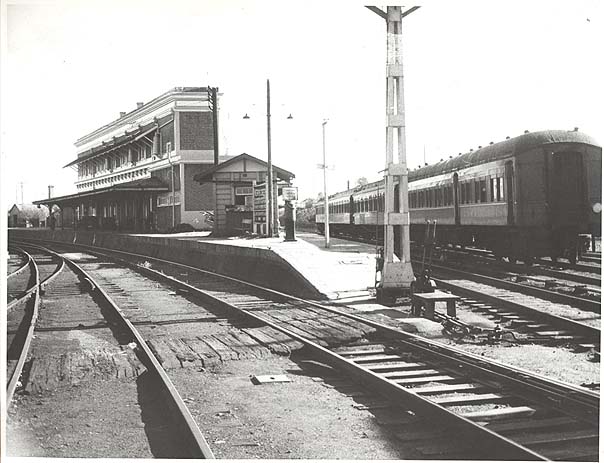
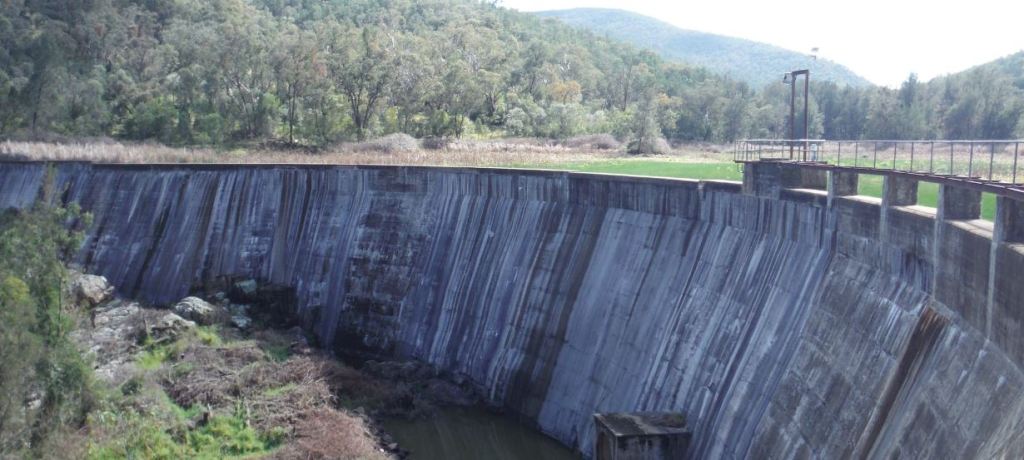
I grew up on a farm in northern NSW. Running through the property was a creek which had two significant dams on it. The first dam was called ‘the old Quipolly Dam’. This concrete span dam wall was built in the early 1930s to provide water for the town of Werris Creek, a town that did not exist until the coming of the railway in the mid-1870s. Being a major rail junction town, water was essential as steam engine locomotives require lots of water. The second newer dam bordered our property. It had an earth wall and was built in the late 1950s to replace ‘the old Quipolly Dam’.

By 1947, when my father moved onto our farm with his parents ‘the old Quipolly Dam’ had silted up. This was less than 15 years after it had been constructed. My father told me that during the 1940s drought rabbits had denuded the landscape. Without grass ground cover, heavy rain caused severe erosion. The sediment ended up in ‘the old Quipolly dam’ as silt. This seemed a logical explanation for the silting.

My father spent his whole life trying to eradicate rabbits on the farm. Trapping, poisoning, releasing calicivirus and myxomatosis viruses, ripping rabbit warrens and shooting them. As young boy I trapped and shot rabbits and every year we undertook a poisoning campaign.

So, the rabbits seemed to be a logical explanation.

Several years later I was doing some family history research and found an engineering research paper. It studied several small railway dams built between 1890 and 1932 in NSW that had silted up. One of dams studied was ‘the old Quipolly dam’. The research paper concluded that ‘the most extreme hydrological events are extreme floods following a long drought period’ and this led to where ‘large sediment loads are carried away into the reservoirs.’

So, were ‘the rabbits’ were responsible for the dams’ siltation problems?

Well, not exactly.

Whilst erosion was a contributing factor, the main reason was a design flaw in the dam’s walls. The basic design of the dam’s arch wall had not changed in over 40 years. This was despite the fact that several dams with curved concrete walls had silted up within 25 years, all before the construction of ‘the old Quipolly Dam’. The wall design did not consider the fundamental concepts of sediment transport. The dams did not have a large outlet for sediment ‘flushing’, resulting in a silt or sediment building up against the curved dam wall.

Rabbits and probably overgrazing that had denuded the landscape during a drought were not the underlying cause of the silting up of the dam, but a contributing factor only.

What do you think the management lesson is here?

Here are some to consider.

We can all remember being told something in our working lives and then finding out this was incorrect. Remember the ‘weapons of mass destruction’ that Iraq had that were used as a pretext for invasion?

Perhaps another lesson is not to believe what bureaucracies or governments do or tell you. In this example, there were several dams of similar design that silted up well before ‘the old Quipolly Dam’ was built.

  • Often, an explanation that seems logical may not be the cause of the problem. In this example, it was only a contributing factor.

As a logistics professional I am continually frustrated when allegedly logical transport solutions do not stand up to scrutiny. For example, a common theme pushed by politicians and special interest groups is that the construction of freeways increases pollution.

Really?

Think about it.

If we did not have freeways, cars, average speed would be lower, more stops and starts, traffic lights, slower travel times and more congestion and pollution.

Can you think of other examples in your working life where this has been the case?

#thenetworkofconsultingprofessionals

Eat that frog…

Eat that frog…

‘If it’s your job to eat a frog, it’s best to do it first thing in the morning. And If it’s your job to eat two frogs, it’s best to eat the biggest one first.

Mark Twain – American writer and humourist

When I was growing up in rural Australia, frogs were part of life. Normally they were green tree frogs and could often be found resting inside the overflow of the rainwater tank or in the toilet cistern. As children, we sometimes kept them as pets in a glass tank and fed them insects. However, I was never tempted to eat a green tree frog – although I must admit I have tried frog’s legs in a French restaurant.

How does the metaphor ‘eating a frog’ relate to productivity?

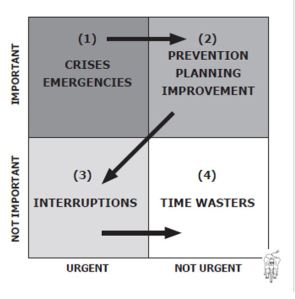
As managers and business owners, we are confronted each day with tasks and the challenge is to prioritise them. We can create a ‘to do list’ and then assign importance to each task:

  • A – most important,
  • B – next most important,
  • C – not important.

Determining what is important is a challenge.

Managerial tasks can be:

  1. Urgent and important – crises, deadline-driven activities, customer issues
  2. Not important and urgent – interruptions such as phone calls and emails, some meetings
  3. Important and not urgent – strategy and planning, building relationships, major projects
  4. Not important and not urgent – activities not beneficial to goals, personal emails, internet browsing.

One of the major problems for me, personally, and when speaking to other business owners, is that we do tasks we like doing rather than the tasks we should be doing. We procrastinate and often avoid the really difficult chores such as dealing with an employee’s performance or visiting a disgruntled customer.

Time is the great equaliser, as you cannot create any more time. Everybody has only 1,440 minutes in a day. The challenge is to manage time to get the best outcomes. The decision-making matrix for time management is a good model to use when determining where your priorities lie and where you should direct your energies to get the best results.

Brian Tracy, in Eat that Frog!, outlines some great ways to stop procrastinating and become more productive. Tracy recommends you tackle the most important task first. Likewise, Kevin Kruse, a best-selling New York Times author, recommends that you identify your most important task (MIT) and tackle it first thing in your working day in 15 Secrets Successful People Know About Time Management. Kevin Kruse says the most productive hours of the day are first two to three hours where your energy and cognitive ability is at its highest. Your mind is clear and uncluttered by the day’s happenings. This tends to be the best time to tackle the task that appears to be the most difficult and insurmountable

By way of comparisons, like Mark Twain, I recommend tackling the hardest task first rather than the most important. That is my frog. While eating your frog may not be the most enjoyable outstanding task, it will energise you to then concentrate on other more important tasks to be completed during the day. These can be prioritised using the 80/20 rule or Pareto Principle.  Having a clear set of goals and a business plan is a good place to start.

For example, I needed to advise a sportswear customer that we would be increasing their rates as they no longer reflected the costs of their new order profile, their contract conditions no longer applied and, because of this, we were losing money. I kept putting off seeing the owner, who was a difficult personality, as I wished to avoid a confrontation – despite this costing the business money. When I finally met the owner, the meeting was less difficult than anticipated and we parted on good terms. Often, when the most difficult task is completed, the rest of the day gets easier and, more importantly, it is not as difficult as first thought. This was certainly the case with the sportswear customer.

How do you manage your time?

Do you have ‘to do’ lists but don’t prioritise your most difficult or important tasks?

What is the best use of your time to achieve your goals and the business’s plans – remembering you only have 1,440 minutes in a day?

#thenetworkofconsultingprofessionals

What are the foundations of a good business?

What are the foundations of a good business?

“You can’t build a great building on a weak foundation. You must have a solid foundation if you’re going to have a strong superstructure”

Gordon B. Hinckley – American religious leader

Deciding to go into business is the first step. The second step is to ensure that from the beginning the business has solid foundations. This is critical and is relevant whether your business is a start-up, or you are purchasing an existing business. Like a building constructed on solid rock, a business with a solid foundation will have a better chance of surviving the inevitable challenges, than one built on unstable foundations. Cracks will inevitably appear in a business over time, as they do in a building. By solid foundations I don’t mean a market niche, systems and processes, skilled employees and loyal customers which can be easily found in ‘how to’ management books, and on the internet.

When my partners and I were going into business, it involved a management buyout of an unprofitable business. We were eager to ‘have a go’ on our own and prove we could build a successful business. This leap of faith meant mortgaging our houses to raise the capital, not an unusual practice for funding new businesses. This certainly focussed our attention. Failure could mean losing the family home and all the implications associated with family life.

As with an elephant’s legs supporting the world’s largest land animal, having a solid foundation on which to build and support a business is essential. Luckily the previous owner had an excellent financial director who provided us, with some practical and useful advice;

”Protect your assets and limit your risks and liabilities”.

We also sought advice from external experts. As owners and managers, we didn’t know what we didn’t know. Seeking external expertise is essential. From our experience in setting up in business, the disciplines where external assistance is required in the following disciplines:

  1. Legal advice in setting up the business’ legal entities, including each owner’s private company which were shareholders in the business, establishing corporate structures that reduce the exposure to legal claims from avaricious ambulance chasing lawyers, completing shareholder’s, agreements, terms and conditions and suppliers’ agreement.

One of the lessons learnt was whilst the structure of the founding team set out the entitlements of each founder, we did not clearly outline our roles and responsibilities which lead to. performance and accountability becoming issues and was complicated by two family tragedies. This could have been managed more effectively if roles and responsibilities had been more clearly set out and a company board that held the executive team and founders to account had been established.

  1. Financial advice from a chartered accountant on business related finance issues, including insurance, taxation, banking and recommended corporate structure in combination with legal advice .

The main lesson learnt was to separate the business entity from personal affairs is essential. Unfortunately, I have witnessed some businesses getting into financial difficulty by not separating private and business affairs as well as a lack of discipline and  no clear understanding of the importance of keeping this separate. This is particularly relevant to family businesses.

  1. Strategic business advice from an advisor with business owner experience. There are two issues here;
    • seeking external advice
    • ensuring it comes from a consultant or advisor who has practical experience in managing and owning a business.

Too often there are consultants who do not have this experience and do not understand what it is like to have their money and house on the line.

In retrospect we should have sought in our logistics business external assistance in strategic planning.  Our annual budgets were built from the ground up and served as our business plan. The weakness became apparent in the vital areas of values, vision and a mission statement which underpin the budgets and business plan. These were missing. We did not recognise their importance. Values, vision and mission statement were only created when we established a webpage. We would have benefited immensely from engaging an external advisor earlier in the piece. The business although profitable would have been more profitable and would have developed more strategically. Professional external advice would have opened up opportunities through identifying strategic long-term customers, obtaining government grants and developing new networks.

In conclusion, the message is seek advice from those with expertise so the business has solid foundations, so when inevitably the storm comes the business has a greater chance of survival. Seeking external advice is not a sign of weaknesses. Elite athletes and sporting teams all have coaches. A business is no different. Also as a manager and business owner, on-going education is essential for continual success.

#thenetworkofconsultingprofessionals
Can we learn anything as managers from the 1975 film, Monty Python and the Holy Grail?

Can we learn anything as managers from the 1975 film, Monty Python and the Holy Grail?

“I am invincible!” said the Black Knight

This British comedy film concerns the legend of King Arthur travelling throughout Britain seeking men to join the Knights of the Round Table in the search for the Holy Grail.  In medieval British legend, the Holy Grail was the cup that Jesus used at the Last Supper. Beliefs at the time said it could heal wounds, deliver eternal youth and grant everlasting happiness. Today, it is a term used to describe a goal or object that is elusive and can never be found or achieved.

It is one of my favorite movies which I must admit I have watched at least 10 times and has a cult following. In watching it again last month, I realised that it had some important lessons for us as managers.

  1. The Black Knight. 

King Arthur approaches the Black Knight who says: “none shall pass”. Despite pleas to be reasonable King Arthur is forced into a joust, resulting in the Black Knight losing all his limbs in the ensuing sword fight. He refuses all offers by King Arthur to cease the one-sided contest. One of my former business partners refused to accept that a manager was having detrimental effects on morale and profitability, despite being presented with the facts. It was only when the partner went on holidays that we were able to take action and dismiss the manager.

What is the lesson for managers here?

Clearly, the stupidity of the Black Knight resulted in him losing all his limbs. Stubbornness, refusal to face facts, bloody mindedness, denial and continuing poor decision making is not a sound managerial strategy. Managers should be realistic when confronted with facts, however unpalatable.

  1. The Man called Dennis. 

King Arthur approaches some peasants on the way to a castle on the horizon and mistaken calls one of the peasants an “old woman”. He then makes excuses for not knowing the peasant’s name (Dennis), age (not old he’s 37) or the fact that he was a man.

Can you spot the poor management here?

Managers should make the effort to know their staff. It’s the attention to detail and often the small things that are important and appreciated. I remember witnessing a manager whom the staff had no respect for walking around a warehouse pretending to know their names and be interested. It became a game to get him to call the person the wrong name.

  1. The Rabbit Cave

King Arthur and his Knights are directed to a cave by Tim the Enchanter. Inside the cave are the directions to the site of the Holy Grail. The entrance to the cave is littered with bones and is guarded by a killer rabbit. Tim warns the Knights that rabbit is a killer and they ignore his advice. They choose to ignore, they attack, which results in the deaths of several knights.

As managers, what can we learn here?

Why did the Knights attack despite being warned and seeing the bones outside the cave? Because they didn’t listen to advice and ignored the evidence. Often as managers we make these fundamental errors, sometimes because our egos get in the way or we don’t wish to face the facts. When managing a transport business, I remember discounting the option that theft from motor vehicles was occurring in our depot even though the evidence seemed to suggest otherwise. A private investigator proved me wrong

In conclusion, the final lesson is within the film itself. Faced with budget constraints, the use of real horses was deemed prohibitive. Instead the Knights ‘travel’ on invisible horses with the sound of the horses’ hooves clopping coming from the clapping coconuts. The idea came from an old radio technique of  using coconut halves as sound effects for horses. Yes, as managers we should all be prepared to compromise, improvise and find solutions that could be just as suitable and more affordable. In our logistics business we were confronted with excessive waiting costs at a retailers’ distribution centre and could not recoup the costs. After some experimentation initially with shipping containers we negotiated a drop-out system for a van trailer, thereby eliminating waiting time and significantly increasing our returns.

#thenetworkofconsultingprofessionals

Is a code of conduct important?

Code of Conduct

Is a code of conduct important?

‘Don’t violate your own code of values and ethics, but don’t waste energy trying to make other people violate theirs.’

Melody Beattie – American self-help author

What is a code of conduct and is it important for a business?

A code of conduct is a set of rules or standards that capture the beliefs and ethics on behavioural expectations in the organisation. There are many types of business codes ranging from financial reporting, conflicts of interest, health and safety, and communication to employment discrimination. A code of conduct sets out a common standard of performance for employees, while respecting the rights of employees and providing a framework for acceptable behaviour.

One of the best examples of a code of conduct is Rotary International’s Four-Way Test for use in professional and personal relationships:

  1. Is it the TRUTH?
  2. Is it FAIR to all concerned?
  3. Will it build GOODWILL and BETTER FRIENDSHIPS?
  4. Will it be BENEFICIAL to all concerned?

Codes of conduct are linked to corporate or organisational values and the mission statement. A good demonstration of the use of corporate values as a guide for decision-making is this example from one of the transport companies I worked for:

‘If you ask yourself the following five questions and you can answer ‘yes’ to all of them confidently, you should go ahead and make the decision:

  • Will the decision help me exceed customer expectations?
  • Is it respectful to all individuals – customers, suppliers, employees and community residents?
  • Does it further our goal of continuous improvement?
  • Is it in the long-term best financial interests of the company?
  • Can I do it safely and ethically?’

If the answer to any of these questions is ‘no’, then the decision you are about to make is unacceptable.

The values, in the form of a card that could fit into a wallet, were given to all staff so that the values could be referred to when required.

In our logistics business, we had a values statement which was as follows:

‘Customers and employees are our greatest assets. The company is committed to providing the highest level of service by working with its customers in an environment of continuous improvement through the introduction of new technology, superior systems, staff training and development.

Work performance and service quality is enhanced by giving responsibility to supervisors on the shop floor. The flat management structure drives the efficiency and effectiveness of the business. It has enabled the company to react quickly to opportunities and requests from current and potential customers.’

However, the statement did not set out specific values driving organisational behaviour – such as work standards, accountability, being open and fair, or personal interactions and behaviour. It did not summarise what needed to be done – for example, ‘we will celebrate success and encourage initiative’ – and what will not be done – for example, ‘we will not tolerate poor performance or rude and condescending behaviour towards others’.

Why was this important?

Because we did not have these values clearly defined, we could not use it as a basis for managing interpersonal conflict when the business was struggling in one area. The failure to accept responsibility for continuing unacceptable performance by a senior manager  who was in denial, and not having a clear values statement, resulted in an acrimonious and deteriorating situation.  Unfortunately, I did not manage the situation constructively at the time and, out of sheer frustration, I allowed my emotions to override a common sense approach to resolving the situation satisfactorily for the business.

Conflicts within organisations are inevitable. The challenge is to manage conflicts when they arise in a constructive way.

Does your business have a code of conduct?

Does it clearly set out the acceptable standards of behaviour as well as a framework to manage conflict?

For example, does it say ‘we will respect and support each other as individuals and members of the team’ and ‘we will recognise both group and individual results’ and ‘we will not ignore achievements or tolerate poor performance’?

#thenetworkofconsultingprofessionals