How to Create Powerful Business Strategies that Improve Your Chances of Success

Guest Blog by Kym Wallis

How to Create Powerful Business Strategies that Improve Your Chances of Success

Regardless of the industry or business model you choose, setting up a successful company is very challenging. Aside from logistical and financial obstacles, you’ll also have to create a brand that speaks to your target audience. And, even if you do everything right, there’s a chance the market itself can change, which may require some action on your behalf. This means that you have to be flexible and make the right adjustments to secure a great outcome.

With this in mind, most entrepreneurs and business owners can increase their chances of achieving success by creating a comprehensive business strategy. This can serve as the blueprint for their business and remind you of the goals you set out at the beginning.

Creating a business plan is necessary, but it’s not simple. Let’s go over a few tips to help you create a powerful strategy for your company.

1. Why Should All Companies Have a Business Plan?

A few decades ago, terms like business plan and marketing strategy were only relevant in large corporations with huge budgets. Today, having a business plan is a critical requirement for all companies.

From local stores to tech companies that provide online services, having a strategy for your business can bring a number of benefits. By thinking strategically you can identify priorities, measure the right success metrics, and get a general overview of your business.

2. How to Create a Powerful Business Strategy

Creating a plan for your business may sound simple. But, you need to take your time and collect all the information you need to make an informed decision. Here are some tips to help you put together a business strategy with good chances of success.

3. Write Out Your Goals and Objectives

Aside from staying profitable, all companies need to have a clear set of objectives. Remember, the more specific they are, the easier it will be to stay on track.

4. Design a Plan that Can Be Adjusted

As mentioned before, all entrepreneurs need to keep an eye on the trends that shape the industry they work in. Likewise, you should design a flexible strategy that can be adjusted even in the most unlikely scenarios.

5. Be Realistic

Setting realistic objectives and being reserved about your projections will help set up your company for success. In case you underperform, you’ll be able to follow the contingency plan you set up. If you’re successful, then you’ll be pleasantly surprised.

6. Technology and Innovation Are a Must

There’s no denying that today’s world is driven by technology and innovation. From mobile devices to ultra-fast connection speeds, business owners need to consider how these technologies will affect their organisation.

7. Create a Robust Marketing Plan

Marketing has become a pivotal part of all successful businesses. But, modern advertising goes way beyond billboards and television ads.

Today, launching a marketing campaign means creating a holistic ecosystem that revolves around user experience. Make sure you create a robust marketing plan that allows you to build your brand and attract the customers that generate the highest revenue.

8. Study Your Audience

Whether you have a B2B company or serve consumers, knowing your audience will give you an advantage when it comes to creating a business strategy. You can collect information from a variety of sources, just make sure you prioritise demographic data as well as your targets’ interests.

9. Cultivate a Great Brand Image

Contrary to popular belief, most consumers prefer branded ads, which means you have to make an effort and cultivate a positive image. Besides marketing your product, also shine a light on your company and try to give your customers a good impression.

10. Find a Consultant You Can Trust

Creating a reliable business strategy is not easy, especially if it’s your first venture. The tips above can help you create a robust plan for your company and pave your way to success. If you want to learn more about our services and how they can complement your strategy, get in touch with us today and our team will be glad to help.

Author’s Bio

Kym Wallis, the founding director of Higher Ranking has over 15 years of advertising sales, digital strategy, and business development experience. He is currently working as Digital Adviser for PK Simpson. Kym has several other blogs on this website.

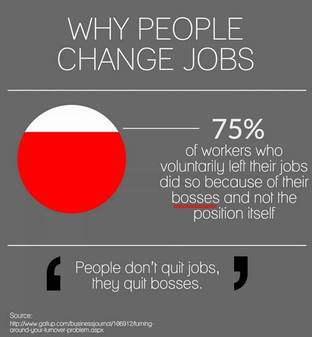
Do people work for you or the business?

10271613-10208164544449154-9134814634118230493-n

Do people work for you or the business?

“People join companies. They leave managers.”

Vern Harnish– Management author

This is a great quote from Verne Harnish author of Scaling Up: How Few Companies Make it…..and Most Don’t. I was talking to a former work colleague who was lamenting on the number of experienced long-term employees leaving his current employer. The managing director said it was because they did not like the new business owners. However, my former work colleague thought it was due to poor management.

As managers of people, we need to be conscious how our behaviour and performance affects our subordinates. In my working life, I have never left a job because of the company; it was always because of my manager. Testament to this statement is that I got so sick of working for bad managers, that I eventually went into business for myself so I could have more control over my working life.

As a young graduate I was thrown into being a Personnel Officer in a Steelworks Department. I’d been forced onto the Mill Superintendent because of his poor record of industrial conflict and poor relationships with his subordinates. His first words to me were;

“I don’t want you here, I could spend your salary in better ways”

So, you can imagine the atmosphere in the department. His managers, supervisors and staff hated him as he was rude, uncommunicative, moody and difficult. I witnessed him causing a labour strike by abusing staff.

Another manager I worked for spent his time checking that his subordinates’ petty cash and phone bills were correct. This was more important than visiting customers, developing his managers or building the business. The final straw came when the business was in the process of attempting to purchase a competitor. As always, he was too busy to discuss the negotiation strategy and as a sign of complete incompetence he did not even bring a pen to the final negotiations. Years later he was dismissed; however I had long left the business.

So, what causes good employees to quit?

The problem is generally with managers. It is seldom the employee or the quality of the workforce that causes employees to quit.

Do managers deliberately set out to be poor people managers?

The answer in most cases is ‘no’.

Many managers have never been taught the art of developing people and being a leader. Often, they know no better and surviving in some organisations means mimicking your old boss or their superiors.

What are the warning signs?

Is your company experiencing high turnover?

Some labour turnover is healthy as it provides opportunities for other people and new ideas and skills to come to the organisation.

Perhaps you should examine how you interact with your team, and also determine whether there are disruptive or unproductive employees  in the team.

Here are what I consider the 3 main reasons why people leave organisations.

  1. An employee’s contributions are not recognised. As a manager you should never under-estimate the power of praise and recognising a job well done. In particular, top performers are normally self-motivated. Don’t take their drive for granted.
  2. A manager does not care about their subordinates, and this normally manifests itself in poor bosses. Research has shown that more than half of people who leave their jobs do so because of their relationship with their boss.
  3. A manager does not honour their commitments. This highlights two traits required by managers, honesty and integrity. If you say you will do something – do it. Keeping your word and your commitments tells the employee everything they need to know about you and the type of person you are and if they can trust you.

There are other reasons for leaving an organisation such as failing to develop employees, not challenging them and not acting on poor performance. Good employees know who the poor performers are, and when they leave morale improves.

Surprisingly, salaries and conditions are not top of the list.

If all else fails, simply remember this:

“People work for people – they do not work for businesses” – Donn Carr

The question is, do you have high or unacceptable levels of employee turnover?

Is so, could it be your management of your staff or other managers are the cause?

As managers, we need to recognise and act on this.

Christmas is coming again…

5-reasons-to-attend-holiday-parties-this-month-1024x678

Christmas is coming again…

“What I don’t like about office Christmas parties is looking for a job the next day”
Phyllis Diller – comedian

Last year I wrote a blog before Christmas about using Christmas as a time to invigorate your staff and business and celebrate their achievements and commitment. A time to build goodwill and for managers to ‘rise to the occasion’ and display leadership.

Despite Christmas being a time of joy and celebration it can also be, unfortunately a disaster for both businesses and staff. Every year we hear stories of work Christmas parties that go wrong…..drunkedness, inappropriate and embarrassing behaviour, work accidents and the like. Often management or the organisation is blamed for the outcomes. It all the more disappointing when it is traditionally a period of cheer and goodwill.
So what should you as a manager or business owner do to protect yourself and staff from a bad outcome for your staff at Christmas?

What are the ‘rules’?

A link to Broadspring Consulting website has some Office Christmas Party Success Tips.

Also remember as an employer, the onus of proof is on you. Christmas parties should be more than about having fun. It’s a good time to reflect on achievements of the business and staff. This should obviously come from the most senior manager, whether the CEO, owner or Department Manager. It’s a time to display leadership and celebrate your business and staff’s achievements and also to thank them for their efforts. It is also an opportunity to set the tone for next year.

So what are you planning for your work Christmas party that will achieve these aims?

Nothing is easy…

Donald Trump

“Nothing is easy”

Donald J Trump US President

As much as I object to Trump’s mindless self- promotion and gigantic ego, his statement above rings true for those of us who strive to improve our businesses and careers. Unfortunately today with instant electronic communication, we hear stories of “overnight success” that implies it’s easy to be successful. Poor research (may be its no research) light weight and lazy journalism and the perceived need for ‘instant’ gratification or success spread this expectation. Most of these overnight success stories are the result of hard work and sacrifice. Think of JK Rowling the writer of the Harry Potter books who as a single mother on social security benefits, spent years writing, often in an Edinburgh café before her first novel was accepted.

The only example of instant success, apart from winning a massive lottery draw I can think of is the story set in 1960s about Sir Frank Packer, millionaire media owner and father of Kerry Packer. The story goes that Sir Frank, in finding himself in an elevator of his Sydney office building along with a shabbily-dressed man, is outraged. Packer tells the man he’s a disgrace to his firm, fires him, and hands him $1,000 to buy a new suit. The ‘fired’ man just grins — he’s actually a freelance photographer who stopped by to visit a friend who worked in the building. 

Malcolm Gladwell in his book Outliers: The Story of Success introduces the idea practice (or hardwork) which he calls the 10,000 hour rule, makes perfect, and success is not due to the random distribution of genetic gifts or luck. He uses examples of The Beatles and Bill Gates whose success he attributes to the 10,000 hour rule of music and computer practice combined to a much lesser extent with opportunity.

Think of successful people around you, whether in business or in society. Almost always their success is the result of hard work and focus over many years.

I can remember doing post-graduate studies, working a 12 hour day in a demanding job with a 3 children under 5 years old and wondering whether it was worth the sacrifice for my wife and I. It was. It led onto lecturing at university, being head hunted for a job and ultimately into our own successful business.

As Donald Trump said “who wants nothing”…………….

As I tell my children………….the only place where reward comes before work is in the dictionary.


Can you compare the game of cricket to business?

Can you compare the game of cricket to business?

“If there is any game in the world that attracts the half- baked theorist more than cricket I have yet to hear of it”

Fred Trueman

The Cricket World Cup is currently underway in Australia and New Zealand (February-March 2015) so it is timely to compile a piece using cricket as a metaphor for business. Think of the game of cricket – there are 3 main parties involved the batting side, the fielding side (with bowlers) and the scorers (sorry this may upset the scorers – even some batsmen upset them)

Can running a business be compared to the game of cricket?

Yes.

In business you have active participants – employees and customers. In cricket you have active participants that make things happen – the bowlers and fielders on one side, and the batsmen on the other.

In business you also have parties that are not active in running the business – for example chartered or compliance accountants and solicitors. In cricket you also have a party not active in the game of cricket. The scorers – who keep the score.

Do chartered accountants perform a similar role to scorers in cricket?

Scorers only record what is happening they never give advice on what to do for the future or participate in the game.

What do chartered accountants do?

They record what has happened in the past. They do not actively participate in the game of business. So if chartered (or compliance) accountants offer business advice, I would caution against accepting such advice if they do not have business experience.

This may seem a harsh statement about accountants – let me give you an example.

We are currently renovating our bathrooms – rather boring don’t you think? No, because of the story the builder told me about his accountant made me feel sorry for him. Just under 10 years ago, his son set up a retail business. They both went to their accountant for ‘professional advice’ on how they should set up the legal entities for the business. His accountant came up with a corporate or business structure ‘on the cheap’ saving them $1,000 and making them joint directors of the new company and the existing building company.

The sad story is that the retail business failed after initially being very successful. Due to the linkage between the two companies, the father became liable for the debts of the retail venture pushing him to the brink of bankruptcy – all to save $1,000 and nearly lost his hoouse. The advice from their accountant was certainly not professional or the correct advice. It highlights the risks of compliance accountants calling themselves business advisors (or legal advisors), especially as many have not actually run a business other than their accounting practice (see blog regarding the business skills of my former accountants.) This is very risky for unwitting business owners.

Receiving business advice from a compliance accountant as distinct from compliance type accounting advice could be a risky strategy.

Do you go to a dentist if you have a sore back or a cold?

Then you should not go to a compliance accountant for business advice, unless they have the necessary experience and qualifications. Our builder’s accountant not only failed to give professional advice because he did not forsee what can happen if a business fails. Perhaps he should have recommended our builder seek legal business advice?

Enjoy the Cricket World Cup and let’s hope the scorers keep score!

Remember in business (and also in your personal life) see advice from professionals in their field……………it is less likely to put your business (or your health at risk)!