As dead as a Dodo….

“Extinction is the rule. Survival is the exception” – Carl Sagan – US Astronomer and Scientist

The phrase “dead as a Dodo” is not just a metaphor, but an epitaph to the extinction of the Dodo. The Dodo was a bird that inhabited Mauritius, an island in the Indian Ocean and its extinction can provide invaluable lessons for today’s managers.

The Dodo’s Tale: A Cautionary Account

The Dodo, a flightless bird closely related to the pigeon was discovered by Dutch sailors in 1598. It had a bulky body, stumpy wings, and a distinctive beak. It lived in a habitat that was, until then, untouched by humans or any significant predators, which contributed to its fearlessness towards humans. This trait would contribute to its downfall.

The Dodo’s lack of fear was not an anomaly in the natural world but rather a common trait among species that evolve in isolated ecosystems, free from natural predators. For example, when humans arrived on Kangaroo Island, just off the coast of South Australia the kangaroos were unafraid of humans and were easily killed by early explorer including Mathew Flinders and Baudin. With the rising of the ocean, the Aboriginals had left the island thousands of years previously. Furthermore, it has also been hypothesised that the megafauna in Australia (Australia is the only continent apart from Antarctica that does not have megafauna), unafraid of humans were killed when the Aboriginals arrived from the north. This naivety, while initially an evolutionary advantage in predator-free environments, became a critical vulnerability with the arrival of humans and other animals that accompanied them.

The Downfall of the Dodo

The extinction of the Dodo was a tragedy. It stemmed from the bird’s inability to adapt to the rapid changes brought about by human colonisation. The factors leading to its extinction included direct overhunting by sailors for food, habitat destruction due to settlement and agriculture, and the introduction of invasive species like rats, pigs, and monkeys. They preyed on Dodo eggs and competed for food resources. By 1662, less than a century after its discovery, the Dodo was seen for the last time.

What are the lessons for modern managers?

1. Sustainability as a Cornerstone

The Dodo’s extinction underscores the critical importance of sustainable practices. For today’s managers, this translates into a mandate to balance growth with ensuring that business operations do not deplete or destroy natural resources. Aside from the environmental concerns today’s managers need to ensure the business is sustainable. For example, training and empowering staff, increasing and maintaining productivity, successfully implementing new technologies etc. The Dodo teaches us that exploitation without consideration of sustainability both environmental and financial leads to loss in the long term.

2. The Imperative of Adaptability

The Dodo’s inability to adapt to new threats underscores the importance of adaptability in the business world. In an era marked by rapid technological advancements and shifting market dynamics, companies must be agile, ready to pivot strategies, embrace innovation, and respond to emerging challenges and opportunities. Good managers foster a culture of continuous learning and flexibility, preparing their teams to navigate change effectively. The dodo’s fate is a stark reminder that those who cannot adapt are doomed to obsolescence.

3. Foresight and the Management of Unintended Consequences

The unforeseen impacts of introducing invasive species to Mauritius echo the modern-day need for managers to anticipate and mitigate the unintended consequences of their decisions. This requires a deep understanding of the complex interdependencies within systems, whether they be ecological, economic, or social and the foresight to identify potential ripple effects. This can involve conducting risk assessments, taking into consideration the broader implications of their strategies as well as developing robust contingency plans to safeguard against unforeseen outcomes.

Conclusion

The Dodo is not an isolated case; history is replete with species that have suffered similar fates due to their lack of fear of humans from the Great Auk in the North Atlantic, and the Tasmanian Tiger in Australia. The “dead as a Dodo” metaphor acts as a call to action for today’s managers. In an age where the pace of change is relentless, these lessons are not just optional; they are essential for ensuring businesses do not merely survive, but thrive responsibly.

As a manager, what do you think?

@thenetworkofconsultingprofessionals

The Rise and Fall of Pet Rocks: A Lesson in Business Innovation

“How you sell is more important than what you sell.”
Andy Paul – sales author

Introduction

Fifty years ago in 1975, Gary Dahl an advertising executive and entrepreneur from California came up with the idea of a “pet rock”.  Few can rival the unexpected business success story of this quirky phenomenon known as the “Pet Rock”.

The Birth of an Idea

The concept was simple yet absurdly ingenious: a smooth, ordinary-looking rock was marketed as a low-maintenance, no-hassle pet. Dahl’s inspiration reportedly came during a conversation with friends about the hassles of traditional pet ownership, such as feeding, grooming, and training. He famously quipped, “I have a pet that doesn’t require any of that! A pet rock!”

Dahl’s idea was to offer people a humorous alternative to the responsibilities of caring for a living pet. He saw an opportunity to capitalise on the countercultural ethos of the 1970s, which embraced whimsical and anti-establishment ideas. Dahl believed that people would be willing to pay for a simple, amusing concept that poked fun at the conventional norms of pet ownership.

The Launch and Marketing

Each rock was carefully selected for its smoothness and appeal, placed inside a small cardboard box with breathing holes, and nestled on a bed of straw. The packaging was intentionally tongue-in-cheek, featuring a detailed “instruction manual” on how to care for your new “pet.” The manual humorously advised owners to ensure their pet rock received enough sunlight and encouraged them to name it.

Dahl’s marketing strategy was equally tongue-in-cheek and relied heavily on humour. He conducted interviews and promotional events, emphasising the simplicity of owning a pet rock compared to traditional pets. The novelty of the concept, combined with his witty advertising, caught the attention of the media and the public.

The Unexpected Phenomenon

What followed was nothing short of astounding. The Pet Rock quickly gained popularity, capturing the imagination of a broad audience. Despite its absurdity, the concept struck a chord with people seeking a light-hearted diversion from the complexities of life. The Pet Rock became a cultural sensation, gracing the pages of magazines and newspapers, and even making appearances on television talk shows.

Dahl’s entrepreneurial success with the Pet Rock was fuelled by several key factors:

  1. Timing: The Pet Rock emerged during a time when American society was experiencing a countercultural wave. People were open to unconventional and humorous ideas, making the concept of a pet rock particularly appealing.
  2. Simplicity: Dahl’s marketing emphasised the simplicity of owning a pet rock, offering a humorous contrast to the responsibilities of traditional pet ownership.
  3. Novelty: The Pet Rock was a novelty item that captured the public’s attention due to its uniqueness. It was something people had never seen before.
  4. Effective Marketing: Dahl’s witty and humorous marketing campaigns helped create buzz around the product and contributed to its success.

The Sales and Revenue

The Pet Rock’s popularity translated into impressive sales figures. At its peak, millions of Pet Rocks were sold, with an estimated 1.5 million sold in the first six months alone. Priced at $3.95 each, the revenue generated from the sale of Pet Rocks reached approximately $6 million, a significant sum in the mid-1970s.

The Decline and Lessons Learned

As with many fads, the Pet Rock’s popularity was short-lived. Within a year, the craze had begun to wane. The initial novelty had worn off, and the Pet Rock was no longer a hot commodity. Dahl’s business venture was a classic example of a short-lived trend, and he wisely recognised the decline in demand.

However, the story of the Pet Rock offers several valuable lessons for business owners and managers. Here are four lessons:

  1. Timing Is Crucial: The success of the Pet Rock was greatly influenced by the cultural context of the 1970s. Dahl’s timing was impeccable, as he tapped into the counterculture of the era. Understanding the timing of your product or service’s launch can significantly impact its success.
  2. Innovation and Uniqueness: The Pet Rock was a groundbreaking novelty item. Its uniqueness and innovation set it apart and captured the public’s imagination. Business owners should strive to offer products or services that stand out in the market.
  3. Effective Marketing: Dahl’s clever marketing strategies played a pivotal role in the Pet Rock’s success. Humour, irony, and effective storytelling can make a significant impact on how a product is perceived and received by consumers.
  4. Understanding Trends and Fads: Dahl recognised that the Pet Rock was a fad, and he wisely adapted to the changing market. Recognising when a trend is on the decline and having an exit strategy is crucial for long-term business sustainability.

In concluding, business owners and managers can glean valuable lessons from the Pet Rock phenomenon. Timing, innovation, effective marketing, and understanding market trends are all essential components of a successful business venture. While the Pet Rock may have been a short-lived craze, its legacy endures as a reminder that even the most unconventional ideas can find their place in the market when the timing is right.

What do you think?

@thenetworkofconsultingprofessionals

Which European country first ‘discovered’ Australia?

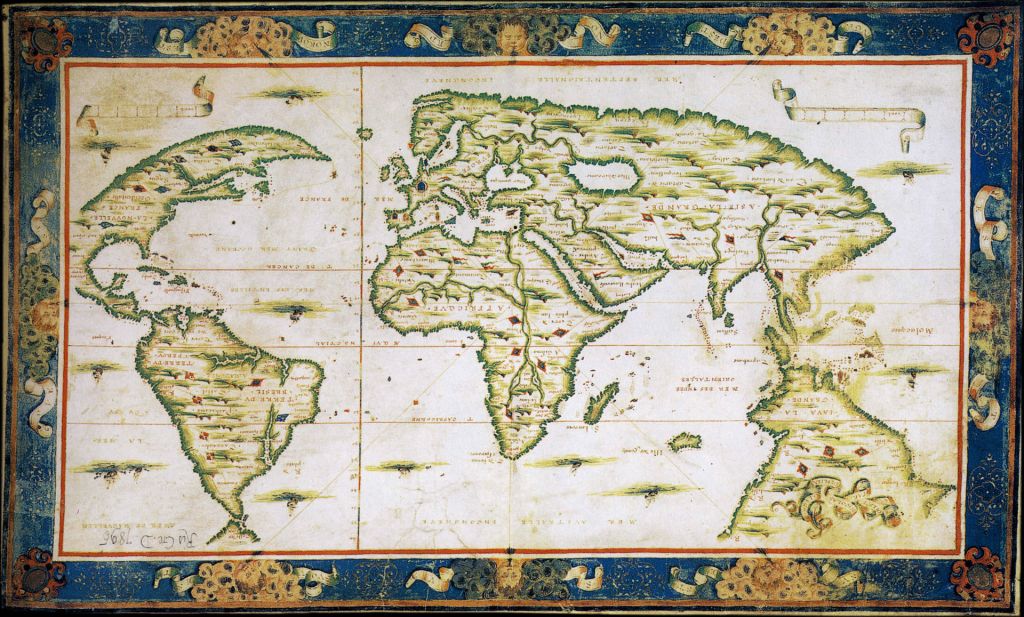
Below is a world map prepared in Dieppe, France showing a large land mass to the south of Indonesia, 50 years before Janzoon ‘discovered’ Australia in 1606

“History is a set of lies agreed upon” – Napoleon Bonaparte

Which European nation first discovered Australia? Was it the Dutch, Spanish or Portuguese?

Several books have been written about the ‘hidden’ discovery of Australia by the Spanish and Portuguese. However, there is no conclusive evidence that these two nations discovered Australia before the Dutch in 1606. Unsurprisingly the ‘evidence’ of the Portuguese being the first Europeans to visit Australia is extremely thin. The ‘evidence’ was ‘conveniently’ lost in the Great Lisbon Earthquake of 1755 and when India annexed the Portuguese colony of Goa in 1961. The Portuguese arrived in Timor in 16th Century and it is less than 250 nautical miles from the Australian continent so it is plausible that they ‘discovered’ northern Australia.  

However, the legend persists that the Portuguese were the first European visitors to Australia. One of the enduring legends is that of the Mahogany Ship, a wreck in the sand dunes in south-west Victoria, on the opposite side of the Australian continent to Timor, the nearest Portuguese colony. In the 1830s or 1840s a wreck was apparently sighted by some residents of the area. Even the position of the wreck was recorded. Mysteriously extensive searches using sophisticated technology and the offer of a $250,000 reward by the Victorian state government have failed to locate the wreck.

So, does the Mahogany Ship exist?

Highly unlikely!

Apparently, the original ‘discoverer’ of the wreck was not in Victoria at the time of ‘the discovery’, and he was a criminal with a history of dishonesty. In 1876 a Captain Mason wrote a letter claiming that he’d seen the wreck and that it could have been mahogany or cedar, and the mahogany story stuck. The suggestion of a mahogany ship fuelled the theory it could be Spanish or Portuguese, as it was a timber used by their shipbuilders for centuries.

Furthermore, a large majority of “eyewitness” accounts of the Mahogany Ship conveniently emerged after the wreck had been supposedly swallowed up by the sand dunes around 1880. A 1977 a book called “The Secret Discovery of Australia” further added fuel to the legend. Sealers inhabited the southwest area of Victoria during the period in which the wreck was ‘discovered’. The original ‘discoverer’ was a sealer whose boat capsized and as he walked back through the dunes with his companion they came upon the wreck. There probably was a wreck. If there was it was more than likely a sealers’ boat or possibly a boat stolen by escaped convicts in Tasmania. Timber allegedly from the wreck has been tested and identified as eucalyptus, not mahogany.

So, like many legends, the Mahogony Ship story has been built on half-truths, mistakes, exaggerations and lies and takes on the form of an ‘urban myth’. This has not stopped the local council in Warrnambool from erecting a Portuguese Explorer’s Memorial in a local park linking it to the legend of the Mahogony Ship! Never let the truth get in the way of a good story.

For more than 28 years the Portuguese speaking communities of Victoria have been coming to the city of Warrnambool to celebrate what they believe to be the discovery of Australia by Portuguese navigators. The Warrnambool Portuguese Cultural Festival is held every two years and celebrates the historical ties between Portugal and Australia, based on the legend of the mysterious Mahogany Ship.

“We are very happy to have the Portuguese community here every two years; we want the festival to get bigger and better. We also want to keep the Mahogany Ship buried in the dunes, we don’t want to dig it out and spoil the mystery, this is great for our city,” said Cr Robert Anderson, Mayor of Warrnambool.

Are there lessons here for managers in the legend of the Mahogany Ship?

  1. Don’t believe everything you are told by customers, staff or owners
  2. Go back to first principles to determine what are the facts – are they actually facts?
  3. There is nothing like telling a story to sell an idea even if it is not correct. The romantic idea of Australia’s first European visitors being Portuguese not British has certainly helped fuel the legend. The local council has profited through the story – it brought visitors to the area.

Note: the first recorded European visit was Dutchman Willem Janzoon in 1606 who landed on Cape York and chartered 300 km of coastline.

#thenetworkofconsultingprofessionals

Would you pass the Tombstone Test?

“They say such nice things about people at funerals that it makes me sad I am going to miss mine by just a few days.” – Anon

Last year I posted a blog called Where is Werris Creek? Having grown up near this town in country NSW I decided to post a link to the blog on the town’s Facebook page. I introduced it by saying that my mother taught there as a Primary School teacher over 40 years ago.

The responses were unexpected. Several former students responded saying they remembered my mother very well and that she had a very positive effect on their lives. A positive legacy after over 40 years. My mother was a very dedicated and hardworking teacher. I can remember her preparing lessons at night. Even into her late 80s she assisted at the local primary school which had a high proportion of migrant children and taught them about Australian history and culture.

This reminded me of a technique used by consultants called the Tombstone Test.

So, what is the Tombstone Test?

No, it’s not the 1881 shootout at the OK Corral in Tombstone, Arizona where Wyatt Earp and his brothers along with Doc Holliday gunned down three “Cowboys”. The “Cowboys” were two families of outlaw cattle rustlers, tobacco and alcohol smugglers.

The concept of the Tombstone Test probably originated from management theories of the 1990s centred around business leadership. In short, it consists of two questions:

  1. What do you want your obituary to say?
  2. Is what you are doing today consistent with the legacy you want to leave?

This can be extended to your relationships with family and friends. Do you want to be remembered for the money you made in your lifetime, or whether you were a good parent, partner, spouse or friend?

The Tombstone Test is sometimes used by management consultants to focus the mind on your legacy.

Being a good business owner or executive, if done well should be about freedom, fun, fulfillment and making money. By extension it should also be about serving and helping others, especially your customers and employees. In our former logistics business, we developed supervisors, paid for their training and when we sold the business, put aside a significant amount of money for the long-term employees and paid them bonuses.

As a manager or business owner how would you like to be remembered?

The greedy, arrogant, unapproachable and selfish individual, or like my mother, remembered in a positive light as someone who made a difference to others’ lives years after the event?

The Tombstone Test is meant to make you confront reality, have a deeper perspective on how you live your life both at work, in the community and at home and be remembered as a making a positive difference in the world.

As we approach Christmas and the end of the calendar year it is a good time to reflect on the past 12 months and think about the future. The Tombstone Test is a good starting point.

Seasons Greetings to all my blog readers and all the best for 2024

#thenetworkofconsultingprofessionals

A management lesson from Erik the Red and the Vikings

“Wisdom is welcome wherever it comes from” – an old Viking saying

The Viking series on TV has become a very popular program with tales of murder, treachery, and intrigue. In real life the Vikings were the first recorded explorers to set off into the unknown with colonial ambitions. This is distinct from empire builders such as the Persians and Romans who massed large invading armies. The Vikings originated in Scandinavia and plundered their way through Europe, into the Middle East and through to the edge of Asia. They also explored and settled in the north Atlantic from Iceland, then Greenland through to North America.

The Vikings were primarily feudal farmers, where the ownership of land and animals was important. As the population grew in the settlements along the Scandinavian fiords, this placed a strain on resources. Combined with harsh winters there seemed little alternative but to search for further settlement elsewhere. In the north Atlantic, the first place settled was Iceland, followed by Greenland and then North America. This was over 500 years before Columbus “discovered” America.

The Viking settlement in Greenland provides some lessons for managers today. Greenland was settled in the 10th Century by Erik the Red. Apparently a violent man, Erik was initially banished from Norway to Iceland for unlawful killing, then banished again from Iceland for the same offence. The long winters, anda propensity to drink in excess, combined with a violent temper were clearly a recipe for disaster. Exiled from Iceland, Erik sailed west and “discovered” and settled in Greenland. It was called Greenland as initially it could sustain traditional Viking farming, having been settled in the Medieval Warm Period. The colonies in Greenland continued for another 400 plus years, then disappeared.

So, what happened?

The Norse colonists failed to adapt to the changing climate. With the beginning of the Little Ice Age in the early 14th Century, their farming techniques did not change. Cattle were preferred, but sheep and goats were better suited to the climate. Forests were felled for heating and to smelt iron. Like Iceland where the Vikings settled earlier, the soil proved shallow and was prone to erosion. Timber and iron were critical in maintaining their lifestyle and technological superiority over the local Innuits.

Furthermore, as the climate cooled the annual trade ships from Norway were abandoned as the pack ice prevented the longboats from reaching Greenland. At the same time a more aggressive Innuit tribe arrived in Greenland, armed with bows and arrows. Competing for the scarce resources they were able to hunt seal and whale more efficiently in kayaks than the Vikings, who failed to adjust to the changes. Inevitably fighting ensured, crops failed, the soil eroded, trade with Norway ceased and by the 16th Century the Greenland colony disappeared.  

What are the management lessons?

  • Adapt or Die: The Vikings failed to adapt to the multiple challenges posed by the climate and the Inuit threat. As a consultant, I once had a client whose business was based on supplying engineering services and products to the Australian motor vehicle manufacturing industry. Despite my protestations that he had all his eggs in the one basket and there was a high risk that vehicle manufacturing was likely to cease in Australia he refused to change his business plan. Their largest customer ceased manufacturing in 2017 and the business folded.
  • Know your Competitors: The Vikings failed to understand the threat the Inuits posed as competitors, and either ignored them, or failed to accommodate them through trade and technology transfer. There was a sense of European cultural superiority As noted earlier with the example of the auto engineering business who supplied a major auto manufacturer in Australia, the owner refused to acknowledge that the competitors to his business were offshore.
  • Isolation is Bad Practice: As the climate cooled the trading ships from Iceland and by extension, the rest of Viking Europe failed to arrive due to the Arctic ice. The trade ceased and the Greenlanders became isolated and inward looking. They eventually disappeared. Just like the example of the engineering company who cut themselves off from the real world and went out of business, the Vikings of Greenland were no different.

Can you think of any other management lessons from the history of the Vikings?

#thenetworkofconsultingprofessionals

A New Australia…where?

“The world will be changed if we succeed, and we will succeed! We cannot help succeeding!”

– William Lane: radical journalist and founder of New Australia

Nearly 120 years ago an idealistic bunch of Australians set sail for South America to build their utopia.

In the early 1890s, the Australian colonies were in the grip of recession. It was a period of bitter industrial conflict particularly in the shearing sheds. The strikes resulted in victory for the pastoralists. With the defeat of the shearers and poor economic conditions, a group of 220 idealistic Australians left by ship in 1893 for a new life in Paraguay.

Why Paraguay?

Paraguay had lost a bitter war between 1867-1870 against Brazil, Argentina and Uruguay resulting in the loss of a quarter of the country and 90% of its male population. With only 14,000 men and 150,000 women there were not enough men to farm the land or partner with the women.

Faced with this dilemma, the Paraguayan government sought to encourage migration by providing land grants and tax breaks. In the 1880s a utopian socialist colony called Nueva Germania was established by Germans disillusioned with Germany’s recent unification. The scene had been set.  

Background

Back in Australia, a firebrand journalist by the name of William Lane had championed the shearers’ cause. Lane was a utopian socialist and was a prominent figure in the Australian labour movement and had founded Australia’s first labour newspaper, the Queensland Worker in 1890.The shearers’ defeat left him bitter and deeply disillusioned

Refusing an offer of land to establish a utopian settlement by the Queensland Government, Lane began an Australia-wide campaign for the creation of a new society elsewhere in the world, peopled by rugged and sober Australian bushmen and their proud wives. He recruited shearers, stockmen and unionists for a new socialist utopian colony. It became known as New Australia.

Lane proposed a new society free from social and economic oppression and isolated from worldly corruption. This new society would be based upon shared wealth and work, women’s equality, and the prohibition of alcohol. However, it was also racist. Known as The Colour Line, the strict rules written by Lane were:

“It is right living to share equally because selfishness is wrong: To teetotal because liquor drinking is wrong; to uphold life marriage and keep white because looseness of living is wrong.”

With such rules and with shearer’s having a reputation for being hard drinkers and with more than 10 women for every man how could this ‘grand plan’ possibly work?

So, what happened?

Unsurprisingly it failed.

On its way to Paraguay, the ship called into Montevideo, the capital of Uruguay. After a long voyage the passengers were eager to step ashore. However, Lane forbade this but went ashore himself. This action was hardly the action of a leader and founder of a socialist colony. Several passengers defied Lane and went ashore and broke the ‘no alcohol’ rules. Once back on deck, a fight broke out between Lane’s supporters and the malcontents. This was a harbinger of things to come.

After a 1,000 km journey up the Paraguay River, the new settlers were finally settled on land granted to them by the government. Within six months, the settlers had cleared land, planted crops and built stockyards. A village began to take shape with a blacksmith’s shop, school and over 20 thatched cottages. However, it wasn’t long before the atmosphere started to deteriorate. Lane’s autocratic nature and inflexible attitude as demonstrated in the ‘Montevideo incident’ alienated many. Some settlers began to barter communal property for drink and began ‘associating’ with local ‘non-white’ women. Several were evicted from the colony with the help of the Paraguayan police after being caught drinking. The hypocrisy of this action by Lane who had rallied against the use of the police in the shearers’ strike split the colony.

In 1894, the arrival of a second batch of settlers didn’t have the effect Lane had hoped for. One was discovered in the possession of rum-laced milk, as payment from a local farmer and was expelled. Following the continued dissension in the community, Lane and a group of around 60 of his supporters left New Australia and established a breakaway settlement to the south called Cosme. Instead of recruiting new settlers from Australia for Cosme, Lane went to England. Although things started promisingly, they soon began to unravel, and the new English settlers were less able to adapt to frontier life. The strict and harsh way of life was taking its toll. 

By 1899 Lane’s dreams were in tatters. He resigned as chairman of Cosme and he and his family left, relocating to New Zealand, where he became the editor of the New Zealand Herald.

What are the leadership lessons in the failure of the ‘New Australia’ venture?

Whilst the story of New Australia is a curious footnote in history are there any lessons in the story for leaders?

Here are some to consider:

  1. Charismatic leadership has significant weaknesses, and many charismatic leaders are autocratic, lack organisational skills, and are too self-assured and narcistic. Certainly, William Lane was autocratic and inflexible, and he lacked true leadership skills, not dissimilar to the leader of the ill-fated Burke and Wills expedition.
  2. Top-down management is generally less successful than decentralised leadership more inclusive which was a one of the key factors in the defeat of the Luftwaffe in the Battle of Britain.
  3. Perfect is the enemy of good. I have found in business that the best results are achieved by determining where the greatest improvements can be made for less efforts than continually chasing perfection. The theory behind the 1905 Schlieffen Plan is a case in point, where German military planners devised the “perfect” plan to invade and take Paris. It failed spectacularly in Word War I.. Lane’s idealistic vision was of a perfect society based on socialist and communal values. Ironically the vision was imposed by inflexible and autocratic leadership which certainly assisted in the New Australia venture failing.

Do you think there are other lessons from the failure of New Australia?

If you would like to know more about the ill-fated socialist experiment New Australia, the following books are recommended:

A Peculiar People: the Australians in Paraguay by Gavin Souter

Paradise Mislaid by Anne Whitehead

Ticket to Paradise by Ben Stubbs

Youtube link:https://www.youtube.com/watch?v=Pb3DQ4uCJSc

#thenetworkofconsultingprofessionals

Another lesson from the farm…

“Our relationships will eventually grow stale unless we are diligent about directing and cultivating them”

Todd Henry – International speaker

Having grown up on a rural property in north-western New South Wales, Australia, I have written several blogs about lessons we can learn as managers based on growing up on a farm. There were many things I observed and experienced that can be related to business and life. From resilience, the importance of ongoing maintenance like chipping a weed called the Bathurst Burrs and the lessons of ‘the cow pat’.

Another lesson comes to mind.

The growing of crops. One crop my father grew was wheat. Wheat needs constant cultivation combined with adding fertiliser and weed control to get the best outcome. The ground needs to be ploughed to remove weeds and make the soil friable and ready to accept the planting of seeds. When seeding, fertiliser needs to be added at the same time to improve yield. And you need rain!

The growing of wheat is a great analogy that can be applied to being a successful manager. Spend time cultivating your connections, fertilise your contacts, provide help when needed, keep the weeds under control by not losing contact and maintain your contacts by watering them.

This has worked for me over the long term with amazingly positive outcomes. Thirty years ago, a recruitment consultant placed me in a job. Over the years I kept contact with him and 5 years ago another opportunity came up. He found a logistics consulting project for me, and I’m still involved with the business as a board member.

Another example relates back to when I was a casual university lecturer. I kept in touch with several of my former students. This resulted in one former student giving an important contract to our logistics business. Another was employed by me for one of my clients and this was after over 15 years since graduating.

The example with the most impact was a former work colleague and student. He convinced me to do my master’s degree. Later he told me about a job vacancy with his former employer. Much later he provided the conduit to sell our logistics business to an Asian based freight forwarder.

What are the considerations with networking?

Most importantly when cultivating your network, it needs to be mutually beneficial but with more give than take. No long-term relationship whether personal or business will endure if it is only one way. Managing is not about platitudes, big schemes and projects. It is about constant attention to relationships, continually seeking ways to interact with your network regularly and adding value.

Do you think that the cultivation analogy is a good one for you as a manager or business owner, both personally or professionally?

#thenetworkofconsultingprofessionals

A Winter Olympics story ….doing a Bradbury

Doing a Bradbury…

“I don’t think I’ll take the medal as the minute and a half of the race I actually won. I’ll take it as the last decade of the hard slog I put in”

Steven Bradbury – Gold Medal Winner 2002 Winter Olympics

With the end of the 2022 Winter Olympics comes a great story from the past.

So, who was Steven Bradbury and why did he become famous?

In 2002 Bradbury was the first athlete from Australia, and also the Southern Hemisphere to win a Winter Olympic Gold Medal. He was a former short track speed skater, a four-time Olympian and was also a member of the short track relay team that won Australia’s first Winter Olympic medal, a Bronze Medal in 1994.

So apart from being the first Australian athlete to win a Winter Olympics Gold Medal what was he famous for?

It was in the manner of his win. Bradbury slipped into the 1,000m speed skating final when two of his competitors in the semi-final crashed and another was disqualified. In the final, in the last lap as his competitors jostled for medal positions, Bradbury drifted further and further behind. With just metres from the finish line, a pile-up took out every other skater and avoiding the collision, he glided past to claim the Gold Medal.

His win entered the Australian colloquial vernacular in the phrase “doing a Bradbury” meaning an unexpected or unusual success.

However, there is more to this than chance. Bradbury was from tropical Queensland, not a state conducive to winter sports. He travelled the world, living hand to mouth to complete internationally, and competed in four Winter Olympics. At one stage he needed to borrow $1000 from his parents to repair his car so he could get to training. He supported himself by making skating boots in a home workshop. The years of hard work and training included nearly bleeding to death when a skate blade cut an artery requiring 111 stiches in 1994. Also in 1998, he fractured his vertebrae.

What are the lessons here for business owners and managers?

  • Hard work and sacrifice pay off.

In our logistics business there were times when a key customer left putting the business under pressure. However, with the previous hard work in networking and business development they were quickly replaced. Success can be a matter of luck, but it rarely is.  

  • Having a goal and vision

Bradbury’s goal was to win an Olympic medal on his own. The 2002 Olympics was his last chance. Despite his setbacks he hung in there, even when it looked increasingly unlikely that he would be successful, he succeeded and achieved his goal.

  • Being in the race

Yes, Bradbury’s tactic was to hang in there. This paid off as his rivals slipped, crashed and went spinning wildly across the ice. We had a customer in our logistics business who tendered for a lucrative post office franchise at an Australian airport. He was 5th or 6th in line, and eventually won the tender as his competitors were one by one, disqualified as being unsuitable, for reasons ranging from having a criminal record to no experience.

The Stephen Bradbury saga is a great story that resonates.  

Can you think of some other lessons?

#thenetworkofconsultingprofessionals

Eat that frog…

Eat that frog…

‘If it’s your job to eat a frog, it’s best to do it first thing in the morning. And If it’s your job to eat two frogs, it’s best to eat the biggest one first.

Mark Twain – American writer and humourist

When I was growing up in rural Australia, frogs were part of life. Normally they were green tree frogs and could often be found resting inside the overflow of the rainwater tank or in the toilet cistern. As children, we sometimes kept them as pets in a glass tank and fed them insects. However, I was never tempted to eat a green tree frog – although I must admit I have tried frog’s legs in a French restaurant.

How does the metaphor ‘eating a frog’ relate to productivity?

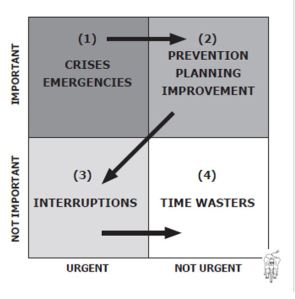
As managers and business owners, we are confronted each day with tasks and the challenge is to prioritise them. We can create a ‘to do list’ and then assign importance to each task:

  • A – most important,
  • B – next most important,
  • C – not important.

Determining what is important is a challenge.

Managerial tasks can be:

  1. Urgent and important – crises, deadline-driven activities, customer issues
  2. Not important and urgent – interruptions such as phone calls and emails, some meetings
  3. Important and not urgent – strategy and planning, building relationships, major projects
  4. Not important and not urgent – activities not beneficial to goals, personal emails, internet browsing.

One of the major problems for me, personally, and when speaking to other business owners, is that we do tasks we like doing rather than the tasks we should be doing. We procrastinate and often avoid the really difficult chores such as dealing with an employee’s performance or visiting a disgruntled customer.

Time is the great equaliser, as you cannot create any more time. Everybody has only 1,440 minutes in a day. The challenge is to manage time to get the best outcomes. The decision-making matrix for time management is a good model to use when determining where your priorities lie and where you should direct your energies to get the best results.

Brian Tracy, in Eat that Frog!, outlines some great ways to stop procrastinating and become more productive. Tracy recommends you tackle the most important task first. Likewise, Kevin Kruse, a best-selling New York Times author, recommends that you identify your most important task (MIT) and tackle it first thing in your working day in 15 Secrets Successful People Know About Time Management. Kevin Kruse says the most productive hours of the day are first two to three hours where your energy and cognitive ability is at its highest. Your mind is clear and uncluttered by the day’s happenings. This tends to be the best time to tackle the task that appears to be the most difficult and insurmountable

By way of comparisons, like Mark Twain, I recommend tackling the hardest task first rather than the most important. That is my frog. While eating your frog may not be the most enjoyable outstanding task, it will energise you to then concentrate on other more important tasks to be completed during the day. These can be prioritised using the 80/20 rule or Pareto Principle.  Having a clear set of goals and a business plan is a good place to start.

For example, I needed to advise a sportswear customer that we would be increasing their rates as they no longer reflected the costs of their new order profile, their contract conditions no longer applied and, because of this, we were losing money. I kept putting off seeing the owner, who was a difficult personality, as I wished to avoid a confrontation – despite this costing the business money. When I finally met the owner, the meeting was less difficult than anticipated and we parted on good terms. Often, when the most difficult task is completed, the rest of the day gets easier and, more importantly, it is not as difficult as first thought. This was certainly the case with the sportswear customer.

How do you manage your time?

Do you have ‘to do’ lists but don’t prioritise your most difficult or important tasks?

What is the best use of your time to achieve your goals and the business’s plans – remembering you only have 1,440 minutes in a day?

#thenetworkofconsultingprofessionals
What is the difference between strategy and tactics?

What is the difference between strategy and tactics?

‘Strategy without tactics is the slowest route to victory. Tactics without strategy is the noise before defeat.’

Sun Tzu

In business we often confuse tactics with strategy. The media refer to some business’ actions as strategies when in fact they are in reality; tactics. For example, with the recent COVID outbreak in Australia, the media referred to hotel quarantine and border closures as strategies when in fact they were tactics in the strategy to stop the spread of the virus.

A tactic is an action or event to achieve a desired outcome.

A strategy is an integrated plan which helps an organisation achieve its objectives.

Tactics are usually designed by middle-level management, whereas top-level management create and implement strategy.

For example, if the strategy of a business is to increase profitable market share (a top-level management action), a tactic could be to increase prices or reduce discounts combined with a marketing campaign (middle level management actions). Tactics often change with the changes in market or economic conditions (the present), whilst strategy remains same for a long period (the future).

If the strategy is wrong, the best tactics in the world will not ensure the strategy is successful. Military conflicts are often good examples where despite sound tactics, a strategy that is wrong will never be achieved. In the Vietnam War, first the French and then the Americans failed due to poor strategy.

A better example is the nasty civil war called ‘the Bush War’ in Rhodesia (now Zimbabwe) from the early 1970s to 1979. In June 1977, Time Magazine reported that “man for man, the Rhodesian army ranks among the world’s finest fighting units“. The Rhodesian military developed a tactic called ‘Fireforce’.

It was a counter-insurgency military tactic using helicopter-borne and parachute infantry to envelop guerillas in the bush before they could flee. The operational assault usually comprised of a first wave of 32 soldiers carried to the scene by three helicopters and a Dakota aircraft, with a command helicopter and a light attack Lynx aircraft in support.  One of the advantages was its flexibility. When contact was made, typically with 6 to 12 insurgents, the 32 soldiers of the Rhodesian Army had immediate superiority on the ground. The tactic quickly yielded an 80–1 kill rate by trapping the guerillas and eliminating them by air and ground fire. However, despite its success measured by the kill ratio, it was not enough to keep the Rhodesians from losing the war, or realising that the war could not be won. KPIs need to measure progress towards an organization, or in this case a government’s strategic goals. Clearly kill ratios, which were also used by the Americans in the Vietnam War were not the right KPIs to meet the strategic goals.

What the Rhodesian Government failed to understand that the ‘bush war’ was political in nature. It was a war for the support of the Rhodesian Africans, not the minority white population. The right-wing government was ill equipped politically to win over the Rhodesian Africans to their side. The government’s budget and efforts were directed to the military side of the war and not the political one. The strategy of stopping majority rule was flawed, politically, morally and geopolitically. Having the best counter insurgency military in the world could not prevent black majority rule.

Also, a minority led white government, not recognised by many countries surrounded by hostile African nation states was never going to prevent guerilla insurgents from entering the country. Furthermore, in the later stages of the war the apartheid government in South Africa withdrew support further isolating the Rhodesian government. There was no plan B until the last year of the war and by then it was too late.

In conclusion, strategy is about choosing the best plan for accomplishing long-term goals of an organisation. Clearly kill ratios, which were also used by the Americans in the Vietnam War were not the right KPIs to meet the strategic goals. Tactics are normally the instant reaction of the organisation, in response to the changing environment whether political or business.

Can you think of examples of where tactics would successful, but the overall strategy failed?

The accompanying table below is a good reference for identifying what is a tactic and what is a strategy.

Basis for ComparisonTacticsStrategy
MeaningA carefully planned action made to achieve a specific objective is Tactics.A long-range blueprint of an organization’s expected image and destination is known as Strategy.
ConceptDetermining how the strategy be executed.An organized set of activities that can lead the company to differentiation.
What is it?ActionAction plan
NaturePreventativeCompetitive
Focus onTaskPurpose
Formulated atMiddle levelTop level
Risk involvedLowHigh
ApproachReactiveProactive
FlexibilityHighNormally less flexible
OrientationPresent circumstancesThe future

#thenetworkofconsultingprofessionals