September is the month of ‘the festival of the boot’…

“Some people think football is a matter of life and death. I assure you, it’s much more serious than that”

Bill Shankly – Successful Coach of Liverpool United

In Australia, the late September and early October period is ‘grand final’ time for the two major football codes, Rugby League (NRL) and Australian Rules (AFL). Australian comedians and sports personalities ‘Rampaging’ Roy Slaven and HG Nelson call it ‘the festival of the boot’.

Politics, family, lifestyle issues, cost of living and food are forgotten about for a couple of weeks of dreams as fans ponder the outcomes. 

This is a great opportunity to discuss sport as it relates to business

So, does sport have some lessons for managers?

What can we learn?

Here are three lessons to consider:

1.  Recruit the right people, then develop and manage

One of the most important lessons that businesses can learn from sport is to recruit the right people (emphasis on the ‘right’) and not necessarily the ‘best’ people. For a team to work, there needs to be diversity but underpinned by shared values. You can teach people new skills, but you can’t always teach them how to behave. Once you have a good team player – make sure you keep hold of them. Just because someone is the ‘right’ person, doesn’t mean that they will not require guidance.

One Australian Rugby League team of recent times that stands out in this regard is the Melbourne Storm. Only established in 1998 in Melbourne in the heart of AFL country, the club won the Premiership in only its second year and went on to win many more Premierships. Through long term coach Craig Bellamy and his coaching team, the Storm have identified and developed players who were not identified or sort after by other clubs. Bellamy began coaching the Storm in 2003 and is still the head coach!   

In our logistics business, we identified floor staff who had potential, with the right values, were ‘trainable’, have the work ethic and values. Many were casuals hired though labour hire agencies. They were made permanent staff, became supervisors and several became warehouse managers.

2.  Being resilient and overcoming adversity

In sport, as in business, change is inevitable. But it is how you deal with the change that can be a make or break decision. For athletes being mentally resilient is as important, if not more, than an athlete’s physical ability. Being able to deal with adversity, hard training sessions and setbacks strengthens an athlete and further pushes them to be the best that they can be.

A great example of resilience is the winner of Australia’s first Winter Olympic Gold Medal, Stephen Bradbury in 2002. Bradbury won the Gold Medal when all the other competitors crashed. However, what few people realised, is that behind the win were years of hard work and serious injuries.  

For us in business, mental resilience is also an important component for success, as pulling through the tough times and remaining positive in the face of adversity can create opportunities. In my former logistics business, in the space of three months we lost two of our largest customers. They represented 30% of our business. This looked like a disaster. However, we implemented a plan, knuckled down and within 12 months our revenue grew by over 50%.  

3. Embrace Team Diversity

A very good example is the 1995 Rugby World Cup winner South Africa. President Nelson Mandela, in a move to unify a racially divided country, supported the traditionally white-dominated South African Springbok rugby team during the Rugby World Cup. Team captain Francois Pienaar, understanding the importance of this gesture, worked to bring his team together, focusing on shared goals rather than individual differences. Led by Mandela and Pienaar, they showcased the power of embracing diversity by beating the favourites, the New Zealand All Blacks.

Before I went into business for myself, I worked for a national transport business. The CEO was a larger-than-life character, well known and respected in the industry with a work ethic second to none. Within the business was a national operations manager who was highly skilled and driven, much like the CEO. He was seen by the CEO as ‘the type’ of manager the business needed. At the time my wife, an industrial psychologist was providing some professional services to the business and was asked to draw up the ‘essential’ characteristics for the perfect manager so they could be replicated throughout the business. The vision being ‘clones’ throughout the business nationally. After some discussions the idea was dropped.

Businesses need a mix of people to meet their full potential. Whilst I am not advocating diversity for diversity’s sake as is frequently the case today, it is critical to have a diverse pool of experience and talent in an organisation. ‘Group think’ is dangerous and often the best ideas and actions come from a diverse workforce.

Sport offers a wealth of lessons for managers, providing insights into leadership, teamwork and success. Recruiting and developing the right people, being resilient and embracing diversity are just three of the lessons for us in business to learn from sport.

Can you think of other lessons we can learn from sport?

In the meantime, if you are in Australia enjoy the ‘festival of the boot’ the finals of the two football codes.

@thenetworkofconsultingprofessionals

Are you using your talents?

“For it is as if a man, going on a journey, summoned his slaves and entrusted his property to them”.

Matthew 25

The Parable of the Talents

What is a parable?

The definition of a parable is a short but simple fictitious story that illustrates a moral attitude or a religious principle.

In Greece and Rome, parables were employed by rhetoricians, politicians and philosophers. In ancient Israel, parables were uttered by prophets and wise women and men. Many appear in the oldest books of the Old Testament. Parables were often used by Jewish rabbis of whom many were contemporaries of Jesus.

Jesus told parables to his disciples. Probably his most famous one was the Parable of the Good Samaritan, where a traveller is robbed and left by the side of the road. A Jewish priest and another Jew wander past and avoid the injured man. However, a Samaritan (who were despised by Jews) comes upon the traveller and assists him. Jesus’ parables usually teach us lessons. In the Parable of the Good Samaritan, the lesson in very broad terms is “show mercy to your fellow man”. This includes your enemies.

A parable told by Jesus that could be used for us as managers is the Parable of the Talents.

A wealthy man embarks on a trip and leaves three servants in charge of his money. Each is given a certain number of talents proportionate to their abilities. A talent in this case was a unit of money worth about 20 year’s wages. Two of the servants used the money wisely (and their business talents!) and returned a profit for their master and were rewarded. The third servant dug a hole in the ground and buried it, not earning any money and was penalised. One of the underlying messages here is that we are not all created with equal skills, abilities and opportunities.

What are the messages here for us as managers?

Here are three messages that come to mind.

  1. Value the opportunity. Each servant was given money to invest. Two of the servants took advantage of the opportunity and invested wisely, whereas one servant did not. He wasted the opportunity. Success only occurs when you take action. When you are offered an opportunity use your talents and take advantage of them, whether as a business owner, manager or employee.
  2. Reward those who do good work. The servants were rewarded on the basis of what they had achieved with what they had been given. Everybody has abilities (“talents” in the literal sense) and we should use what we have been given. There is no one that has no talents. As managers we need to recognise those who use their talents and reward them appropriately.
  3. Know who to trust. We live in a diverse world and we are different in many ways. The master realised this and gave talents (money) to each man “according to his own ability”. As managers we need to recognise different levels of skills and abilities of our employees and more importantly treat people humanly and with dignity. Clearly not everyone is created equal and we should recognise this a managers act appropriately.

Can you think of any other lessons in the Parable of the Talents?

Note: This blog is not meant to be a theological interpretation of the Biblical parables.

#thenetworkofconsultingprofessionals
Necessity is the mother of invention

“Our need will be the real creator” – Plato Greek Philosopher

Despite relatively low litter rates, in 2019 the Victorian State Government implemented a state-wide ban on lightweight plastic shopping bags. The Government explained this as a global problem, as plastics in the environment break up into smaller and smaller pieces over time.  Plastic bags can easily be blown into open spaces and waterways and pose a danger to marine life.

I was outraged. We reused shopping bags for bin liners and put ‘doggy poo’ in them when we walked our dog. We were recycling plastic bags and not allowing them into the environment. I considered that our household was doing our bit in helping the environment and recycling plastic bags.

Interestingly, the two major supermarkets who in Australia have over 50% market share displayed predictable oligopolistic behaviours. They immediately implemented the ban and then sold ‘reusable’ plastic shopping bags to customers, never missing an opportunity to make money.

In regard to the ‘doggy poo’ problem, we soon found alternatives to shopping bags. The plastic covering for bread, which previously were thrown into the rubbish bin made better ‘doggy poo’ bags than the now banned shopping bags.

The lesson here was that necessity made us find an alternative to shopping plastic bags. This happens in business. Here is an example and is another “lesson from the farm”.

I grew up on a farm in rural NSW, Australia. My father grew wheat and bred sheep and cattle. Ewes lambed in spring. One important task was to check them each morning to see if any were in difficulty, if lambs were not with their mothers or if lambs had been attacked by crows. So, each morning my father had to ‘catch a horse’ (go and round up his horse), saddle it and ride over a kilometre to the paddock where lambing was occurring, then ride around the flock to check them. This took well over two hours, a considerable part of the day. This was in the mid-1960s.

He gave it some thought and came up with the idea of using a motorbike. A bike didn’t need to be caught and saddled each morning, be fed and was far quicker than a horse. Placing an advertisement in the local newspaper he found a person wishing to sell a World War II era motorbike. Dad purchased it, and quickly learnt to ride it, especially in rough paddocks. He saved the equivalent of a day a week each week. Five years later Honda released their Honda 90 Ag Bike – necessity was the mother of invention!

Can you think of any examples in your organisation of necessity forcing innovation?

#thenetworkofconsultingprofessionals

A management lesson from Colonial Australia

“The roads are rare to travel, and life seems all complete;

The grind of wheels on gravel, the trot of horses’ feet,

The trot, trot, trot and canter, as down the spur we go —

The green sweeps to horizons blue that call for Cobb and Co”

From the poem – “The lights of Cobb and Co” by Henry Lawson

Who or what was Cobb & Co?

Cobb & Co was a coach company established in 1853 in Melbourne, Australia by a small group of Americans to service the Victorian goldfields. This was before the advent of railways. The company won mail contracts, gold escort, passenger and mail service contracts based on reliable and efficient schedules. The company pioneered transport routes, delivering mail, gold and passengers throughout the country and contributed greatly to social growth and the expansion of pastoral settlement across Australia.

The business grew rapidly up until the early 20th Century. At its peak, its coaches travelled 44,800km each week, over 11,200 km of regular routes with over 6,000 horses were harnessed every day. Its network of tracks extended further than those of any other coach system in the world. The network extended from far north Queensland to Victoria and South Australia in the south, covering all of eastern Australia, an area larger than Western Europe. The logistics of operating without the information technology of today defies belief.

In 1924, the last coach trip was completed between Yuleba and Surat in Queensland. Two years before the last trip, Qantas launched its first mail and passenger flight, signally the changes in transport technology such as railways, aeroplanes and motor vehicles. This meant Cobb & Co’s days were numbered.

Cobb & Co’s operational success mirrored my earlier days managing an interstate vehicle transport operation.

What are the lessons for managers today in the rise of Cobb & Co’s?

  • Technology

Cobb & Co: Coach design. The existing coaching companies used English vehicles that were heavy and had stiff metal springs. They were totally unsuitable for the rugged Australian landscape. Cobb & Co imported coaches from the American West, that were light weight, had leather straps as suspension systems and were far better suited to Australian conditions. This resulted in a faster and smoother ride.

Transport Company: The vehicle transport business was so successful that at the time it transported over 60% of all locally manufactured vehicles in Australia. Supported by on-board computers which were in their infancy, the significant difference to the competition was a revolutionary designed car carrying trailer that transported 10 cars instead of 8, with a revolutionary sliding axle and fifth wheel allowing the truck to travel off B-Double routes which the opposition could not match. Whereas Cobb & Co had the best coach design, we had the best technology in trailer design for vehicle transport.

  • Planning and Efficiency

Cobb & Co: The ability to regularly change horses provided the competitive edge over the company’s rivals.  Horse changing stations were placed every 16-32 km along their routes, whereas their competitors had much greater distances. Fresh horses meant the coaches could maintain high speeds across long distances. This allowed the business to grow quickly and win lucrative mail and gold escort contracts combined with the rapid increase in rural settlement across Australia. Horses, harnesses, stables, grooms and stock feed supplies were organised; booking offices were set up in major towns and inns, shanties and post offices were used to service the passengers enroute.

Transport Company: With motor car manufacturing sites in Melbourne and Adelaide and a strategically located hub based in rural NSW, the transport company was through careful planning and geographically located drivers was able to run trucks continuously for over 6 days per week. Drivers changed over every 10 hours, keeping within the legal driving hours whilst more than doubling the number of kilometres travelled per week that was considered the industry average. This was before GPS technology. Much like the change-stations in the Cobb & Co network of over 130 years ago.

  • People

Cobb & Co: The success of Cobb & Co was largely due to its people, from its coachbuilders to grooms, innkeepers, horse breeders, managers and drivers. The drivers, with their extraordinary skills with horses established the company’s reputation and ensured the service operated to the highest possible standard in all weathers, whether on bush tracks or well-maintained roads. At each changing station the grooms were responsible for 8-10 horses and their equipment.  Two kms out from the change station, the driver would sound a bugle alerting the groom, who would have a fresh horse team harnessed by the time the coach arrived.

Transport Company: If there is anything that makes a business successful, it’s the people. Like Cobb & Co we had a team that was prepared to ‘think outside the square’, customer and service focussed, understood what could be achieved and successfully planned the daily and weekly operations. This was backed up by choosing, training and rewarding our driving team who like Cobb & Co were proud of their position in the industry.

Post Note: Cobb & Co eventually failed through a combination of factors. If you are interested in the history of Cobb & Co, I would recommend the book Wild Ride: The Rise and Fall of Cobb & Co by Sam Everingham

#thenetworkofconsultingprofessionals

Lessons from 55 years ago……

“Before anything else, preparation is the key to success.”

Alexander Graham Bell – inventor of the telephone

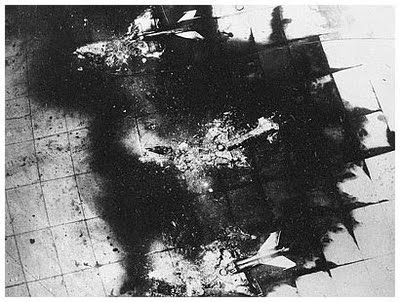
Egyptian Airforce destroyed on the ground

As a very young boy at Primary School, I vividly remember the Middle-East Six-Day War in 1967. Our school Principal announced at Assembly that he was deeply concerned about it leading to another World War and we should all pray. As a farm boy, I caught the local school bus, which in those days also delivered the mail, newspapers and bread to local farms. I distinctly remember glancing at the newspaper headlines and viewing the photos over that week of the newspapers that lay stacked at the front of the bus near the driver. Within a week the news vanished. Israel had defeated the Arab armies of Egypt, Jordan and Syria.

Next month it is 55 years since the Six-Day War.

Are there some lessons for managers from this significant historical event?

The war between Israel, Egypt, Jordon and Syria was fought between June 5 and June 10 1967 and resulted in an overwhelming victory to Israel and included the capture of the Sinai Peninsula and Gaza Strip from Egypt, the Golan Heights from Syria, and the West Bank and the Arab section of Jerusalem from Jordan. In summary, the war was a pre-emptive strike by Israel within an environment of mounting tensions with its Arab neighbours, where war unfortunately seemed inevitable. Israel was geographically challenged, lacked strategic depth, was politically and economically isolated and was numerically inferior in population and the size of its military.

So how did Israel succeed so spectacularly against such overwhelming odds?

Israel had been planning for war for many years, and central to this was the use of their air force. This involved a pre-emptive strike to destroy the Arab air forces on the ground. The plan had been worked out and practiced for several years with Israeli pilots flying repeated practice missions against mock Egyptian airfields in the Negev Desert.

At 7:14 a.m. the entire Israeli Air Force (IAF) of nearly 183 planes, with the exception of just 12 fighters assigned to defend Israeli air space, took off, flying under the radar with the goal of bombing 11 Egyptian airfields while the Egyptian pilots were eating breakfast.  Israel needed to destroy the Arab air force on the ground as their bombers could devastate Israeli cities. Amazingly, Israel had no bombers to use in the attack and the raid was carried out entirely by fighter planes. Most of Egypt’s planes never left the ground. By 11:05 a.m., 293 Egyptian planes were destroyed. Israeli fighters then attacked the Syrian and Jordanian air forces. By the end of the first day, most of the Egyptian, half the Syrian and all of the Jordanian air forces had been destroyed on the ground. By the end of the Six-Day War, the Arabs had lost 450 aircraft, compared to 46 for Israel.

So how was success achieved?

Logistics, superior training, planning and better intelligence.

The Israeli ground crews had practiced the rearming and refueling of returning aircraft. They achieved this in less than eight minutes, thereby enabling the strike aircraft of the first wave to fly in the second wave and meant an aircraft could fly five missions per day. By comparison, NATO aircraft could only fly three missions per day.

The IAF pilots were highly skilled and had been training for years. They practiced low level flying which required exceptional skills over the Mediterranean at under 30 metres so as to avoid radar detection. Furthermore, every pilot had photographs of their targets and had been practicing on mock targets in the Negrev Desert.

The IAF, using the “concrete dibber” anti-runway bombs which created huge craters made it impossible for the Egyptian aircraft to take off. This made the aircraft ‘sitting ducks’ and they were later destroyed on the ground.

Dawn was always considered the best time for an air attack from the east as the sun was in the defenders’ eyes. This was when the Egyptian air force was on high alert. However, Israeli intelligence found that 7.45 a.m. was when all the Egyptian air force was on the ground and the pilots were having their breakfast. This is when the IAF first attacked.    

Within six hours after the first IAF aircraft had soared into the morning sky, Israel had laid the foundation to winning the Six-Day War. Although the pre-emptive strike was a gamble, it paid off.

Careful preparation and some luck had been rewarded

What other lessons are there for managers here?

1. Planning – never underestimate how important planning is and doing your homework. The IAF did their homework on their enemies, knowing when they were most vulnerable and where the planes were located. Sound intelligence laid the groundwork for success.

2. Logistics – efficient use of available resources. The IAF was able to increase the utilisation of their aircraft well above what was considered ‘the norm’. Furthermore, as the IAF lacked bombers a new strategy of using bombs to effectively ground the rival air forces made them vulnerable to attack from the air by fighter jets.

3. Practice – leaving very little to chance the IAF practiced and practiced minimising the risk of failure. As the saying goes, practice makes perfect. There is no substitution for practicing to improve performance and increase the chances for success.

What other lessons do you think there are for managers?

#thenetworkofconsultingprofessionals

What if………..

“what if, but what is”

Gary West coach of Anna Meares – Australian Olympic Gold Medal Cyclist

In mid-2012, I was in England attending a management training program which coincided with the London Olympics. Sadly, I did not attend any events.  However, one night over a cold beer in my hotel room I watched two women cyclists, the 2008 gold medal winner Victoria Pembleton and the 2008 silver medallist Anna Meares, slog it out in the women’s sprint. It was an intense battle of stamina and wills and in the mesmerising trussell Anna Meares eventually triumphed.

So, who is Anna Meares?

Anna was Australia’s first female cycling gold medallist. She was an 11 times world cycling champion and the only Australian athlete to win medals at four consecutive Olympics.

Meares, was a daughter of a coalminer and grew up in Blackwater central Queensland hundreds of kilometres from the nearest bike track.  When her elder sister Kerrie showed promise as a cyclist the family moved to the coastal city of Rockhampton as it had a bike track.

  • Athens 2004 – gold medal in women’s 500-metre time trial, bronze medal in 200m sprint
  • Beijing 2008 – silver medal in women’s sprint
  • London 2012 – gold medal in the women’s in and bronze medal in the women’s team sprint
  • Rio de Janeiro 2016 – bronze medal in the keirin

These results are remarkable but there is something that is exceptional about her Olympic record.  In January 2008 seven months out from the Beijing Olympics, Meares broke her neck after crashing in the World Cup competition, fracturing her C2 vertebra, dislocating her right shoulder and tearing her ligaments and tendons. She went within 2 mm of becoming a paraplegic or worse death. Within 10 days she was back on her bike. With intensive rehabilitation she was able to fight her way back and qualify for the 2008 Beijing Olympics. Not only did she manage to qualify, but she also won a silver medal. From a broken neck to a silver medal in seven months – a truly remarkable performance.

Whilst her dedication and intense training to get fit enough to qualify and win a medal is testament to her intense focus and a clear goal (link here) there is something that is more compelling. It was her attitude. She did not focus on ‘what if’ but ‘what is’. Meares do not dwell on what might have happened if she’d been more seriously injured. Her coach made her appreciate her current situation. She was thankful and became more determined and focussed.

As managers, Anna Meares provides us with a great lesson.

Focus on what you can achieve – what’s in front of you. Don’t dwell on what you can’t control.

Four years later in London, Meares went on to win a gold and a bronze medal in Rio.

#thenetworkofconsulting professionals

A Winter Olympics story ….doing a Bradbury

Doing a Bradbury…

“I don’t think I’ll take the medal as the minute and a half of the race I actually won. I’ll take it as the last decade of the hard slog I put in”

Steven Bradbury – Gold Medal Winner 2002 Winter Olympics

With the end of the 2022 Winter Olympics comes a great story from the past.

So, who was Steven Bradbury and why did he become famous?

In 2002 Bradbury was the first athlete from Australia, and also the Southern Hemisphere to win a Winter Olympic Gold Medal. He was a former short track speed skater, a four-time Olympian and was also a member of the short track relay team that won Australia’s first Winter Olympic medal, a Bronze Medal in 1994.

So apart from being the first Australian athlete to win a Winter Olympics Gold Medal what was he famous for?

It was in the manner of his win. Bradbury slipped into the 1,000m speed skating final when two of his competitors in the semi-final crashed and another was disqualified. In the final, in the last lap as his competitors jostled for medal positions, Bradbury drifted further and further behind. With just metres from the finish line, a pile-up took out every other skater and avoiding the collision, he glided past to claim the Gold Medal.

His win entered the Australian colloquial vernacular in the phrase “doing a Bradbury” meaning an unexpected or unusual success.

However, there is more to this than chance. Bradbury was from tropical Queensland, not a state conducive to winter sports. He travelled the world, living hand to mouth to complete internationally, and competed in four Winter Olympics. At one stage he needed to borrow $1000 from his parents to repair his car so he could get to training. He supported himself by making skating boots in a home workshop. The years of hard work and training included nearly bleeding to death when a skate blade cut an artery requiring 111 stiches in 1994. Also in 1998, he fractured his vertebrae.

What are the lessons here for business owners and managers?

  • Hard work and sacrifice pay off.

In our logistics business there were times when a key customer left putting the business under pressure. However, with the previous hard work in networking and business development they were quickly replaced. Success can be a matter of luck, but it rarely is.  

  • Having a goal and vision

Bradbury’s goal was to win an Olympic medal on his own. The 2002 Olympics was his last chance. Despite his setbacks he hung in there, even when it looked increasingly unlikely that he would be successful, he succeeded and achieved his goal.

  • Being in the race

Yes, Bradbury’s tactic was to hang in there. This paid off as his rivals slipped, crashed and went spinning wildly across the ice. We had a customer in our logistics business who tendered for a lucrative post office franchise at an Australian airport. He was 5th or 6th in line, and eventually won the tender as his competitors were one by one, disqualified as being unsuitable, for reasons ranging from having a criminal record to no experience.

The Stephen Bradbury saga is a great story that resonates.  

Can you think of some other lessons?

#thenetworkofconsultingprofessionals

Why do airlines offer cheap seats?

‘I don’t care what you cover the seats with as long as you cover them with assholes’

Eddie Rickenbacker – US aviator

It’s coming up to Christmas and in Australia it’s the summer holiday period. Yes, over the Festive Season unlike our friends in the norther hemisphere, we will enjoy sunshine and summer. Whilst the monthly blog is posted on 21st of the month, in December it is released early. After all, 21st December is very close to Christmas Day.

Summer holidays often means travel and with COVID restrictions lifting, air travel is often ‘front of mind’. Hence the December blog is about air travel

Today, flying as a form of travel is widespread and growing – so we, the general public, are affected by airline pricing. Airline ticket prices are not set and can vary significantly, with some airlines offering flights that seem to be ridiculously cheap.

Why do they do this?

Modern airlines have very sophisticated analytical programs that use yield management or dynamic pricing to maximise the seating capacity of each aircraft, while obtaining the highest price for each seat. As Rickenbacker’s quote implies, seats need to be filled. This is a concept relevant to many businesses, which is little understood. It is called marginal pricing and, if used carefully, can significantly increase a business’s profits.

What is marginal pricing?

Marginal pricing occurs when a business sells a product or service at a price that covers the variable cost of producing it. The marginal cost is the variable cost of producing an additional unit or service. The concept of marginal pricing assumes that the fixed costs and overheads are already covered by earlier sales.

How does marginal pricing work in practice?

With airlines, the marginal costs of getting additional revenue are very low. Once an aircraft takes off, the empty seat is gone forever. It is a perishable commodity and cannot be warehoused or sold on another day. The same can be said for scheduled truck deliveries with spare capacity. The marginal cost of additional passengers is virtually zero. This is why airlines can offer what appears to be drastically discounted fares.

The road industry provides a good example of how this works in practice. For example, the cost of operating a semi-trailer is $1,600 per day including variable costs – fuel, finance, tyres and maintenance, loading and unloading – as well as fixed costs and overheads such as insurance, registration, depot costs and the driver’s salary. This is based on traveling 900km per day and a freight carrying capacity of 22 pallets.

The semi-trailer is loaded with 18 pallets (82% capacity) with initial revenue of $2,160 ($120 per pallet).

•             Fixed costs and overheads: $450 per day

•             Variable costs: $1,050 per day

•             Marginal costs: $5.56 per pallet (loading and unloading a pallet).

With a spare capacity of four pallets, there is an opportunity for the vehicle to fill this capacity by using marginal pricing. The assumption is that no extra variable costs such as fuel and tyres are incurred, and the only additional or marginal cost is the loading and unloading of the additional pallets. According to the concept of marginal pricing, providing the marginal costs of $5.56 per pallet is included, and any additional revenue above this will fall to the bottom line as profit.

This is demonstrated in the following table:

Marginal Pricing of Semi-Trailer Delivery

This example clearly shows that the addition of three pallets loaded onto the vehicle, with revenue of $80.00 per pallet instead of $120.00 per pallet, increases the revenue from $2,160 to $2,400, with profits increasing from $559.92 to $783.24 per day, or 40%.

Within manufacturing, the marginal cost is the variable cost of producing an extra unit of output. Let’s use manufacturing 1,000 wheelbarrows as an example:

•             Variable cost of manufacture is $20.00 per unit

•             Fixed costs are $10.00 per unit

•             Overheads are $5.00 per unit

•             Total cost per unit for a single wheelbarrow is $35.00.

The total cost for 1,000 wheelbarrows is $35,000 (1,000 x $35.00).

However, the cost of manufacturing an additional 500 wheelbarrows is $10,000, as $20.00 per wheelbarrow is the variable cost of production. The manufacturer could sell the additional 500 wheelbarrows at $40.00 each and make a profit of $20.00 per wheelbarrow.

Marginal cost pricing is a valuable tool for businesses, providing an opportunity to increase profits significantly if managed – particularly with unused capacity, such as in a manufacturing plant and in services such as transport.

However, there are dangers in marginal pricing. As a business, you must know and understand your costs – and this includes the cost of the sales staff.

Are there opportunities in your business to increase profits by marginal pricing?

What are the dangers if you decide to implement this strategy?

#thenetworkofconsultingprofessionals

Are you an intelligent boss?

Are you an intelligent boss?

‘In a high-IQ job pool, soft skills like discipline, drive, and empathy mark those who emerge as outstanding.

Daniel Goleman – author of Emotional Intelligence

It is often assumed that good managers are intelligent, and this is what makes them successful. Is this what really occurs in the world of work? This depends on how intelligence is defined.

Do you consider yourself an intelligent manager?

What is IQ?

IQ stands for Intelligence Quotient, a common measurement of human intelligence. The IQ test was originally developed in France by two psychologists, Binet and Simon, in the early 1900s – and their work still provides the basis of the tests used today. IQ tests were further developed throughout the 20th century and have been used in many psychological studies as well as in business, education, the military and government.

What is EQ?

EQ stands for Emotional Intelligence and the concept emerged in 1995 with the publishing of a book called Emotional Intelligence by Daniel Goleman. It sold over five million copies. Goleman claimed that EQ discounted IQ in determining success.

Why is EQ now considered more important than IQ for success in business today?

Have you met or worked with people who are highly intelligent but have a low EQ? They frequently display a lack of empathy and initiative, are arrogant, refuse to listen to other points of view, are insensitive and argumentative, blame others, never hold themselves accountable and are unable to control their emotions.

I certainly have, and there is nothing more demoralising and frustrating than working for such people. Low EQ people often suffer from ‘I’ strain – ‘I did this’, ‘I did that’ and ‘I am very important just listen to me’. One of the main impediments to achieving better outcomes is allowing egos to override common sense. An important aspect of high EQ is being able to manage your ego.

People are considered intelligent if they can reel off facts, retain information or have high technical skills. However, this does not necessarily make them, or the organisation they work for, successful.

While we may, as managers, pride ourselves on our technical skills, industry expertise, and innovation, this does not make us successful managers or leaders. Being the smartest person in the room does not necessarily equate to success.In successfully managing organisations today, we are increasingly dependent on ‘soft skills’ that build relationships inside and outside the organisation. It is essential to be able to negotiate, collaborate and compromise by listening, communicating, being flexible, and being able to work with others. Management by walking around is a good example of using EQ skills. Poor levels of EQ can make or break customer relationships, create and perpetuate poor work environments and reduce constructive communication with managers, colleagues, peers and subordinates. Michael Gerber, in The e-Myth Revisited, .

According to Harvard Business Review, EQ is ‘the key attribute that distinguishes outstanding performers’ and is the leading differentiator between employees whose IQ and technical skills are approximately the same. People with high EQs tend to be happier and have more fulfilling personal lives – as they are more self and socially aware, manage their emotions and tend to be more engaged with other people and events.

The good news is that EQ can be taught. However, it depends on your mental outlook and willingness to change. It can be improved through coaching, training and good mentoring.

Here are three questions that you can ask yourself to gauge your level of EQ:

  1. How would your employees describe your leadership style?

Ask this to gauge self-awareness. Does it sound realistic when you answer this question? Do you mention any shortcomings you are trying to address?

  1. Could you do a SWOT analysis on yourself?

Would your colleagues or subordinates agree with your self-assessment profile?

  1. Do you know the interests and family circumstances of your work colleagues?

This is asked to gauge your level of empathy with others.

#thenetworkofconsultingprofessionals
How do you improve your business processes?

Process improvement…

‘Without continual growth and progress, such words as improvement, achievement, and success have no meaning

 Benjamin Franklin – one of the Founding Fathers of the USA

Against a background of continual distractions, including increasing regulations and competition, one of the greatest challenges for businesses is to continue improve their performance and profitability. Improved processes lead to better efficiencies, improved productivity, greater employee satisfaction and, ultimately, profits.

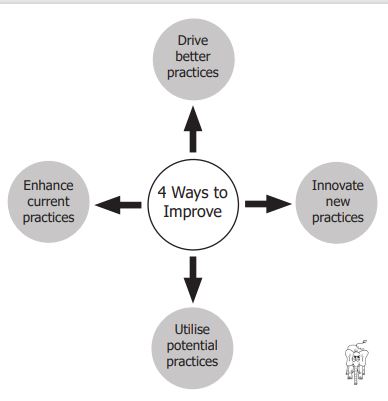
At its most basic level, there are four ways to improve productivity: 

  1. Drive better practices
  2. Innovate new practices
  3. Utilise potential practices
  4. Enhance current practices

Four Ways to Improve

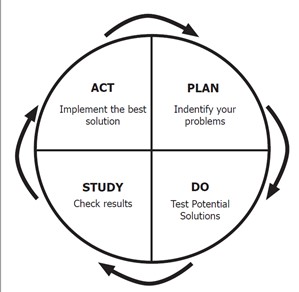
In Japan, following the devastation of World War II, the concept of ‘quality management’ was developed and implemented by an American – W. Edward Deming. He became known as the ‘father of quality management’ and his work led to the amazing success of Japanese companies such as Toyota, Sony and Mitsubishi. The ‘Deming management method’ became known as the Plan-Do-Study-Act (PDSA) cycle, which imbedded learning into a cycle of continous improvement.

Plan-Do-Study-Act (PDSA) Cycle

The aims of this section are:

  1. Describe how important process improvement is to a business
  2. Introduce a methodology we used to improve productivity in our logistics business.

Our third-party logistics business’s specific niche was retail logistics. When the business was first set up, it provided floor-ready merchandising services (FRM©) to retail suppliers. At that stage, the business was not a traditional warehousing and transport business – instead, stock was processed in the warehouse in a way that enabled it to be placed in each individual retail store in a ‘floor-ready’ condition, underpinned by an electronic commerce system. Items were price and security labelled, placed on hangers if required and scan-packed to store level.

This required a more varied skill set than traditional warehousing. The production process depended on the type of merchandise – whether apparel, shoes, cosmetics or electronics. This required a flexible approach and a standard methodology. Each supervisor would organise and ‘set up’ the job, and plan and manage the FRM© process. The productivity of each job and section was measured and reviewed individually with the supervisors on a weekly basis.

The methodology was called ‘the W5H Check’ because it asked why, what, where, when, how and who. Before each job was set up, the supervisor used this checklist to maximise productivity – answering the questions on the checklist. This approach improved productivity by  reducing the number of times the goods were handled, minimising lifting and walking, questioning who was doing the work,  eliminating unnecessary tasks and simplifying the process. 

W5H Check©

We found that this process improved productivity over time as it was decentralised, empowered the supervisors to make decisions, and measured performance. The supervisors were encouraged to seek input from their staff on how best to improve productivity and were authorised to communicate directly with the customers. It was similar to the PDSA cycle used in the Deming method and included specific questions that required thought. The W5H Check© sparked a process of continous improvement that was driven by ‘hands-on’ supervisors who were given the authority to make decisions that were the best for the customer and for the business.

The benefits of this system included very low staff and supervisor turnover, long-term customer retention and high levels of employee satisfaction. When the business was sold, the majority of supervisors had been with the company for over 10 years.

What are the areas in your business that you could improve using the simple Four Ways to Improve test?

Do you think that the W5H Check© system would be useful in improving productivity in your business?

Are there lessons to be learnt from the example above, relating to pushing responsibility down to supervisor level?

#thenetworkofconsultingprofessionals