The lessons from railway tracks

The lessons from railway tracks

“Most managers were trained to be the thing they most despise – bureaucrats”

Alvin Toffler: author and futurist

The state of New South Wales (NSW) railways has a railway gauge (distance between the rails) called the standard gauge. It is 4 feet, 8.5 inches or 1.435 metres and is also the gauge used in Great Britain and USA. As an aside, there are 2 other railway gauges used in Australia. How they came about is a story for another blog.

The standard gauge is an exceedingly odd number.

Why was that gauge used?

Because that’s the railway gauge used in England, and NSW was formally a British colony.

Why did the British select this gauge?

Because the first railway lines were built by the same people who built the pre-rail tramways. This was the gauge they used.

Why was this gauge used?

Because the engineers who built the tramways used the same jigs that were used for building wagons using the same wheel spacing.

Why did the wagons have this wheel spacing?

Because the wagon wheels were the spacing of the old wheel ruts. Outside these spacing they would break through the old, long distance roads in England.

So who built the old rutted roads in England?

Imperial Rome over 2,000 years ago. Many of these old Roman roads have been used ever since.

And what formed the initial ruts in the roads?

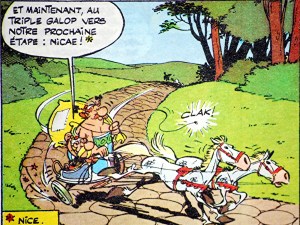
Roman war chariots.

So the NSW standard railway gauge were derived from the original specifications of an Imperial Roman war chariot.

What a great example of the power and life of bureaucracy. Bureaucracies can live forever.

When you are handed a specification, procedure or process and fail to understand the ‘logic’ or ‘reason’ you can make the statement:

‘What horse’s arse came up with this?’

And you may be right. Imperial Roman army chariots were made wide enough to accommodate the rear ends of two war horses.

The moral of the story is to “aware of the power and intransigence of

bureaucracies”. This can be outside your organisation or within your organisation itself.

You need to keep asking the question ‘why’ to get the best outcome.

Lessons from a master Rugby Coach

Eddie jones

Lessons from a master Rugby Coach

“There are people who lead and lead inspirationally, and those who don’t”
Eddie Jones – English Rugby Coach

At the time of writing, the English Rugby team had won 18 Test Rugby Matches without a loss, having won the 2016 Six Nations Championship and a 3 nil win against the Wallabies on last year’s tour of Australia. Previously England had only won 3 Tests in 100 years. (Post Script: England lost to Ireland last weekend 13-9 denying them a world record).

What has brought about this amazing run of wins?

The English team is coached by a former coach of the Wallabies, Eddie Jones. In 2015 as the coach of the Japanese side he orchestrated one of the greatest upsets in the history of the sport with Japan defeating the mighty South African Springboks in the Rugby World Cup.  The Japanese culture is very different to that of England. Jones has been able to adjust his style of coaching to match the culture. In Japan as head coach everyone does as you say.  With the old ‘command and control’ style of management there was no room for initiative and self-reliance.

It however was different when Jones took up the position of English Rugby coach. Described by former Wallaby coach, Bob Dwyer:

“He calls a spade a shovel, Eddie. I consider myself a very direct Australian, but Eddie is more so than I am. He takes no prisoners at all.”

Whilst being a strict disciplinarian and setting clear expectations of performance, he adopted a different approach to the one he used when coaching Japan. He created an environment where players were allowed to make decisions.

“You can’t develop leadership qualities if you don’t allow players to make decisions. You can’t develop leadership qualities if you don’t allow people to make mistakes. It is a very difficult balance, but you have to allow it,” says Jones

“You need players who have leadership qualities to make decisions for themselves”

Jones is a former teacher and head master. Perhaps his experience here helped in his coaching.

Jones has demonstrated some of the real characteristics of a leader – developing people, generating enthusiasm, inspiring trust, motivating, challenging the status quo and modifying your leadership approach to match the circumstances.

Can you think of circumstances where you have developed as a leader or developed others while allowing or being allowed to make decisions thereby becoming better leaders?

The importance of standard routines and procedures

pioneer_cement_ford

The importance of standard routines and procedures

“Routine sets you free”
Verne Harnish – founder of Young Entrepreneurs’ Organization (YEO)

One of the biggest issues faced by businesses as they grow is managing the growth. This is because their management systems come under strain.
Many businesses begin when a ‘technician’, for example, a tradesman such as an electrician decides that they want to go into business as they have the technical expertise. The new entrepreneur thinks that because they understand the technical work they also understand how the business operates.

This is a myth according to author Michael Gerber. In his book published over 20 years ago called The E-Myth he introduces the concept that very successful businesses have very simple and robust business systems that do not require exceptional managers. The more automatic and simplified your management system the more effective is your business. What Gerber is explaining is a franchise system.

Very early in my corporate career I worked for a business called Pioneer Concrete Services Ltd. The company grew from a single pre-mixed concrete plant in Sydney in the early 1950s to a major industrial corporation operating in 11 countries within 30 years. The founder was an accountant called Sir Tristan Antico who was obviously not a concrete ‘technician’. The primary foundation of the pre-mixed concrete business was a concept called ‘cell management’, where the plant manager was responsible for marketing, production, human resources, sales, quality and profitability. As a young graduate it was an exciting and challenging work environment where you quickly learnt business management skills or left.

Antico designed a very simple management system. Remember this was before computers. Each fortnight the manager reported their profit and loss using standard forms, showing gross margins, sales and profits. Once again using standard forms materials purchases and usage were reconciled monthly. The company could tell very quickly, regionally, nationally and internationally how it was travelling using this standardised and disciplined system. What I learnt at Pioneer I carried on to other companies I worked for and then to our own business.

As Vern Harnish says “Routine sets you free”

This disciplined, routine and systematic management system allowed Pioneer to expand quickly into international markets well before other competitors. Their business system was scaleable without the administrative and management bottlenecks often encountered when companies grow. One of my former managers said a trained monkey could run the Pioneer Concrete system.

As Warren Buffett, the great American investor said:

‘Buy into a business that’s doing so well an idiot could run it, because sooner or later, one will,’”

This was one of the main keys to Pioneer’s success. Interestingly, a new CEO recruited from outside the organisation and therefore with no allegiance to the cell management system took over. The cell management system with its standardised and disciplined management system was abandoned. The business was subsequently acquired by a major international competitor and a major Australian industrial icon was lost.

The question for any business owner is:

“Are your business systems scaleable so that your company can manage its growth without losing control allowing you to work on the business rather in it?”

Procrastination and egos cost businesses…

procastination-1

Procrastination and egos cost businesses…

“It does not take much strength to do things, but it requires a great deal of strength to decide what to do.”
Elbert Hubbard : writer, publisher and philosopher

How often, as business owners and managers do we procrastinate on making decisions because of the feared consequences?
Sometimes we procrastinate making the most obvious decisions and further compound indecision by allowing our egos to rule rather than practical common sense. Let me give you an example.

Recently a friend was caught up in a situation that not only cost the business significant money but was a major distraction for the business in general. An employee who was still within their probationary period was responsible for bullying two other employees causing them to leave. Despite advice that the offender should be terminated without recourse as they were within their probationary period, the owner procrastinated and the offending employee remained employed after their probationary period. The owner then decided to act on the advice and terminate the employee, who immediately filed for ‘unfair dismissal’. Australia’s employment laws make it quite difficult to terminate employees after their probationary and court imposed penalties are high.

The owner was advised to make a one off payment to make the problem ‘go away’. He refused, stating it was against his principles to make such a payment. Lawyers were engaged, time was spent to present the case to the government tribunal and everybody was distracted. The indirect cost was considerable. The offender then doubled their demand for ‘go away’ money. The final outcome was a large legal bill, plus a payout to the ‘offender’ and wasted time and effort by the business owner and advisors.

All this was avoidable. The offender should have been terminated within their probation period. Their actions had already resulted in two long term employees leaving the business which was poor management. The second piece of advice to pay out the claim would have also solved the problem. However, pride and ego rather than common sense ruled the roost.

In business sometimes we have to put our pride and ego aside and make a decision that is best for the business. I have been guilty of this in my career, however several painful experiences have caused me to reflect my actions.

Can you think of an example where you procrastinated or allowed your ego to either delay making a decision or discarded common sense advice and made the wrong decision?

Reading is not just for Christmas…

gates

Reading is not just for Christmas…

“not all readers are leaders, but all leaders are readers”
Harry S Truman – US President

Several years ago I was assisting with managing a 3 day residential leadership program called “The Challenge to Lead” for my Rotary Club. The program was run by professional facilitators who had donated their time to conduct the program. One of the facilitators asked the question:

“Who here has read a management or leadership book in the last 12 months?”

Of the 28 people in the room only 2 put up their hands. I was horrified. I personally try to read a book a month on leadership and management, whether they are biographies on famous people or management books. I also read novels and books on history.

The facilitator’s comment was:

“Readers are leaders”

It was interesting that people attending a leadership course had not seen the need to increase their knowledge and seek out new ideas by reading. Warren Buffett the billionaire investor reads 500 pages a day, Bill Gates reads 50 books per year and Mark Zuckerburg reads 2 books per month. Successful people do not just read anything, they are selective preferring to be educated rather than entertained.

Why is reading books, particularly management and leadership books important?

Here are some suggestions as to why:

• We can learn from the experience of smart people – Management by Peter Drucker
• It opens up your mind to new ideas – Good to Great by Jim Collins
• It can be inspirational, particularly biographies – Not for Turning. The Life of Margaret Thatcher by Robin Harris
• Show you how to do things – The One Minute Manager, by Ken Blanchard and Spencer Johnson
• Stimulate the mind and get you thinking – How to Win Friends and Influence People by Dale Carnegie
• Provide a framework for leadership – The 7 Habits of Highly Effective People by Stephen R. Covey

Reading is not just for Christmas…..

“not all readers are leaders, but all leaders are readers”
Harry S Truman – US President

Furthermore, reading elevates you above the daily grind of work and can inspire you and give you new ideas. Reading is a form of learning and can stimulate your thinking processes, providing ideas from a different viewpoint.

If you do not have time for reading than another alternative is listening to audio books. I listen to audio books whilst driving. Instead of listening to trivial talkback radio shows I use the time to increase my knowledge.

In 2016 the 5 best selling management books for Dymocks an Australian national book retailer were:

The 7 Habits of Highly Effective People by Stephen R. Covey.
Strengthsfinder 2.0 by Tom Rath.
The One Minute Manager, by Ken Blanchard and Spencer Johnson.
Five Dysfunctions of a Team by Patrick Lencioni.

Good to Great by Jim Collins.

With the traditional holiday period coming up in the southern hemisphere it is now an opportunity to think about how can you enjoy the period and start reading. Reading is not just for Christmas, however it is a good time to begin. Take the time to select some books to read and make a start. The 5 books mentioned above are a good reads.

With some planning it can become a life time habit and make you a better leader.

Wishing you and your families a Merry Christmas and best wishes for 2017 and thank you for following my blog in 2016.

Christmas is coming again…

5-reasons-to-attend-holiday-parties-this-month-1024x678

Christmas is coming again…

“What I don’t like about office Christmas parties is looking for a job the next day”
Phyllis Diller – comedian

Last year I wrote a blog before Christmas about using Christmas as a time to invigorate your staff and business and celebrate their achievements and commitment. A time to build goodwill and for managers to ‘rise to the occasion’ and display leadership.

Despite Christmas being a time of joy and celebration it can also be, unfortunately a disaster for both businesses and staff. Every year we hear stories of work Christmas parties that go wrong…..drunkedness, inappropriate and embarrassing behaviour, work accidents and the like. Often management or the organisation is blamed for the outcomes. It all the more disappointing when it is traditionally a period of cheer and goodwill.
So what should you as a manager or business owner do to protect yourself and staff from a bad outcome for your staff at Christmas?

What are the ‘rules’?

A link to Broadspring Consulting website has some Office Christmas Party Success Tips.

Also remember as an employer, the onus of proof is on you. Christmas parties should be more than about having fun. It’s a good time to reflect on achievements of the business and staff. This should obviously come from the most senior manager, whether the CEO, owner or Department Manager. It’s a time to display leadership and celebrate your business and staff’s achievements and also to thank them for their efforts. It is also an opportunity to set the tone for next year.

So what are you planning for your work Christmas party that will achieve these aims?

Are all your eggs in the one basket?

zimbabwe

Are all your eggs in the one basket?

“Don’t put all your eggs in one basket”
Anon

I love travelling. Travelling allows me to experience unique cultures, see beautiful and interesting sights and most importantly meet interesting people. It’s amazing what you can learn from listening to other people’s experiences.

On a recent trip to Zimbabwe I was fortunate to be sitting on an aeroplane next to a local businessman who was returning home from South Africa. In conversation he gave me his family’s life story. He had several businesses, some urban property assets and was managing to survive despite the severe economic circumstances. His family also used to have several farms, employing hundreds of people. With the encouragement of the government, these farms were ‘taken over’ by so called ‘war veterans’ in the early 2000s with no compensation. In other words, his farms were stolen and hundreds lost their jobs.

Apart from obvious injustice, his position emphasised an important strategy for business owners. I had initially seen this strategy used by a former employer.

The strategy was “don’t put all your eggs in one basket”

Unlike many farmers who had lost their farms in the ‘farm invasions’ the Zimbabwean businessman had survived because he had diversified his businesses, thereby protecting his wealth. Likewise my former employer had carefully separated his business into various categories – operating business, fixed assets, property investments and stock exchange investments. If the operating business failed, then the rest of his wealth was not threatened.

The lessons learnt from my former employer were implemented in a subsequent business. This could not have been done without a very disciplined approach as at times our business struggled. Too often I have seen business owners draw out of their business for private use such as expensive cars, children’s school fees and overseas holidays and then get into trouble with the tax office and creditors when the business struggles financially.

Have you got ‘all your eggs in the one basket’?

If you have, perhaps you need to reassess your situation……

Using visual symbols to communicate…

82 Overcrowded Bus.

Using visual symbols to communicate…

“The best leaders… almost without exception and at every level, are master users of stories and symbols”

Tom Peters – Business Author

I have just arrived back today from travelling in Africa …..

We often hear business leaders and politicians trying to communicate messages unsuccessfully. Why?

Are they using too many words, the wrong words or just words? Communication is not just verbal. It is estimated that over 65% of all communication is non-verbal. Eye contact, facial expressions, appearance and gestures influence how you interpret the message.

This is where the use of symbols become important in communicating. This can be used in the workplace.

Recently I was confronted with trying to express the importance and urgency of cultural change to an organisation that was underperforming. Presenting to the Board I realised that the use of symbols or visual imagery would help communicate the issues and how to manage the change.

The visual imagery I decided to use was taken directly out of Jim Collins’ management book, “From Good to Great – why some companies make the leap and others don’t”.

I used the symbol of a bus. The symbolism was very easy to understand and is very clear.

From a PowerPoint slide showing a red bus presented to the Board, the concept developed to using a model of a toy bus. The bus had the company’s logos on the side, and on the roof was an arrow pointing forwards indicating progress and moving ahead with the Jim Collin’s quote:

“Get the right people on the bus, the wrong people off the bus, and the right people in the right seats”

The toy bus sat on the meeting room table for all to see. Later we added Lego people getting on and off the bus – normal people getting on, and pirates, wizards and clowns getting off the bus. The toy bus was regularly referred to when explaining a person’s performance or suitability and became a clear way of communicating.

Staff were often asked: “Are you on the bus?” and ‘Are they on the bus?”

It became a powerful visual symbol. When management spoke about what needed to happen it was described in terms of being on the bus. It was a clear message and was understood from the managing director to the staff on the shop floor.

We implemented daily ‘toolbox’ meetings with staff. We called the location ‘the bus stop’ further reinforcing the message.

Using symbols in business as a tool is a very important part of communicating, both with your current and prospective customers and staff. If the symbol is compelling enough it will become part of the organisation’s culture.

Can you think of a symbol used by an organisation that is easily recognisable and understood?

What about your organisation?

Visualising your goals…

IMG_3092

Visualising your goals…

“If I could have seen France, I would have made it”

Francis Chadwick: long distance swimmer

 Francis Chadwick was the first woman to swim English Channel in both directions. Her first attempt failed after spending 14 hours in the water. The attempt was made in thick fog and ironically she was only 3 miles from France when she abandoned her attempted crossing. Her comments on finding out how close she was to her goal was:

“If I could have seen France, I would have made it”

There are few better examples of the importance of setting goals and visualising those goals. Last month I was trekking in the McDonnell Ranges near Alice Springs in Central Australia. Not only was it an amazing visual experience but it was also a time to reflect and enjoy the company of interesting people, as well as the physical challenge. Each day we set out to walk the 18 to 20 kilometres in a harsh desert environment. This meant setting goals for the day.

On our second day we got up at 5.30 am and trekked 8 kilometres through a gorge over rocky and steep terrain onto open spinifex covered slopes to the summit of Mt Sonder. This mountain was the highest point on the Larapinta Trail with 180 degree views over 100 kilometres of the surrounding country.

At times it was physically quite difficult however it was made easier as we had a goal. We could see the mountain in front of us. Unlike Francis Chadwick’s first attempt at swimming the English Channel we could see our goal and kept going. The magnificent views were one of the rewards for our efforts.

Everybody should have goals whether it’s to obtain a degree, be financially independent, buy your first house or start a business.

Without clear goals you are less likely to achieve your potential or anything else for that matter. Too few of us set goals in life or in our work. Importantly, by not having written goals we are even less likely to achieve our potential.

The alleged quote from Lewis Carroll’s book Alice in Wonderland explains the situation clearly:

“If you don’t know where you’re going, any road will get you there”

However, I have found that although writing down goals is important it is critical that you also have a plan with milestones to help you meet your goals. In climbing Mt Sonder, we had various milestones to reach certain locations by set times to ensure we climbed it in the time planned and to complete our descent before the heat of the afternoon set in.

In concluding one often overlooked part of goal setting is to visualise your goal. I have found that visualising what the completed goal is a powerful motivator. In selling our business I visualised what it would be like to finally be rewarded for all that hard work

……….a bit like climbing Mt Sonder where we visualised the spectacular  views and enjoying a well-earned rest. To be able to see the mountain helped with the visualising the goal. Francis Chadwick in her second and successful attempt at swimming the English Channel, could see the English shore.

Can you visualise what the completion of your goals looks like?

Business Storytelling

storytelling-18642-3-1940x1293 (1)

Business Storytelling

“Storytelling is about two things; it’s about character and plot”

George Lucas

I have just been trekking in the McDonnell Ranges near Alice Springs in Central Australia in the great Australian Outback! What an amazing scenery ranging from spinifex and mulga covered hills to gorges of ferns and white river gums…

Well might you ask what has a quote from a famous movie director got to do with business story telling?

Using stories in business as a communication tool is a very important part of communicating with your current and prospective customers. If the story is compelling enough or inspiring enough it will become part of the culture of the business demonstrating your values and where the company came from. More importantly it helps sell your products and services.

Everybody likes a good story and like what George Lucas says the plot and character are vital. I find stories about how businesses start as the most compelling and fascinating. Hewlett-Packard was started in a garage by Dave Packard and Bill Hewlett in 1938 and the garage is now part of company culture. What an inspiring story!

I once worked for a company where the owner in his mid-50s lost his business his father and uncle had established after fleeing the Nazis in Europe. He and his daughter commenced a new business in their rented flat on their kitchen table – it later became the largest supplier of sleeping bags in Australia. What a compelling story for staff and customers…..

People whether staff or customers warm to stories of success from hardship – a plot and character just as George Lucas suggests. It’s emotional and uplifting. However the story must be authentic – if you are not authentic it damages you and your business or brand.

I visited Nepal just over 2 years ago with an Associate to assist a locally owned and managed travel company to improve their business. It was a both an exciting and rewarding experience and hearing how the business commenced was inspiring and a great story.

As a young boy, the founder watched groups trekking through his village in northern Nepal. He had a vision and decided to create his own future. Whilst in his early teens he went to Kathmandu to high school without his family (in Nepal high schools are only in the largest cities). From there he worked in a hotel as a porter, before moving into hotel reception. To gain practical experience in trekking he became a guide, completed his university studies before establishing his own tour company. All this was less than 15 years ago. It is now one of the largest trekking companies in Nepal. As well as offering employment and training in a comparatively poor country, he also has a mission to give back something to the people of Nepal. He instigated school building projects in poor and remote areas as well as making significant financial donations are to schools in these areas.

Both are good examples of stories that can inspire staff because they explain where they came from and help embody the values and provide the foundation of the culture and vision for the company.

Do you have some great stories you can tell your customers and staff?

……………it will help give colour to your communication.