So where is Werris Creek?

“Many times, the wrong train took me to the right place.”

Paulo Coelho – Brazilian lyricist and novelist

Whist undertaking post graduate studies many years ago, one of my fellow students and friend was a senior executive of Queensland Rail. He had started his career as a clerk in a rural railway station in outback Queensland and went on to hold senior executive positions in rail businesses in Australia. Clearly rail was in his blood, as his father had been a fettler on the railways.

One of his father’s postings was to the tiny and declining town of Wallangarra on the Queensland New South Wales border. The town had been established in 1885 for the sole purpose of being the connecting link between the NSW rail system and the rural Queensland rail system. Wallangarra was the result of two state governments deciding to build railways of different gauges; narrow gauge in Queensland (1067 mm) and standard gauge in NSW (1435 mm). This meant that people travelling from Queensland to NSW had to alight at Wallangarra and change trains in the historic town of Tenterfield just across the border. Not surprisingly this ensured that the tiny settlement became a major railway junction.

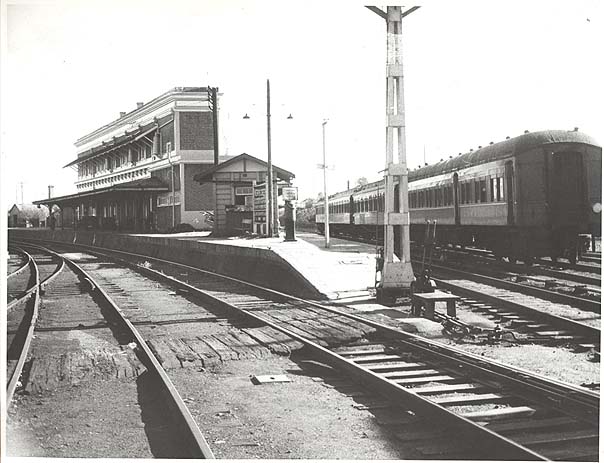
In northwest NSW, there lies another important railway junction town called Werris Creek. Werris Creek like Wallangra did not exist until the late 1870s when the railway arrived. A town of approximately 2,000 people, this was where trains from Sydney could be diverted onto three branch lines to various locations in country NSW, with one branch line terminating in Tenterfield. By co-incidence, as a young farm boy I lived less than 20 minutes’ drive from Werris Creek.

Anyway, back to my friend and fellow student. During the school holidays, he worked as a casual railway porter moving luggage from Wallangarra to Tenterfield, just across the border. All the luggage was marked ‘To Werris Creek’. As a young, and obviously naïve lad, he thought that Werris Creek was one of the largest cities in NSW. Having lived near Werris Creek the irony of this was not lost on me.

What are the lessons here?

How often are we as managers given a picture of a situation that is unrealistic?

Today, in the age of the internet there are organisations that appear much larger and more substantial than they are in the real world. With the advent of social media, virtual organisations and people exist.

Doing your homework will certainly help and don’t take things on face value.

This what I call this the ‘Werris Creek Affect’

Can you think of examples of ‘Werris Creek Affect’ in your working life?

Post note: the last train left Tenterfield in 1988 and the last scheduled train to Wallangarra left in 1997.

#thenetworkconsultingprofessionals

Are you prepared for a ‘black swan’ event?

“The problem with experts is that they do not know what they do not know.”

― Nassim Nicholas Taleb, author of The Black Swan: The Impact of the Highly Improbable

What is a black swan event?

The phrase “black swan” derives from a Latin expression; “rara avis in terris nigroque simillima cygno” – “a rare bird in the lands and very much like a black swan”.

A black swan event is a rare event that is positive or negative, is deemed improbable yet has massive consequences and could not have been predicted even with the help of sophisticated modelling techniques. For example, an event that has a severe impact on the economy, social conditions, and overall well-being of a nation. The recent COVID pandemic has been called a ’black swan’ event or Russia’s invasion of Ukraine.

A characteristic of a black swan event is low probability and high impact. Often it becomes rationalised in hindsight, as if it could have been expected. Once again, the COVID example comes to mind. The so-called experts had been ‘predicting’ that the world was overdue for a worldwide pandemic as the last deadly one was the Spanish Flu pandemic, over 100 years ago. However there had also been other pandemics that were not as deadly as the Spanish Flu, namely the Hong Kong Flu in 1968 and the 1957 Asian Flu.

Apparently, the phrase was commonly used in 16th century London as a statement of impossibility. It derives from the presumption that all swans must be white as there were no records of swans having feathers that were NOT white. Therefore, a black swan was impossible or at least non-existent. However, in the late 17th century, Dutch explorers became the first Europeans to see black swans, in Western Australia.

Did this change the meaning of the term ‘black swan’ event?

Yes and no.

Nassim Taleb in his book The Black Swan: The Impact of the Highly Improbable said that black swan events have three characteristics:

1. Low predictability based on prior information

2. High consequence, and sometimes catastrophic impact

3. Explained in hindsight as if it were actually predictable

The main idea in Taleb’s book is not to attempt to predict black swan events, but to build robustness against negative ones that occur and to be able to exploit positive ones.

As a business, how can you prepare for a ‘black swan’ event?

This is a challenge for all business managers and leaders.

Some of the possible strategies for dealing with a black swan event include having a business continuity plan and testing it, diversification into unrelated industries, for example a mining company who is reliant on one commodity could move into other commodities, develop alternative supply chains and having adequate insurance cover.

The critical aspect for business to minimalise the impact is to build robustness in the business.

#thenetworkofconsultingprofessionals
A management lesson from Colonial Australia

“The roads are rare to travel, and life seems all complete;

The grind of wheels on gravel, the trot of horses’ feet,

The trot, trot, trot and canter, as down the spur we go —

The green sweeps to horizons blue that call for Cobb and Co”

From the poem – “The lights of Cobb and Co” by Henry Lawson

Who or what was Cobb & Co?

Cobb & Co was a coach company established in 1853 in Melbourne, Australia by a small group of Americans to service the Victorian goldfields. This was before the advent of railways. The company won mail contracts, gold escort, passenger and mail service contracts based on reliable and efficient schedules. The company pioneered transport routes, delivering mail, gold and passengers throughout the country and contributed greatly to social growth and the expansion of pastoral settlement across Australia.

The business grew rapidly up until the early 20th Century. At its peak, its coaches travelled 44,800km each week, over 11,200 km of regular routes with over 6,000 horses were harnessed every day. Its network of tracks extended further than those of any other coach system in the world. The network extended from far north Queensland to Victoria and South Australia in the south, covering all of eastern Australia, an area larger than Western Europe. The logistics of operating without the information technology of today defies belief.

In 1924, the last coach trip was completed between Yuleba and Surat in Queensland. Two years before the last trip, Qantas launched its first mail and passenger flight, signally the changes in transport technology such as railways, aeroplanes and motor vehicles. This meant Cobb & Co’s days were numbered.

Cobb & Co’s operational success mirrored my earlier days managing an interstate vehicle transport operation.

What are the lessons for managers today in the rise of Cobb & Co’s?

  • Technology

Cobb & Co: Coach design. The existing coaching companies used English vehicles that were heavy and had stiff metal springs. They were totally unsuitable for the rugged Australian landscape. Cobb & Co imported coaches from the American West, that were light weight, had leather straps as suspension systems and were far better suited to Australian conditions. This resulted in a faster and smoother ride.

Transport Company: The vehicle transport business was so successful that at the time it transported over 60% of all locally manufactured vehicles in Australia. Supported by on-board computers which were in their infancy, the significant difference to the competition was a revolutionary designed car carrying trailer that transported 10 cars instead of 8, with a revolutionary sliding axle and fifth wheel allowing the truck to travel off B-Double routes which the opposition could not match. Whereas Cobb & Co had the best coach design, we had the best technology in trailer design for vehicle transport.

  • Planning and Efficiency

Cobb & Co: The ability to regularly change horses provided the competitive edge over the company’s rivals.  Horse changing stations were placed every 16-32 km along their routes, whereas their competitors had much greater distances. Fresh horses meant the coaches could maintain high speeds across long distances. This allowed the business to grow quickly and win lucrative mail and gold escort contracts combined with the rapid increase in rural settlement across Australia. Horses, harnesses, stables, grooms and stock feed supplies were organised; booking offices were set up in major towns and inns, shanties and post offices were used to service the passengers enroute.

Transport Company: With motor car manufacturing sites in Melbourne and Adelaide and a strategically located hub based in rural NSW, the transport company was through careful planning and geographically located drivers was able to run trucks continuously for over 6 days per week. Drivers changed over every 10 hours, keeping within the legal driving hours whilst more than doubling the number of kilometres travelled per week that was considered the industry average. This was before GPS technology. Much like the change-stations in the Cobb & Co network of over 130 years ago.

  • People

Cobb & Co: The success of Cobb & Co was largely due to its people, from its coachbuilders to grooms, innkeepers, horse breeders, managers and drivers. The drivers, with their extraordinary skills with horses established the company’s reputation and ensured the service operated to the highest possible standard in all weathers, whether on bush tracks or well-maintained roads. At each changing station the grooms were responsible for 8-10 horses and their equipment.  Two kms out from the change station, the driver would sound a bugle alerting the groom, who would have a fresh horse team harnessed by the time the coach arrived.

Transport Company: If there is anything that makes a business successful, it’s the people. Like Cobb & Co we had a team that was prepared to ‘think outside the square’, customer and service focussed, understood what could be achieved and successfully planned the daily and weekly operations. This was backed up by choosing, training and rewarding our driving team who like Cobb & Co were proud of their position in the industry.

Post Note: Cobb & Co eventually failed through a combination of factors. If you are interested in the history of Cobb & Co, I would recommend the book Wild Ride: The Rise and Fall of Cobb & Co by Sam Everingham

#thenetworkofconsultingprofessionals

The Atlantic Conveyor Affect…

“It’s OK to have your eggs in one basket as long as you control what happens to that basket”
Elon Musk – billionaire businessman

Just over 40 years ago on 2nd April 1982, Argentina invaded the British overseas territory of the Falkland Islands. They are an island archipelago in the South Atlantic Ocean located over 12,000 kilometres away from the British Isles. The Falklands were a community of just 1,800 people, primarily rural sheep farmers, the majority of whom were of British descent.

In the face of this challenge, the British government under the leadership of Margaret Thatcher organised a Task Force of over 100 ships, including naval vessels, merchant ships, and a submarine all carrying supplies, military equipment and troops. An extraordinary feat considering the tight time frame and the huge distances involved.  

At the time Argentina was ruled by a brutal military dictatorship. Argentina had claimed sovereignty over the islands for many years and the ruling military junta did not believe that Britain would attempt to regain the islands by force. With falling popularity and failing economy, the junta saw the invasion as a diversion from their domestic problems.

On 21st May 1982 British forces landed on the islands. On 25th May the container ship, Atlantic Conveyor, a ship requisitioned by the Royal Navy was hit by two Exocet missiles fired by the Argentinian air force, killing 12 of the crew including captain. Due to the presence of both fuel and ammunition that were stored below decks, the incendiary effect of the unburnt propellant from the missiles caused an uncontrollable fire and the vessel sank three days later.

What else was lost?

Apart from fuel and ammunition the Atlantic Conveyor was carrying seven Westland helicopters, four Boeing Chinooks, and a Westland Lynx. Only one Chinook one Westland Wessex were saved. Almost all the Task Force helicopters were on this ship.

Did this influence the plan to retake the islands by the British forces?

Yes, the plan to ferry troops by helicopter could not be carried out, resulting in a significant change of strategy. The loss of these helicopters meant that British troops with the onset of winter had to march on foot across the wet and semi-frozen ground to recapture the island’s capital, Stanley. However, despite this setback, Stanley was captured on 14 June 1982 – the war having lasted only 74 days.

So, what do you think is the main management lesson from the sinking of the Atlantic Conveyor?

Do not put all your eggs in one basket. Having most of the helicopters on one ship making it vulnerable to a missile attack was a very poor decision!

Can you think of other management lessons from the sinking of Atlantic Conveyor?

#thenetworkofconsultingprofessionals

Another lesson from the farm…

“Our relationships will eventually grow stale unless we are diligent about directing and cultivating them”

Todd Henry – International speaker

Having grown up on a rural property in north-western New South Wales, Australia, I have written several blogs about lessons we can learn as managers based on growing up on a farm. There were many things I observed and experienced that can be related to business and life. From resilience, the importance of ongoing maintenance like chipping a weed called the Bathurst Burrs and the lessons of ‘the cow pat’.

Another lesson comes to mind.

The growing of crops. One crop my father grew was wheat. Wheat needs constant cultivation combined with adding fertiliser and weed control to get the best outcome. The ground needs to be ploughed to remove weeds and make the soil friable and ready to accept the planting of seeds. When seeding, fertiliser needs to be added at the same time to improve yield. And you need rain!

The growing of wheat is a great analogy that can be applied to being a successful manager. Spend time cultivating your connections, fertilise your contacts, provide help when needed, keep the weeds under control by not losing contact and maintain your contacts by watering them.

This has worked for me over the long term with amazingly positive outcomes. Thirty years ago, a recruitment consultant placed me in a job. Over the years I kept contact with him and 5 years ago another opportunity came up. He found a logistics consulting project for me, and I’m still involved with the business as a board member.

Another example relates back to when I was a casual university lecturer. I kept in touch with several of my former students. This resulted in one former student giving an important contract to our logistics business. Another was employed by me for one of my clients and this was after over 15 years since graduating.

The example with the most impact was a former work colleague and student. He convinced me to do my master’s degree. Later he told me about a job vacancy with his former employer. Much later he provided the conduit to sell our logistics business to an Asian based freight forwarder.

What are the considerations with networking?

Most importantly when cultivating your network, it needs to be mutually beneficial but with more give than take. No long-term relationship whether personal or business will endure if it is only one way. Managing is not about platitudes, big schemes and projects. It is about constant attention to relationships, continually seeking ways to interact with your network regularly and adding value.

Do you think that the cultivation analogy is a good one for you as a manager or business owner, both personally or professionally?

#thenetworkofconsultingprofessionals

Lessons from 55 years ago……

“Before anything else, preparation is the key to success.”

Alexander Graham Bell – inventor of the telephone

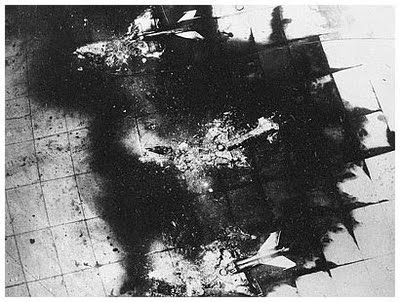
Egyptian Airforce destroyed on the ground

As a very young boy at Primary School, I vividly remember the Middle-East Six-Day War in 1967. Our school Principal announced at Assembly that he was deeply concerned about it leading to another World War and we should all pray. As a farm boy, I caught the local school bus, which in those days also delivered the mail, newspapers and bread to local farms. I distinctly remember glancing at the newspaper headlines and viewing the photos over that week of the newspapers that lay stacked at the front of the bus near the driver. Within a week the news vanished. Israel had defeated the Arab armies of Egypt, Jordan and Syria.

Next month it is 55 years since the Six-Day War.

Are there some lessons for managers from this significant historical event?

The war between Israel, Egypt, Jordon and Syria was fought between June 5 and June 10 1967 and resulted in an overwhelming victory to Israel and included the capture of the Sinai Peninsula and Gaza Strip from Egypt, the Golan Heights from Syria, and the West Bank and the Arab section of Jerusalem from Jordan. In summary, the war was a pre-emptive strike by Israel within an environment of mounting tensions with its Arab neighbours, where war unfortunately seemed inevitable. Israel was geographically challenged, lacked strategic depth, was politically and economically isolated and was numerically inferior in population and the size of its military.

So how did Israel succeed so spectacularly against such overwhelming odds?

Israel had been planning for war for many years, and central to this was the use of their air force. This involved a pre-emptive strike to destroy the Arab air forces on the ground. The plan had been worked out and practiced for several years with Israeli pilots flying repeated practice missions against mock Egyptian airfields in the Negev Desert.

At 7:14 a.m. the entire Israeli Air Force (IAF) of nearly 183 planes, with the exception of just 12 fighters assigned to defend Israeli air space, took off, flying under the radar with the goal of bombing 11 Egyptian airfields while the Egyptian pilots were eating breakfast.  Israel needed to destroy the Arab air force on the ground as their bombers could devastate Israeli cities. Amazingly, Israel had no bombers to use in the attack and the raid was carried out entirely by fighter planes. Most of Egypt’s planes never left the ground. By 11:05 a.m., 293 Egyptian planes were destroyed. Israeli fighters then attacked the Syrian and Jordanian air forces. By the end of the first day, most of the Egyptian, half the Syrian and all of the Jordanian air forces had been destroyed on the ground. By the end of the Six-Day War, the Arabs had lost 450 aircraft, compared to 46 for Israel.

So how was success achieved?

Logistics, superior training, planning and better intelligence.

The Israeli ground crews had practiced the rearming and refueling of returning aircraft. They achieved this in less than eight minutes, thereby enabling the strike aircraft of the first wave to fly in the second wave and meant an aircraft could fly five missions per day. By comparison, NATO aircraft could only fly three missions per day.

The IAF pilots were highly skilled and had been training for years. They practiced low level flying which required exceptional skills over the Mediterranean at under 30 metres so as to avoid radar detection. Furthermore, every pilot had photographs of their targets and had been practicing on mock targets in the Negrev Desert.

The IAF, using the “concrete dibber” anti-runway bombs which created huge craters made it impossible for the Egyptian aircraft to take off. This made the aircraft ‘sitting ducks’ and they were later destroyed on the ground.

Dawn was always considered the best time for an air attack from the east as the sun was in the defenders’ eyes. This was when the Egyptian air force was on high alert. However, Israeli intelligence found that 7.45 a.m. was when all the Egyptian air force was on the ground and the pilots were having their breakfast. This is when the IAF first attacked.    

Within six hours after the first IAF aircraft had soared into the morning sky, Israel had laid the foundation to winning the Six-Day War. Although the pre-emptive strike was a gamble, it paid off.

Careful preparation and some luck had been rewarded

What other lessons are there for managers here?

1. Planning – never underestimate how important planning is and doing your homework. The IAF did their homework on their enemies, knowing when they were most vulnerable and where the planes were located. Sound intelligence laid the groundwork for success.

2. Logistics – efficient use of available resources. The IAF was able to increase the utilisation of their aircraft well above what was considered ‘the norm’. Furthermore, as the IAF lacked bombers a new strategy of using bombs to effectively ground the rival air forces made them vulnerable to attack from the air by fighter jets.

3. Practice – leaving very little to chance the IAF practiced and practiced minimising the risk of failure. As the saying goes, practice makes perfect. There is no substitution for practicing to improve performance and increase the chances for success.

What other lessons do you think there are for managers?

#thenetworkofconsultingprofessionals

What can an early Australian explorer teach us about leadership?

“Difficulties are just things to overcome.”

Ernest Shackleton – British Antarctic Explorer

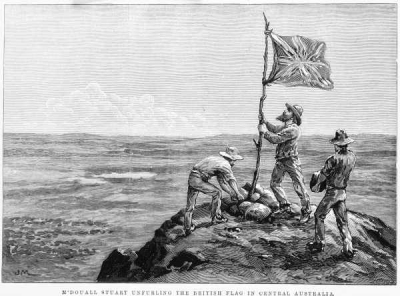
McDouall Stuart in central Australia

As a primary school student, I was enthralled by the exploits of the early Australian colonial explorers from Blaxland, Lawson and Wentworth who first crossed the Blue Mountains, to Oxley, Burke and Wills, Kennedy and then Leichardt, who disappeared without trace. One particular explorer stood out, John McDouall Stuart.

In an earlier blog, I wrote about management lessons from the failed and tragic Burke and Wills expedition. The contrast between Stuart who was a dour alcoholic, careful, physically small and a shy Scot to Robert O’Hara Burke who was a moody, impulsive, eccentric and physically intimidating Irishman, could not have been starker.

Leaving from Adelaide, Stuart successfully crossed Australia from south to north through the harsh desert interior and returned, without losing any member of his expedition.

So how did he do it?

Trained as a civil engineer, Stuart accompanied the famous explorer Captain Charles Sturt in 1844 to search for the inland sea in central Australia. This expedition returned to Adelaide, exhausted and suffering from scurvy after discovering two of the harshest deserts in Australia, the Simpson Desert and Sturt’s Stony Desert; but failing to find the island sea. The conditions were so horrendous, the lead fell out of their pencils, and the screws fell out of their wooden equipment boxes as they shrank in the heat. The horses became lame and many died. Sturt became nearly blind and the second in charge, James Poole died of scurvy.    

Over the next nearly 20 years Stuart led five expeditions into the centre of Australia before his final and successful expedition in late 1861. Each subsequent expedition explored further and further into the harsh desert interior, finding the geographic centre of the continent and finally solving the riddle of the inland sea. On his fifth expedition Stuart reached Newcastle Waters north of what is now known as Tennant Creek in the Northern Territory. They were forced back from reaching the northern coastline near Darwin due to the lack of water and inhospitable scrub.

His sixth and final expedition was successful, reaching the north coast on July 1862 and arriving back in Adelaide in December 1862. The crossing did not come easily.  The men were sick with scurvy and malnourished, many of the horses were abandoned as they became too weak to continue, and Stuart himself had to be carried on a stretcher between two horses on the final leg of the return journey. In contrast to Burke, and despite these hardships, no person ever died on any of the expeditions he led.

Returning as a hero, Stuart was awarded a gold medal by the Royal Geographical Society to add to a gold watch he had previously been awarded. The only other person to ever receive both a watch and medal was the missionary and African explorer, Dr David Livingstone such was his prestige. Stuart and his group were given a special welcome in Adelaide as heroes and crowds lined the streets, ironically on the day that Burke and Wills were buried in Melbourne. The government proclaimed a holiday.

Sadly, nearly blind and very sick, he died less than four years later.

What are three lessons for managers we can learn from John McDouall Stuart?

How does this compare this to the infamous and failed Burke and Wills expedition?

1. Planning – there is no substitute for sound planning. In contrast to Burke and Wills, his rivals in crossing Australia, he carefully planned his expeditions using a smaller and more mobile team. Being a qualified surveyor, he used these skills in planning his expeditions, combined with the experience gained from previous exploratory expeditions.

2. Experience – in contrast to Burke and Wills, Stuart was an experienced bushman. He spent nearly 20 years gaining experience in exploring the central Australian desert. Stuart travelled lightly and with small numbers of men on horses. There were no bullock drays and flocks of sheep to slow them down. They could travel far more quickly than all the explorers before them, and they followed the water courses. Stuart did not keep to a predetermined route and he used experience gained from the Aborigines. In the harsh Australian desert, he observed bird and animal movements which he used to discover water. Furthermore, the small party did not need large amounts of water.

3. Persistence – it took Stuart six attempts to cross Australia. Unlike Burke, he did not put his expedition members in danger.  When it became too difficult the expedition returned home. Persistence paid off in the end, although it could be argued to terrible effect on his physical health. Overnight success is very rare – there is no substitute for hard work and staying the distance.

Stuart’s exploits can be summed up in the following quote by T.G.H. Strehlow, an Australian anthologist who specialised in Central Australian Aboriginal culture:

“In Stuart, Australia possessed a man cast in the mould of a hero – a man whose amazing persistence, indomitable courage, and unfailing common sense enabled him to succeed in a mighty task in which most others would have failed”

Do you agree with these lessons?

What other lessons can we learn from the success of John McDouall Stuart?

#thenetworkofconsultingprofessionals
What if………..

“what if, but what is”

Gary West coach of Anna Meares – Australian Olympic Gold Medal Cyclist

In mid-2012, I was in England attending a management training program which coincided with the London Olympics. Sadly, I did not attend any events.  However, one night over a cold beer in my hotel room I watched two women cyclists, the 2008 gold medal winner Victoria Pembleton and the 2008 silver medallist Anna Meares, slog it out in the women’s sprint. It was an intense battle of stamina and wills and in the mesmerising trussell Anna Meares eventually triumphed.

So, who is Anna Meares?

Anna was Australia’s first female cycling gold medallist. She was an 11 times world cycling champion and the only Australian athlete to win medals at four consecutive Olympics.

Meares, was a daughter of a coalminer and grew up in Blackwater central Queensland hundreds of kilometres from the nearest bike track.  When her elder sister Kerrie showed promise as a cyclist the family moved to the coastal city of Rockhampton as it had a bike track.

  • Athens 2004 – gold medal in women’s 500-metre time trial, bronze medal in 200m sprint
  • Beijing 2008 – silver medal in women’s sprint
  • London 2012 – gold medal in the women’s in and bronze medal in the women’s team sprint
  • Rio de Janeiro 2016 – bronze medal in the keirin

These results are remarkable but there is something that is exceptional about her Olympic record.  In January 2008 seven months out from the Beijing Olympics, Meares broke her neck after crashing in the World Cup competition, fracturing her C2 vertebra, dislocating her right shoulder and tearing her ligaments and tendons. She went within 2 mm of becoming a paraplegic or worse death. Within 10 days she was back on her bike. With intensive rehabilitation she was able to fight her way back and qualify for the 2008 Beijing Olympics. Not only did she manage to qualify, but she also won a silver medal. From a broken neck to a silver medal in seven months – a truly remarkable performance.

Whilst her dedication and intense training to get fit enough to qualify and win a medal is testament to her intense focus and a clear goal (link here) there is something that is more compelling. It was her attitude. She did not focus on ‘what if’ but ‘what is’. Meares do not dwell on what might have happened if she’d been more seriously injured. Her coach made her appreciate her current situation. She was thankful and became more determined and focussed.

As managers, Anna Meares provides us with a great lesson.

Focus on what you can achieve – what’s in front of you. Don’t dwell on what you can’t control.

Four years later in London, Meares went on to win a gold and a bronze medal in Rio.

#thenetworkofconsulting professionals

Rabbits, dams and engineering faults!

“He who chases two rabbits, catches none”
— Confucius

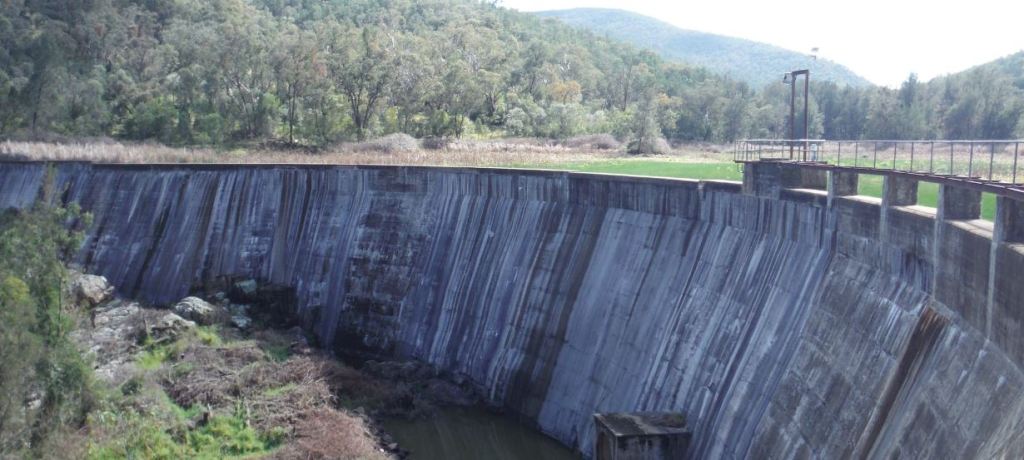
I grew up on a farm in northern NSW. Running through the property was a creek which had two significant dams on it. The first dam was called ‘the old Quipolly Dam’. This concrete span dam wall was built in the early 1930s to provide water for the town of Werris Creek, a town that did not exist until the coming of the railway in the mid-1870s. Being a major rail junction town, water was essential as steam engine locomotives require lots of water. The second newer dam bordered our property. It had an earth wall and was built in the late 1950s to replace ‘the old Quipolly Dam’.

By 1947, when my father moved onto our farm with his parents ‘the old Quipolly Dam’ had silted up. This was less than 15 years after it had been constructed. My father told me that during the 1940s drought rabbits had denuded the landscape. Without grass ground cover, heavy rain caused severe erosion. The sediment ended up in ‘the old Quipolly dam’ as silt. This seemed a logical explanation for the silting.

My father spent his whole life trying to eradicate rabbits on the farm. Trapping, poisoning, releasing calicivirus and myxomatosis viruses, ripping rabbit warrens and shooting them. As young boy I trapped and shot rabbits and every year we undertook a poisoning campaign.

So, the rabbits seemed to be a logical explanation.

Several years later I was doing some family history research and found an engineering research paper. It studied several small railway dams built between 1890 and 1932 in NSW that had silted up. One of dams studied was ‘the old Quipolly dam’. The research paper concluded that ‘the most extreme hydrological events are extreme floods following a long drought period’ and this led to where ‘large sediment loads are carried away into the reservoirs.’

So, were ‘the rabbits’ were responsible for the dams’ siltation problems?

Well, not exactly.

Whilst erosion was a contributing factor, the main reason was a design flaw in the dam’s walls. The basic design of the dam’s arch wall had not changed in over 40 years. This was despite the fact that several dams with curved concrete walls had silted up within 25 years, all before the construction of ‘the old Quipolly Dam’. The wall design did not consider the fundamental concepts of sediment transport. The dams did not have a large outlet for sediment ‘flushing’, resulting in a silt or sediment building up against the curved dam wall.

Rabbits and probably overgrazing that had denuded the landscape during a drought were not the underlying cause of the silting up of the dam, but a contributing factor only.

What do you think the management lesson is here?

Here are some to consider.

We can all remember being told something in our working lives and then finding out this was incorrect. Remember the ‘weapons of mass destruction’ that Iraq had that were used as a pretext for invasion?

Perhaps another lesson is not to believe what bureaucracies or governments do or tell you. In this example, there were several dams of similar design that silted up well before ‘the old Quipolly Dam’ was built.

  • Often, an explanation that seems logical may not be the cause of the problem. In this example, it was only a contributing factor.

As a logistics professional I am continually frustrated when allegedly logical transport solutions do not stand up to scrutiny. For example, a common theme pushed by politicians and special interest groups is that the construction of freeways increases pollution.

Really?

Think about it.

If we did not have freeways, cars, average speed would be lower, more stops and starts, traffic lights, slower travel times and more congestion and pollution.

Can you think of other examples in your working life where this has been the case?

#thenetworkofconsultingprofessionals
A Winter Olympics story ….doing a Bradbury

Doing a Bradbury…

“I don’t think I’ll take the medal as the minute and a half of the race I actually won. I’ll take it as the last decade of the hard slog I put in”

Steven Bradbury – Gold Medal Winner 2002 Winter Olympics

With the end of the 2022 Winter Olympics comes a great story from the past.

So, who was Steven Bradbury and why did he become famous?

In 2002 Bradbury was the first athlete from Australia, and also the Southern Hemisphere to win a Winter Olympic Gold Medal. He was a former short track speed skater, a four-time Olympian and was also a member of the short track relay team that won Australia’s first Winter Olympic medal, a Bronze Medal in 1994.

So apart from being the first Australian athlete to win a Winter Olympics Gold Medal what was he famous for?

It was in the manner of his win. Bradbury slipped into the 1,000m speed skating final when two of his competitors in the semi-final crashed and another was disqualified. In the final, in the last lap as his competitors jostled for medal positions, Bradbury drifted further and further behind. With just metres from the finish line, a pile-up took out every other skater and avoiding the collision, he glided past to claim the Gold Medal.

His win entered the Australian colloquial vernacular in the phrase “doing a Bradbury” meaning an unexpected or unusual success.

However, there is more to this than chance. Bradbury was from tropical Queensland, not a state conducive to winter sports. He travelled the world, living hand to mouth to complete internationally, and competed in four Winter Olympics. At one stage he needed to borrow $1000 from his parents to repair his car so he could get to training. He supported himself by making skating boots in a home workshop. The years of hard work and training included nearly bleeding to death when a skate blade cut an artery requiring 111 stiches in 1994. Also in 1998, he fractured his vertebrae.

What are the lessons here for business owners and managers?

  • Hard work and sacrifice pay off.

In our logistics business there were times when a key customer left putting the business under pressure. However, with the previous hard work in networking and business development they were quickly replaced. Success can be a matter of luck, but it rarely is.  

  • Having a goal and vision

Bradbury’s goal was to win an Olympic medal on his own. The 2002 Olympics was his last chance. Despite his setbacks he hung in there, even when it looked increasingly unlikely that he would be successful, he succeeded and achieved his goal.

  • Being in the race

Yes, Bradbury’s tactic was to hang in there. This paid off as his rivals slipped, crashed and went spinning wildly across the ice. We had a customer in our logistics business who tendered for a lucrative post office franchise at an Australian airport. He was 5th or 6th in line, and eventually won the tender as his competitors were one by one, disqualified as being unsuitable, for reasons ranging from having a criminal record to no experience.

The Stephen Bradbury saga is a great story that resonates.  

Can you think of some other lessons?

#thenetworkofconsultingprofessionals