September is the month of ‘the festival of the boot’…

“Some people think football is a matter of life and death. I assure you, it’s much more serious than that”

Bill Shankly – Successful Coach of Liverpool United

In Australia, the late September and early October period is ‘grand final’ time for the two major football codes, Rugby League (NRL) and Australian Rules (AFL). Australian comedians and sports personalities ‘Rampaging’ Roy Slaven and HG Nelson call it ‘the festival of the boot’.

Politics, family, lifestyle issues, cost of living and food are forgotten about for a couple of weeks of dreams as fans ponder the outcomes. 

This is a great opportunity to discuss sport as it relates to business

So, does sport have some lessons for managers?

What can we learn?

Here are three lessons to consider:

1.  Recruit the right people, then develop and manage

One of the most important lessons that businesses can learn from sport is to recruit the right people (emphasis on the ‘right’) and not necessarily the ‘best’ people. For a team to work, there needs to be diversity but underpinned by shared values. You can teach people new skills, but you can’t always teach them how to behave. Once you have a good team player – make sure you keep hold of them. Just because someone is the ‘right’ person, doesn’t mean that they will not require guidance.

One Australian Rugby League team of recent times that stands out in this regard is the Melbourne Storm. Only established in 1998 in Melbourne in the heart of AFL country, the club won the Premiership in only its second year and went on to win many more Premierships. Through long term coach Craig Bellamy and his coaching team, the Storm have identified and developed players who were not identified or sort after by other clubs. Bellamy began coaching the Storm in 2003 and is still the head coach!   

In our logistics business, we identified floor staff who had potential, with the right values, were ‘trainable’, have the work ethic and values. Many were casuals hired though labour hire agencies. They were made permanent staff, became supervisors and several became warehouse managers.

2.  Being resilient and overcoming adversity

In sport, as in business, change is inevitable. But it is how you deal with the change that can be a make or break decision. For athletes being mentally resilient is as important, if not more, than an athlete’s physical ability. Being able to deal with adversity, hard training sessions and setbacks strengthens an athlete and further pushes them to be the best that they can be.

A great example of resilience is the winner of Australia’s first Winter Olympic Gold Medal, Stephen Bradbury in 2002. Bradbury won the Gold Medal when all the other competitors crashed. However, what few people realised, is that behind the win were years of hard work and serious injuries.  

For us in business, mental resilience is also an important component for success, as pulling through the tough times and remaining positive in the face of adversity can create opportunities. In my former logistics business, in the space of three months we lost two of our largest customers. They represented 30% of our business. This looked like a disaster. However, we implemented a plan, knuckled down and within 12 months our revenue grew by over 50%.  

3. Embrace Team Diversity

A very good example is the 1995 Rugby World Cup winner South Africa. President Nelson Mandela, in a move to unify a racially divided country, supported the traditionally white-dominated South African Springbok rugby team during the Rugby World Cup. Team captain Francois Pienaar, understanding the importance of this gesture, worked to bring his team together, focusing on shared goals rather than individual differences. Led by Mandela and Pienaar, they showcased the power of embracing diversity by beating the favourites, the New Zealand All Blacks.

Before I went into business for myself, I worked for a national transport business. The CEO was a larger-than-life character, well known and respected in the industry with a work ethic second to none. Within the business was a national operations manager who was highly skilled and driven, much like the CEO. He was seen by the CEO as ‘the type’ of manager the business needed. At the time my wife, an industrial psychologist was providing some professional services to the business and was asked to draw up the ‘essential’ characteristics for the perfect manager so they could be replicated throughout the business. The vision being ‘clones’ throughout the business nationally. After some discussions the idea was dropped.

Businesses need a mix of people to meet their full potential. Whilst I am not advocating diversity for diversity’s sake as is frequently the case today, it is critical to have a diverse pool of experience and talent in an organisation. ‘Group think’ is dangerous and often the best ideas and actions come from a diverse workforce.

Sport offers a wealth of lessons for managers, providing insights into leadership, teamwork and success. Recruiting and developing the right people, being resilient and embracing diversity are just three of the lessons for us in business to learn from sport.

Can you think of other lessons we can learn from sport?

In the meantime, if you are in Australia enjoy the ‘festival of the boot’ the finals of the two football codes.

@thenetworkofconsultingprofessionals
The most famous mutiny in history…

“To function efficiently, any group of people or employees must have faith in their leader”

– William Bligh: of mutiny on the Bounty fame

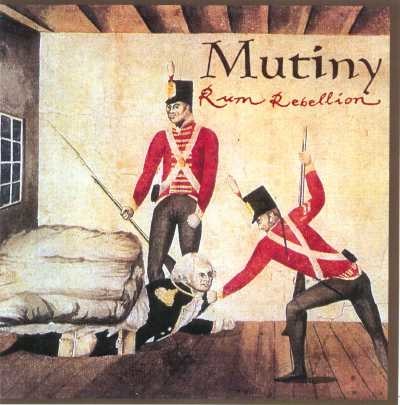
The above quote is rather ironical, considering Bligh was the subject of the most famous historical maritime mutiny, the Mutiny on the Bounty. It was made famous or infamous in three films in 1935, 1962 and 1984. None of these films were sympathetic to Lieutenant William Bligh, the officer in charge (note that he was not a Captain). Interestingly, Bligh was also the subject of another less well-known mutiny, when as Governor of NSW he was overthrown in a military coup in what was known as the Rum Rebellion.

Bligh’s mission was to transport breadfruit plants from Tahiti to feed slaves on plantations in the West Indies. A little known and important fact was that the Bounty had no marines onboard. During this period, it was customary to have marines onboard a naval vessel to ensure discipline and to separate the ordinary sailors from the officers as well as to protect the crew from hostile natives. The Bounty had been converted into a ‘floating greenhouse’ to house the breadfruit so there was no room for a party of marines. Bligh, as only a Lieutenant rather than a Captain, had to rely on his ability to control the sailors onboard. Also, there were no other officers onboard the Bounty.

Bligh was a very experienced sailor, coming from a family with a long naval tradition. He went to sea as a cabin boy at the age of seven and travelled with Captain Cook as the chief navigator on Cook’s third and final voyage. His navigation skills would become extremely useful in the future. Historical reports state that Bligh was a strict disciplinarian and was given to outburst of ‘towering rage’ and ‘bad temper’, which obviously did not endear him to the crew. Strict discipline was, however, not unusual for the times.

Setting sail in 1787, the Bounty was to travel to Tahiti around Cape Horn. However, after terrible storms and weather experienced trying to round Cape Horn, Bligh was forced to sail to the pacific ‘the long way’, across the Atlantic, around the Cape of Good Hope, into the Indian Ocean, through the Great Southern Ocean under Australia and into the Pacific. After this unscheduled extended voyage, the Bounty arrived in Tahiti. Here it stayed for five months to allow the breadfruit trees to mature to be able to be transported. During the stay many of the crew were mostly idle and formed romantic relationships with the local women whilst enjoying the tropic climate of this Pacific paradise.

The Bounty left for the West Indies in April 1789. Later in the same month, the crew led by Fletcher Christian mutinied. Bligh and 18 loyalists were cast adrift in 7m open boat. Considering the circumstances, with their holiday cut short, it is perhaps not surprising that the crew mutinied!

Following the mutiny, the Bounty returned with the mutineers to Tahiti. Meanwhile, the boat with the 18 loyalists was so overloaded, it required constant bailing to remain afloat. Over the next 47 days and over 6,700 kms, Bligh and crew sailed to Timor in the Dutch East Indies. Bligh, ever the disciplinarian ensured severe rationing of food and water – 28g of water and 40g of biscuits per crew member per day. Despite exposure, malnutrition and dehydration the boat arrived without any loss of life, apart from a crew member killed by natives in Tonga. The success of the journey is testament to Bligh’s navigational skills, sheer will power, determination and disciplined leadership.

What do you think are lessons for leaders from the mutiny on the Bounty?

Here are three.

  1. Leadership and Team Dynamics: The Mutiny on the Bounty underscores the critical role of leadership and its impact on team dynamics. Managers should prioritise fostering positive leadership qualities, such as fairness, respect, and effective communication, to create a harmonious and productive work environment.

2.            Addressing Employee Dissatisfaction: Understanding and addressing employee dissatisfaction is essential. In Bligh’s case, his tyrannical leadership contributed to the mutiny. Managers should encourage open channels of communication and actively seek feedback to prevent grievances from festering.

3.            Crisis Management and Adaptability: Bligh’s remarkable journey in the open boat highlights the importance of crisis management and adaptability. Managers should equip themselves with the skills and resilience needed to navigate unexpected challenges, providing stability and direction during crises.

Can you think of any others?

How do you think Bligh should be remembered?

Bligh’s reputation was a mixture of admiration for his survival and navigational skills, and criticism for his leadership approach. He is remembered as a figure of resilience, skilled navigation, and unwavering dedication to his duties, albeit with a leadership style that sometimes clashed with the needs and expectations of those he led. William Bligh’s life is a study in contrasts—his unparalleled navigational achievements and resilience in the face of adversity stand against the backdrop of his leadership controversies. His story offers invaluable lessons on the importance of adaptability, empathy, and the ability to lead under the most challenging conditions.

@thenetworkofconsultingprofessionals

Where’s my tractor?

“Sorry Minister, we know it left Hamilton, but it failed to arrive in Taumarunui.” – NZ Railway Executive

The above quote is attributed to an executive from the state-owned New Zealand Railways in the 1980s. A farmer had written to Richard Prebble, the then Minister for Railways complaining that the Railways had lost his tractor. After weeks of fruitless complaining and an offer to pay $20 to compensate the loss based on some obscure statutory railway regulation, he wrote to the Minister.

Prebble then ordered the railways to find the tractor. A reply came back stating that the tractor had failed to arrive in Taumarunui. The distance by rail between Hamilton and Taumarunui is just under 160 kms. At the time, the NZ Railways was a monopoly, had 22,000 employees and was losing a million dollars a day. It was also losing customers, freight and sometimes whole wagons. With 22,000 employees in a small country like New Zealand they could not find a tractor!

Prebble then wrote apologetically to the farmer stating that they could not find his tractor. Frustrated that the bureaucrats (and the Minister) in the railways could not help him, the farmer decided to take matters into his own hands. He got into his car and followed the railway line. In a week, he found his tractor and six missing rail wagons!

Following this sad account of poor customer service, consultants were engaged. Their final report found many of the railway ‘managers’ had been promoted “simply because they looked the part”, “have been “yes-men” to their superiors”, and “never take a decision for which, if it fails, they can be held to account”. The railways were later privatised.

What is the lesson for managers here?

An organisation with 22,000 employees, even with the direction of the Minister could not compel its employees to care enough for its customers to find something as big as a tractor. Clearly, not only did the employees not care, but management was also either ineffective, incompetent or had no authority or a combination of all of the above. This is also a great example of how sadly how poor culture ‘kills’ an organistion, in this case corporate culture! It can be defined as ‘how we do things around here’, and it is intangible but can be ‘felt’.

Successful organisations need clear goals. Management not only needs to be responsible, but held accountable and have the authority to act.

@thenetworkofconsultingprofessionals

Would you pass the Tombstone Test?

“They say such nice things about people at funerals that it makes me sad I am going to miss mine by just a few days.” – Anon

Last year I posted a blog called Where is Werris Creek? Having grown up near this town in country NSW I decided to post a link to the blog on the town’s Facebook page. I introduced it by saying that my mother taught there as a Primary School teacher over 40 years ago.

The responses were unexpected. Several former students responded saying they remembered my mother very well and that she had a very positive effect on their lives. A positive legacy after over 40 years. My mother was a very dedicated and hardworking teacher. I can remember her preparing lessons at night. Even into her late 80s she assisted at the local primary school which had a high proportion of migrant children and taught them about Australian history and culture.

This reminded me of a technique used by consultants called the Tombstone Test.

So, what is the Tombstone Test?

No, it’s not the 1881 shootout at the OK Corral in Tombstone, Arizona where Wyatt Earp and his brothers along with Doc Holliday gunned down three “Cowboys”. The “Cowboys” were two families of outlaw cattle rustlers, tobacco and alcohol smugglers.

The concept of the Tombstone Test probably originated from management theories of the 1990s centred around business leadership. In short, it consists of two questions:

  1. What do you want your obituary to say?
  2. Is what you are doing today consistent with the legacy you want to leave?

This can be extended to your relationships with family and friends. Do you want to be remembered for the money you made in your lifetime, or whether you were a good parent, partner, spouse or friend?

The Tombstone Test is sometimes used by management consultants to focus the mind on your legacy.

Being a good business owner or executive, if done well should be about freedom, fun, fulfillment and making money. By extension it should also be about serving and helping others, especially your customers and employees. In our former logistics business, we developed supervisors, paid for their training and when we sold the business, put aside a significant amount of money for the long-term employees and paid them bonuses.

As a manager or business owner how would you like to be remembered?

The greedy, arrogant, unapproachable and selfish individual, or like my mother, remembered in a positive light as someone who made a difference to others’ lives years after the event?

The Tombstone Test is meant to make you confront reality, have a deeper perspective on how you live your life both at work, in the community and at home and be remembered as a making a positive difference in the world.

As we approach Christmas and the end of the calendar year it is a good time to reflect on the past 12 months and think about the future. The Tombstone Test is a good starting point.

Seasons Greetings to all my blog readers and all the best for 2024

#thenetworkofconsultingprofessionals

Does your organisation suffer from Komodo Dragon Syndrome?

Does your organisation suffer from Komodo Dragon Syndrome?

“Dragons are creatures of legend, but in a world as fantastic as Indonesia, myths become reality. On a small, 22 mile long island among the thousands of Indonesian isles lives the planet’s only living dragon -the Komodo (Varanus komodoensis)”

Extract from Wild Indonesia

In 1910, in eastern Indonesia on the island of Flores a Dutch colonial administrator, Lieutenant J.K.T. van Steyn van Hensbroek received word of a “land crocodile” living on the nearby island of Komodo. Intrigued, he decided to visit Komodo to investigate. He returned with a photo and a skin. The reptile was not a crocodile, but a large monitor lizard. In 1912, it was recognised as new to science and the first formal description of the lizard was published. It became known as the Komodo Dragon, the world’s largest living lizard.

So, what is Komodo Dragon Syndrome?

Komodo dragons are endemic to eastern Indonesia. They are found only on the northern coast of Flores and on three nearby islands including the island of Komodo. The Komodo Dragon can grow to over 3 metres in length and weigh up to 130 kgs. They are territorial, can run at up to 20 kph, are carnivores and have very sensitive forked tongues that sense prey and food, such as rotting flesh kilometres away. With a powerful tail, large claws and serrated teeth they have a fearsome reputation. Their bite is toxic due to the bacteria in their salvia and glands in their mouth produce a venom that prevents blood clotting and leads to unconsciousness.  Known to occasionally eat humans, they predominantly eat deer and pigs, which they ambush and bite, and wait then for them to succumb to their toxic bite.

No, it’s not about a fierce venomous predatory reptile.

The Dutch had been in Indonesia as a colonial power since the early 17th Century with the establishment of the Dutch East India (VOC) Company in 1602. The VOC was one of the world’s first multi-national companies. By 1800 however, due to mismanagement, corruption and fierce competition from the English East India Company, the VOC was bankrupt and was nationalised by the Dutch state.

The Dutch had been in Indonesia for over 300 years and had not found the Komodo Dragon, the world’s largest and most dangerous lizard. Even Lt van Steyn van Hensbroek, the ‘discoverer’ of the Komodo Dragon who was living on the island of Flores where it also lived, went to the island of Komodo to find it.

This defies explanation.

How could such an animal remain ‘undiscovered’ for so long?

This is what I call Komodo Dragon Syndrome, where the management can be so inward looking that something so obvious can be missed.

Perhaps the Dutch colonial administrators were ostrich managers or were so blinded by their colonial superiority and preconceived ideas that they failed to see what was virtually right under their noses.

The message is, to avoid suffering from Komodo Dragon Syndrome, we as managers need to ask questions, be inquisitive and manage by walking around.

Are you being complacent?

Too comfortable in your position, inward looking and missing the obvious?

Perhaps you have Komodo Dragon Syndrome.

#thenetworkofconsultingprofessionals

One small step…

One small step…

“I believe that this Nation should commit itself to achieving the goal, before this decade is out, of landing a man on the moon and returning him safely to earth.”
John F Kennedy – USA President

Over 50 years ago on 20th July, 1969, the whole world watched as Neil Armstrong became the first human to step onto the surface of the moon. It was witnessed by a global audience of over an estimated 600 million people. This was an amazing one-fifth of the world’s population.

The importance of this event at the time was indescribable. At the time, our family did not own a TV. In 1969, TVs in Australia were expensive, costing well over one month’s average wage. My parents had decided to rent a TV to watch the moon landing. This was how important this event was. At the time I was in primary school. The school also hired a TV and we all watched the event live on a grainy screen, and importantly for me as a 10 year old, lessons were cancelled for the day. In those days there was no the audio-visual equipment or computers in schools. Everybody was talking about man landing on the moon.

What are the management lessons from this historic event?

President Kennedy’s 1961 speech is one of the best examples of a vision statement, as within the decade, man had landed on the moon and returned safely.  However, it is important to remember that the moon landing was the result of decades of work by hundreds of thousands of people working across the disciplines of science, technology, and engineering, peaking at a cost of 4.41% of the Federal US budget in 1966.

How important is it for an organisation to have a vision?

A vision is a picture or an idea. It helps focus us on the future, provides inspiration and assists in overcoming the obstacles that inevitably appear along the way. A vision is a target. It should be aspirational, perhaps like the concept of a BHAG (Big Hairy Audacious Goal) in Jim Collins’ book Built to Last: Successful Habits of Visionary Companies, and be successfully communicated throughout the organisation.

Another example of the power of an aspirational vision is Rotary International’s End Polio Now program. In 1979 Clem Renouf, the Australian President of Rotary International read about in the Readers Digest how smallpox had been eradicated. After discussing this with a medical expert, he asked what other diseases could be eradicated. He was told that polio was one such disease. Renouf then proposed a vision where the world could be polio free. At the time, more than 350,000 people were infected by polio each year across 125 countries. Later that year Rotary’s Board of Directors passed a resolution for a program for “the eradication of poliomyelitis and the alleviation of its consequences” throughout the world.  Subsequently, in 1985 the End Polio Now program was adopted with the aim of eradicating polio worldwide. With so many countries where polio was still endemic, this was a challenging vision, a BHAG.

Rotary initiated the program and together with the support of UNICEF, WHO and other organisations such as the Bill and Melinda Gates Foundation have now almost achieved Clem Renouf’s original vision. in 2018, only 33 cases of polio were reported in just two countries, Afghanistan and Pakistan. At times there were difficulties in overcoming cultural suspicion, low levels of education, training staff to manage and administer the program, political insurgencies and geographical remoteness. However, despite these obstacles, the original vision ensured the program continued and it is now almost complete.

What other lessons are there for managers in man landing on the moon and the ending polio program?

Apart from an inspiring vision, it demonstrated the importance of having a plan behind the vision. Furthermore, the moon landing is a lesson in perseverance and determination. In less than 10 years from Kennedy’s vision speech, Apollo 11 landed on the moon and the astronauts returned safely to earth. Great strides were made in technological advances in rockets, computers and other space-age materials and innovations. The Apollo Program required integrated circuits which lead to the development of micro-electronics connecting the world. This gave us pocket calculators, home computers, mobile phones, iPads and other high-tech devices. An inspiring vision can lead to other remarkable and beneficial outcomes. Today we can see the positive impact of Apollo Program everywhere.

There are a number of websites and other sources that provide methodologies on how to create a vision statement for your organisation. As can be demonstrated from the above two examples, strong and clear visions are powerful tools and can provide a framework for the future. The future can be positively changed for the better. This is the case with any organisation.

Visions should be compiled into a vision statement in a suitable form to communicate to staff, customers, suppliers and other stakeholders. Vision statements define goals and assist in creating a path for the future. Just look at the Apollo Program and End Polio Now.

Does your organisation have a vision statement?

If not, do you think that the organisation would benefit from having a vision statement followed by a well-constructed plan behind the vision?

What is a processionary caterpillar manager?

What is a processionary caterpillar manager?

“What matters in learning is not to be taught, but to wake up.”

 Jean-Henri Fabre – father of modern entomology

In the 19th Century, Jean-Henri Fabre the famous French naturalist, conducted an experiment with Pine Processionary caterpillars. He arranged the caterpillars in a continuous loop around the rim of a flower pot, where each caterpillar’s head touched the end of the caterpillar in front of it so that the procession formed a full circle. He then placed the favourite food of the caterpillars in the middle of the circle of caterpillars.

What happened?

The caterpillars went around and around in circles formed by the procession, blindly following the caterpillar in front. Despite the food being less than 3 centimetres away, they all died of hunger and exhaustion. All they needed to survive was to change direction to get the food.

The caterpillars were following instinct – habit – custom – tradition – past experience – precedent – opinions – ‘standard practice’ or whatever you may choose to call it..

What are the lessons for managers?

  1. Activity is not accomplishment. How often are you busy, but not accomplishing anything?
  2. Are you “caught in a rut” by following traditional routines, habit patterns, or schedules and not achieving the outcomes the organisation requires to be successful in the future?
  3. As managers, balancing tradition and implementing new strategies is difficult. Success is based on the willingness to plan, fail, learn, and move forward, so the existing strategies support a successful and productive future?

So, are you or your staff acting as processionary caterpillars and mistaking activity for outcomes?

If so, what new ideas and activities are required to ensure continued success?

What habits and activities do you need to stop doing?

Do people work for you or the business?

10271613-10208164544449154-9134814634118230493-n

Do people work for you or the business?

“People join companies. They leave managers.”

Vern Harnish– Management author

This is a great quote from Verne Harnish author of Scaling Up: How Few Companies Make it…..and Most Don’t. I was talking to a former work colleague who was lamenting on the number of experienced long-term employees leaving his current employer. The managing director said it was because they did not like the new business owners. However, my former work colleague thought it was due to poor management.

As managers of people, we need to be conscious how our behaviour and performance affects our subordinates. In my working life, I have never left a job because of the company; it was always because of my manager. Testament to this statement is that I got so sick of working for bad managers, that I eventually went into business for myself so I could have more control over my working life.

As a young graduate I was thrown into being a Personnel Officer in a Steelworks Department. I’d been forced onto the Mill Superintendent because of his poor record of industrial conflict and poor relationships with his subordinates. His first words to me were;

“I don’t want you here, I could spend your salary in better ways”

So, you can imagine the atmosphere in the department. His managers, supervisors and staff hated him as he was rude, uncommunicative, moody and difficult. I witnessed him causing a labour strike by abusing staff.

Another manager I worked for spent his time checking that his subordinates’ petty cash and phone bills were correct. This was more important than visiting customers, developing his managers or building the business. The final straw came when the business was in the process of attempting to purchase a competitor. As always, he was too busy to discuss the negotiation strategy and as a sign of complete incompetence he did not even bring a pen to the final negotiations. Years later he was dismissed; however I had long left the business.

So, what causes good employees to quit?

The problem is generally with managers. It is seldom the employee or the quality of the workforce that causes employees to quit.

Do managers deliberately set out to be poor people managers?

The answer in most cases is ‘no’.

Many managers have never been taught the art of developing people and being a leader. Often, they know no better and surviving in some organisations means mimicking your old boss or their superiors.

What are the warning signs?

Is your company experiencing high turnover?

Some labour turnover is healthy as it provides opportunities for other people and new ideas and skills to come to the organisation.

Perhaps you should examine how you interact with your team, and also determine whether there are disruptive or unproductive employees  in the team.

Here are what I consider the 3 main reasons why people leave organisations.

  1. An employee’s contributions are not recognised. As a manager you should never under-estimate the power of praise and recognising a job well done. In particular, top performers are normally self-motivated. Don’t take their drive for granted.
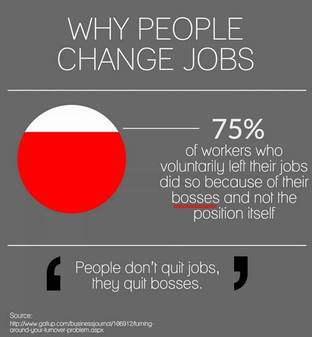
  2. A manager does not care about their subordinates, and this normally manifests itself in poor bosses. Research has shown that more than half of people who leave their jobs do so because of their relationship with their boss.
  3. A manager does not honour their commitments. This highlights two traits required by managers, honesty and integrity. If you say you will do something – do it. Keeping your word and your commitments tells the employee everything they need to know about you and the type of person you are and if they can trust you.

There are other reasons for leaving an organisation such as failing to develop employees, not challenging them and not acting on poor performance. Good employees know who the poor performers are, and when they leave morale improves.

Surprisingly, salaries and conditions are not top of the list.

If all else fails, simply remember this:

“People work for people – they do not work for businesses” – Donn Carr

The question is, do you have high or unacceptable levels of employee turnover?

Is so, could it be your management of your staff or other managers are the cause?

As managers, we need to recognise and act on this.

“Do as I say, not as I do”

“Do as I say, not as I do”

This is not a really a quote, but an expression. The derivation is believed to originally come from the Bible, Matthew 23 “For they preach, but do not practice” when Jesus highlighted the hypocrisy of the Pharisees in the Temple. Years later a book by Peter Schweize titled Do as I Say (Not as I Do): Profiles in Liberal Hypocrisy sought to expose the public utterances and conflicting private actions of leading ‘progressive’ USA politicians.

What relevance does this have to being a good manager?

Plenty.

Let me give you an example. It was a condition of site entry in a business I was involved with that all staff had to either sign in or use an in/out who’s on site entry board. Two senior managers, including the CEO rarely did this, despite it being mentioned and noted in safety and management meetings. One day we had a fire evacuation drill which is mandated by law. This is where the building is evacuated and the site safety representative calls out the names of those on-site to ensure everybody is out of the building. After the names were called out you are asked to stand to one side. This is to ensure that the fire safety drill has worked successfully.

In this case, two people were left with their names not called out – the two senior managers. One made some excuses. The other was embarrassed.

How did this look to staff? Well you can only imagine.

Staff pick up hypocrisy quickly, word spreads and the authority of management and company policies are eroded. Also the moral authority or status of individual managers is severely weakened. In this case it seemed to demonstrate to the assembled staff that either safety was not important and/or that there were two sets of rules. I witnessed plenty of sniggering and hushed conversations at the time.

Another example is the wearing of safety vests in industrial environments such as warehouses and construction sites. In the business mentioned earlier, it was a requirement for all staff to wear safety vests and this was enforced by the supervisors. However some senior managers still continued to walk around the site without safety vests as required by company policy. Warehouses are potentially dangerous places, especially with fork lift trucks and other equipment on site. Even worse, this action unsettles operators who have to perform their duties with a heightened level of concern that, at any time, plain clothes staff can and will wander the warehouse, exposing all parties to risk. These actions undermined the authority of the supervisors and in discussions with them, reduced the respect for the managers who did not abide by company rules.

We are often bombarded by media coverage of politicians in safety vests, goggles and hard hats on the campaign trail. Whilst this may seem like overkill, it does send an important message. What would be the affect if the politicians did not wear the prescribed person protective equipment?

Management is about integrity and leading by example – you can’t expect staff to perform or conform to the required standards if you as a manager or supervisor don’t. Do the right thing at all times, and your staff will respect you for it. Don’t and you will pay the price, at the least in lost respect and poor compliance and at worst – an avoidable site injury or fatality.

As a manager your actions are important to the organisation, yourself and the staff…

Priorities…

Priorities…

“Having my priorities in order has really helped me look better, fresher and more relaxed”
Kim Cattrall

Maybe a quote from a TV star (Sex and the City) is not what you would expect to head a blog about priorities in work and business. However, it does highlight the fact that if you have your priorities in order, you can achieve great things and not be side-tracked by unimportant issues.

Let me give you an example. A friend of my daughters popped in recently for a quick catch up. I asked casually how things were going in first 12 months of her job. She started to complain that the new managing director (and this was a multinational company) had decreed that only white coffee cups were to be used and she wanted to use her Lord of the Rings coffee cup. Other people were complaining as well.

These types of decrees are not uncommon as shown by the linked article about the former managing director of BHP Billiton, the world’s largest mining company. He put out an edict about desk ‘etiquette’ that bordered on the neurotic, at a time when the company had both great opportunities and of course many problems. He subsequently left the company with very little to show for his tenure at the helm, in particular the missed opportunities.

Micro management is normally a red light that may indicate that management does not know how to prioritise; treats staff as unimportant, and is not up to the “real” job. I once worked for a manager who was obsessed with orderliness, where all prospective customers were placed in labelled manila folders and filed (and that’s where they stayed!) whilst he complained that I should not keep active files on the floor near my desk as it made my office untidy. Perhaps it did make my office untidy, it certainly did not stop my success in achieving sales. I can remember another good example from years ago. I was studying whilst working full time and thought it would be a good idea to give my then manager a draft of one of my one of my assignments (which was about the industry we work working in). He proceeded to mark the spelling and grammar (this was before Spellcheck)

…………..little wonder he was dismissed some years later.

So what would be your advice to my daughter’s friend?

Be defiant and show independence and continue to use her Lord of the Rings cup?

It’s all about priorities.

Is it important?

………possibly demotivating, irritating and annoying ‘yes’ but important ‘no’?

We asked her:

“Is this important to you doing your job to the best of your ability?”

“No”

“Then it’s not a high priority is it?”

As the link to blog below, the expression “when a dog is in the hunt, it has no time to search for fleas” has relevance.

Remember it is up to you get your priorities right………………..

If you do, life and work is far less complicated and you are more likely to be much happier and more successful.