Another parable for managers…

“You reap what you sow” – Anon

In a previous blog, I wrote about the parable of the talents. In summary, a parable is a short but simple fictitious story that illustrates a moral attitude or a religious principle. In ancient Greece and Rome, parables were employed by rhetoricians, politicians and philosophers. In ancient Israel, parables were uttered by prophets and wise women and men. Many of these appear in the Bible in oldest books of the Old Testament. Jesus also told parables to his disciples, and they appear in the New Testament.

In the Parable of the Sower by Jesus from the New Testament in Matthew 13:3-23 offers some lessons for today’s managers.

A farmer went out into a field to sow some seeds. As he scattered them across the ground, they fell on different types of soil, each representing a unique fate for the seeds. Some seeds fell along the path, where they were quickly snatched up by birds. Others landed on rocky ground, where they sprouted quickly but, lacking deep roots, withered under the sun’s heat. A few seeds fell among thorns, which grew up and choked them. But then, there were those that fell on good soil, where they produced a crop – a thirty, sixty, or a hundred times what was sown.

Certainly, the Parable of the Sower is one of those stories that resonates even today. Not only does it unveil truths about human nature and growth, it also offers lessons for today’s managers, providing an analogy of the conditions necessary for professional and business growth and the obstacles, that can prevent it.

Here are three lessons for today’s managers:

Lesson 1: Know Your Terrain

The first lesson is all about understanding your market and the conditions you’re operating in. Just as the sower faced different types of soil, business leaders encounter various market conditions. Some are hard and unyielding, like the path where seeds were easily eaten by birds. This can be likened to entering a highly competitive market with little chance of penetration. Then, there’s the rocky ground—initial excitement without sustainability, akin to launching a product without adequate support or a clear value proposition, leading to quick failure.

But there’s also fertile ground out there, markets or niches ripe for innovation, where if your seed—your product or service—lands, it can flourish.

The key?

Research, understanding, and adaptability. Just as a wise farmer tests the soil, savvy business leaders must analyse their market, understanding its needs, challenges, and opportunities.

Example in Today’s Business Environment

Consider the tech industry, where startups often face the “rocky ground” of rapid scaling without establishing a strong foundation, leading to burnout and collapse. In contrast, companies that find their “good soil,” like niche markets hungry for innovation, can experience exponential growth. Think of Zoom, which, by focusing on reliable, user-friendly video communication, became indispensable in the fertile ground of remote work necessitated by the global pandemic.

Lesson 2: Cultivation is Key

The parable also teaches us the importance of nurturing and protecting your ventures. The seeds that fell among thorns and were choked represent businesses that, while having potential, get overrun by external pressures—be it competition, market changes, or internal conflicts.

For business owners and managers, this means not just planting seeds but cultivating them—investing in your team, fostering a strong company culture, and staying vigilant against threats. It’s about creating an environment where your business can grow, unencumbered by the “thorns” that might seek to choke its potential.

Example in Today’s Business Environment

A prime example is the rise of small businesses and startups that prioritise company culture and employee well-being. Companies like Salesforce and Google, despite their size, focus heavily on maintaining environments that nurture their employees’ growth and creativity, effectively keeping the thorns at bay.

Lesson 3: Patience Yields Prosperity

Finally, the parable underscores the virtue of patience. Not all seeds will bear fruit immediately, if at all, but those that fall on good soil and are tended with care can yield a harvest beyond expectations. For businesses, this means having the patience to see initiatives through, to allow strategies to unfold, and to understand that not every venture will succeed—but those that do, can succeed spectacularly.

Innovation and growth often require time. The “overnight successes” we see are usually years in the making, built on perseverance, adaptation, and learning from failures. The message here is clear: be patient, be persistent, and keep sowing your seeds.

Example in Today’s Business Environment

Consider the story of Dyson. It took James Dyson over 5,000 prototypes and 15 years to create the first bagless vacuum cleaner. Yet, his persistence paid off, revolutionising the industry and leading to a company valued in billions. This is the epitome of patience yielding prosperity, illustrating the truth that the most fruitful harvests often take time to cultivate.

Can you think of any other lessons?

In conclusion, the parable teaches today’s managers the importance of understanding your market, nurturing your business, and having the patience to see your efforts come to fruition. In a world that’s constantly changing, these lessons remain as relevant as ever.

@thenetworkofconsultingprofessionals

September is the month of ‘the festival of the boot’…

“Some people think football is a matter of life and death. I assure you, it’s much more serious than that”

Bill Shankly – Successful Coach of Liverpool United

In Australia, the late September and early October period is ‘grand final’ time for the two major football codes, Rugby League (NRL) and Australian Rules (AFL). Australian comedians and sports personalities ‘Rampaging’ Roy Slaven and HG Nelson call it ‘the festival of the boot’.

Politics, family, lifestyle issues, cost of living and food are forgotten about for a couple of weeks of dreams as fans ponder the outcomes. 

This is a great opportunity to discuss sport as it relates to business

So, does sport have some lessons for managers?

What can we learn?

Here are three lessons to consider:

1.  Recruit the right people, then develop and manage

One of the most important lessons that businesses can learn from sport is to recruit the right people (emphasis on the ‘right’) and not necessarily the ‘best’ people. For a team to work, there needs to be diversity but underpinned by shared values. You can teach people new skills, but you can’t always teach them how to behave. Once you have a good team player – make sure you keep hold of them. Just because someone is the ‘right’ person, doesn’t mean that they will not require guidance.

One Australian Rugby League team of recent times that stands out in this regard is the Melbourne Storm. Only established in 1998 in Melbourne in the heart of AFL country, the club won the Premiership in only its second year and went on to win many more Premierships. Through long term coach Craig Bellamy and his coaching team, the Storm have identified and developed players who were not identified or sort after by other clubs. Bellamy began coaching the Storm in 2003 and is still the head coach!   

In our logistics business, we identified floor staff who had potential, with the right values, were ‘trainable’, have the work ethic and values. Many were casuals hired though labour hire agencies. They were made permanent staff, became supervisors and several became warehouse managers.

2.  Being resilient and overcoming adversity

In sport, as in business, change is inevitable. But it is how you deal with the change that can be a make or break decision. For athletes being mentally resilient is as important, if not more, than an athlete’s physical ability. Being able to deal with adversity, hard training sessions and setbacks strengthens an athlete and further pushes them to be the best that they can be.

A great example of resilience is the winner of Australia’s first Winter Olympic Gold Medal, Stephen Bradbury in 2002. Bradbury won the Gold Medal when all the other competitors crashed. However, what few people realised, is that behind the win were years of hard work and serious injuries.  

For us in business, mental resilience is also an important component for success, as pulling through the tough times and remaining positive in the face of adversity can create opportunities. In my former logistics business, in the space of three months we lost two of our largest customers. They represented 30% of our business. This looked like a disaster. However, we implemented a plan, knuckled down and within 12 months our revenue grew by over 50%.  

3. Embrace Team Diversity

A very good example is the 1995 Rugby World Cup winner South Africa. President Nelson Mandela, in a move to unify a racially divided country, supported the traditionally white-dominated South African Springbok rugby team during the Rugby World Cup. Team captain Francois Pienaar, understanding the importance of this gesture, worked to bring his team together, focusing on shared goals rather than individual differences. Led by Mandela and Pienaar, they showcased the power of embracing diversity by beating the favourites, the New Zealand All Blacks.

Before I went into business for myself, I worked for a national transport business. The CEO was a larger-than-life character, well known and respected in the industry with a work ethic second to none. Within the business was a national operations manager who was highly skilled and driven, much like the CEO. He was seen by the CEO as ‘the type’ of manager the business needed. At the time my wife, an industrial psychologist was providing some professional services to the business and was asked to draw up the ‘essential’ characteristics for the perfect manager so they could be replicated throughout the business. The vision being ‘clones’ throughout the business nationally. After some discussions the idea was dropped.

Businesses need a mix of people to meet their full potential. Whilst I am not advocating diversity for diversity’s sake as is frequently the case today, it is critical to have a diverse pool of experience and talent in an organisation. ‘Group think’ is dangerous and often the best ideas and actions come from a diverse workforce.

Sport offers a wealth of lessons for managers, providing insights into leadership, teamwork and success. Recruiting and developing the right people, being resilient and embracing diversity are just three of the lessons for us in business to learn from sport.

Can you think of other lessons we can learn from sport?

In the meantime, if you are in Australia enjoy the ‘festival of the boot’ the finals of the two football codes.

@thenetworkofconsultingprofessionals

The Rise and Fall of Pet Rocks: A Lesson in Business Innovation

“How you sell is more important than what you sell.”
Andy Paul – sales author

Introduction

Fifty years ago in 1975, Gary Dahl an advertising executive and entrepreneur from California came up with the idea of a “pet rock”.  Few can rival the unexpected business success story of this quirky phenomenon known as the “Pet Rock”.

The Birth of an Idea

The concept was simple yet absurdly ingenious: a smooth, ordinary-looking rock was marketed as a low-maintenance, no-hassle pet. Dahl’s inspiration reportedly came during a conversation with friends about the hassles of traditional pet ownership, such as feeding, grooming, and training. He famously quipped, “I have a pet that doesn’t require any of that! A pet rock!”

Dahl’s idea was to offer people a humorous alternative to the responsibilities of caring for a living pet. He saw an opportunity to capitalise on the countercultural ethos of the 1970s, which embraced whimsical and anti-establishment ideas. Dahl believed that people would be willing to pay for a simple, amusing concept that poked fun at the conventional norms of pet ownership.

The Launch and Marketing

Each rock was carefully selected for its smoothness and appeal, placed inside a small cardboard box with breathing holes, and nestled on a bed of straw. The packaging was intentionally tongue-in-cheek, featuring a detailed “instruction manual” on how to care for your new “pet.” The manual humorously advised owners to ensure their pet rock received enough sunlight and encouraged them to name it.

Dahl’s marketing strategy was equally tongue-in-cheek and relied heavily on humour. He conducted interviews and promotional events, emphasising the simplicity of owning a pet rock compared to traditional pets. The novelty of the concept, combined with his witty advertising, caught the attention of the media and the public.

The Unexpected Phenomenon

What followed was nothing short of astounding. The Pet Rock quickly gained popularity, capturing the imagination of a broad audience. Despite its absurdity, the concept struck a chord with people seeking a light-hearted diversion from the complexities of life. The Pet Rock became a cultural sensation, gracing the pages of magazines and newspapers, and even making appearances on television talk shows.

Dahl’s entrepreneurial success with the Pet Rock was fuelled by several key factors:

  1. Timing: The Pet Rock emerged during a time when American society was experiencing a countercultural wave. People were open to unconventional and humorous ideas, making the concept of a pet rock particularly appealing.
  2. Simplicity: Dahl’s marketing emphasised the simplicity of owning a pet rock, offering a humorous contrast to the responsibilities of traditional pet ownership.
  3. Novelty: The Pet Rock was a novelty item that captured the public’s attention due to its uniqueness. It was something people had never seen before.
  4. Effective Marketing: Dahl’s witty and humorous marketing campaigns helped create buzz around the product and contributed to its success.

The Sales and Revenue

The Pet Rock’s popularity translated into impressive sales figures. At its peak, millions of Pet Rocks were sold, with an estimated 1.5 million sold in the first six months alone. Priced at $3.95 each, the revenue generated from the sale of Pet Rocks reached approximately $6 million, a significant sum in the mid-1970s.

The Decline and Lessons Learned

As with many fads, the Pet Rock’s popularity was short-lived. Within a year, the craze had begun to wane. The initial novelty had worn off, and the Pet Rock was no longer a hot commodity. Dahl’s business venture was a classic example of a short-lived trend, and he wisely recognised the decline in demand.

However, the story of the Pet Rock offers several valuable lessons for business owners and managers. Here are four lessons:

  1. Timing Is Crucial: The success of the Pet Rock was greatly influenced by the cultural context of the 1970s. Dahl’s timing was impeccable, as he tapped into the counterculture of the era. Understanding the timing of your product or service’s launch can significantly impact its success.
  2. Innovation and Uniqueness: The Pet Rock was a groundbreaking novelty item. Its uniqueness and innovation set it apart and captured the public’s imagination. Business owners should strive to offer products or services that stand out in the market.
  3. Effective Marketing: Dahl’s clever marketing strategies played a pivotal role in the Pet Rock’s success. Humour, irony, and effective storytelling can make a significant impact on how a product is perceived and received by consumers.
  4. Understanding Trends and Fads: Dahl recognised that the Pet Rock was a fad, and he wisely adapted to the changing market. Recognising when a trend is on the decline and having an exit strategy is crucial for long-term business sustainability.

In concluding, business owners and managers can glean valuable lessons from the Pet Rock phenomenon. Timing, innovation, effective marketing, and understanding market trends are all essential components of a successful business venture. While the Pet Rock may have been a short-lived craze, its legacy endures as a reminder that even the most unconventional ideas can find their place in the market when the timing is right.

What do you think?

@thenetworkofconsultingprofessionals

Where’s my tractor?

“Sorry Minister, we know it left Hamilton, but it failed to arrive in Taumarunui.” – NZ Railway Executive

The above quote is attributed to an executive from the state-owned New Zealand Railways in the 1980s. A farmer had written to Richard Prebble, the then Minister for Railways complaining that the Railways had lost his tractor. After weeks of fruitless complaining and an offer to pay $20 to compensate the loss based on some obscure statutory railway regulation, he wrote to the Minister.

Prebble then ordered the railways to find the tractor. A reply came back stating that the tractor had failed to arrive in Taumarunui. The distance by rail between Hamilton and Taumarunui is just under 160 kms. At the time, the NZ Railways was a monopoly, had 22,000 employees and was losing a million dollars a day. It was also losing customers, freight and sometimes whole wagons. With 22,000 employees in a small country like New Zealand they could not find a tractor!

Prebble then wrote apologetically to the farmer stating that they could not find his tractor. Frustrated that the bureaucrats (and the Minister) in the railways could not help him, the farmer decided to take matters into his own hands. He got into his car and followed the railway line. In a week, he found his tractor and six missing rail wagons!

Following this sad account of poor customer service, consultants were engaged. Their final report found many of the railway ‘managers’ had been promoted “simply because they looked the part”, “have been “yes-men” to their superiors”, and “never take a decision for which, if it fails, they can be held to account”. The railways were later privatised.

What is the lesson for managers here?

An organisation with 22,000 employees, even with the direction of the Minister could not compel its employees to care enough for its customers to find something as big as a tractor. Clearly, not only did the employees not care, but management was also either ineffective, incompetent or had no authority or a combination of all of the above. This is also a great example of how sadly how poor culture ‘kills’ an organistion, in this case corporate culture! It can be defined as ‘how we do things around here’, and it is intangible but can be ‘felt’.

Successful organisations need clear goals. Management not only needs to be responsible, but held accountable and have the authority to act.

@thenetworkofconsultingprofessionals
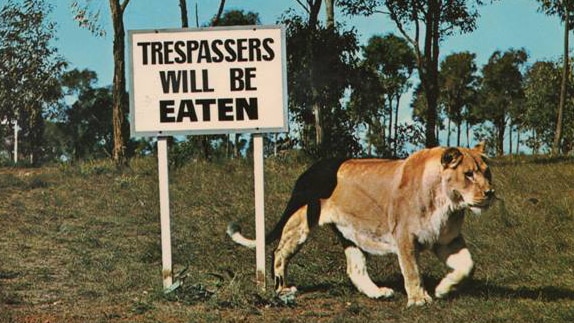
Lions roaming Australia…

“Any fact is better established by two or three good testimonies than a thousand arguments”.

Nathanial Emmons – influential American theologian

Before the opening of open range zoos in Australia, there was an African Lion Park located on the edge of suburban Sydney. It was owned and managed by the famous Bullen circus family. Families could drive through the park and get close to lions. As a kid I can remember visiting and reading the signs warning you that if you got out of your car you could be eaten!

How exciting a visit was for young children! As a visitor you had the chance to see lions rubbing up against your car and even licking the windows!

Interestingly, the park also provided a disposal service for the local community for their unwanted livestock. Classified advertisements ran in the local newspapers for the removal of sick or injured sheep, cows and horses. The park closed in 1991 but the lions remained!!!

Now, Australia is renowned for its dangerous creatures from the sharks, spiders, jelly fish, snakes to crocodiles. In 1995, the inhabitants in the townships of Warragamba and Silverdale close to the lion park were reportedly ‘terrorised’ by lions. In Australia, surely this was an urban myth!

Well, facts can be stranger than fiction.

So, what happened and was it true or just an urban myth?

Yes, three lions escaped. The local police received a call from a startled motorist who saw a lion cross the road and they had to attend to a “lion wandering the streets”. Two of the lions were recaptured and returned to the park. However, one lion continued to wander the streets and after killing a dog was shot and killed by the park’s owner in a suburban street.

How did the lions escape?

Even though the park was closed, lions could still be heard roaring and been seen being fed from the boundary fence. Living next to a defunct lion park were two 12-year-old boys. Now boys will be boys. One day on the park’s boundary fence, they kicked in a rusted grate on a stormwater culvert and wandered in. They did some exploring, fished for yabbies and then headed back home back through the culvert and broken grate. The thought of lions escaping was apparently furthest from their minds, and alas that occurred.  

So, this was not an urban myth!

Is there a lesson about urban myths here for us as managers?

Years ago, a colleague related the story of a business owner who re-employed a person to run the business who had sacked the week before for non-performance. Sometimes facts can be stranger than fiction even if they sound like an urban myth or an episode of Utopia the ABC TV series that parodies how bureaucracies work. A great example is the Harold Holt Memorial Pool in Melbourne. The local Council named the pool after Prime Minister Harold Holt, who drowned while swimming in the surf near Melbourne and whose body has never been found!

When it comes to your own corporate myths, I am not suggesting that you make up stories. Instead, make an effort to find and share them. These stories can be a vehicle to connect and engage with current employees and customers. Without the ongoing sharing of the story, the actual event will be lost or forgotten, and companies will start to lose their corporate memory.

For example, in 1998 there was the shopping trolley story involving Roger Corbett, the then CEO of Woolworths Australia a supermarket company. Apparently, he came across an empty Woolies trolley and then pushed it all the way from Sydney’s Circular Quay near the Opera House to the Town Hall supermarket. At the time, Corbett was creating a culture of attention to detail and cost reduction. Although he retired in 2006, the story is still shared today. It has become an urban myth in the company.

Another business urban myth is the story set in 1960s about Sir Frank Packer, millionaire media owner and father of media baron Kerry Packer. The story goes that Sir Frank, a pugnacious, autocratic and often difficult businessman found himself in an elevator of his Sydney office building with a shabbily dressed man, and was outraged. Packer tells the man he’s a disgrace to his firm, fires him, and hands him $1,000 to buy a new suit. The ‘fired’ man just grins — he was a freelance photographer who stopped by to visit a friend who worked in the building. The story apparently circulated when Sir Frank believed his employees were not meeting his dress standards.

Does your organisation have stories that could be used to enhance and build a positive and constructive culture?

It could be worth exploring.

#thenetworkofconsultingprofessionals

Sometimes being a rocket scientist doesn’t help…

“Reach for it, you know. Go push yourself as far as you can”

Christa McAuliffe – astronaut on the doomed Challenger

38 years ago this month on 28 January 1986, on a cold morning watched by thousands of onlookers and millions live on TV, the Space Shuttle Challenger lifted off from Kennedy Space Centre in Florida at 11:38 AM EST. To everybody’s horror just 73 seconds into its flight the shuttle broke apart, leading to the tragic death of all seven crew members. This event is etched in our collective memory, not only for its heartbreaking impact but also for the profound lessons it imparts to managers, business owners, and leaders across various fields.

What caused this disaster?

The primary cause of the Challenger disaster was the failure of the O-ring seals in its right solid rocket booster (SRB). These O-rings were not designed to handle the unusually cold conditions on the day of the launch. The low temperatures compromised the O-rings’ elasticity, preventing a proper seal. This failure allowed pressurized burning gas from within the solid rocket motor to reach the outside and impinge upon the adjacent SRB aft field joint attachment hardware and external fuel tank, leading to the structural failure of the SRB attachment and the destruction of the Challenger.

Engineers at Morton Thiokol, the contractor responsible for the solid rocket boosters, had raised concerns about the O-rings in cold weather. However, these concerns were not adequately communicated to or heeded by the key decision-makers at NASA. The organisational culture at NASA, which at the time prioritised schedule and budget over safety, played a significant role in the decision to proceed with the launch, despite these known risks.

Furthermore, this design flaw was compounded by a failure in communication and decision-making processes within NASA and between NASA and its contractors.

What lessons can we as managers learn from this disaster?

Here are three lessons:

  1. Importance of a Safety Culture: The Challenger disaster underscores the critical need for organisations to prioritise safety over other objectives, including schedule pressures or financial concerns. Creating a culture where safety is paramount can prevent catastrophic outcomes.
  2. Effective Communication and Heed Expert Opinion: Effective communication and respecting the expertise of team members is vital. The concerns of the engineers about the O-rings were a missed opportunity that highlight the importance of listening to and acting on expert advice, especially when it pertains to potential risks.
  3. Ethical Decision Making: The Challenger incident serves as a stark reminder of the ethical responsibilities of decision-makers. Ethical decision-making involves considering the wider implications of actions and prioritising the well-being of all stakeholders, including employees and the public.

In conclusion, the Challenger disaster, serves as a sombre reminder of the consequences of overlooking safety, underestimating risks, and the critical importance of ethical leadership. For managers and business owners, it is a call to reflect on their practices, to ensure that the lessons from this event are not just remembered, but integrated into how they lead and make decisions.

#thenetworkofconsultingprofessionals
Another lesson from the island of St Kilda

“Facts do not cease to exist because they are ignored.”
Aldous Huxley – British Author

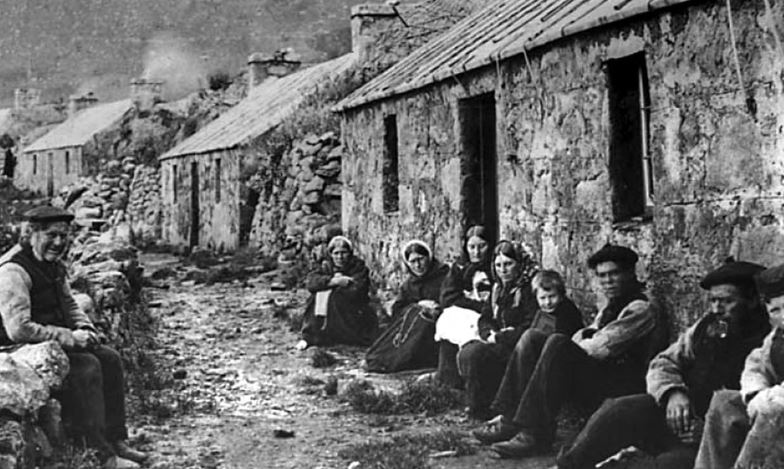
In a previous blog I used the backdrop of the remote isolated and windswept island of St Kilda off the west coast of mainland Scotland and the suburb of St Kilda in Melbourne, Australia. The moral of the story was THAT as managers, we should never accept things at face value. Once again, I’m going to use the island of St Kilda as a backdrop for another lesson for managers.

Background

On St Kilda the climate was so extreme, and the wind was sometimes so strong that the islanders’ sheep and cattle could be blown over the cliffs.  During the 19th Century, the island’s population was around 100 people. With increasing contact with the outside world in the 19th and early 20th centuries, the island’s population gradually declined. In September 1852, 36 emigrants from St Kilda left for Melbourne. Sadly, only 17 survived the journey, the others succumbing to diseases they had no immunity to due to their isolated existence. The island never fully recovered from this event, both physically and psychologically.

After the World War I, most of the young men left the island. The population fell from 73 in 1920 to only 37 in 1928. In 1930, the last of the island’s inhabitants were evacuated to mainland Scotland, ending hundreds of years of isolation, poverty, and deprivation.

What caused the demise of the population of St Kilda?

Obviously, increasing contact with the outside world provided the opportunity for the islanders to see that an easier and better standard of living could be achieved if they left the island. However, one of the main reasons can be traced back to the mid-19th Century with the arrival of Rev John Mackay, a minister in the new Free Church of Scotland. Mackay was a religious zealot. He introduced a routine of three two to three-hour services on Sunday. No work was permitted or conversation, only recitation from the Bible was allowed.

Although Rev Mackay left the island in 1889 his legacy lived on. Mackay denied the islanders outside influences and being the only English speaker on the island (the islanders spoke Gaelic) he was able to keep them in a state of ignorance, combining this with religious zealotry.

Linked to societal ignorance, one of the sadder aspects of St Kilda’s life was the horrendous infant mortality rate. One out of every two babies born would not survive their first year of life, dying of infant tetanus. When a child was born on the island, fulmar (sea bird) oil, was applied to the baby after the umbilical cord had been cut. The oil was not stored in sterile conditions.

In 1891, two years after Rev Mackay left a midwife arrived from Glasgow.  She brought improved midwifery skills, hygienic nursing practices and education and the practice of dipping the umbilical cord in fulmar oil ceased. This reduced childhood tetanus, and it was virtually eliminated. Unfortunately, by this time the situation on the island was irreversible. The population was stagnant, and many wanted to leave.

What can we learn as managers from this sad story of the demise of the people of St Kilda?

Organisations and businesses have similar characteristics to small communities like St Kilda. In particular, family-owned businesses often fail to bring in new blood and ideas and this can lead to a gradual demise of the business. Often when new blood comes into an organisation, the owner and the family refuse to change and this undermines the newcomer’s position. I witnessed a former client who claimed he wanted to ‘step back’ from the day to day running of the business. Sadly, he failed to share information, didn’t communicate in a constructive and rational way, and often made decisions behind the new manager’s back. Despite claiming he wanted to ‘step back’, he couldn’t let go and didn’t know how to. He then fired the incumbent because he claimed he had “failed”. Employees on experiencing professional management and then seeing a return to the old behaviors, started to leave. People join organisations but leave due to bad managers.

In my experience, keeping people ignorant is never a wise strategy for managers. I have found that often sharing information can improve performance. When I was managing a major trucking business, despite ‘advice’ to the contrary, I shared weekly driving performance statistics with the linehaul drivers. Driving performance improved, with reduced speeding and fuel consumption and fewer accidents.

All organisations have life cycles and they need to be regenerated with ideas and people externally.

Postscript: I do want to stress that many factors contributed to the decline and death of the community of St Kilda, with health-related problems being one of the main causes. I visited the islands in mid-2023 and it was a very interesting trip – history, birds and landscape. I would recommend a visit – a real step back in time.

#thenetworkofconsultingprofessionals

…it only took 74 days!

“Any leader has to have a certain amount of steel in them, so I am not that put out being called the Iron Lady”

Margaret Thatcher – British Prime Minister

The Falklands War in 1982 between Britain and Argentina lasted only 74 days, culminating in a British victory. This short and bloody conflict has some excellent lessons for managers and leaders.

Background:

Just over 41 years ago this month, on 2 April 1982, the Argentinian fascist military dictatorship decided to invade the British Overseas Territory of the Falkland Islands. They hoped to bolster their dwindling legitimacy by mobilising the long-standing patriotic feelings of Argentines towards the islands, as well as diverting public attention from their ongoing human rights violations against their own citizens and the country’s chronic economic problems.

The islands, 12,000 kms away from Britain are a windswept treeless, damp and cold group of islands. The Falklands had a population of around 2,000 people and its major industry was sheep farming.

In the face of cuts to the military budget by the British Government, the Argentinian military junta miscalculated. They thought that Britain would not respond militarily. However, within three days of the invasion, the British Government under the leadership of Margaret Thatcher had assembled a military task force to retake the islands.

The logistics challenges for the British were immense and the risk of failure high. The Argentinians had 10,000 troops dug in on the islands and were protected by mine fields. Their air force, located on bases on the Argentinian mainland, outnumbered the carrier based British planes by eight to one.

Outcome:

On 13 June 1982, the Argentinian forces on the islands surrendered. Despite the logistics challenges, and setbacks such as the loss of almost all their troop-carrying helicopters on the Atlantic Conveyor the British forces triumphed. The loss of the Atlantic Conveyor meant that the British troops with 80 kgs on their backs had to walk 80 kms in freezing and wet conditions to attack the capital of the Falklands, Port Stanley.

Here are three leadership traits displayed in the Falklands War:

  1. Decisive decision making

The British assembled a military task force within three days of the invasion, despite the fact that the Falklands were over 12,000 kms away from London. This was an example of decisive decision making. In our logistics business, we had a toxic manager who was having a detrimental effect on employee morale and customer satisfaction. One of our partners refused to recognise this situation. When the partner was overseas, we terminated the manager. Within a month, the business he had been managing turned around. Following this action, several supervisors came up to me and said how were pleased that action had been taken. They had been waiting for management action to fix ‘the problem’!

2. Clear purpose

Throughout the crisis, Thatcher’s message was clear and simple. In her communications, there was no doubting her intentions and the purpose was very clear. The British were not going to allow the invasion of British territory by a fascist military dictatorship to succeed.

In my experience, employees respond positively to strong and decisive leadership, especially when there is clear purpose. For example, I was engaged by a business owner to review his business, then introduce standard procedures and managerial disciplines. This message was made very clear to the staff. The culture must change. We would create a work environment through a disciplined and inclusive approach, where employees’ experience, expertise and opinions were valued. The incumbent general manager tried to thwart this approach and was “forced” to leave the business. The staff were relieved. Morale improved almost immediately. They became engaged, as they were now valued and could look forward to the future.

3. Communicate a positive message.

Admiral Sir Henry Leach, Chief of the Defence Force who was instrumental in convincing Thatcher that the islands could be recapture, was asked by her why it was important to retake them.

He said:

“Because if we do not, or if we pussyfoot in our actions and do not achieve complete success, in a few months from now, we will be living in a completely different country whose word counts for nothing.”

Following that advice, Thatcher’s message was positive, and she took the high moral ground.      

  1. We are a democracy
  2. We are not going to have a nasty military junta taking over British territory
  3. We can retake the islands

When I was managing a national vehicle transport company in regional NSW, I was confronted with an unsolvable problem. A private vehicle arrived in our transport depot from Melbourne, several days late. The vehicle owner was arriving in Cairns in far north Queensland the same day. This was three days drive away from Cairns by truck, so he was not going to have his car for the first couple of days of his holidays. Confronted with this problem, I phoned him just as he was boarding the plane in Melbourne offering a solution. A hire car would be provided when he arrived in Cairns until his car arrived. It was a positive message given with authority to solve his problem. The customer continued to use our services for many years.

The British armed forces faced with what were seemingly impossible odds were ultimately successful.

 Do you think that the leadership traits of being decisive, having a clear purpose communicated positively, had a significant bearing on the successful outcome?

‘Real’ leadership is important in any organisation, whether it’s a crisis like the Falklands or not. In my experience, I have found that employees respond positively to good leadership.

#thenetworkofconsultingprofessionals

Are you prepared for a ‘black swan’ event?

“The problem with experts is that they do not know what they do not know.”

― Nassim Nicholas Taleb, author of The Black Swan: The Impact of the Highly Improbable

What is a black swan event?

The phrase “black swan” derives from a Latin expression; “rara avis in terris nigroque simillima cygno” – “a rare bird in the lands and very much like a black swan”.

A black swan event is a rare event that is positive or negative, is deemed improbable yet has massive consequences and could not have been predicted even with the help of sophisticated modelling techniques. For example, an event that has a severe impact on the economy, social conditions, and overall well-being of a nation. The recent COVID pandemic has been called a ’black swan’ event or Russia’s invasion of Ukraine.

A characteristic of a black swan event is low probability and high impact. Often it becomes rationalised in hindsight, as if it could have been expected. Once again, the COVID example comes to mind. The so-called experts had been ‘predicting’ that the world was overdue for a worldwide pandemic as the last deadly one was the Spanish Flu pandemic, over 100 years ago. However there had also been other pandemics that were not as deadly as the Spanish Flu, namely the Hong Kong Flu in 1968 and the 1957 Asian Flu.

Apparently, the phrase was commonly used in 16th century London as a statement of impossibility. It derives from the presumption that all swans must be white as there were no records of swans having feathers that were NOT white. Therefore, a black swan was impossible or at least non-existent. However, in the late 17th century, Dutch explorers became the first Europeans to see black swans, in Western Australia.

Did this change the meaning of the term ‘black swan’ event?

Yes and no.

Nassim Taleb in his book The Black Swan: The Impact of the Highly Improbable said that black swan events have three characteristics:

1. Low predictability based on prior information

2. High consequence, and sometimes catastrophic impact

3. Explained in hindsight as if it were actually predictable

The main idea in Taleb’s book is not to attempt to predict black swan events, but to build robustness against negative ones that occur and to be able to exploit positive ones.

As a business, how can you prepare for a ‘black swan’ event?

This is a challenge for all business managers and leaders.

Some of the possible strategies for dealing with a black swan event include having a business continuity plan and testing it, diversification into unrelated industries, for example a mining company who is reliant on one commodity could move into other commodities, develop alternative supply chains and having adequate insurance cover.

The critical aspect for business to minimalise the impact is to build robustness in the business.

#thenetworkofconsultingprofessionals

What if………..

“what if, but what is”

Gary West coach of Anna Meares – Australian Olympic Gold Medal Cyclist

In mid-2012, I was in England attending a management training program which coincided with the London Olympics. Sadly, I did not attend any events.  However, one night over a cold beer in my hotel room I watched two women cyclists, the 2008 gold medal winner Victoria Pembleton and the 2008 silver medallist Anna Meares, slog it out in the women’s sprint. It was an intense battle of stamina and wills and in the mesmerising trussell Anna Meares eventually triumphed.

So, who is Anna Meares?

Anna was Australia’s first female cycling gold medallist. She was an 11 times world cycling champion and the only Australian athlete to win medals at four consecutive Olympics.

Meares, was a daughter of a coalminer and grew up in Blackwater central Queensland hundreds of kilometres from the nearest bike track.  When her elder sister Kerrie showed promise as a cyclist the family moved to the coastal city of Rockhampton as it had a bike track.

  • Athens 2004 – gold medal in women’s 500-metre time trial, bronze medal in 200m sprint
  • Beijing 2008 – silver medal in women’s sprint
  • London 2012 – gold medal in the women’s in and bronze medal in the women’s team sprint
  • Rio de Janeiro 2016 – bronze medal in the keirin

These results are remarkable but there is something that is exceptional about her Olympic record.  In January 2008 seven months out from the Beijing Olympics, Meares broke her neck after crashing in the World Cup competition, fracturing her C2 vertebra, dislocating her right shoulder and tearing her ligaments and tendons. She went within 2 mm of becoming a paraplegic or worse death. Within 10 days she was back on her bike. With intensive rehabilitation she was able to fight her way back and qualify for the 2008 Beijing Olympics. Not only did she manage to qualify, but she also won a silver medal. From a broken neck to a silver medal in seven months – a truly remarkable performance.

Whilst her dedication and intense training to get fit enough to qualify and win a medal is testament to her intense focus and a clear goal (link here) there is something that is more compelling. It was her attitude. She did not focus on ‘what if’ but ‘what is’. Meares do not dwell on what might have happened if she’d been more seriously injured. Her coach made her appreciate her current situation. She was thankful and became more determined and focussed.

As managers, Anna Meares provides us with a great lesson.

Focus on what you can achieve – what’s in front of you. Don’t dwell on what you can’t control.

Four years later in London, Meares went on to win a gold and a bronze medal in Rio.

#thenetworkofconsulting professionals