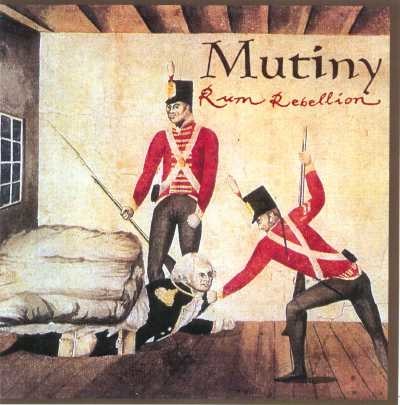
The most famous mutiny in history…

“To function efficiently, any group of people or employees must have faith in their leader”

– William Bligh: of mutiny on the Bounty fame

The above quote is rather ironical, considering Bligh was the subject of the most famous historical maritime mutiny, the Mutiny on the Bounty. It was made famous or infamous in three films in 1935, 1962 and 1984. None of these films were sympathetic to Lieutenant William Bligh, the officer in charge (note that he was not a Captain). Interestingly, Bligh was also the subject of another less well-known mutiny, when as Governor of NSW he was overthrown in a military coup in what was known as the Rum Rebellion.

Bligh’s mission was to transport breadfruit plants from Tahiti to feed slaves on plantations in the West Indies. A little known and important fact was that the Bounty had no marines onboard. During this period, it was customary to have marines onboard a naval vessel to ensure discipline and to separate the ordinary sailors from the officers as well as to protect the crew from hostile natives. The Bounty had been converted into a ‘floating greenhouse’ to house the breadfruit so there was no room for a party of marines. Bligh, as only a Lieutenant rather than a Captain, had to rely on his ability to control the sailors onboard. Also, there were no other officers onboard the Bounty.

Bligh was a very experienced sailor, coming from a family with a long naval tradition. He went to sea as a cabin boy at the age of seven and travelled with Captain Cook as the chief navigator on Cook’s third and final voyage. His navigation skills would become extremely useful in the future. Historical reports state that Bligh was a strict disciplinarian and was given to outburst of ‘towering rage’ and ‘bad temper’, which obviously did not endear him to the crew. Strict discipline was, however, not unusual for the times.

Setting sail in 1787, the Bounty was to travel to Tahiti around Cape Horn. However, after terrible storms and weather experienced trying to round Cape Horn, Bligh was forced to sail to the pacific ‘the long way’, across the Atlantic, around the Cape of Good Hope, into the Indian Ocean, through the Great Southern Ocean under Australia and into the Pacific. After this unscheduled extended voyage, the Bounty arrived in Tahiti. Here it stayed for five months to allow the breadfruit trees to mature to be able to be transported. During the stay many of the crew were mostly idle and formed romantic relationships with the local women whilst enjoying the tropic climate of this Pacific paradise.

The Bounty left for the West Indies in April 1789. Later in the same month, the crew led by Fletcher Christian mutinied. Bligh and 18 loyalists were cast adrift in 7m open boat. Considering the circumstances, with their holiday cut short, it is perhaps not surprising that the crew mutinied!

Following the mutiny, the Bounty returned with the mutineers to Tahiti. Meanwhile, the boat with the 18 loyalists was so overloaded, it required constant bailing to remain afloat. Over the next 47 days and over 6,700 kms, Bligh and crew sailed to Timor in the Dutch East Indies. Bligh, ever the disciplinarian ensured severe rationing of food and water – 28g of water and 40g of biscuits per crew member per day. Despite exposure, malnutrition and dehydration the boat arrived without any loss of life, apart from a crew member killed by natives in Tonga. The success of the journey is testament to Bligh’s navigational skills, sheer will power, determination and disciplined leadership.

What do you think are lessons for leaders from the mutiny on the Bounty?

Here are three.

  1. Leadership and Team Dynamics: The Mutiny on the Bounty underscores the critical role of leadership and its impact on team dynamics. Managers should prioritise fostering positive leadership qualities, such as fairness, respect, and effective communication, to create a harmonious and productive work environment.

2.            Addressing Employee Dissatisfaction: Understanding and addressing employee dissatisfaction is essential. In Bligh’s case, his tyrannical leadership contributed to the mutiny. Managers should encourage open channels of communication and actively seek feedback to prevent grievances from festering.

3.            Crisis Management and Adaptability: Bligh’s remarkable journey in the open boat highlights the importance of crisis management and adaptability. Managers should equip themselves with the skills and resilience needed to navigate unexpected challenges, providing stability and direction during crises.

Can you think of any others?

How do you think Bligh should be remembered?

Bligh’s reputation was a mixture of admiration for his survival and navigational skills, and criticism for his leadership approach. He is remembered as a figure of resilience, skilled navigation, and unwavering dedication to his duties, albeit with a leadership style that sometimes clashed with the needs and expectations of those he led. William Bligh’s life is a study in contrasts—his unparalleled navigational achievements and resilience in the face of adversity stand against the backdrop of his leadership controversies. His story offers invaluable lessons on the importance of adaptability, empathy, and the ability to lead under the most challenging conditions.

@thenetworkofconsultingprofessionals

What’s the Dunning Kruger effect?

“One of the painful things about our time is that those who feel certainty are stupid, and those with any imagination and understanding are filled with doubt and indecision.”
Bertrand Russell – British philosopher

What is the Dunning-Kruger effect?

In 1999 two social psychologists David Dunning and Justin Kruger identified a cognitive bias based on a bank robber who believed that lemon juice would make his face invisible, as lemon juice makes ink invisible. Setting off to rob his first bank, bank robber McArthur Wheeler waved at the CCTV cameras as he entered and left the bank. He was arrested soon after and exclaimed “But I wore lemon juice!”.

Similar events have occurred in South Africa where bank robbers and shoplifters have attached bottles of muti (traditional African medicine) to their belts thinking that this made them invisible. However, this is more a story of witchcraft rather than incompetence or over-estimating their abilities.

The Dunning-Kruger Effect is where individuals who have limited knowledge, competence or ability, wrongly imagine themselves to be very good at something they are obviously not!

In history there are many examples of the Dunning-Kruger effect. Hitler is but one example. He considered himself a great artist, but twice failed entry to Vienna’s Academy of Fine Arts. The admissions committee decided his drawing skills were “unsatisfactory”. Hitler also thought he was a military genius, and believed he could be the only man apart from Genghis Khan to successfully invade Russia. Sadly, this delusion led to the unnecessary deaths and suffering of tens of millions of people.

Does Dunning-Kruger effect have any relevance for us as managers?

Of course it does!

There are two effects:

  1. Not only are people incompetent, and this
  2. Incompetence robs them of the ability to realise how incompetent they are!

To put in bluntly, at the extreme end of the Dunning-Kruger Effect, stupid people do not realise they are stupid. A little knowledge can be a dangerous thing!

This can have unfortunate consequences. Hitler is but an extreme example.

Many incompetent managers suffer from the Dunning-Kruger effect. A lack of self-awareness is a common sign, although not all managers who lack self-awareness suffer from the Dunning-Kruger Effect. Managers who overestimate their abilities often are unable to recognise their own limitations. This leads to mistakes and poor decision making. Believing themselves to be experts in the field, they are often unwilling to seek feedback or ask for help,

Do you have any examples in your work life of the Dunning-Kruger effect?

I certainly do!

Here are three examples to consider.

  1. Over-estimate their own skills and achievements. For example, a dictatorial manager who is a poor communicator, micromanages and fails to listen. They believe they are a natural leader and refuse to acknowledge the negative impact their management style is having on their team.  This lack of self-awareness breeds frustration and low morale and can lead to a toxic work environment. Ultimately this harms the organisation’s success. I once assisted a fellow consultant in an organisation where the CEO thought because he had a PhD that he was the smartest person in the organisation and overestimated his success, despite evidence to the contrary. Morale was poor and the business was losing money.
  2. Don’t recognise the skills and knowledge of others. The manager who ‘knows best’ and fails to consult with their team. This can manifest in a variety of ways, such as being very vocal about one’s views, even in the face of evidence to the contrary, or being unwilling to consider alternative perspectives, believing they are the only one who truly understands the situation. This thwarts team building and staff development. In the example above, the CEO made the statement that there were ‘no real managers’ in the organisation and they were in reality ‘just clerks’. He never consulted them, asked for their opinions or sought their considerable expertise and experience. After he exited the business, we sought to engage the staff through a series of workshops seeking their input. The turnaround in morale was immediate.
  3. Resistance to Feedback and Constructive Criticism.  People exhibiting the Dunning-Kruger Effect may be resistant to feedback and constructive criticism. They may see any criticism of their views or actions as a personal attack, leading to defensiveness and an unwillingness to listen to others’ perspectives. Also, they refuse to recognise their own mistakes. This lack of insight often leads to poor team morale. I can remember a situation when I was in business where one of our partners refused to accept any feedback when we brought in an external consultant to review the business. His reaction was to sack the consultant.  

Encourage Self-Reflection and Self-Assessment

If you recognise the Dunning-Kruger Effect in yourself, how should you deal with it?

  • Encourage Self-Reflection

One key strategy for dealing with the Dunning-Kruger Effect is to encourage self-reflection and self-assessment. People who are aware of their own limitations and weaknesses are more likely to seek help and feedback, leading to better decision making and personal growth.

  • Provide Constructive Feedback

Another strategy is to provide constructive feedback to people who may be exhibiting the Dunning-Kruger Effect. It’s important to approach feedback in a non-judgmental way, focusing on specific behaviours or actions rather than criticising the individual as a whole.

  • Promote a Growth Mindset

A growth mindset can also help to combat the Dunning-Kruger effect. People who believe that their abilities can improve with effort and practice are more likely to seek feedback and learn from their mistakes, leading to personal and professional growth.

In conclusion by understanding the signs of the Dunning-Kruger Effect, we can better recognise it in ourselves and others, and take steps to address it. By encouraging self-reflection, providing constructive feedback, promoting a growth mindset, and fostering a culture of humility and openness, we can overcome the limitations of the Dunning-Kruger Effect and achieve our personal and professional goals.

What do you think?

@thenetworkofconsultingprofessionals

Sporting trivia from 75 years ago…

DID YOU KNOW? Rhodesia (now Zimbabwe) beat the All Blacks 10-8 in Bulawayo on 27 July 1949, and drew 3-3 with them three days later?

Last year the Rugby World Cup was held in France, with the South African Springboks triumphing over the New Zealand All Blacks 12-11. The All Blacks are considered the pinnacle of national Rugby excellence but 75 years ago they were defeated by a provincial side in southern Africa. The provincial side remains undefeated against the All Blacks, the only team in history to do so.

The team represented Northern Rhodesia (now Zambia) and Southern Rhodesia (now Zimbabwe). The first match, played in Bulawayo in front of 10,000 people, resulted in a surprising defeat for the All Blacks 10-8. At the time the All Blacks were (and still are) one of the most formidable teams in international rugby. The significance of this defeat was made more poignant in the return match three days later with a 3-3 draw in Salisbury (now Harare). And for my New Zealand readers, 1949 remains the worst years in All Black history, with losses of 4-0 to the Springboks and 2-0 to the Wallabies.

What were the factors contributing to the defeat?

  1. Complacency of the All Blacks: The All Blacks, being a top team, might have underestimated Rhodesia, leading to complacency. The All Blacks were surprised by the dash of the Rhodesians, who played a different, open, and attacking brand of Rugby, as distinct from the safety-first South African teams.
  2. Local Conditions: The All Blacks were possibly not fully acclimatised to the local conditions in Rhodesia. Local knowledge and adaptation to specific environments can be crucial in determining the outcome of a contest.
  3. Psychological Advantage: The Rhodesian team, motivated by the opportunity to make history, may have had a psychological advantage. They had everything to gain and nothing to lose, which can be a powerful motivator.

The Rhodesian rugby team’s victory over the New Zealand All Blacks in 1949 is a noteworthy event in the annals of sports history, particularly rugby.

Here are three lessons for managers that go beyond the realm of sports, offering valuable insights for managers in various fields.

  1. Never Underestimate the Underdog: In business, as in sports, complacency can be a downfall. Always respect your competitors, regardless of their size or perceived strength.
  2. Adaptability: The ability to adapt to different environments and conditions is crucial. Managers must be flexible and responsive to changing situations, whether in market conditions, consumer preferences, or competitive landscapes.
  3. Motivation and Team Spirit: The Rhodesian team’s victory underscores the importance of motivation and team spirit. In management, fostering a strong team culture and keeping the team motivated, especially during challenges, can lead to significant achievements.

The Rhodesia vs. All Blacks games of 1949 serve as a timeless reminder of the unpredictable nature of sports and, by extension, the competitive world of business. They highlight the importance of preparation, respect for all competitors, adaptability, and leadership.

Note: Rhodesia RFU were treated as a province of South Africa for rugby reasons. Their players were eligible for selection by the South African team. Many were selected to play for the Springboks. Rhodesia never won another game against a touring side before being reconstituted as Zimbabwe in 1980.

@thenetworkofconsultingprofessionals

Gritty leadership from 75 years ago…

“I am ready to try an airlift. I can’t guarantee it will work. I am sure that even at its best, people are going to be cold and people are going to be hungry. And if the people of Berlin won’t stand that, it will fail. And I don’t want to go into this unless I have your assurance that the people will be heavily in approval.”

Lucius D. Clay, June 1948

Military Governor of the United States Zone, Germany (1947 to 1949)

The Berlin Airlift. 75 years ago this month the Berlin Airlift ‘officially’ finished.

What was it?

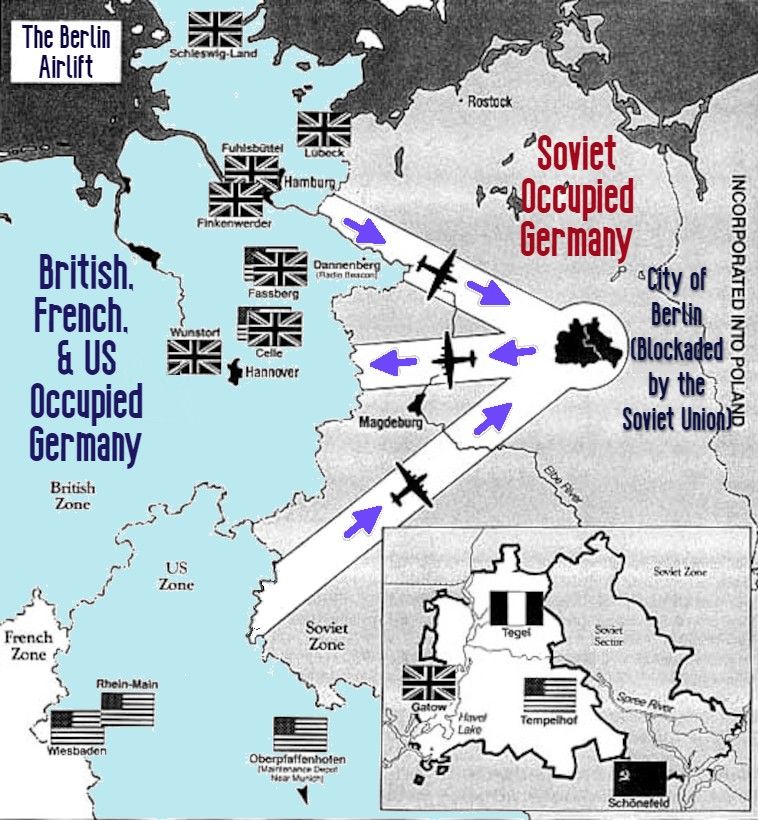
After World War II, Germany was divided into four zones, Soviet Russia, Britain, France and the USA. Berlin was also divided into four zones but lay within the Soviet Russian zone. On 24 June 1948, Soviet forces blockaded all road, rail and water routes into Berlin’s Allied-controlled areas. This stifled the vital flow of food, coal and other supplies. More than 2 million Berliners were relying on the aid, which included much-needed food, fuel and medicine and would otherwise starve and freeze. Two thirds of what was needed was coal.

However, the Russians could not block the Allied airspace. On 24 June 1948. The Allies established an airbridge and began an airlift that lasted officially until 12 May 1949 when the Soviet Union lifted the blockade. The airlift continued until September after the lifting of the blockade as the Allies wanted to make sure that it was not reintroduced.

Why did it occur?

The blockade was an attempt by Soviet Russia to gain control over the entire city by cutting off all land and water routes to West Berlin, which was then under the control of the Western Allies.

Logistics of the Berlin Airlift

The success of the airlift depended on meticulous planning and execution. The planes were scheduled to land and take off at precise intervals, ensuring a continuous flow of supplies. This required exceptional coordination among pilots, ground crews, and logistics teams. To maximise efficiency, the cargo planes followed specific flight paths and adhered to strict timetables. This was all before the use of computers, GPS tracking and scheduling which we have today.

The airlift involved transporting a wide range of supplies, including food, coal, medicine, and machinery. Each type of cargo required different handling and storage conditions, which added complexity to the logistics operation.

Berlin Airlift – Facts & Figures

  • One aircraft landing per minute
  • Over 200 million miles flown
  • Each aircraft unloaded in 20-30 minutes
  • 2000 tonnes of food required per day
  • 400,000 tonnes of food, supplies and coal
  • Over 200,000 kms flown
  • 277,804 flights completed
  • 93 lives lost

The airlift cost the United States $350 million; the UK £17 million and Western Germany 150 million Deutschmarks.

What are three lessons for business leaders in the example of the Berlin Airlift?

  1. Innovative Problem-Solving: Leaders had to think creatively and act decisively to overcome the blockade. This required innovative strategies, such as the airlift, which had never been attempted on such a scale.
  2. Resilience and Determination: Leaders demonstrated resilience and determination in the face of adversity. The operation continued for over a year, and the leaders remained committed to their mission despite the challenges.
  3. Precision and Coordination: The operation demonstrated the critical role of precision and coordination in logistics. Timely delivery and efficient turnaround were essential for the success of the airlift.

In conclusion, the Berlin Airlift was not only a remarkable logistical achievement but also a powerful example of international cooperation, innovative problem-solving, and leadership under pressure. It provided invaluable lessons in both logistics management and leadership that are still relevant today.

What do you think?

Note: 39 British, 31 American and 13 German civilians lost their lives in the Berlin Airlift. They are remembered on the Berlin Airlift monument at Tempelhof. The pilots came from the USA, Britain and France and also from Australia, Canada, South Africa and New Zealand.

@thenetworkofconsultingprofessionals
Sometimes being a rocket scientist doesn’t help…

“Reach for it, you know. Go push yourself as far as you can”

Christa McAuliffe – astronaut on the doomed Challenger

38 years ago this month on 28 January 1986, on a cold morning watched by thousands of onlookers and millions live on TV, the Space Shuttle Challenger lifted off from Kennedy Space Centre in Florida at 11:38 AM EST. To everybody’s horror just 73 seconds into its flight the shuttle broke apart, leading to the tragic death of all seven crew members. This event is etched in our collective memory, not only for its heartbreaking impact but also for the profound lessons it imparts to managers, business owners, and leaders across various fields.

What caused this disaster?

The primary cause of the Challenger disaster was the failure of the O-ring seals in its right solid rocket booster (SRB). These O-rings were not designed to handle the unusually cold conditions on the day of the launch. The low temperatures compromised the O-rings’ elasticity, preventing a proper seal. This failure allowed pressurized burning gas from within the solid rocket motor to reach the outside and impinge upon the adjacent SRB aft field joint attachment hardware and external fuel tank, leading to the structural failure of the SRB attachment and the destruction of the Challenger.

Engineers at Morton Thiokol, the contractor responsible for the solid rocket boosters, had raised concerns about the O-rings in cold weather. However, these concerns were not adequately communicated to or heeded by the key decision-makers at NASA. The organisational culture at NASA, which at the time prioritised schedule and budget over safety, played a significant role in the decision to proceed with the launch, despite these known risks.

Furthermore, this design flaw was compounded by a failure in communication and decision-making processes within NASA and between NASA and its contractors.

What lessons can we as managers learn from this disaster?

Here are three lessons:

  1. Importance of a Safety Culture: The Challenger disaster underscores the critical need for organisations to prioritise safety over other objectives, including schedule pressures or financial concerns. Creating a culture where safety is paramount can prevent catastrophic outcomes.
  2. Effective Communication and Heed Expert Opinion: Effective communication and respecting the expertise of team members is vital. The concerns of the engineers about the O-rings were a missed opportunity that highlight the importance of listening to and acting on expert advice, especially when it pertains to potential risks.
  3. Ethical Decision Making: The Challenger incident serves as a stark reminder of the ethical responsibilities of decision-makers. Ethical decision-making involves considering the wider implications of actions and prioritising the well-being of all stakeholders, including employees and the public.

In conclusion, the Challenger disaster, serves as a sombre reminder of the consequences of overlooking safety, underestimating risks, and the critical importance of ethical leadership. For managers and business owners, it is a call to reflect on their practices, to ensure that the lessons from this event are not just remembered, but integrated into how they lead and make decisions.

#thenetworkofconsultingprofessionals

The Valley of Tears…

“On 6 October 1973, the Yom Kippur war broke out between a coalition of Arab states and Israel. At 6 A.M. that morning, Kissinger, asleep in the Waldorf, was taken by surprise by the Arab attack – as were the CIA and the rest of the world”.

Alistair Horne – British Historian

Fifty years ago next month, on 6th October 1973 the combined forces of Egypt and Syria attacked Israel, the Sinai in the west and the Golan Heights in the northeast. This became known as the Yom Kippur War. The surprise attack occurred on the Jewish Yom Kippur holiday when most of the Israeli military were on leave.

Egypt’s prime reason for the attack was to force Israel to negotiate a peace treaty for the return of the Sinai. The Egyptians did not advance any further than a narrow strip of the Sinai that could be protected by SAM missile batteries. However, the Syrians had different aims, to retake the Golan Heights taken in 1967 Six Day War and destroy Israel. With the unexpected success of the Six Day War, Israel was arrogant, complacent, overconfident, and believed that their intelligence would anticipate any assault.

In particular, the battle of the Golan Heights has some important lessons for managers and leaders.

More than 1,400 Syrians tanks, 28,000 troops and 600 artillery pieces poured into the Golan Heights, opposed by just 180 Israeli tanks, 3,000 troops and 60 artillery pieces. Syrian intelligence had estimated that due to the Yom Kippur holiday it would take 20 hours for the Israeli reservists to reinforce the Golan Heights, however instead it took 10 hours.

By 5pm on 7th October with the Israelis under sustained pressure, the Syrians at the instruction of their President, unexpectedly halted their advance on the road to Galilee. The bridges over the Jordan River were virtually undefended and the road to Israel was open to the invading force.

Despite the overwhelming numbers, the Israeli forces manage to hold the advance in time for the reservists to arrive. In what became known as the ‘valley of tears’, the Syrian armoured forces suffered horrendous losses against a far numerically inferior foe, turning the tide of the battle for the Golan Heights.

So, what happened?

The Syrians were numerically superior, armed with up-to-date Soviet weaponry and night vision equipment which the Israelis did not have. When their lead tanks were destroyed, the Syrian tanks refused to stop, move off the roads or bypass the destroyed vehicles. This caused roadblocks and made them easy targets for the highly trained Israeli tank crews.

The Syrians refused to manoeuvre unless ordered by higher command. Syrian forces demonstrated a critical lack of adaptability and comprehensive training. This was in direct comparison to the Israeli forces, who despite being outgunned and outnumbered, changed their tactics.

The most famous of the adaptability of tactics was a young Lieutenant Zvi Gringold, known affectionately as ‘Lieutenant Zvicka,’. He became a legend and was awarded Israel’s highest decoration. His hit-and-run tactics initially destroyed 10 Syrian tanks and he was credited with single-handedly holding at bay 50 Syrian tanks. The Syrians thought they were up against a large Israeli force and withdrew. Throughout the night and following day, Gringold continued to engage the Syrians and destroyed another 30 tanks. These tactics were copied by other Israeli tank commanders.

The tide in the battle for the Golan Heights began to turn as arriving Israeli reserve forces were able to contain the Syrian advance.  The arrival of the reservists was the beginning of the end for Syria. After four days the Israelis succeeded in pushing the Syrians out of the Golan Heights and began their march towards the Syrian capital, Damascus.

What are the lessons for leaders here?

Lesson 1: Remote and authoritarian leadership often fails. The Syrian advance was unexpectedly halted by the Syrian Dictator President Assad, but the road into Israel was virtually undefended. Clearly the best decisions are often made close to the battlefield and in business close to ‘the coal face’ as the managers have a better understanding of the situation.

How often do decrees from head office seem remote and unrealistic?

Lesson 2: Decentralised leadership is far more effective and allows managers to react to the situation. In this case,case, as demonstrated by ‘Lieutenant Ziva’ the Israelis adapted their tactics to meet the situation, despite the overwhelming numerical superiority of the Syrians.

In our former logistics business, we gave our supervisors the authority to manage customers face-to-face on a daily basis, without always referring to the Warehouse Manager. This enabled them to manage the usual crises that occur in logistics in a proactive and ‘customer centric’ way, resulting in customers staying with the business over the long term.

Lesson 3: Over confidence and arrogance are dangerous. With the overwhelming success of the 1967 Six Day War, the Israelis were arrogant. They ignored the intelligence and were caught short. As Andy Gove, the founder and former CEO of Intel said; “only the paranoid survive”. Gove warned against the ‘inertia of success’.

Can you think of any businesses that were initially successful but failed because they were complacent and arrogant?

Kodak dominated the photographic film industry with over 50% of the global market share. It ignored the market disruption caused by digital cameras. Ironically, a Kodak engineer in 1975 invented the digital camera, but it was ignored by management. In 2012, Kodak filed for bankruptcy.

#thenetworkofconsultingprofessionals
Lessons from the Great Train Robbery…

“There’s a difference between criminals and crooks. Crooks steal. Criminals blow some guy’s brains out. I’m a crook”

Ronnie Briggs – Great Train Robber

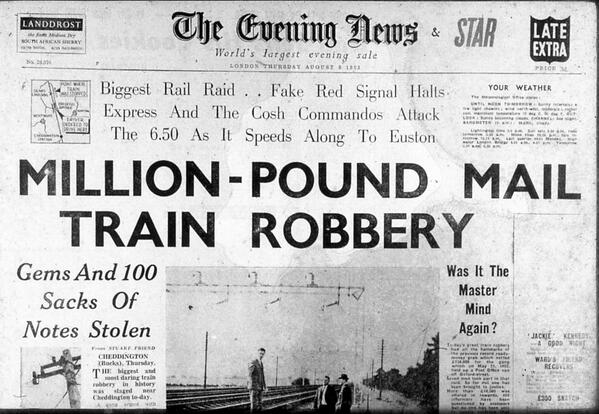
Sixty years ago, this month on 8th August 1963 the Glasgow–London Royal Mail Train was held up by 15 men, wearing helmets, ski masks, and gloves. The train was carrying mostly used bank notes to be destroyed. This was known as the Great Train Robbery.  The ringleader, Bruce Reynolds was a known burglar and armed robber. Just over £2,600,000 (£50m today) was stolen in an audacious and apparently well-planned heist aided by inside information. It only took 15 minutes. No firearms were used, although the train’s driver was seriously injured when bashed with a metal bar.

Before the Great Train Robbery, Reynolds had organised a gang and conducted a successful £62,000 airport robbery. Flush with this success, Reynolds began searching for ‘the next big one’. Upon identifying the opportunity, Reynolds realised that he needed help from the London underworld as his original gang could not do the job alone.

The train was stopped when the robbers turned off a green track signal with batteries and turned on a red signal. Approximately 120 mail bags were taken from the train to a farm hideaway, where it was divided up. During the robbery, one of the gang told the postal staff on the train not to move for 30 minutes. This information suggested to the police that the hideout was within a 30-mile radius.

On hearing on the radio that the police were narrowing the search, the robbers hurriedly left the farm the day after the robbery. Only five days after the robbery a local farm worker had noted suspicious vehicles at a neighbouring farm and advised the police. When two police came to the farm, they found the Landrovers and truck used in the robbery, plus bedding, food, post office bags, banknote wrappers and a monopoly board. Part of the plan was to burn down the farmhouse. However, the robbers in their haste left fingerprints on a tomato sauce bottle and the monopoly board. Apparently, the robbers had played monopoly with real money from the heist!

The robbery had attracted far more police attention than anticipated by the robbers. It also captured the imagination of the public and the media. A reward of £250,000 was offered. A breakthrough came when an informant gave the police a list of names. Some of the names were matched to the fingerprints from the farm. With this and other evidence, by Christmas 12 robbers had been caught, convicted and sentenced up to 30 years jail.

Only three of the robbers remained at large. Reynolds and two others went abroad to Mexico and lived the highlife. By 1968 Reynolds had spent most of his ill-gotten gains. He planned another large robbery and returned to England where he was arrested. Ronnie Biggs escaped from prison in 1965, fled first to Paris, then after undergoing plastic surgery travelled to Australia, and finally to Brazil in 1970. He remained at large as there was no extradition treaty between Brazil and the UK. In 2001 after suffering several strokes, he returned voluntarily to the England and was rearrested.

Are there any lessons here for managers in this ‘crime of the century’ (apart from the obvious lessons of crime not paying and it’s not a good idea to play Monopoly with real money)?

The robbery was well planned and executed with military precision. But by Christmas in 1963, 12 of the robbers had been arrested. Hardly a sign of success!

Here are three lessons I think we can take away from the Great Train Robbery:

  • 1. Have a vision.  

Reynolds as the leader was the brains behind the daring heist. Following the ‘success’ of the airport robbery, Reynolds wanted a bigger challenge. In the dialogue from a movie of the robbery, Reynolds was quoted as saying:

“You’ve got to dream big.  What are we here for if we don’t make our mark? It was never just about the cash.  It’s the buzz.  Building the team, finding the job, planning the job, carrying it out. It’s the camaraderie. Trusting other men with everything you know. With your life.”

Although this is a fictional quote it is probably is an accurate depiction of what occurred. Reynolds had clear vision – in other words a vision statement! The power of vision is very powerful. An ingredient of a successful business is to have a very clear vision.

  • 2. Plan thoroughly.

With a clear vision, Reynolds meticulously prepared and planned the robbery. He realised that the scope was beyond his immediate circle’s skills and quickly expanded the size and skills of the gang.  He was faced with needing specific skills to ensure success. This included how to fake the train signals to stop the train and how to drive the train once it was held up. Sound planning allowed the initial success of the robbery – in 15 minutes.

  • 3. You cannot plan for all eventualities and you should have a plan B.

Despite the meticulous planning, the robbers did not plan for all eventualities. In reality, in business it is also not possible to plan for all eventualities. However, you should always have a Plan B. A contingency plan if ‘things go wrong’. When calm leadership was required, the gang panicked when they heard that the police were searching within a 30-mile radius of the robbery. They left the farm and didn’t adequately cover their tracks. In other words, despite the planning there was poor execution which resulted in the robbers being caught.

In concluding, there is nothing like a good story to demonstrate a point and the Great Train Robbery certainly does this!

What do you think?

Note: I am not condoning the robbery that left the train driver seriously injured. Just using a well-known story as an example for managers. The robbery was a success, but many things went wrong after that.  The amount stolen was so much more than expected that it sparked a major investigation plus “crime of the century” publicity. The police response was swift and successful. An example of sound management and leadership.

#thenetworkofconsultingprofessionals
Management lessons from a long-forgotten battle…

“Arrogance, ignorance, and incompetence. Not a pretty cocktail of personality traits in the best of situations”

Graydon Carter – US Journalist

70 years ago this month, the colonies of French Indochina were lost when the Communist Viet Minh guerilla army defeated French forces in Vietnam in the Battle of Điện Biên Phủ.

Background

Following the Japanese surrender in World War II, the Viet Minh, a Vietnamese Communist guerilla army declared independence from France. France did not recognise the new government, and the first Indochina War began when the French navy bombarded the port city of Haiphong in northern Vietnam in November 1946, killing thousands of Vietnamese civilians. The war continued for another seven years and by 1953 it was at a stalemate. It had not been going well for the French. The war was unpopular, costly, and the French political environment was unstable. During the seven years of war, there were 16 changes of government in France and 13 changes of prime minister. Clearly, domestic political instability helped undermine the war effort.  

Setting

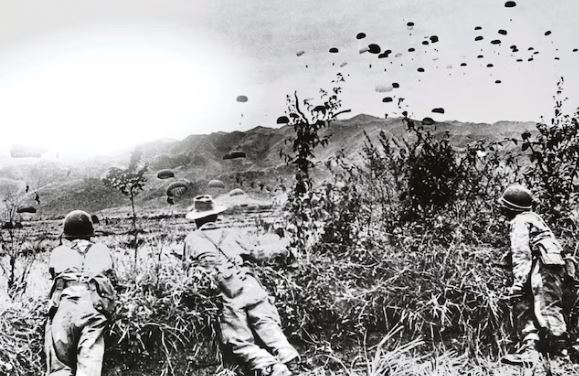
A French needed a solution to break the stalemate, so negotiations could be conducted. The French plan was to create a military situation which would bring the Viet Minh to the negotiating table. In late 1953, 2,000 French paratroopers were dropped deep in Viet Minh held territory in north-western Vietnam at a town called Điện Biên Phủ to establish a heavily fortified base.

The aim was to cut the Viet Minh supply lines from Laos and provide a base from which to attack them in the countryside. The French strategy was to draw out the Vietnamese and destroy them with superior firepower. They believed they held all the military advantages – the military equipment, the planes, trained soldiers, and the artillery. This strategy was called the hérisson (‘hedgehog’) concept. It was based on the success of the 1952 Battle of Nà Sản, where a fortified French camp supplied only by air repeatedly beat back the Viet Minh who suffered heavy losses. By repeating this strategy at Điện Biên Phủ on a much larger scale, using superior artillery and air support, the French believed they could defeat the Viet Minh in set piece battle. But the Viet Minh were fighting a guerilla war.

Outcome

In March 1954, the battle of Điện Biên Phủ began with a massive artillery bombardment by the Viet Minh. They were strategically positioned in caves and dugouts in the hills above the base. This lasted until May when 16,000 troops French were soundly defeated.

With over 50,000 Viet Minh troops surrounding the base, roads to supply the French garrison were cut which necessitated being supplied by air. The French believed that the Viet Minh had no anti-aircraft capacity and limited artillery. This proved to be incorrect, and the planes were forced to fly higher and higher, which resulted in supplies often falling into the Viet Minh’s hands.

The Viet Minh leader, General Giáp had learnt from the losses at Nà Sản. He spent months planning the transporting and stockpiling ammunition, and placing heavy artillery and anti-aircraft guns in tunnels in the hills around the French base. Furthermore, thousands of local peasants who supported the Viet Minh, including many women, provided labour, built roads, cleared jungle, transported food by foot and on bicycles and hauled equipment. Over 300,000 people were involved in the Viet Minh logistical effort.

With tenacious fighting on the ground resulting in horrendous causalities, the Viet Minh dug trenches and gradually encroached on the French base, finally cutting the runway. This forced the French to deliver supplies and reinforcements by parachute. As key positions were overrun, the perimeter contracted. While at times, the French repulsed Viet Minh assaults, airpower and superior military equipment did not win the day. The siege ended with a humiliating defeat for the French with 2,293 killed. The Viet Minh suffered horrendous casualties with over 8,000 Viet Minh fighters killed and an estimated 15,000 wounded.

Are there management lessons from the Battle of Điện Biên Phủ for managers today?

Here are three to consider:

1. Do your homework and understand your competitorsknow your enemy

The French underestimated their enemy. The French did not know the number of Viet Minh troops or how many artillery pieces they possessed and, furthermore the French believed that the Viet Minh had no anti-aircraft capability. Not only did they misjudge their enemy, but the French also discounted the huge material support received from the Communist Bloc, in the form of left-over stockpiles of Soviet-made and captured American heavy artillery and anti-aircraft artillery from the Korean War. By comparison, Giáp knew the strength and weaknesses of the French from his spies in the camp, and from the hills overlooking the French base. Unlike the battle of Nà Sản, the Viet Minh controlled the high ground, a major strategic oversight by the French. Clearly, the French did not do their homework, were arrogant and had no Plan B.

2. Technological superiority does not guarantee success

The French strategy was to defeat the Viet Minh in a set piece battle using their superior military technologies and resources – artillery, aircraft, trucks and tanks. Artillery and tanks had been dismantled and delivered by air and then reassembled on the ground. This strategy did not suit a guerrilla war, where having the support of the general population is critical. The Viet Minh’s supply chain did not rely on the use of modern technologies such as aircraft, but instead thousands of peasants carried food, ammunition and the dismantled artillery pieces into hidden and protected positions in the hills above the base. It was a triumph of logistical planning.  

Technology can make you vulnerable. The Viet Minh’s artillery closed the airstrip halfway through the siege, necessitating parachute resupply. The efficient anti-aircraft artillery forced the planes higher, and a high proportion of the supplies fell into the Viet Minh’s hands, including ironically the French Commander’s new general’s stars dropped with a bottle of champagne.

My experience in niche logistics business was when our biggest competitor decided to invest millions of dollars in state-of-the-art equipment and take out a long-term lease on an expensive warehouse. Their major customer, a major retailer was slow to use their services, and they eventually ran out of money and were bankrupted.

3. Be prepared to change your plan when conditions or the situation changes

Giáp’s initial strategy was based on the Communist Chinese “Fast Strike, Fast Victory” model. The aim was to attack the French garrison command centre with overwhelming force to a secure victory. However, the Viet Minh found out that the French knew about this plan, and their technological superiority combined with well dug in troops would have made this strategy fail. Instead, Giáp changed to a siege strategy. This helped ensure success. By mid-1953, the First Indochina War was in its seventh year and for either side there was no obvious prospect of victory. The French had tried a variety of tactics to defeat the Viet Minh, which failed. Exhausted and devoid of ideas, they had no long-term vision or overall strategy, which was in stark contrast to the Viet Minh. They simply defended their positions and reacted to attacks when they occurred.

A road transport client of mine, experienced a drop in revenue by 75%. However, he became far more profitable by changing their strategy, ditching difficult and unprofitable customers.

Do you think there are any other lessons for managers?

#thenetworkofconsultingprofessionals

…it only took 74 days!

“Any leader has to have a certain amount of steel in them, so I am not that put out being called the Iron Lady”

Margaret Thatcher – British Prime Minister

The Falklands War in 1982 between Britain and Argentina lasted only 74 days, culminating in a British victory. This short and bloody conflict has some excellent lessons for managers and leaders.

Background:

Just over 41 years ago this month, on 2 April 1982, the Argentinian fascist military dictatorship decided to invade the British Overseas Territory of the Falkland Islands. They hoped to bolster their dwindling legitimacy by mobilising the long-standing patriotic feelings of Argentines towards the islands, as well as diverting public attention from their ongoing human rights violations against their own citizens and the country’s chronic economic problems.

The islands, 12,000 kms away from Britain are a windswept treeless, damp and cold group of islands. The Falklands had a population of around 2,000 people and its major industry was sheep farming.

In the face of cuts to the military budget by the British Government, the Argentinian military junta miscalculated. They thought that Britain would not respond militarily. However, within three days of the invasion, the British Government under the leadership of Margaret Thatcher had assembled a military task force to retake the islands.

The logistics challenges for the British were immense and the risk of failure high. The Argentinians had 10,000 troops dug in on the islands and were protected by mine fields. Their air force, located on bases on the Argentinian mainland, outnumbered the carrier based British planes by eight to one.

Outcome:

On 13 June 1982, the Argentinian forces on the islands surrendered. Despite the logistics challenges, and setbacks such as the loss of almost all their troop-carrying helicopters on the Atlantic Conveyor the British forces triumphed. The loss of the Atlantic Conveyor meant that the British troops with 80 kgs on their backs had to walk 80 kms in freezing and wet conditions to attack the capital of the Falklands, Port Stanley.

Here are three leadership traits displayed in the Falklands War:

  1. Decisive decision making

The British assembled a military task force within three days of the invasion, despite the fact that the Falklands were over 12,000 kms away from London. This was an example of decisive decision making. In our logistics business, we had a toxic manager who was having a detrimental effect on employee morale and customer satisfaction. One of our partners refused to recognise this situation. When the partner was overseas, we terminated the manager. Within a month, the business he had been managing turned around. Following this action, several supervisors came up to me and said how were pleased that action had been taken. They had been waiting for management action to fix ‘the problem’!

2. Clear purpose

Throughout the crisis, Thatcher’s message was clear and simple. In her communications, there was no doubting her intentions and the purpose was very clear. The British were not going to allow the invasion of British territory by a fascist military dictatorship to succeed.

In my experience, employees respond positively to strong and decisive leadership, especially when there is clear purpose. For example, I was engaged by a business owner to review his business, then introduce standard procedures and managerial disciplines. This message was made very clear to the staff. The culture must change. We would create a work environment through a disciplined and inclusive approach, where employees’ experience, expertise and opinions were valued. The incumbent general manager tried to thwart this approach and was “forced” to leave the business. The staff were relieved. Morale improved almost immediately. They became engaged, as they were now valued and could look forward to the future.

3. Communicate a positive message.

Admiral Sir Henry Leach, Chief of the Defence Force who was instrumental in convincing Thatcher that the islands could be recapture, was asked by her why it was important to retake them.

He said:

“Because if we do not, or if we pussyfoot in our actions and do not achieve complete success, in a few months from now, we will be living in a completely different country whose word counts for nothing.”

Following that advice, Thatcher’s message was positive, and she took the high moral ground.      

  1. We are a democracy
  2. We are not going to have a nasty military junta taking over British territory
  3. We can retake the islands

When I was managing a national vehicle transport company in regional NSW, I was confronted with an unsolvable problem. A private vehicle arrived in our transport depot from Melbourne, several days late. The vehicle owner was arriving in Cairns in far north Queensland the same day. This was three days drive away from Cairns by truck, so he was not going to have his car for the first couple of days of his holidays. Confronted with this problem, I phoned him just as he was boarding the plane in Melbourne offering a solution. A hire car would be provided when he arrived in Cairns until his car arrived. It was a positive message given with authority to solve his problem. The customer continued to use our services for many years.

The British armed forces faced with what were seemingly impossible odds were ultimately successful.

 Do you think that the leadership traits of being decisive, having a clear purpose communicated positively, had a significant bearing on the successful outcome?

‘Real’ leadership is important in any organisation, whether it’s a crisis like the Falklands or not. In my experience, I have found that employees respond positively to good leadership.

#thenetworkofconsultingprofessionals

A New Australia…where?

“The world will be changed if we succeed, and we will succeed! We cannot help succeeding!”

– William Lane: radical journalist and founder of New Australia

Nearly 120 years ago an idealistic bunch of Australians set sail for South America to build their utopia.

In the early 1890s, the Australian colonies were in the grip of recession. It was a period of bitter industrial conflict particularly in the shearing sheds. The strikes resulted in victory for the pastoralists. With the defeat of the shearers and poor economic conditions, a group of 220 idealistic Australians left by ship in 1893 for a new life in Paraguay.

Why Paraguay?

Paraguay had lost a bitter war between 1867-1870 against Brazil, Argentina and Uruguay resulting in the loss of a quarter of the country and 90% of its male population. With only 14,000 men and 150,000 women there were not enough men to farm the land or partner with the women.

Faced with this dilemma, the Paraguayan government sought to encourage migration by providing land grants and tax breaks. In the 1880s a utopian socialist colony called Nueva Germania was established by Germans disillusioned with Germany’s recent unification. The scene had been set.  

Background

Back in Australia, a firebrand journalist by the name of William Lane had championed the shearers’ cause. Lane was a utopian socialist and was a prominent figure in the Australian labour movement and had founded Australia’s first labour newspaper, the Queensland Worker in 1890.The shearers’ defeat left him bitter and deeply disillusioned

Refusing an offer of land to establish a utopian settlement by the Queensland Government, Lane began an Australia-wide campaign for the creation of a new society elsewhere in the world, peopled by rugged and sober Australian bushmen and their proud wives. He recruited shearers, stockmen and unionists for a new socialist utopian colony. It became known as New Australia.

Lane proposed a new society free from social and economic oppression and isolated from worldly corruption. This new society would be based upon shared wealth and work, women’s equality, and the prohibition of alcohol. However, it was also racist. Known as The Colour Line, the strict rules written by Lane were:

“It is right living to share equally because selfishness is wrong: To teetotal because liquor drinking is wrong; to uphold life marriage and keep white because looseness of living is wrong.”

With such rules and with shearer’s having a reputation for being hard drinkers and with more than 10 women for every man how could this ‘grand plan’ possibly work?

So, what happened?

Unsurprisingly it failed.

On its way to Paraguay, the ship called into Montevideo, the capital of Uruguay. After a long voyage the passengers were eager to step ashore. However, Lane forbade this but went ashore himself. This action was hardly the action of a leader and founder of a socialist colony. Several passengers defied Lane and went ashore and broke the ‘no alcohol’ rules. Once back on deck, a fight broke out between Lane’s supporters and the malcontents. This was a harbinger of things to come.

After a 1,000 km journey up the Paraguay River, the new settlers were finally settled on land granted to them by the government. Within six months, the settlers had cleared land, planted crops and built stockyards. A village began to take shape with a blacksmith’s shop, school and over 20 thatched cottages. However, it wasn’t long before the atmosphere started to deteriorate. Lane’s autocratic nature and inflexible attitude as demonstrated in the ‘Montevideo incident’ alienated many. Some settlers began to barter communal property for drink and began ‘associating’ with local ‘non-white’ women. Several were evicted from the colony with the help of the Paraguayan police after being caught drinking. The hypocrisy of this action by Lane who had rallied against the use of the police in the shearers’ strike split the colony.

In 1894, the arrival of a second batch of settlers didn’t have the effect Lane had hoped for. One was discovered in the possession of rum-laced milk, as payment from a local farmer and was expelled. Following the continued dissension in the community, Lane and a group of around 60 of his supporters left New Australia and established a breakaway settlement to the south called Cosme. Instead of recruiting new settlers from Australia for Cosme, Lane went to England. Although things started promisingly, they soon began to unravel, and the new English settlers were less able to adapt to frontier life. The strict and harsh way of life was taking its toll. 

By 1899 Lane’s dreams were in tatters. He resigned as chairman of Cosme and he and his family left, relocating to New Zealand, where he became the editor of the New Zealand Herald.

What are the leadership lessons in the failure of the ‘New Australia’ venture?

Whilst the story of New Australia is a curious footnote in history are there any lessons in the story for leaders?

Here are some to consider:

  1. Charismatic leadership has significant weaknesses, and many charismatic leaders are autocratic, lack organisational skills, and are too self-assured and narcistic. Certainly, William Lane was autocratic and inflexible, and he lacked true leadership skills, not dissimilar to the leader of the ill-fated Burke and Wills expedition.
  2. Top-down management is generally less successful than decentralised leadership more inclusive which was a one of the key factors in the defeat of the Luftwaffe in the Battle of Britain.
  3. Perfect is the enemy of good. I have found in business that the best results are achieved by determining where the greatest improvements can be made for less efforts than continually chasing perfection. The theory behind the 1905 Schlieffen Plan is a case in point, where German military planners devised the “perfect” plan to invade and take Paris. It failed spectacularly in Word War I.. Lane’s idealistic vision was of a perfect society based on socialist and communal values. Ironically the vision was imposed by inflexible and autocratic leadership which certainly assisted in the New Australia venture failing.

Do you think there are other lessons from the failure of New Australia?

If you would like to know more about the ill-fated socialist experiment New Australia, the following books are recommended:

A Peculiar People: the Australians in Paraguay by Gavin Souter

Paradise Mislaid by Anne Whitehead

Ticket to Paradise by Ben Stubbs

Youtube link:https://www.youtube.com/watch?v=Pb3DQ4uCJSc

#thenetworkofconsultingprofessionals