A New Australia…where?

“The world will be changed if we succeed, and we will succeed! We cannot help succeeding!”

– William Lane: radical journalist and founder of New Australia

Nearly 120 years ago an idealistic bunch of Australians set sail for South America to build their utopia.

In the early 1890s, the Australian colonies were in the grip of recession. It was a period of bitter industrial conflict particularly in the shearing sheds. The strikes resulted in victory for the pastoralists. With the defeat of the shearers and poor economic conditions, a group of 220 idealistic Australians left by ship in 1893 for a new life in Paraguay.

Why Paraguay?

Paraguay had lost a bitter war between 1867-1870 against Brazil, Argentina and Uruguay resulting in the loss of a quarter of the country and 90% of its male population. With only 14,000 men and 150,000 women there were not enough men to farm the land or partner with the women.

Faced with this dilemma, the Paraguayan government sought to encourage migration by providing land grants and tax breaks. In the 1880s a utopian socialist colony called Nueva Germania was established by Germans disillusioned with Germany’s recent unification. The scene had been set.  

Background

Back in Australia, a firebrand journalist by the name of William Lane had championed the shearers’ cause. Lane was a utopian socialist and was a prominent figure in the Australian labour movement and had founded Australia’s first labour newspaper, the Queensland Worker in 1890.The shearers’ defeat left him bitter and deeply disillusioned

Refusing an offer of land to establish a utopian settlement by the Queensland Government, Lane began an Australia-wide campaign for the creation of a new society elsewhere in the world, peopled by rugged and sober Australian bushmen and their proud wives. He recruited shearers, stockmen and unionists for a new socialist utopian colony. It became known as New Australia.

Lane proposed a new society free from social and economic oppression and isolated from worldly corruption. This new society would be based upon shared wealth and work, women’s equality, and the prohibition of alcohol. However, it was also racist. Known as The Colour Line, the strict rules written by Lane were:

“It is right living to share equally because selfishness is wrong: To teetotal because liquor drinking is wrong; to uphold life marriage and keep white because looseness of living is wrong.”

With such rules and with shearer’s having a reputation for being hard drinkers and with more than 10 women for every man how could this ‘grand plan’ possibly work?

So, what happened?

Unsurprisingly it failed.

On its way to Paraguay, the ship called into Montevideo, the capital of Uruguay. After a long voyage the passengers were eager to step ashore. However, Lane forbade this but went ashore himself. This action was hardly the action of a leader and founder of a socialist colony. Several passengers defied Lane and went ashore and broke the ‘no alcohol’ rules. Once back on deck, a fight broke out between Lane’s supporters and the malcontents. This was a harbinger of things to come.

After a 1,000 km journey up the Paraguay River, the new settlers were finally settled on land granted to them by the government. Within six months, the settlers had cleared land, planted crops and built stockyards. A village began to take shape with a blacksmith’s shop, school and over 20 thatched cottages. However, it wasn’t long before the atmosphere started to deteriorate. Lane’s autocratic nature and inflexible attitude as demonstrated in the ‘Montevideo incident’ alienated many. Some settlers began to barter communal property for drink and began ‘associating’ with local ‘non-white’ women. Several were evicted from the colony with the help of the Paraguayan police after being caught drinking. The hypocrisy of this action by Lane who had rallied against the use of the police in the shearers’ strike split the colony.

In 1894, the arrival of a second batch of settlers didn’t have the effect Lane had hoped for. One was discovered in the possession of rum-laced milk, as payment from a local farmer and was expelled. Following the continued dissension in the community, Lane and a group of around 60 of his supporters left New Australia and established a breakaway settlement to the south called Cosme. Instead of recruiting new settlers from Australia for Cosme, Lane went to England. Although things started promisingly, they soon began to unravel, and the new English settlers were less able to adapt to frontier life. The strict and harsh way of life was taking its toll. 

By 1899 Lane’s dreams were in tatters. He resigned as chairman of Cosme and he and his family left, relocating to New Zealand, where he became the editor of the New Zealand Herald.

What are the leadership lessons in the failure of the ‘New Australia’ venture?

Whilst the story of New Australia is a curious footnote in history are there any lessons in the story for leaders?

Here are some to consider:

  1. Charismatic leadership has significant weaknesses, and many charismatic leaders are autocratic, lack organisational skills, and are too self-assured and narcistic. Certainly, William Lane was autocratic and inflexible, and he lacked true leadership skills, not dissimilar to the leader of the ill-fated Burke and Wills expedition.
  2. Top-down management is generally less successful than decentralised leadership more inclusive which was a one of the key factors in the defeat of the Luftwaffe in the Battle of Britain.
  3. Perfect is the enemy of good. I have found in business that the best results are achieved by determining where the greatest improvements can be made for less efforts than continually chasing perfection. The theory behind the 1905 Schlieffen Plan is a case in point, where German military planners devised the “perfect” plan to invade and take Paris. It failed spectacularly in Word War I.. Lane’s idealistic vision was of a perfect society based on socialist and communal values. Ironically the vision was imposed by inflexible and autocratic leadership which certainly assisted in the New Australia venture failing.

Do you think there are other lessons from the failure of New Australia?

If you would like to know more about the ill-fated socialist experiment New Australia, the following books are recommended:

A Peculiar People: the Australians in Paraguay by Gavin Souter

Paradise Mislaid by Anne Whitehead

Ticket to Paradise by Ben Stubbs

Youtube link:https://www.youtube.com/watch?v=Pb3DQ4uCJSc

#thenetworkofconsultingprofessionals

It’s that time of the year again..

“Christmas is a season not only of rejoicing but of reflection”
Winston Churchill

In December 1843, Charles Dickens published his book A Christmas Carol. The book was set against significant changes in British society. As Britain industrialised there was a mass movement of people from the countryside to the cities. Dickens witnessed this change and the resulting appalling conditions of child labour.

The book’s messages are timeless. Radical for the time, one significant theme from the book is that employers were responsible for the wellbeing of their workers,

Firstly, lets briefly recount the story.

The book is about a mean-spirited and selfish old man called Ebenezer Scrooge who hates Christmas.

“Bah Humbug” he says.

Scrooge is unkind to the people who work for him. He does not accept an invitation from his nephew to spend Christmas with his nephew’s family. He also refuses to give to any charity. On Christmas Eve he is visited by the ghost of his former business partner Jacob Marley, who warns him that three ghosts will visit him that night.

The first ghost is the Ghost of Christmas Past. He takes Scrooge to his past as an unhappy child and to a man who forsakes his fiancée for the love of money. The second ghost is the Ghost of Christmas Present who takes him to the family of his clerk, Bob Cratchit. At the house Scrooge sees Cratchit’s ill son Tiny Tim. Then the ghost takes Scrooge to see his nephew’s Christmas celebrations he had refused to attend. The final ghost, the Ghost of Christmas Yet to Come shows Scrooge his own death and how he will be remembered. This terrifies him as there is no-one to mourn him.

The ghosts’ journey through time makes Scrooge see the error of his ways. On Christmas morning, Scrooge wakes up and is transformed into a kinder, gentler man. He buys the biggest turkey for the Cratchit family and then spends Christmas Day the day with his nephew and family.

What are the messages for employers and managers in A Christmas Carol?

With Christmas being at the end of the calendar year, it is an excellent time for managers to reflect, consider the past, in particular the past year, the present, and the future, just like the three ghosts.

As a manager and business owner what are you going to do about Christmas for your staff and customers?

It’s the season of goodwill – don’t waste the opportunity!

#thenetworkofconsultingprofessionals

The Great Emu War

“The incompetent leading the unwilling to do the unnecessary.”
Evan Wright – American author

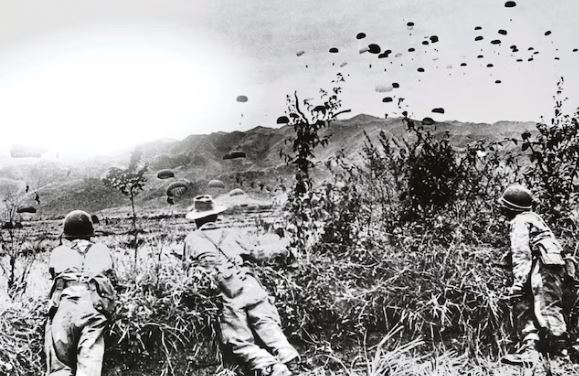
Military failure is everywhere. As managers and leaders, we can learn from classic instances of so-called military incompetence. There are many examples from the disastrous Allied landing at Gallipoli in World War I, to operation Barbarossa, the failed Nazi invasion of Soviet Union in World War II and to the 1954 Battle of Dien Bien Phu in French Indochina which resulted in catastrophic defeat for the French.

However, few examples could be more humorous, without loss of human life and just as instructive for managers on ‘what not to do’ as the Great Emu War of 1932.

What are the characteristics of an emu?

They are an enormous bird second in size to the African ostrich. They cannot fly and have an average height of over 2 metres, very strong legs, can run up to 50 kph, and naturally flock in large numbers.

Background to ‘the conflict’

Following the end of World War I, the Australian government ‘rewarded’ returning soldiers with farm land. In Western Australia the veterans or ‘soldier settlers’ were allocated farmland which was very marginal for the growing wheat. Very few were experienced in agriculture. To add to the farmers’ challenges a severe drought hit, and 20,000 starving emus came in from the desert and commenced in destroying the existing wheat crop. Furthermore, this occurred in the Great Depression with a background of rising unemployment and falling wheat prices

The veterans lobbied their local parliamentary representatives to provide assist to rid the country of the emu ‘menace’. A Western Australian Senator, Sir George Pearce, recommended that the veterans and troops should tackle the problem head-on and hunt the birds. The government needed to show support for the famers. As the saying goes, “never waste a good crisis”.

What better opportunity for politicians than to provide a well-publicised effort to protect the former veterans who were ‘doing it tough’ and call in the army?

So certain that the operation would be a success, a cinematographer was hired from Fox Movietone to cover the hunt.

On the first day of ‘war’ less than 50 birds were killed out of the thousands shot at. The biggest misconception about the Emu War is that it was a massive assault staged by the Australian military. It was just three soldiers, a small truck, two Lewis machine guns, and 10,000 rounds of ammunition. A machine gun was mounted on the truck, but the truck could only travel a 30 kph over rough land, no match for an emu who could run at 50 kph and the truck could only chase one emu at a time. Furthermore, the soldiers couldn’t stabilise a machine gun on the vehicle or shoot with any accuracy.

The Great Emu war lasted less than six weeks – 986 emus were killed, and 9,860 rounds of ammunition was expended. Ten rounds per dead emu – not a great kill ratio although the only loss for the soldiers was their pride!

A more effective plan was later introduced. Rather than use brute-force the government set aside money for bounties. The farmers did the hard work of tracking and shooting the emu menace. Two years later in 1934, nearly 58,000 bounties were claimed.

What lessons are there for us as managers in the ‘great emu war’?

Here are three worth considering.

  1. Be aware that politicians do not have the answers for problems of business. Many, in particular politicians today have no business or managerial experience. Governments overpromise and under deliver. The management of the COVID pandemic is a good example.  
  2. Technology is not the answer. Technology is an enabler and not the magic bullet to solve the problem. Having a motor vehicle and machine guns did not solve the problem as it was not clearly defined.
  3. The most successful solutions involve the parties directly involved in the problem. By offering bounties, the farmers had a direct incentive to make it work – and they made money out of the bounties and reduced the number of emus attacking their crops.

#thenetworkofconsultingprofessionals

Another lesson from the farm…

“Our relationships will eventually grow stale unless we are diligent about directing and cultivating them”

Todd Henry – International speaker

Having grown up on a rural property in north-western New South Wales, Australia, I have written several blogs about lessons we can learn as managers based on growing up on a farm. There were many things I observed and experienced that can be related to business and life. From resilience, the importance of ongoing maintenance like chipping a weed called the Bathurst Burrs and the lessons of ‘the cow pat’.

Another lesson comes to mind.

The growing of crops. One crop my father grew was wheat. Wheat needs constant cultivation combined with adding fertiliser and weed control to get the best outcome. The ground needs to be ploughed to remove weeds and make the soil friable and ready to accept the planting of seeds. When seeding, fertiliser needs to be added at the same time to improve yield. And you need rain!

The growing of wheat is a great analogy that can be applied to being a successful manager. Spend time cultivating your connections, fertilise your contacts, provide help when needed, keep the weeds under control by not losing contact and maintain your contacts by watering them.

This has worked for me over the long term with amazingly positive outcomes. Thirty years ago, a recruitment consultant placed me in a job. Over the years I kept contact with him and 5 years ago another opportunity came up. He found a logistics consulting project for me, and I’m still involved with the business as a board member.

Another example relates back to when I was a casual university lecturer. I kept in touch with several of my former students. This resulted in one former student giving an important contract to our logistics business. Another was employed by me for one of my clients and this was after over 15 years since graduating.

The example with the most impact was a former work colleague and student. He convinced me to do my master’s degree. Later he told me about a job vacancy with his former employer. Much later he provided the conduit to sell our logistics business to an Asian based freight forwarder.

What are the considerations with networking?

Most importantly when cultivating your network, it needs to be mutually beneficial but with more give than take. No long-term relationship whether personal or business will endure if it is only one way. Managing is not about platitudes, big schemes and projects. It is about constant attention to relationships, continually seeking ways to interact with your network regularly and adding value.

Do you think that the cultivation analogy is a good one for you as a manager or business owner, both personally or professionally?

#thenetworkofconsultingprofessionals

What is the difference between strategy and tactics?

What is the difference between strategy and tactics?

‘Strategy without tactics is the slowest route to victory. Tactics without strategy is the noise before defeat.’

Sun Tzu

In business we often confuse tactics with strategy. The media refer to some business’ actions as strategies when in fact they are in reality; tactics. For example, with the recent COVID outbreak in Australia, the media referred to hotel quarantine and border closures as strategies when in fact they were tactics in the strategy to stop the spread of the virus.

A tactic is an action or event to achieve a desired outcome.

A strategy is an integrated plan which helps an organisation achieve its objectives.

Tactics are usually designed by middle-level management, whereas top-level management create and implement strategy.

For example, if the strategy of a business is to increase profitable market share (a top-level management action), a tactic could be to increase prices or reduce discounts combined with a marketing campaign (middle level management actions). Tactics often change with the changes in market or economic conditions (the present), whilst strategy remains same for a long period (the future).

If the strategy is wrong, the best tactics in the world will not ensure the strategy is successful. Military conflicts are often good examples where despite sound tactics, a strategy that is wrong will never be achieved. In the Vietnam War, first the French and then the Americans failed due to poor strategy.

A better example is the nasty civil war called ‘the Bush War’ in Rhodesia (now Zimbabwe) from the early 1970s to 1979. In June 1977, Time Magazine reported that “man for man, the Rhodesian army ranks among the world’s finest fighting units“. The Rhodesian military developed a tactic called ‘Fireforce’.

It was a counter-insurgency military tactic using helicopter-borne and parachute infantry to envelop guerillas in the bush before they could flee. The operational assault usually comprised of a first wave of 32 soldiers carried to the scene by three helicopters and a Dakota aircraft, with a command helicopter and a light attack Lynx aircraft in support.  One of the advantages was its flexibility. When contact was made, typically with 6 to 12 insurgents, the 32 soldiers of the Rhodesian Army had immediate superiority on the ground. The tactic quickly yielded an 80–1 kill rate by trapping the guerillas and eliminating them by air and ground fire. However, despite its success measured by the kill ratio, it was not enough to keep the Rhodesians from losing the war, or realising that the war could not be won. KPIs need to measure progress towards an organization, or in this case a government’s strategic goals. Clearly kill ratios, which were also used by the Americans in the Vietnam War were not the right KPIs to meet the strategic goals.

What the Rhodesian Government failed to understand that the ‘bush war’ was political in nature. It was a war for the support of the Rhodesian Africans, not the minority white population. The right-wing government was ill equipped politically to win over the Rhodesian Africans to their side. The government’s budget and efforts were directed to the military side of the war and not the political one. The strategy of stopping majority rule was flawed, politically, morally and geopolitically. Having the best counter insurgency military in the world could not prevent black majority rule.

Also, a minority led white government, not recognised by many countries surrounded by hostile African nation states was never going to prevent guerilla insurgents from entering the country. Furthermore, in the later stages of the war the apartheid government in South Africa withdrew support further isolating the Rhodesian government. There was no plan B until the last year of the war and by then it was too late.

In conclusion, strategy is about choosing the best plan for accomplishing long-term goals of an organisation. Clearly kill ratios, which were also used by the Americans in the Vietnam War were not the right KPIs to meet the strategic goals. Tactics are normally the instant reaction of the organisation, in response to the changing environment whether political or business.

Can you think of examples of where tactics would successful, but the overall strategy failed?

The accompanying table below is a good reference for identifying what is a tactic and what is a strategy.

Basis for ComparisonTacticsStrategy
MeaningA carefully planned action made to achieve a specific objective is Tactics.A long-range blueprint of an organization’s expected image and destination is known as Strategy.
ConceptDetermining how the strategy be executed.An organized set of activities that can lead the company to differentiation.
What is it?ActionAction plan
NaturePreventativeCompetitive
Focus onTaskPurpose
Formulated atMiddle levelTop level
Risk involvedLowHigh
ApproachReactiveProactive
FlexibilityHighNormally less flexible
OrientationPresent circumstancesThe future

#thenetworkofconsultingprofessionals

Do you have a “Beppo” Schmid in your organisation?

Do you have “Beppo” Schmid in your organisation?

“Never interrupt your enemy when he is making a mistake”

Napoleon Bonaparte

So, who was Joseph “Beppo” Schmid?

In World War II, Schmid was German Luftwaffe Field Marshall Herman Goering’s Intelligence chief and personal friend.  The provision of useful intelligence, particularly during the Battle of Britain in 1940 was of less importance to Schmid than his career. He was shrewd, calculating and ambitious. He removed any staff that could be considered a threat to his ambitions and replaced them with those who would not challenge him. Schmid was intent on ingratiating himself with Goering by only telling him what he wanted to hear.

One of the consequences was poor intelligence. This was a major contributing factor to the defeat of the Luftwaffe in the Battle of Britain, leading to the deaths of thousands of German airmen and the virtual destruction of the Luftwaffe.  In early 1940 Schmid’s team produced the ‘Study Blue’ report. It was based on a book about British industry ordered directly from a London bookshop, as well as British newspaper cuttings, and was supplemented by reconnaissance photographs. The study was used for planning the Luftwaffe’s campaign against Britain. It summary, the report underestimated the capabilities of the RAF in aircraft, pilots, aircraft production and technology, and overestimated the technical capabilities of the German aircraft, probably tempered by arrogance following the success of Blitzkrieg in the invasion of France.  

Throughout the Battle of Britain, Schmid’s intelligence was suspect. In August 1940 another report predicted that Britain would run out of fighter aircraft and that Germany was shooting them down at three times the actual attrition rate. Furthermore, they underestimated the number of RAF fighters by a factor of three. With unsustainable aircraft losses, the German objective to either compel Britain to negotiate a peace settlement or be invaded, failed. By early September 1940 Hitler’s Operation Sealion, the invasion of Britain, was postponed.

As managers, what lessons as managers can we learn from “Beppo” Schmid?

 Here are 3 management lessons…

1. Beware of egos and unbridled ambition

Sadly, throughout my career I witnessed too many examples of egos and blinding ambition endangering a business and, in the process, adversely affected employees’ lives. One of my former business partners refused to acknowledge that a customer he had secured was costing our business thousands of dollars a week because he didn’t want to admit that he had under quoted and didn’t want to face the customer. His ego would not allow him to admit the mistake.    

2. There is no substitute from doing your homework

The results of bombing were consistently exaggerated, probably through inaccurate claims and over-enthusiastic reports. Following the unexpectedly quick fall of France there developed an atmosphere of perceived victory. The Luftwaffe leadership and in particular Goering, became increasingly disconnected from reality. Doing his homework properly, rather than telling Goering what he needed to hear, Schmid could have prevented the massive loss of lives and material which weakened the Luftwaffe. They never fully recovered before Germany’s defeat in 1945.

3. Incompetent leadership severely impacts an organisation

A fish rots from the head first. Goering was an incompetent leader who surrounded himself with people who were afraid to say “no” – afraid to give him bad news and probably feared for their lives. Leadership whether poor or good has a massive impact on an organisation’s success and the lives of its employees. Leadership comes with responsibility and more importantly, accountability. Compare this with the leadership displayed by the RAF.    

What do you think are the lessons are?

#thenetworkofconsultingprofessionals

Are you an intelligent boss?

Are you an intelligent boss?

‘In a high-IQ job pool, soft skills like discipline, drive, and empathy mark those who emerge as outstanding.

Daniel Goleman – author of Emotional Intelligence

It is often assumed that good managers are intelligent, and this is what makes them successful. Is this what really occurs in the world of work? This depends on how intelligence is defined.

Do you consider yourself an intelligent manager?

What is IQ?

IQ stands for Intelligence Quotient, a common measurement of human intelligence. The IQ test was originally developed in France by two psychologists, Binet and Simon, in the early 1900s – and their work still provides the basis of the tests used today. IQ tests were further developed throughout the 20th century and have been used in many psychological studies as well as in business, education, the military and government.

What is EQ?

EQ stands for Emotional Intelligence and the concept emerged in 1995 with the publishing of a book called Emotional Intelligence by Daniel Goleman. It sold over five million copies. Goleman claimed that EQ discounted IQ in determining success.

Why is EQ now considered more important than IQ for success in business today?

Have you met or worked with people who are highly intelligent but have a low EQ? They frequently display a lack of empathy and initiative, are arrogant, refuse to listen to other points of view, are insensitive and argumentative, blame others, never hold themselves accountable and are unable to control their emotions.

I certainly have, and there is nothing more demoralising and frustrating than working for such people. Low EQ people often suffer from ‘I’ strain – ‘I did this’, ‘I did that’ and ‘I am very important just listen to me’. One of the main impediments to achieving better outcomes is allowing egos to override common sense. An important aspect of high EQ is being able to manage your ego.

People are considered intelligent if they can reel off facts, retain information or have high technical skills. However, this does not necessarily make them, or the organisation they work for, successful.

While we may, as managers, pride ourselves on our technical skills, industry expertise, and innovation, this does not make us successful managers or leaders. Being the smartest person in the room does not necessarily equate to success.In successfully managing organisations today, we are increasingly dependent on ‘soft skills’ that build relationships inside and outside the organisation. It is essential to be able to negotiate, collaborate and compromise by listening, communicating, being flexible, and being able to work with others. Management by walking around is a good example of using EQ skills. Poor levels of EQ can make or break customer relationships, create and perpetuate poor work environments and reduce constructive communication with managers, colleagues, peers and subordinates. Michael Gerber, in The e-Myth Revisited, .

According to Harvard Business Review, EQ is ‘the key attribute that distinguishes outstanding performers’ and is the leading differentiator between employees whose IQ and technical skills are approximately the same. People with high EQs tend to be happier and have more fulfilling personal lives – as they are more self and socially aware, manage their emotions and tend to be more engaged with other people and events.

The good news is that EQ can be taught. However, it depends on your mental outlook and willingness to change. It can be improved through coaching, training and good mentoring.

Here are three questions that you can ask yourself to gauge your level of EQ:

  1. How would your employees describe your leadership style?

Ask this to gauge self-awareness. Does it sound realistic when you answer this question? Do you mention any shortcomings you are trying to address?

  1. Could you do a SWOT analysis on yourself?

Would your colleagues or subordinates agree with your self-assessment profile?

  1. Do you know the interests and family circumstances of your work colleagues?

This is asked to gauge your level of empathy with others.

#thenetworkofconsultingprofessionals

Is a code of conduct important?

Code of Conduct

Is a code of conduct important?

‘Don’t violate your own code of values and ethics, but don’t waste energy trying to make other people violate theirs.’

Melody Beattie – American self-help author

What is a code of conduct and is it important for a business?

A code of conduct is a set of rules or standards that capture the beliefs and ethics on behavioural expectations in the organisation. There are many types of business codes ranging from financial reporting, conflicts of interest, health and safety, and communication to employment discrimination. A code of conduct sets out a common standard of performance for employees, while respecting the rights of employees and providing a framework for acceptable behaviour.

One of the best examples of a code of conduct is Rotary International’s Four-Way Test for use in professional and personal relationships:

  1. Is it the TRUTH?
  2. Is it FAIR to all concerned?
  3. Will it build GOODWILL and BETTER FRIENDSHIPS?
  4. Will it be BENEFICIAL to all concerned?

Codes of conduct are linked to corporate or organisational values and the mission statement. A good demonstration of the use of corporate values as a guide for decision-making is this example from one of the transport companies I worked for:

‘If you ask yourself the following five questions and you can answer ‘yes’ to all of them confidently, you should go ahead and make the decision:

  • Will the decision help me exceed customer expectations?
  • Is it respectful to all individuals – customers, suppliers, employees and community residents?
  • Does it further our goal of continuous improvement?
  • Is it in the long-term best financial interests of the company?
  • Can I do it safely and ethically?’

If the answer to any of these questions is ‘no’, then the decision you are about to make is unacceptable.

The values, in the form of a card that could fit into a wallet, were given to all staff so that the values could be referred to when required.

In our logistics business, we had a values statement which was as follows:

‘Customers and employees are our greatest assets. The company is committed to providing the highest level of service by working with its customers in an environment of continuous improvement through the introduction of new technology, superior systems, staff training and development.

Work performance and service quality is enhanced by giving responsibility to supervisors on the shop floor. The flat management structure drives the efficiency and effectiveness of the business. It has enabled the company to react quickly to opportunities and requests from current and potential customers.’

However, the statement did not set out specific values driving organisational behaviour – such as work standards, accountability, being open and fair, or personal interactions and behaviour. It did not summarise what needed to be done – for example, ‘we will celebrate success and encourage initiative’ – and what will not be done – for example, ‘we will not tolerate poor performance or rude and condescending behaviour towards others’.

Why was this important?

Because we did not have these values clearly defined, we could not use it as a basis for managing interpersonal conflict when the business was struggling in one area. The failure to accept responsibility for continuing unacceptable performance by a senior manager  who was in denial, and not having a clear values statement, resulted in an acrimonious and deteriorating situation.  Unfortunately, I did not manage the situation constructively at the time and, out of sheer frustration, I allowed my emotions to override a common sense approach to resolving the situation satisfactorily for the business.

Conflicts within organisations are inevitable. The challenge is to manage conflicts when they arise in a constructive way.

Does your business have a code of conduct?

Does it clearly set out the acceptable standards of behaviour as well as a framework to manage conflict?

For example, does it say ‘we will respect and support each other as individuals and members of the team’ and ‘we will recognise both group and individual results’ and ‘we will not ignore achievements or tolerate poor performance’?

#thenetworkofconsultingprofessionals

How NOT to celebrate Christmas…

How NOT to celebrate Christmas…

“Every Who down in Whoville liked Christmas a lot

But the Grinch who lived just North of Whoville did not!

The Grinch hated Christmas! The whole Christmas season!

Now, please don’t ask why. No one quite knows the reason.

It could be, perhaps, that his shoes were too tight.

It could be his head wasn’t screwed on just right”

From the book “How the Grinch Stole Christmas!” by Dr Suess (Theodor Geisel)

So, what relevance does a children’s book of rhyme about a grumpy, solitary creature who tries to end Christmas by stealing Christmas-themed items from the homes of a nearby town Whoville have for managers?

In previous Christmas blogs, topics covered  included the need to have rules on behaviour, the importance of taking the opportunity to celebrate, thank staff and display leadership as well as a time for renewal and evaluation and setting the tone for the next year

John Cleese the famous comedian and Antony Jay one of the authors of TV show “Yes Minister” made a fortune from training videos that emphasised what not to do. With the large number of articles on management and leadership easily available today, I find it inconceivable that managers still display appalling examples of how not to do things. In these times where communication is spread quickly through social media it is even more important to ensure communication to staff in particular, is considered and done carefully.

This year I was sent a copy of the following Christmas notice posted on a company notice board.

From the text it would appear there have been problems of behaviour at the company’s Christmas parties in the past. As a manager, what do you think of this Christmas message to staff?

Here are some questions to ponder…

What is the underlying message in this Christmas notice?

Is it positive?

Would this communication help lift employees’ morale and get them working to improve performance?

What tone is set for the future?

What do you think of this company’s culture?

Do you think that culture effects profitability?

Between January 2016 and late 2019, the price of the commodity this business mines rose 40%, however in two of these years this company made losses and did not pay a dividend. Anecdotally it would appear that culture could be a contributing factor to less than satisfactory financial performance.

My advice to managers and business owners is “don’t be a Grinch-like at Christmas”. It is traditionally period of goodwill. Celebrate the occasion display graciousness, thank your staff and their families…

Take advantage of the opportunity, provide hope for the future and display leadership.

And to all the readers of this blog, thank you for subscribing and I wish you and your families the compliments of the Season and best wishes for the New Year.

Lessons on leadership and making a difference….

Lessons on leadership and making a difference….

“In a gentle way, you can shake the world.”
Mahatma Gandhi –  humanitarian

I have just completed reading a book called Toilet Warrior by my friend Mark Balla. The book details how a single person can ‘make a difference’ in the world by having an inspiring vision, energy and a plan. These are also the foundations of running a successful business.

In a chance meeting on a crowded suburban train in India in 2014, Mark was invited to visit Dharavi, a slum of 1 million people living in an area of 1 square mile in Mumbai. This visit changed his life, and more importantly the lives of thousands of others.

The visit to the slum opened his eyes to a major problem that is not often recognised. He noticed that there were very few teenage girls attending school.

Why?

Not because families had forbidden girls to attend school, but because the schools had no toilets. Very few schools in India have toilets or adequate and suitable toilets for the numbers of school children. The primary reason the girls did not go to school was that when they were having their periods they were unable to change their menstrual pads. This also applies to female teachers.

In India, the implications of over 30% of girls not attending school during their periods was that over 25% dropped out when they reach puberty. The follow-on effects of under educated females both socially, culturally and economically is profound.

Mark decided to do something and set up a charity to build toilets in India with the support of Rotary International, an international service organisation whose objective is to encourage and foster the ideals of service in the community and worldwide. However, this was not straight forward and required considerable management skills and perseverance.

Defecating in the open in India with all the related hygiene issues was considered ‘the norm’. Furthermore, if public or school toilets were available they would normally be in an unfit state. Behavioural change became an obstacle. There were also safety issues as girls would wait until dark to go to the toilet and this was when they were very likely to be attacked.

When undertaking the building of the first set of toilets for a school, it became apparent that the designs were not suitable and there were not enough toilets for girls. Biology, fashion and privacy issues had not been considered. Even after the first set of toilets were built a visit 2 years later found that they were not being maintained to an acceptable standard and required a corrective action plan.

What are three leadership lessons from this?

  1. Have a vision – Mark has a vision to remove a major barrier getting in the way of girls completing their education
  2. Management by walking around – the issues of design, maintenance and education were only identified by being on-site
  3. Have a Plan B – when the initial designs were not suitable, they were changed through collaborate and seeking expert advice

To date, well over 40,000 children in Indian schools have been given improved educational opportunities and access to proper sanitation facilities thanks to Mark’s vision and the amazing network that is Rotary International.

I would recommend that you buy and read Mark’s book. All proceeds go to Rotary International’s WASH (water and sanitation hygiene) program.

Here is the link: https://www.toiletwarrior.net/

The underlaying message is that individuals can make a difference with vision, planning and networking.

If you are interested in more details, here is a Tedx talk delivered by Mark:

https://www.youtube.com/watch?v=r3xr13xFfto