Lessons from the Great Train Robbery…

“There’s a difference between criminals and crooks. Crooks steal. Criminals blow some guy’s brains out. I’m a crook”

Ronnie Briggs – Great Train Robber

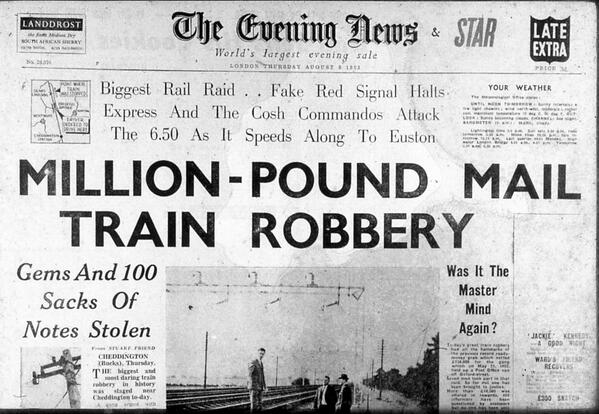
Sixty years ago, this month on 8th August 1963 the Glasgow–London Royal Mail Train was held up by 15 men, wearing helmets, ski masks, and gloves. The train was carrying mostly used bank notes to be destroyed. This was known as the Great Train Robbery.  The ringleader, Bruce Reynolds was a known burglar and armed robber. Just over £2,600,000 (£50m today) was stolen in an audacious and apparently well-planned heist aided by inside information. It only took 15 minutes. No firearms were used, although the train’s driver was seriously injured when bashed with a metal bar.

Before the Great Train Robbery, Reynolds had organised a gang and conducted a successful £62,000 airport robbery. Flush with this success, Reynolds began searching for ‘the next big one’. Upon identifying the opportunity, Reynolds realised that he needed help from the London underworld as his original gang could not do the job alone.

The train was stopped when the robbers turned off a green track signal with batteries and turned on a red signal. Approximately 120 mail bags were taken from the train to a farm hideaway, where it was divided up. During the robbery, one of the gang told the postal staff on the train not to move for 30 minutes. This information suggested to the police that the hideout was within a 30-mile radius.

On hearing on the radio that the police were narrowing the search, the robbers hurriedly left the farm the day after the robbery. Only five days after the robbery a local farm worker had noted suspicious vehicles at a neighbouring farm and advised the police. When two police came to the farm, they found the Landrovers and truck used in the robbery, plus bedding, food, post office bags, banknote wrappers and a monopoly board. Part of the plan was to burn down the farmhouse. However, the robbers in their haste left fingerprints on a tomato sauce bottle and the monopoly board. Apparently, the robbers had played monopoly with real money from the heist!

The robbery had attracted far more police attention than anticipated by the robbers. It also captured the imagination of the public and the media. A reward of £250,000 was offered. A breakthrough came when an informant gave the police a list of names. Some of the names were matched to the fingerprints from the farm. With this and other evidence, by Christmas 12 robbers had been caught, convicted and sentenced up to 30 years jail.

Only three of the robbers remained at large. Reynolds and two others went abroad to Mexico and lived the highlife. By 1968 Reynolds had spent most of his ill-gotten gains. He planned another large robbery and returned to England where he was arrested. Ronnie Biggs escaped from prison in 1965, fled first to Paris, then after undergoing plastic surgery travelled to Australia, and finally to Brazil in 1970. He remained at large as there was no extradition treaty between Brazil and the UK. In 2001 after suffering several strokes, he returned voluntarily to the England and was rearrested.

Are there any lessons here for managers in this ‘crime of the century’ (apart from the obvious lessons of crime not paying and it’s not a good idea to play Monopoly with real money)?

The robbery was well planned and executed with military precision. But by Christmas in 1963, 12 of the robbers had been arrested. Hardly a sign of success!

Here are three lessons I think we can take away from the Great Train Robbery:

  • 1. Have a vision.  

Reynolds as the leader was the brains behind the daring heist. Following the ‘success’ of the airport robbery, Reynolds wanted a bigger challenge. In the dialogue from a movie of the robbery, Reynolds was quoted as saying:

“You’ve got to dream big.  What are we here for if we don’t make our mark? It was never just about the cash.  It’s the buzz.  Building the team, finding the job, planning the job, carrying it out. It’s the camaraderie. Trusting other men with everything you know. With your life.”

Although this is a fictional quote it is probably is an accurate depiction of what occurred. Reynolds had clear vision – in other words a vision statement! The power of vision is very powerful. An ingredient of a successful business is to have a very clear vision.

  • 2. Plan thoroughly.

With a clear vision, Reynolds meticulously prepared and planned the robbery. He realised that the scope was beyond his immediate circle’s skills and quickly expanded the size and skills of the gang.  He was faced with needing specific skills to ensure success. This included how to fake the train signals to stop the train and how to drive the train once it was held up. Sound planning allowed the initial success of the robbery – in 15 minutes.

  • 3. You cannot plan for all eventualities and you should have a plan B.

Despite the meticulous planning, the robbers did not plan for all eventualities. In reality, in business it is also not possible to plan for all eventualities. However, you should always have a Plan B. A contingency plan if ‘things go wrong’. When calm leadership was required, the gang panicked when they heard that the police were searching within a 30-mile radius of the robbery. They left the farm and didn’t adequately cover their tracks. In other words, despite the planning there was poor execution which resulted in the robbers being caught.

In concluding, there is nothing like a good story to demonstrate a point and the Great Train Robbery certainly does this!

What do you think?

Note: I am not condoning the robbery that left the train driver seriously injured. Just using a well-known story as an example for managers. The robbery was a success, but many things went wrong after that.  The amount stolen was so much more than expected that it sparked a major investigation plus “crime of the century” publicity. The police response was swift and successful. An example of sound management and leadership.

#thenetworkofconsultingprofessionals
Another lesson from the island of St Kilda

“Facts do not cease to exist because they are ignored.”
Aldous Huxley – British Author

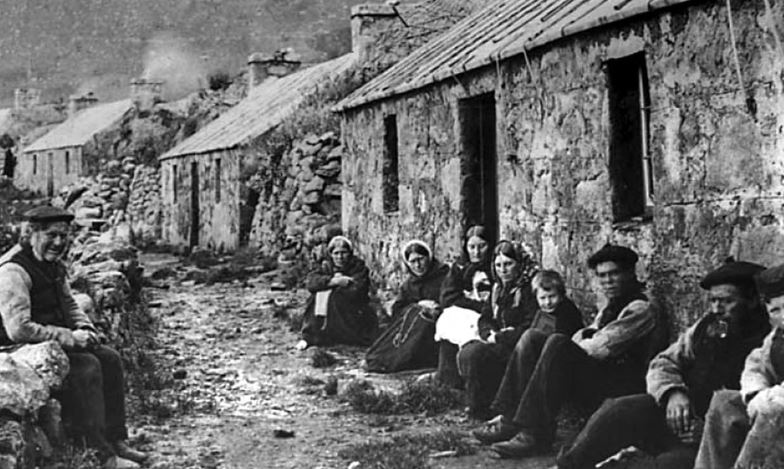
In a previous blog I used the backdrop of the remote isolated and windswept island of St Kilda off the west coast of mainland Scotland and the suburb of St Kilda in Melbourne, Australia. The moral of the story was THAT as managers, we should never accept things at face value. Once again, I’m going to use the island of St Kilda as a backdrop for another lesson for managers.

Background

On St Kilda the climate was so extreme, and the wind was sometimes so strong that the islanders’ sheep and cattle could be blown over the cliffs.  During the 19th Century, the island’s population was around 100 people. With increasing contact with the outside world in the 19th and early 20th centuries, the island’s population gradually declined. In September 1852, 36 emigrants from St Kilda left for Melbourne. Sadly, only 17 survived the journey, the others succumbing to diseases they had no immunity to due to their isolated existence. The island never fully recovered from this event, both physically and psychologically.

After the World War I, most of the young men left the island. The population fell from 73 in 1920 to only 37 in 1928. In 1930, the last of the island’s inhabitants were evacuated to mainland Scotland, ending hundreds of years of isolation, poverty, and deprivation.

What caused the demise of the population of St Kilda?

Obviously, increasing contact with the outside world provided the opportunity for the islanders to see that an easier and better standard of living could be achieved if they left the island. However, one of the main reasons can be traced back to the mid-19th Century with the arrival of Rev John Mackay, a minister in the new Free Church of Scotland. Mackay was a religious zealot. He introduced a routine of three two to three-hour services on Sunday. No work was permitted or conversation, only recitation from the Bible was allowed.

Although Rev Mackay left the island in 1889 his legacy lived on. Mackay denied the islanders outside influences and being the only English speaker on the island (the islanders spoke Gaelic) he was able to keep them in a state of ignorance, combining this with religious zealotry.

Linked to societal ignorance, one of the sadder aspects of St Kilda’s life was the horrendous infant mortality rate. One out of every two babies born would not survive their first year of life, dying of infant tetanus. When a child was born on the island, fulmar (sea bird) oil, was applied to the baby after the umbilical cord had been cut. The oil was not stored in sterile conditions.

In 1891, two years after Rev Mackay left a midwife arrived from Glasgow.  She brought improved midwifery skills, hygienic nursing practices and education and the practice of dipping the umbilical cord in fulmar oil ceased. This reduced childhood tetanus, and it was virtually eliminated. Unfortunately, by this time the situation on the island was irreversible. The population was stagnant, and many wanted to leave.

What can we learn as managers from this sad story of the demise of the people of St Kilda?

Organisations and businesses have similar characteristics to small communities like St Kilda. In particular, family-owned businesses often fail to bring in new blood and ideas and this can lead to a gradual demise of the business. Often when new blood comes into an organisation, the owner and the family refuse to change and this undermines the newcomer’s position. I witnessed a former client who claimed he wanted to ‘step back’ from the day to day running of the business. Sadly, he failed to share information, didn’t communicate in a constructive and rational way, and often made decisions behind the new manager’s back. Despite claiming he wanted to ‘step back’, he couldn’t let go and didn’t know how to. He then fired the incumbent because he claimed he had “failed”. Employees on experiencing professional management and then seeing a return to the old behaviors, started to leave. People join organisations but leave due to bad managers.

In my experience, keeping people ignorant is never a wise strategy for managers. I have found that often sharing information can improve performance. When I was managing a major trucking business, despite ‘advice’ to the contrary, I shared weekly driving performance statistics with the linehaul drivers. Driving performance improved, with reduced speeding and fuel consumption and fewer accidents.

All organisations have life cycles and they need to be regenerated with ideas and people externally.

Postscript: I do want to stress that many factors contributed to the decline and death of the community of St Kilda, with health-related problems being one of the main causes. I visited the islands in mid-2023 and it was a very interesting trip – history, birds and landscape. I would recommend a visit – a real step back in time.

#thenetworkofconsultingprofessionals

Rewriting history…

“Who controls the past controls the future. Who controls the present controls the past”

George Orwell – British author

My great great grandfather William and his wife Jane emigrated to Australia from the Orkney Islands, north of Scotland in the late 1850s. Initially he worked as indentured shepherd on a squatters run (sheep station) before conditionally purchasing land on which to farm. According to family ‘history’ he carried a newspaper clipping of the sinking of the ‘Dunbar’ in his wallet.

The ‘Dunbar’ was a sailing ship that operated on the Britain to Australia route in the 1850s. It was the pride of the Dunbar company fleet. It was modern (for those days) and fast. On the evening of 20th August 1857, the ‘Dunbar’ was wrecked whilst attempting to enter Sydney Harbour during a storm. There was only one survivor and 121 perished, many of whom were prominent and wealthy Sydney residents returning from England. The impact on the small Sydney community was immense. Many of the citizens viewed the wreck from the cliffs near the entrance to Sydney Harbour, witnessing bodies washing up and sharks feeding on the carcasses along with the wreck debris. An inquest was held within a week of the sinking. After only one day it found that the cause of the tragedy was an ‘error of judgement’ and ‘did not attach any blame to Captain Green or his officers’. However, this did not stop the politicians and the local media of the day in particular, from blaming the dead captain for the tragedy. It was far better to blame the dead captain than the contributing factors of the inadequate pilot service, lack of lights at the entrance to the harbour or the poor location of the Macquarie lighthouse.

So why did William carry this clipping in his wallet?

Because he and his wife were booked to sail on ‘The Dunbar’ and escaped certain death?

An interesting family story, but was it true?

The ship William and Jane sailed on, the ‘John Bunyan’ left Liverpool on 9th August 1857 and arrived in Sydney on 27th October 1857. The ‘Dunbar’ left Plymouth on 31st May 1857 and was wrecked on 20th August 1857. There are two inconsistencies here. The ‘Dunbar’ left Plymouth over two months before the ‘John Bunyan’ sailed from Liverpool. It is extremely unlikely that William and Jane would have been in England two months before they sailed. They were poor immigrants from the wet and windy Orkneys. They could not have survived this period of time waiting in England. The second inconsistency was that they left from Liverpool, a far closer port to Scotland than Plymouth which is located in the south of England.

So, the story was simply ‘family folklore’.

What are the lessons here for managers?

Don’t believe everything that you are told?

Check your facts and get to the source and question everything?

How often in organisations, is a person used as a scapegoat to ‘rewrite’ the organisation’s ‘history’ and justify new management?

In the book 1984 by Eric Blair (better known as George Orwell), the ‘hero’ of the novel, Winston Smith was introduced to the concept of ‘re-writing’ history when working at the Ministry of Truth. The Party understood that by rewriting the events of the past and controlling the narrative of history, they could maintain their position of authority. Captain Green of the ‘Dunbar’ was made a scapegoat for the tragedy. This often happens in organisations and in politics.

Note: There may be another explanation for the newspaper clipping story. The Captain and Second Officer were both from Orkney. They could have been known to my ancestors, although that is unlikely as they were from different islands – or perhaps they ‘felt lucky’ that they did not suffer the same fate as the passengers and crew on the ‘Dunbar’. By the time my ancestors arrived in late October 1857, Sydney was enmeshed in the ‘Dunbar’ tragedy – there had been wide media coverage, several books had been written, paintings completed, and artifacts from the wreck sold. They certainly would have known about the tragedy.

Who knows?

#thenetworkofconsultingprofessionals
Management lessons from a long-forgotten battle…

“Arrogance, ignorance, and incompetence. Not a pretty cocktail of personality traits in the best of situations”

Graydon Carter – US Journalist

70 years ago this month, the colonies of French Indochina were lost when the Communist Viet Minh guerilla army defeated French forces in Vietnam in the Battle of Điện Biên Phủ.

Background

Following the Japanese surrender in World War II, the Viet Minh, a Vietnamese Communist guerilla army declared independence from France. France did not recognise the new government, and the first Indochina War began when the French navy bombarded the port city of Haiphong in northern Vietnam in November 1946, killing thousands of Vietnamese civilians. The war continued for another seven years and by 1953 it was at a stalemate. It had not been going well for the French. The war was unpopular, costly, and the French political environment was unstable. During the seven years of war, there were 16 changes of government in France and 13 changes of prime minister. Clearly, domestic political instability helped undermine the war effort.  

Setting

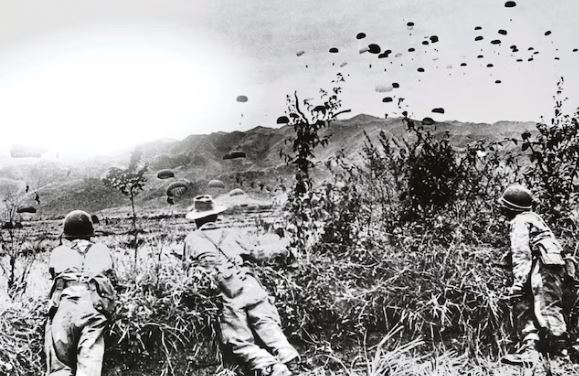
A French needed a solution to break the stalemate, so negotiations could be conducted. The French plan was to create a military situation which would bring the Viet Minh to the negotiating table. In late 1953, 2,000 French paratroopers were dropped deep in Viet Minh held territory in north-western Vietnam at a town called Điện Biên Phủ to establish a heavily fortified base.

The aim was to cut the Viet Minh supply lines from Laos and provide a base from which to attack them in the countryside. The French strategy was to draw out the Vietnamese and destroy them with superior firepower. They believed they held all the military advantages – the military equipment, the planes, trained soldiers, and the artillery. This strategy was called the hérisson (‘hedgehog’) concept. It was based on the success of the 1952 Battle of Nà Sản, where a fortified French camp supplied only by air repeatedly beat back the Viet Minh who suffered heavy losses. By repeating this strategy at Điện Biên Phủ on a much larger scale, using superior artillery and air support, the French believed they could defeat the Viet Minh in set piece battle. But the Viet Minh were fighting a guerilla war.

Outcome

In March 1954, the battle of Điện Biên Phủ began with a massive artillery bombardment by the Viet Minh. They were strategically positioned in caves and dugouts in the hills above the base. This lasted until May when 16,000 troops French were soundly defeated.

With over 50,000 Viet Minh troops surrounding the base, roads to supply the French garrison were cut which necessitated being supplied by air. The French believed that the Viet Minh had no anti-aircraft capacity and limited artillery. This proved to be incorrect, and the planes were forced to fly higher and higher, which resulted in supplies often falling into the Viet Minh’s hands.

The Viet Minh leader, General Giáp had learnt from the losses at Nà Sản. He spent months planning the transporting and stockpiling ammunition, and placing heavy artillery and anti-aircraft guns in tunnels in the hills around the French base. Furthermore, thousands of local peasants who supported the Viet Minh, including many women, provided labour, built roads, cleared jungle, transported food by foot and on bicycles and hauled equipment. Over 300,000 people were involved in the Viet Minh logistical effort.

With tenacious fighting on the ground resulting in horrendous causalities, the Viet Minh dug trenches and gradually encroached on the French base, finally cutting the runway. This forced the French to deliver supplies and reinforcements by parachute. As key positions were overrun, the perimeter contracted. While at times, the French repulsed Viet Minh assaults, airpower and superior military equipment did not win the day. The siege ended with a humiliating defeat for the French with 2,293 killed. The Viet Minh suffered horrendous casualties with over 8,000 Viet Minh fighters killed and an estimated 15,000 wounded.

Are there management lessons from the Battle of Điện Biên Phủ for managers today?

Here are three to consider:

1. Do your homework and understand your competitorsknow your enemy

The French underestimated their enemy. The French did not know the number of Viet Minh troops or how many artillery pieces they possessed and, furthermore the French believed that the Viet Minh had no anti-aircraft capability. Not only did they misjudge their enemy, but the French also discounted the huge material support received from the Communist Bloc, in the form of left-over stockpiles of Soviet-made and captured American heavy artillery and anti-aircraft artillery from the Korean War. By comparison, Giáp knew the strength and weaknesses of the French from his spies in the camp, and from the hills overlooking the French base. Unlike the battle of Nà Sản, the Viet Minh controlled the high ground, a major strategic oversight by the French. Clearly, the French did not do their homework, were arrogant and had no Plan B.

2. Technological superiority does not guarantee success

The French strategy was to defeat the Viet Minh in a set piece battle using their superior military technologies and resources – artillery, aircraft, trucks and tanks. Artillery and tanks had been dismantled and delivered by air and then reassembled on the ground. This strategy did not suit a guerrilla war, where having the support of the general population is critical. The Viet Minh’s supply chain did not rely on the use of modern technologies such as aircraft, but instead thousands of peasants carried food, ammunition and the dismantled artillery pieces into hidden and protected positions in the hills above the base. It was a triumph of logistical planning.  

Technology can make you vulnerable. The Viet Minh’s artillery closed the airstrip halfway through the siege, necessitating parachute resupply. The efficient anti-aircraft artillery forced the planes higher, and a high proportion of the supplies fell into the Viet Minh’s hands, including ironically the French Commander’s new general’s stars dropped with a bottle of champagne.

My experience in niche logistics business was when our biggest competitor decided to invest millions of dollars in state-of-the-art equipment and take out a long-term lease on an expensive warehouse. Their major customer, a major retailer was slow to use their services, and they eventually ran out of money and were bankrupted.

3. Be prepared to change your plan when conditions or the situation changes

Giáp’s initial strategy was based on the Communist Chinese “Fast Strike, Fast Victory” model. The aim was to attack the French garrison command centre with overwhelming force to a secure victory. However, the Viet Minh found out that the French knew about this plan, and their technological superiority combined with well dug in troops would have made this strategy fail. Instead, Giáp changed to a siege strategy. This helped ensure success. By mid-1953, the First Indochina War was in its seventh year and for either side there was no obvious prospect of victory. The French had tried a variety of tactics to defeat the Viet Minh, which failed. Exhausted and devoid of ideas, they had no long-term vision or overall strategy, which was in stark contrast to the Viet Minh. They simply defended their positions and reacted to attacks when they occurred.

A road transport client of mine, experienced a drop in revenue by 75%. However, he became far more profitable by changing their strategy, ditching difficult and unprofitable customers.

Do you think there are any other lessons for managers?

#thenetworkofconsultingprofessionals

A management lesson from Erik the Red and the Vikings

“Wisdom is welcome wherever it comes from” – an old Viking saying

The Viking series on TV has become a very popular program with tales of murder, treachery, and intrigue. In real life the Vikings were the first recorded explorers to set off into the unknown with colonial ambitions. This is distinct from empire builders such as the Persians and Romans who massed large invading armies. The Vikings originated in Scandinavia and plundered their way through Europe, into the Middle East and through to the edge of Asia. They also explored and settled in the north Atlantic from Iceland, then Greenland through to North America.

The Vikings were primarily feudal farmers, where the ownership of land and animals was important. As the population grew in the settlements along the Scandinavian fiords, this placed a strain on resources. Combined with harsh winters there seemed little alternative but to search for further settlement elsewhere. In the north Atlantic, the first place settled was Iceland, followed by Greenland and then North America. This was over 500 years before Columbus “discovered” America.

The Viking settlement in Greenland provides some lessons for managers today. Greenland was settled in the 10th Century by Erik the Red. Apparently a violent man, Erik was initially banished from Norway to Iceland for unlawful killing, then banished again from Iceland for the same offence. The long winters, anda propensity to drink in excess, combined with a violent temper were clearly a recipe for disaster. Exiled from Iceland, Erik sailed west and “discovered” and settled in Greenland. It was called Greenland as initially it could sustain traditional Viking farming, having been settled in the Medieval Warm Period. The colonies in Greenland continued for another 400 plus years, then disappeared.

So, what happened?

The Norse colonists failed to adapt to the changing climate. With the beginning of the Little Ice Age in the early 14th Century, their farming techniques did not change. Cattle were preferred, but sheep and goats were better suited to the climate. Forests were felled for heating and to smelt iron. Like Iceland where the Vikings settled earlier, the soil proved shallow and was prone to erosion. Timber and iron were critical in maintaining their lifestyle and technological superiority over the local Innuits.

Furthermore, as the climate cooled the annual trade ships from Norway were abandoned as the pack ice prevented the longboats from reaching Greenland. At the same time a more aggressive Innuit tribe arrived in Greenland, armed with bows and arrows. Competing for the scarce resources they were able to hunt seal and whale more efficiently in kayaks than the Vikings, who failed to adjust to the changes. Inevitably fighting ensured, crops failed, the soil eroded, trade with Norway ceased and by the 16th Century the Greenland colony disappeared.  

What are the management lessons?

  • Adapt or Die: The Vikings failed to adapt to the multiple challenges posed by the climate and the Inuit threat. As a consultant, I once had a client whose business was based on supplying engineering services and products to the Australian motor vehicle manufacturing industry. Despite my protestations that he had all his eggs in the one basket and there was a high risk that vehicle manufacturing was likely to cease in Australia he refused to change his business plan. Their largest customer ceased manufacturing in 2017 and the business folded.
  • Know your Competitors: The Vikings failed to understand the threat the Inuits posed as competitors, and either ignored them, or failed to accommodate them through trade and technology transfer. There was a sense of European cultural superiority As noted earlier with the example of the auto engineering business who supplied a major auto manufacturer in Australia, the owner refused to acknowledge that the competitors to his business were offshore.
  • Isolation is Bad Practice: As the climate cooled the trading ships from Iceland and by extension, the rest of Viking Europe failed to arrive due to the Arctic ice. The trade ceased and the Greenlanders became isolated and inward looking. They eventually disappeared. Just like the example of the engineering company who cut themselves off from the real world and went out of business, the Vikings of Greenland were no different.

Can you think of any other management lessons from the history of the Vikings?

#thenetworkofconsultingprofessionals

…it only took 74 days!

“Any leader has to have a certain amount of steel in them, so I am not that put out being called the Iron Lady”

Margaret Thatcher – British Prime Minister

The Falklands War in 1982 between Britain and Argentina lasted only 74 days, culminating in a British victory. This short and bloody conflict has some excellent lessons for managers and leaders.

Background:

Just over 41 years ago this month, on 2 April 1982, the Argentinian fascist military dictatorship decided to invade the British Overseas Territory of the Falkland Islands. They hoped to bolster their dwindling legitimacy by mobilising the long-standing patriotic feelings of Argentines towards the islands, as well as diverting public attention from their ongoing human rights violations against their own citizens and the country’s chronic economic problems.

The islands, 12,000 kms away from Britain are a windswept treeless, damp and cold group of islands. The Falklands had a population of around 2,000 people and its major industry was sheep farming.

In the face of cuts to the military budget by the British Government, the Argentinian military junta miscalculated. They thought that Britain would not respond militarily. However, within three days of the invasion, the British Government under the leadership of Margaret Thatcher had assembled a military task force to retake the islands.

The logistics challenges for the British were immense and the risk of failure high. The Argentinians had 10,000 troops dug in on the islands and were protected by mine fields. Their air force, located on bases on the Argentinian mainland, outnumbered the carrier based British planes by eight to one.

Outcome:

On 13 June 1982, the Argentinian forces on the islands surrendered. Despite the logistics challenges, and setbacks such as the loss of almost all their troop-carrying helicopters on the Atlantic Conveyor the British forces triumphed. The loss of the Atlantic Conveyor meant that the British troops with 80 kgs on their backs had to walk 80 kms in freezing and wet conditions to attack the capital of the Falklands, Port Stanley.

Here are three leadership traits displayed in the Falklands War:

  1. Decisive decision making

The British assembled a military task force within three days of the invasion, despite the fact that the Falklands were over 12,000 kms away from London. This was an example of decisive decision making. In our logistics business, we had a toxic manager who was having a detrimental effect on employee morale and customer satisfaction. One of our partners refused to recognise this situation. When the partner was overseas, we terminated the manager. Within a month, the business he had been managing turned around. Following this action, several supervisors came up to me and said how were pleased that action had been taken. They had been waiting for management action to fix ‘the problem’!

2. Clear purpose

Throughout the crisis, Thatcher’s message was clear and simple. In her communications, there was no doubting her intentions and the purpose was very clear. The British were not going to allow the invasion of British territory by a fascist military dictatorship to succeed.

In my experience, employees respond positively to strong and decisive leadership, especially when there is clear purpose. For example, I was engaged by a business owner to review his business, then introduce standard procedures and managerial disciplines. This message was made very clear to the staff. The culture must change. We would create a work environment through a disciplined and inclusive approach, where employees’ experience, expertise and opinions were valued. The incumbent general manager tried to thwart this approach and was “forced” to leave the business. The staff were relieved. Morale improved almost immediately. They became engaged, as they were now valued and could look forward to the future.

3. Communicate a positive message.

Admiral Sir Henry Leach, Chief of the Defence Force who was instrumental in convincing Thatcher that the islands could be recapture, was asked by her why it was important to retake them.

He said:

“Because if we do not, or if we pussyfoot in our actions and do not achieve complete success, in a few months from now, we will be living in a completely different country whose word counts for nothing.”

Following that advice, Thatcher’s message was positive, and she took the high moral ground.      

  1. We are a democracy
  2. We are not going to have a nasty military junta taking over British territory
  3. We can retake the islands

When I was managing a national vehicle transport company in regional NSW, I was confronted with an unsolvable problem. A private vehicle arrived in our transport depot from Melbourne, several days late. The vehicle owner was arriving in Cairns in far north Queensland the same day. This was three days drive away from Cairns by truck, so he was not going to have his car for the first couple of days of his holidays. Confronted with this problem, I phoned him just as he was boarding the plane in Melbourne offering a solution. A hire car would be provided when he arrived in Cairns until his car arrived. It was a positive message given with authority to solve his problem. The customer continued to use our services for many years.

The British armed forces faced with what were seemingly impossible odds were ultimately successful.

 Do you think that the leadership traits of being decisive, having a clear purpose communicated positively, had a significant bearing on the successful outcome?

‘Real’ leadership is important in any organisation, whether it’s a crisis like the Falklands or not. In my experience, I have found that employees respond positively to good leadership.

#thenetworkofconsultingprofessionals

A New Australia…where?

“The world will be changed if we succeed, and we will succeed! We cannot help succeeding!”

– William Lane: radical journalist and founder of New Australia

Nearly 120 years ago an idealistic bunch of Australians set sail for South America to build their utopia.

In the early 1890s, the Australian colonies were in the grip of recession. It was a period of bitter industrial conflict particularly in the shearing sheds. The strikes resulted in victory for the pastoralists. With the defeat of the shearers and poor economic conditions, a group of 220 idealistic Australians left by ship in 1893 for a new life in Paraguay.

Why Paraguay?

Paraguay had lost a bitter war between 1867-1870 against Brazil, Argentina and Uruguay resulting in the loss of a quarter of the country and 90% of its male population. With only 14,000 men and 150,000 women there were not enough men to farm the land or partner with the women.

Faced with this dilemma, the Paraguayan government sought to encourage migration by providing land grants and tax breaks. In the 1880s a utopian socialist colony called Nueva Germania was established by Germans disillusioned with Germany’s recent unification. The scene had been set.  

Background

Back in Australia, a firebrand journalist by the name of William Lane had championed the shearers’ cause. Lane was a utopian socialist and was a prominent figure in the Australian labour movement and had founded Australia’s first labour newspaper, the Queensland Worker in 1890.The shearers’ defeat left him bitter and deeply disillusioned

Refusing an offer of land to establish a utopian settlement by the Queensland Government, Lane began an Australia-wide campaign for the creation of a new society elsewhere in the world, peopled by rugged and sober Australian bushmen and their proud wives. He recruited shearers, stockmen and unionists for a new socialist utopian colony. It became known as New Australia.

Lane proposed a new society free from social and economic oppression and isolated from worldly corruption. This new society would be based upon shared wealth and work, women’s equality, and the prohibition of alcohol. However, it was also racist. Known as The Colour Line, the strict rules written by Lane were:

“It is right living to share equally because selfishness is wrong: To teetotal because liquor drinking is wrong; to uphold life marriage and keep white because looseness of living is wrong.”

With such rules and with shearer’s having a reputation for being hard drinkers and with more than 10 women for every man how could this ‘grand plan’ possibly work?

So, what happened?

Unsurprisingly it failed.

On its way to Paraguay, the ship called into Montevideo, the capital of Uruguay. After a long voyage the passengers were eager to step ashore. However, Lane forbade this but went ashore himself. This action was hardly the action of a leader and founder of a socialist colony. Several passengers defied Lane and went ashore and broke the ‘no alcohol’ rules. Once back on deck, a fight broke out between Lane’s supporters and the malcontents. This was a harbinger of things to come.

After a 1,000 km journey up the Paraguay River, the new settlers were finally settled on land granted to them by the government. Within six months, the settlers had cleared land, planted crops and built stockyards. A village began to take shape with a blacksmith’s shop, school and over 20 thatched cottages. However, it wasn’t long before the atmosphere started to deteriorate. Lane’s autocratic nature and inflexible attitude as demonstrated in the ‘Montevideo incident’ alienated many. Some settlers began to barter communal property for drink and began ‘associating’ with local ‘non-white’ women. Several were evicted from the colony with the help of the Paraguayan police after being caught drinking. The hypocrisy of this action by Lane who had rallied against the use of the police in the shearers’ strike split the colony.

In 1894, the arrival of a second batch of settlers didn’t have the effect Lane had hoped for. One was discovered in the possession of rum-laced milk, as payment from a local farmer and was expelled. Following the continued dissension in the community, Lane and a group of around 60 of his supporters left New Australia and established a breakaway settlement to the south called Cosme. Instead of recruiting new settlers from Australia for Cosme, Lane went to England. Although things started promisingly, they soon began to unravel, and the new English settlers were less able to adapt to frontier life. The strict and harsh way of life was taking its toll. 

By 1899 Lane’s dreams were in tatters. He resigned as chairman of Cosme and he and his family left, relocating to New Zealand, where he became the editor of the New Zealand Herald.

What are the leadership lessons in the failure of the ‘New Australia’ venture?

Whilst the story of New Australia is a curious footnote in history are there any lessons in the story for leaders?

Here are some to consider:

  1. Charismatic leadership has significant weaknesses, and many charismatic leaders are autocratic, lack organisational skills, and are too self-assured and narcistic. Certainly, William Lane was autocratic and inflexible, and he lacked true leadership skills, not dissimilar to the leader of the ill-fated Burke and Wills expedition.
  2. Top-down management is generally less successful than decentralised leadership more inclusive which was a one of the key factors in the defeat of the Luftwaffe in the Battle of Britain.
  3. Perfect is the enemy of good. I have found in business that the best results are achieved by determining where the greatest improvements can be made for less efforts than continually chasing perfection. The theory behind the 1905 Schlieffen Plan is a case in point, where German military planners devised the “perfect” plan to invade and take Paris. It failed spectacularly in Word War I.. Lane’s idealistic vision was of a perfect society based on socialist and communal values. Ironically the vision was imposed by inflexible and autocratic leadership which certainly assisted in the New Australia venture failing.

Do you think there are other lessons from the failure of New Australia?

If you would like to know more about the ill-fated socialist experiment New Australia, the following books are recommended:

A Peculiar People: the Australians in Paraguay by Gavin Souter

Paradise Mislaid by Anne Whitehead

Ticket to Paradise by Ben Stubbs

Youtube link:https://www.youtube.com/watch?v=Pb3DQ4uCJSc

#thenetworkofconsultingprofessionals

How the Marathon was nearly axed as an Olympic event..

“They cast me out and they were jealous because I turned in the fastest time ever run by a human and it was impossible at the time”

Ben Johnson – disgraced 100m 1988 Olympic “Champion”

The head of the International Olympics Committee Pierre de Coubertin described the 1904 St Louis Olympic Games in the USA as an “outrageous charade”. The running of the men’s marathon was so poorly organised and managed, the event was nearly abolished for future games.

So, what happened?

At 3:03pm on a hot summer day in 1904 St Louis Olympic Games, the marathon runners set off from the stadium in oppressive heat amongst horses and dogs and over dusty and unpaved roads. Many of the athletes were not experienced long distance runners. Two members of South Africa’s Tswana tribe raced in bare feet. They finished ninth and twelfth. However, they could have done better if one of them had not been chased off course by wild dogs.

Another entrant, Cuban Félix Carbajal de Sotos blew all his donated funds when he went gambling in New Orleans. He hitchhiked to St Louis in time for the marathon, showing up in a dress shirt, slacks, leather street shoes and a beret. Luckily a sympathetic spectator using a pair of scissors and helped him turn his pants into shorts. He came 4th!

There was only one water station on the entire course. The organisers deliberately deprived the athletes of water as they wanted to test the theory called ‘purposeful dehydration’, that is water diminishes athletic performance. Over half the participants dropped out from dehydration and several nearly died. American runner William Garcia collapsed halfway through the course and needed emergency surgery because he ingested so much dust that it had ripped his stomach lining.

The first ‘winner’ was 20-year-old Fred Lorz. He had given up at the 14th kilometre mark. His trainer offered him a lift to the stadium so he could pick up his clothes. However, the car broke down, so Lorz decided to run the rest of the way. He ran across the finish line first and had his photograph taken with the daughter of President Theodore Roosevelt. And just as he was about to accept the gold medal a witness stepped forward and declared him a fraud

The eventual winner, Thomas Hicks doped up and hallucinating on rat poison was dragged across the finishing line by his trainers. This certainly would not be allowed in the Olympics today! The Amateur Athletics Union immediately banned Lotz for life for ‘cheating’. This was overturned after a year, and he subsequently won the 1905 Boston Marathon!

Are there any lessons for managers in this fascinating Olympic episode?

Here are three that come to mind.

  1. Just like in sport, organisations need clear policies and procedures that provide rules of behaviour
  2. The importance of safety protocols and policies. They are essential in organisations to prevent accidents and injuries
  3. Be prepared to improvise. The unlucky gambler Cuban de Sotos despite not be correctly attired to run the marathon with the help of a bystander improvised and still managed to do remarkably well

Can you think of any other lessons?

#thenetworkofconsultingprofessionals

It’s that time of the year again..

“Christmas is a season not only of rejoicing but of reflection”
Winston Churchill

In December 1843, Charles Dickens published his book A Christmas Carol. The book was set against significant changes in British society. As Britain industrialised there was a mass movement of people from the countryside to the cities. Dickens witnessed this change and the resulting appalling conditions of child labour.

The book’s messages are timeless. Radical for the time, one significant theme from the book is that employers were responsible for the wellbeing of their workers,

Firstly, lets briefly recount the story.

The book is about a mean-spirited and selfish old man called Ebenezer Scrooge who hates Christmas.

“Bah Humbug” he says.

Scrooge is unkind to the people who work for him. He does not accept an invitation from his nephew to spend Christmas with his nephew’s family. He also refuses to give to any charity. On Christmas Eve he is visited by the ghost of his former business partner Jacob Marley, who warns him that three ghosts will visit him that night.

The first ghost is the Ghost of Christmas Past. He takes Scrooge to his past as an unhappy child and to a man who forsakes his fiancée for the love of money. The second ghost is the Ghost of Christmas Present who takes him to the family of his clerk, Bob Cratchit. At the house Scrooge sees Cratchit’s ill son Tiny Tim. Then the ghost takes Scrooge to see his nephew’s Christmas celebrations he had refused to attend. The final ghost, the Ghost of Christmas Yet to Come shows Scrooge his own death and how he will be remembered. This terrifies him as there is no-one to mourn him.

The ghosts’ journey through time makes Scrooge see the error of his ways. On Christmas morning, Scrooge wakes up and is transformed into a kinder, gentler man. He buys the biggest turkey for the Cratchit family and then spends Christmas Day the day with his nephew and family.

What are the messages for employers and managers in A Christmas Carol?

With Christmas being at the end of the calendar year, it is an excellent time for managers to reflect, consider the past, in particular the past year, the present, and the future, just like the three ghosts.

As a manager and business owner what are you going to do about Christmas for your staff and customers?

It’s the season of goodwill – don’t waste the opportunity!

#thenetworkofconsultingprofessionals

The Great Emu War

“The incompetent leading the unwilling to do the unnecessary.”
Evan Wright – American author

Military failure is everywhere. As managers and leaders, we can learn from classic instances of so-called military incompetence. There are many examples from the disastrous Allied landing at Gallipoli in World War I, to operation Barbarossa, the failed Nazi invasion of Soviet Union in World War II and to the 1954 Battle of Dien Bien Phu in French Indochina which resulted in catastrophic defeat for the French.

However, few examples could be more humorous, without loss of human life and just as instructive for managers on ‘what not to do’ as the Great Emu War of 1932.

What are the characteristics of an emu?

They are an enormous bird second in size to the African ostrich. They cannot fly and have an average height of over 2 metres, very strong legs, can run up to 50 kph, and naturally flock in large numbers.

Background to ‘the conflict’

Following the end of World War I, the Australian government ‘rewarded’ returning soldiers with farm land. In Western Australia the veterans or ‘soldier settlers’ were allocated farmland which was very marginal for the growing wheat. Very few were experienced in agriculture. To add to the farmers’ challenges a severe drought hit, and 20,000 starving emus came in from the desert and commenced in destroying the existing wheat crop. Furthermore, this occurred in the Great Depression with a background of rising unemployment and falling wheat prices

The veterans lobbied their local parliamentary representatives to provide assist to rid the country of the emu ‘menace’. A Western Australian Senator, Sir George Pearce, recommended that the veterans and troops should tackle the problem head-on and hunt the birds. The government needed to show support for the famers. As the saying goes, “never waste a good crisis”.

What better opportunity for politicians than to provide a well-publicised effort to protect the former veterans who were ‘doing it tough’ and call in the army?

So certain that the operation would be a success, a cinematographer was hired from Fox Movietone to cover the hunt.

On the first day of ‘war’ less than 50 birds were killed out of the thousands shot at. The biggest misconception about the Emu War is that it was a massive assault staged by the Australian military. It was just three soldiers, a small truck, two Lewis machine guns, and 10,000 rounds of ammunition. A machine gun was mounted on the truck, but the truck could only travel a 30 kph over rough land, no match for an emu who could run at 50 kph and the truck could only chase one emu at a time. Furthermore, the soldiers couldn’t stabilise a machine gun on the vehicle or shoot with any accuracy.

The Great Emu war lasted less than six weeks – 986 emus were killed, and 9,860 rounds of ammunition was expended. Ten rounds per dead emu – not a great kill ratio although the only loss for the soldiers was their pride!

A more effective plan was later introduced. Rather than use brute-force the government set aside money for bounties. The farmers did the hard work of tracking and shooting the emu menace. Two years later in 1934, nearly 58,000 bounties were claimed.

What lessons are there for us as managers in the ‘great emu war’?

Here are three worth considering.

  1. Be aware that politicians do not have the answers for problems of business. Many, in particular politicians today have no business or managerial experience. Governments overpromise and under deliver. The management of the COVID pandemic is a good example.  
  2. Technology is not the answer. Technology is an enabler and not the magic bullet to solve the problem. Having a motor vehicle and machine guns did not solve the problem as it was not clearly defined.
  3. The most successful solutions involve the parties directly involved in the problem. By offering bounties, the farmers had a direct incentive to make it work – and they made money out of the bounties and reduced the number of emus attacking their crops.

#thenetworkofconsultingprofessionals