The Art of Leadership?

The Art of Leadership?

“Leadership is an action, not a position.”

Donald McGannon – USA television broadcasting pioneer

Last month there was a horrific fire that killed over 80 people in a high-rise building in London. The British Prime Minister Theresa May took 3 days for her to visit the survivors. Her handling of the situation drew a storm of criticism.

Why?

She could not have influenced the management of the crisis.

Surely visiting the site of the fire was an empty gesture as she could not influence the outcome. Perhaps she should be spending her valuable time running the country?

However, her actions or lack of action, depending on your view, raises the important question of leadership.
Should Mrs May have visited the site and met with the survivors earlier?

The answer is ‘YES” because that’s what prime ministers do. Gestures are important and her responsibility as a leader is to convey to the country her appreciation of the gravity of the event, how the nation feels and how everyone respects the sorrow the survivors and those who have lost loved ones.

Is leadership an art?

Leaders are not bureaucrats. Mrs May is not the head bureaucrat. She is a political leader and is expected to display leadership in both the good times and times of adversity. Policy is easy, but leadership is hard. It requires judgement.

By comparison one of her predecessors, Sir Winston Churchill was a leader. During World War II, against what seemed insurmountable odds, he gave strength and purpose to the stand against the evils of Nazi Germany. He painted a picture. This evil had to be destroyed and despite the odds, Britain survived. Furthermore, this was reinforced by his actions in visiting bombed sites in London, speaking to survivors, and visiting troops as far away as North Africa.

Remember the BP Horizon Deepwater oil spill in 2010 where 11 workers were killed in a horrific explosion?

The spill was the worst oil spill in USA history, disrupting commerce, peoples’ livelihoods as well as causing massive environmental damage. The CEO of BP, Tony Haywood stated during the disaster “we’re sorry for the massive disruption it’s caused to their lives. There’s no one who wants this thing over more than I do, I’d like my life back.” He even participated in a boat race in a boat he co-owned whilst the oil spill continued. Haywood was replaced as CEO within 6 months of the tragedy. This would seem to be punishment for his appalling judgement and leadership.

The former Victorian Chief Police Commissioner, Christine Nixon who in Black Saturday Bushfires where 173 people died, left the operations centre and went to dinner with friends after she was told of the likelihood of bushfire deaths.

She stated “Whether or not me being there or not would have made any difference to the fires is a whole other issue.”

This statement, like Tony Hayward’s misses the essence of being a good leader.

A leader understands what is necessary. Churchill was seen to be leading. May, Hayward and Nixon’s leadership showed through their actions they did not understand “what is necessary”. Leadership is an art and although many gestures politicians make may be insincere, gestures such as being seen at disasters are what is expected. This is no different to leaders at work or in community organisations.

Gestures are as important as the leadership characteristics of leading by example, communicating your vision to others and having a sense of direction. The wrong gestures can destroy the standing of a leader in the eyes of their team or the public.

As a leader, do you understand that gestures and to be seen doing the right thing is a vital trait of being a successful leader?

Are you an ostrich or meerkat manager?

Are you an ostrich or meerkat manager?

“What makes us human may not be uniquely human after all”

David Attenborough – naturalist and TV compare

What kind of manager are you?

An ostrich or a meerkat?

Last year I travelled to Southern Africa and experienced viewing the amazing African wildlife from a canoe and a 4WD safari vehicle. African wildlife is best viewed quietly, early in the morning or in the evening. I love watching David Attenborough’s nature series. The most recent series I watched was about meerkats. Unfortunately, I did not see an meerkats on my trip. However, I did see some elephants, hippos, lions, wild dogs, jackals, crocodiles, various species of antelopes, buffalos, hyenas, monkeys and ostriches.

This got me thinking about management styles and the animal kingdom. On safari you have plenty of time to think and reflect. Watching the sun rise, lying under a tree during the heat of the day or drifting in a canoe. Some animals remind me of some of the managers and business owners I have met over the past 30 years.

Think of the ostrich. What do they do? They run, hide and avoid a problem. An ostrich does not actually bury its head in the sand when confronted by danger. However, they flop to the ground and remain motionless. This passive behaviour only exacerbates the danger and it becomes an easy target for a predator. Not much good if a lion or hyena is hungry and chasing you.

Ostrich managers refuse to recognise reality, do not listen, are often loaners, refuse to seek advice, don’t act on facts and resist change. They do things the same way they have always done and fail to adapt.

On the opposite side of the African animal kingdom, are meerkats. Meerkats are a species of mongoose. They live in colonies of up 40 animals in desert or semi-arid areas of Southern Africa. What are the traits of a meerkat? A meerkat sits up, scans the horizon to watch for danger, is constantly alert and addresses the risks and adapts. Meerkats also display altruistic behaviour and watch out for others in the colony and work as a team. This includes lactating to feed others babies. They nurture, mentor and teach young meerkats to hunt. For example, adults pull the tail of scorpions, a favourite food so young ones can safely learn to hunt.

Meerkat managers build strong cohesive teams, are always looking out for others in their team, mentor staff members, look out and adjust for risk, collaborate with others and continue professional education and

So, some questions you may wish to ask yourself….

Are you an ostrich manager or a meerkat manager?

What are you DOING to become a meerkat manager?

What should you STOP doing to become a meerkat manager?

Is there a thief or fraudster in your business?

employee-dishonesty

Is there a thief or fraudster in your business?

“I take full responsibility for what happened at Enron. But saying that, I know in my mind that I did nothing criminal”

Kenneth Lay – disgraced criminal former CEO of Enron

Normally my blog is released every month on 21st day except for Christmas and when I am away overseas. This is one of those blogs. It was prompted by a conversation with a friend whose business did not get paid because their IT system was hacked, diverting the payment to a fictitious bank account. Their customer did not have the checks and balances in their accounts payable department. However, most fraud is internal.

Is there a fraudster or thief in your business?

In the media headlines, we regularly hear about business fraud from chief executives defrauding the company to cover gambling debts, to public servants giving contracts to family friends and associates, and to senior managers being appointed on false resumes.

However, fraud and theft in organisations are more widespread than the media portrays and are often hidden as it is embarrassing to the organisation and its management. Most theft and fraud occurs within an organisation and not outside the organisation. In Australia, theft in retail by employees is far higher than theft from shop lifting.

Every organisation needs to be vigilant where ever possible against theft and fraud and have the appropriate systems in place to prevent it occurring. I once worked for a company where it was rumoured several of the senior managers were perpetuating fraud. The clue was that they were living beyond their means. An alert CFO decided to engage forensic accountants. The subsequent investigation found fraud extended back over a decade and involved millions of dollars. The culprits were sacked and it was never reported to shareholders.

For fraud or theft to occur there needs to be three conditions. This is often called the fraud triangle.

  • Motivation – this is often related to personal financial situation and living beyond their means. For example, gambling debts. When I was in business we had a customer who was defrauded for over $1m by a ‘trusted’ employee who had gambling debts
  • Opportunity – access to cash or goods and understanding of the company’s systems. For example, truck drivers and dispatch staff in a warehouse colluding to steal stock
  • Rationalisation – where employees often feel justified in their actions. For example, an employee who feels aggrieved by their salary or envious of the business or owner making a profit.

Most fraud or theft is result of a lack of segregation of duties, inadequate check and balance systems and inadequate supervision.

In reducing the opportunity to steal or defraud where do you start?

Like most things in an organisation it starts at the top. The first step is the culture.

  • set the right ethical tone from the top of the organisation
  • communicate no tolerance of unethical behavior
  • walk the talk and set the right example

As a business owner or manager…………….

“You own the business; you own the risk. Identify it and manage it.”

The second step is to ensure internal accounting controls are in place. Identify the areas of the business most at risk of fraud and focus your attention in improving controls in those areas, especially the ones relating to how money is moved around the business. For example, when paying suppliers and wages separate out who can raise an invoice and who can pay it. Create a system where a second person is responsible for authorising payments that have been approved before the money leaves the organisation’s bank account.

The final step is to have a system that will uncover fraud and theft. Two examples are:

  • whistle blower policy that protects the whistle blower. For example, it may be a phone number an employee can call such as the Chief Financial Officer. Most fraud is uncovered by employees
  • regularly and systematically analyse the data in high risk areas such as payroll and procurement and investigate transactions that do not look right

As well as being a management distraction when discovered, serious fraud and theft can destroy a company and jobs.

Unfortunately, in over 30 years of life in business I have witnessed too many acts of theft and fraud. In most cases, they continued until discovered and were the result of poor systems and supervisory management. Generally, theft and fraud starts small and then as the perpetrators become more bold and greedy they become careless. Often it’s a small indiscretion that tips a manager off and often it is the ‘tip of the iceberg’.

In my work experience two examples spring to mind. Personal items from motor vehicles were being stolen in transit. When the employees were caught the police found an ‘Aladdin’s Cave’ of stolen items. In another example, a supplier was randomly checked and it was found to be owned by two managers who were directing non-existent services and collecting the money.

In conclusion, in your organisation are you vigilant about theft and fraud?

Do you have the necessary systems in place that discourage it?

More importantly do you set the moral tone and walk the talk and set the standard that theft and fraud at any level is unacceptable and will be dealt with accordingly?

Remember, a fish goes rotten from the head first.

The lessons from railway tracks

The lessons from railway tracks

“Most managers were trained to be the thing they most despise – bureaucrats”

Alvin Toffler: author and futurist

The state of New South Wales (NSW) railways has a railway gauge (distance between the rails) called the standard gauge. It is 4 feet, 8.5 inches or 1.435 metres and is also the gauge used in Great Britain and USA. As an aside, there are 2 other railway gauges used in Australia. How they came about is a story for another blog.

The standard gauge is an exceedingly odd number.

Why was that gauge used?

Because that’s the railway gauge used in England, and NSW was formally a British colony.

Why did the British select this gauge?

Because the first railway lines were built by the same people who built the pre-rail tramways. This was the gauge they used.

Why was this gauge used?

Because the engineers who built the tramways used the same jigs that were used for building wagons using the same wheel spacing.

Why did the wagons have this wheel spacing?

Because the wagon wheels were the spacing of the old wheel ruts. Outside these spacing they would break through the old, long distance roads in England.

So who built the old rutted roads in England?

Imperial Rome over 2,000 years ago. Many of these old Roman roads have been used ever since.

And what formed the initial ruts in the roads?

Roman war chariots.

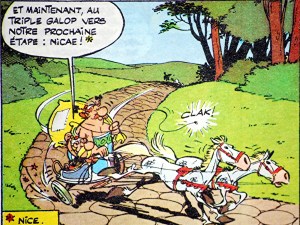
So the NSW standard railway gauge were derived from the original specifications of an Imperial Roman war chariot.

What a great example of the power and life of bureaucracy. Bureaucracies can live forever.

When you are handed a specification, procedure or process and fail to understand the ‘logic’ or ‘reason’ you can make the statement:

‘What horse’s arse came up with this?’

And you may be right. Imperial Roman army chariots were made wide enough to accommodate the rear ends of two war horses.

The moral of the story is to “aware of the power and intransigence of

bureaucracies”. This can be outside your organisation or within your organisation itself.

You need to keep asking the question ‘why’ to get the best outcome.

Lessons from a master Rugby Coach

Eddie jones

Lessons from a master Rugby Coach

“There are people who lead and lead inspirationally, and those who don’t”
Eddie Jones – English Rugby Coach

At the time of writing, the English Rugby team had won 18 Test Rugby Matches without a loss, having won the 2016 Six Nations Championship and a 3 nil win against the Wallabies on last year’s tour of Australia. Previously England had only won 3 Tests in 100 years. (Post Script: England lost to Ireland last weekend 13-9 denying them a world record).

What has brought about this amazing run of wins?

The English team is coached by a former coach of the Wallabies, Eddie Jones. In 2015 as the coach of the Japanese side he orchestrated one of the greatest upsets in the history of the sport with Japan defeating the mighty South African Springboks in the Rugby World Cup.  The Japanese culture is very different to that of England. Jones has been able to adjust his style of coaching to match the culture. In Japan as head coach everyone does as you say.  With the old ‘command and control’ style of management there was no room for initiative and self-reliance.

It however was different when Jones took up the position of English Rugby coach. Described by former Wallaby coach, Bob Dwyer:

“He calls a spade a shovel, Eddie. I consider myself a very direct Australian, but Eddie is more so than I am. He takes no prisoners at all.”

Whilst being a strict disciplinarian and setting clear expectations of performance, he adopted a different approach to the one he used when coaching Japan. He created an environment where players were allowed to make decisions.

“You can’t develop leadership qualities if you don’t allow players to make decisions. You can’t develop leadership qualities if you don’t allow people to make mistakes. It is a very difficult balance, but you have to allow it,” says Jones

“You need players who have leadership qualities to make decisions for themselves”

Jones is a former teacher and head master. Perhaps his experience here helped in his coaching.

Jones has demonstrated some of the real characteristics of a leader – developing people, generating enthusiasm, inspiring trust, motivating, challenging the status quo and modifying your leadership approach to match the circumstances.

Can you think of circumstances where you have developed as a leader or developed others while allowing or being allowed to make decisions thereby becoming better leaders?

The importance of standard routines and procedures

pioneer_cement_ford

The importance of standard routines and procedures

“Routine sets you free”
Verne Harnish – founder of Young Entrepreneurs’ Organization (YEO)

One of the biggest issues faced by businesses as they grow is managing the growth. This is because their management systems come under strain.
Many businesses begin when a ‘technician’, for example, a tradesman such as an electrician decides that they want to go into business as they have the technical expertise. The new entrepreneur thinks that because they understand the technical work they also understand how the business operates.

This is a myth according to author Michael Gerber. In his book published over 20 years ago called The E-Myth he introduces the concept that very successful businesses have very simple and robust business systems that do not require exceptional managers. The more automatic and simplified your management system the more effective is your business. What Gerber is explaining is a franchise system.

Very early in my corporate career I worked for a business called Pioneer Concrete Services Ltd. The company grew from a single pre-mixed concrete plant in Sydney in the early 1950s to a major industrial corporation operating in 11 countries within 30 years. The founder was an accountant called Sir Tristan Antico who was obviously not a concrete ‘technician’. The primary foundation of the pre-mixed concrete business was a concept called ‘cell management’, where the plant manager was responsible for marketing, production, human resources, sales, quality and profitability. As a young graduate it was an exciting and challenging work environment where you quickly learnt business management skills or left.

Antico designed a very simple management system. Remember this was before computers. Each fortnight the manager reported their profit and loss using standard forms, showing gross margins, sales and profits. Once again using standard forms materials purchases and usage were reconciled monthly. The company could tell very quickly, regionally, nationally and internationally how it was travelling using this standardised and disciplined system. What I learnt at Pioneer I carried on to other companies I worked for and then to our own business.

As Vern Harnish says “Routine sets you free”

This disciplined, routine and systematic management system allowed Pioneer to expand quickly into international markets well before other competitors. Their business system was scaleable without the administrative and management bottlenecks often encountered when companies grow. One of my former managers said a trained monkey could run the Pioneer Concrete system.

As Warren Buffett, the great American investor said:

‘Buy into a business that’s doing so well an idiot could run it, because sooner or later, one will,’”

This was one of the main keys to Pioneer’s success. Interestingly, a new CEO recruited from outside the organisation and therefore with no allegiance to the cell management system took over. The cell management system with its standardised and disciplined management system was abandoned. The business was subsequently acquired by a major international competitor and a major Australian industrial icon was lost.

The question for any business owner is:

“Are your business systems scaleable so that your company can manage its growth without losing control allowing you to work on the business rather in it?”

Procrastination and egos cost businesses…

procastination-1

Procrastination and egos cost businesses…

“It does not take much strength to do things, but it requires a great deal of strength to decide what to do.”
Elbert Hubbard : writer, publisher and philosopher

How often, as business owners and managers do we procrastinate on making decisions because of the feared consequences?
Sometimes we procrastinate making the most obvious decisions and further compound indecision by allowing our egos to rule rather than practical common sense. Let me give you an example.

Recently a friend was caught up in a situation that not only cost the business significant money but was a major distraction for the business in general. An employee who was still within their probationary period was responsible for bullying two other employees causing them to leave. Despite advice that the offender should be terminated without recourse as they were within their probationary period, the owner procrastinated and the offending employee remained employed after their probationary period. The owner then decided to act on the advice and terminate the employee, who immediately filed for ‘unfair dismissal’. Australia’s employment laws make it quite difficult to terminate employees after their probationary and court imposed penalties are high.

The owner was advised to make a one off payment to make the problem ‘go away’. He refused, stating it was against his principles to make such a payment. Lawyers were engaged, time was spent to present the case to the government tribunal and everybody was distracted. The indirect cost was considerable. The offender then doubled their demand for ‘go away’ money. The final outcome was a large legal bill, plus a payout to the ‘offender’ and wasted time and effort by the business owner and advisors.

All this was avoidable. The offender should have been terminated within their probation period. Their actions had already resulted in two long term employees leaving the business which was poor management. The second piece of advice to pay out the claim would have also solved the problem. However, pride and ego rather than common sense ruled the roost.

In business sometimes we have to put our pride and ego aside and make a decision that is best for the business. I have been guilty of this in my career, however several painful experiences have caused me to reflect my actions.

Can you think of an example where you procrastinated or allowed your ego to either delay making a decision or discarded common sense advice and made the wrong decision?

Reading is not just for Christmas…

gates

Reading is not just for Christmas…

“not all readers are leaders, but all leaders are readers”
Harry S Truman – US President

Several years ago I was assisting with managing a 3 day residential leadership program called “The Challenge to Lead” for my Rotary Club. The program was run by professional facilitators who had donated their time to conduct the program. One of the facilitators asked the question:

“Who here has read a management or leadership book in the last 12 months?”

Of the 28 people in the room only 2 put up their hands. I was horrified. I personally try to read a book a month on leadership and management, whether they are biographies on famous people or management books. I also read novels and books on history.

The facilitator’s comment was:

“Readers are leaders”

It was interesting that people attending a leadership course had not seen the need to increase their knowledge and seek out new ideas by reading. Warren Buffett the billionaire investor reads 500 pages a day, Bill Gates reads 50 books per year and Mark Zuckerburg reads 2 books per month. Successful people do not just read anything, they are selective preferring to be educated rather than entertained.

Why is reading books, particularly management and leadership books important?

Here are some suggestions as to why:

• We can learn from the experience of smart people – Management by Peter Drucker
• It opens up your mind to new ideas – Good to Great by Jim Collins
• It can be inspirational, particularly biographies – Not for Turning. The Life of Margaret Thatcher by Robin Harris
• Show you how to do things – The One Minute Manager, by Ken Blanchard and Spencer Johnson
• Stimulate the mind and get you thinking – How to Win Friends and Influence People by Dale Carnegie
• Provide a framework for leadership – The 7 Habits of Highly Effective People by Stephen R. Covey

Reading is not just for Christmas…..

“not all readers are leaders, but all leaders are readers”
Harry S Truman – US President

Furthermore, reading elevates you above the daily grind of work and can inspire you and give you new ideas. Reading is a form of learning and can stimulate your thinking processes, providing ideas from a different viewpoint.

If you do not have time for reading than another alternative is listening to audio books. I listen to audio books whilst driving. Instead of listening to trivial talkback radio shows I use the time to increase my knowledge.

In 2016 the 5 best selling management books for Dymocks an Australian national book retailer were:

The 7 Habits of Highly Effective People by Stephen R. Covey.
Strengthsfinder 2.0 by Tom Rath.
The One Minute Manager, by Ken Blanchard and Spencer Johnson.
Five Dysfunctions of a Team by Patrick Lencioni.

Good to Great by Jim Collins.

With the traditional holiday period coming up in the southern hemisphere it is now an opportunity to think about how can you enjoy the period and start reading. Reading is not just for Christmas, however it is a good time to begin. Take the time to select some books to read and make a start. The 5 books mentioned above are a good reads.

With some planning it can become a life time habit and make you a better leader.

Wishing you and your families a Merry Christmas and best wishes for 2017 and thank you for following my blog in 2016.

Christmas is coming again…

5-reasons-to-attend-holiday-parties-this-month-1024x678

Christmas is coming again…

“What I don’t like about office Christmas parties is looking for a job the next day”
Phyllis Diller – comedian

Last year I wrote a blog before Christmas about using Christmas as a time to invigorate your staff and business and celebrate their achievements and commitment. A time to build goodwill and for managers to ‘rise to the occasion’ and display leadership.

Despite Christmas being a time of joy and celebration it can also be, unfortunately a disaster for both businesses and staff. Every year we hear stories of work Christmas parties that go wrong…..drunkedness, inappropriate and embarrassing behaviour, work accidents and the like. Often management or the organisation is blamed for the outcomes. It all the more disappointing when it is traditionally a period of cheer and goodwill.
So what should you as a manager or business owner do to protect yourself and staff from a bad outcome for your staff at Christmas?

What are the ‘rules’?

A link to Broadspring Consulting website has some Office Christmas Party Success Tips.

Also remember as an employer, the onus of proof is on you. Christmas parties should be more than about having fun. It’s a good time to reflect on achievements of the business and staff. This should obviously come from the most senior manager, whether the CEO, owner or Department Manager. It’s a time to display leadership and celebrate your business and staff’s achievements and also to thank them for their efforts. It is also an opportunity to set the tone for next year.

So what are you planning for your work Christmas party that will achieve these aims?

Are all your eggs in the one basket?

zimbabwe

Are all your eggs in the one basket?

“Don’t put all your eggs in one basket”
Anon

I love travelling. Travelling allows me to experience unique cultures, see beautiful and interesting sights and most importantly meet interesting people. It’s amazing what you can learn from listening to other people’s experiences.

On a recent trip to Zimbabwe I was fortunate to be sitting on an aeroplane next to a local businessman who was returning home from South Africa. In conversation he gave me his family’s life story. He had several businesses, some urban property assets and was managing to survive despite the severe economic circumstances. His family also used to have several farms, employing hundreds of people. With the encouragement of the government, these farms were ‘taken over’ by so called ‘war veterans’ in the early 2000s with no compensation. In other words, his farms were stolen and hundreds lost their jobs.

Apart from obvious injustice, his position emphasised an important strategy for business owners. I had initially seen this strategy used by a former employer.

The strategy was “don’t put all your eggs in one basket”

Unlike many farmers who had lost their farms in the ‘farm invasions’ the Zimbabwean businessman had survived because he had diversified his businesses, thereby protecting his wealth. Likewise my former employer had carefully separated his business into various categories – operating business, fixed assets, property investments and stock exchange investments. If the operating business failed, then the rest of his wealth was not threatened.

The lessons learnt from my former employer were implemented in a subsequent business. This could not have been done without a very disciplined approach as at times our business struggled. Too often I have seen business owners draw out of their business for private use such as expensive cars, children’s school fees and overseas holidays and then get into trouble with the tax office and creditors when the business struggles financially.

Have you got ‘all your eggs in the one basket’?

If you have, perhaps you need to reassess your situation……