…it only took 74 days!

“Any leader has to have a certain amount of steel in them, so I am not that put out being called the Iron Lady”

Margaret Thatcher – British Prime Minister

The Falklands War in 1982 between Britain and Argentina lasted only 74 days, culminating in a British victory. This short and bloody conflict has some excellent lessons for managers and leaders.

Background:

Just over 41 years ago this month, on 2 April 1982, the Argentinian fascist military dictatorship decided to invade the British Overseas Territory of the Falkland Islands. They hoped to bolster their dwindling legitimacy by mobilising the long-standing patriotic feelings of Argentines towards the islands, as well as diverting public attention from their ongoing human rights violations against their own citizens and the country’s chronic economic problems.

The islands, 12,000 kms away from Britain are a windswept treeless, damp and cold group of islands. The Falklands had a population of around 2,000 people and its major industry was sheep farming.

In the face of cuts to the military budget by the British Government, the Argentinian military junta miscalculated. They thought that Britain would not respond militarily. However, within three days of the invasion, the British Government under the leadership of Margaret Thatcher had assembled a military task force to retake the islands.

The logistics challenges for the British were immense and the risk of failure high. The Argentinians had 10,000 troops dug in on the islands and were protected by mine fields. Their air force, located on bases on the Argentinian mainland, outnumbered the carrier based British planes by eight to one.

Outcome:

On 13 June 1982, the Argentinian forces on the islands surrendered. Despite the logistics challenges, and setbacks such as the loss of almost all their troop-carrying helicopters on the Atlantic Conveyor the British forces triumphed. The loss of the Atlantic Conveyor meant that the British troops with 80 kgs on their backs had to walk 80 kms in freezing and wet conditions to attack the capital of the Falklands, Port Stanley.

Here are three leadership traits displayed in the Falklands War:

  1. Decisive decision making

The British assembled a military task force within three days of the invasion, despite the fact that the Falklands were over 12,000 kms away from London. This was an example of decisive decision making. In our logistics business, we had a toxic manager who was having a detrimental effect on employee morale and customer satisfaction. One of our partners refused to recognise this situation. When the partner was overseas, we terminated the manager. Within a month, the business he had been managing turned around. Following this action, several supervisors came up to me and said how were pleased that action had been taken. They had been waiting for management action to fix ‘the problem’!

2. Clear purpose

Throughout the crisis, Thatcher’s message was clear and simple. In her communications, there was no doubting her intentions and the purpose was very clear. The British were not going to allow the invasion of British territory by a fascist military dictatorship to succeed.

In my experience, employees respond positively to strong and decisive leadership, especially when there is clear purpose. For example, I was engaged by a business owner to review his business, then introduce standard procedures and managerial disciplines. This message was made very clear to the staff. The culture must change. We would create a work environment through a disciplined and inclusive approach, where employees’ experience, expertise and opinions were valued. The incumbent general manager tried to thwart this approach and was “forced” to leave the business. The staff were relieved. Morale improved almost immediately. They became engaged, as they were now valued and could look forward to the future.

3. Communicate a positive message.

Admiral Sir Henry Leach, Chief of the Defence Force who was instrumental in convincing Thatcher that the islands could be recapture, was asked by her why it was important to retake them.

He said:

“Because if we do not, or if we pussyfoot in our actions and do not achieve complete success, in a few months from now, we will be living in a completely different country whose word counts for nothing.”

Following that advice, Thatcher’s message was positive, and she took the high moral ground.      

  1. We are a democracy
  2. We are not going to have a nasty military junta taking over British territory
  3. We can retake the islands

When I was managing a national vehicle transport company in regional NSW, I was confronted with an unsolvable problem. A private vehicle arrived in our transport depot from Melbourne, several days late. The vehicle owner was arriving in Cairns in far north Queensland the same day. This was three days drive away from Cairns by truck, so he was not going to have his car for the first couple of days of his holidays. Confronted with this problem, I phoned him just as he was boarding the plane in Melbourne offering a solution. A hire car would be provided when he arrived in Cairns until his car arrived. It was a positive message given with authority to solve his problem. The customer continued to use our services for many years.

The British armed forces faced with what were seemingly impossible odds were ultimately successful.

 Do you think that the leadership traits of being decisive, having a clear purpose communicated positively, had a significant bearing on the successful outcome?

‘Real’ leadership is important in any organisation, whether it’s a crisis like the Falklands or not. In my experience, I have found that employees respond positively to good leadership.

#thenetworkofconsultingprofessionals

A New Australia…where?

“The world will be changed if we succeed, and we will succeed! We cannot help succeeding!”

– William Lane: radical journalist and founder of New Australia

Nearly 120 years ago an idealistic bunch of Australians set sail for South America to build their utopia.

In the early 1890s, the Australian colonies were in the grip of recession. It was a period of bitter industrial conflict particularly in the shearing sheds. The strikes resulted in victory for the pastoralists. With the defeat of the shearers and poor economic conditions, a group of 220 idealistic Australians left by ship in 1893 for a new life in Paraguay.

Why Paraguay?

Paraguay had lost a bitter war between 1867-1870 against Brazil, Argentina and Uruguay resulting in the loss of a quarter of the country and 90% of its male population. With only 14,000 men and 150,000 women there were not enough men to farm the land or partner with the women.

Faced with this dilemma, the Paraguayan government sought to encourage migration by providing land grants and tax breaks. In the 1880s a utopian socialist colony called Nueva Germania was established by Germans disillusioned with Germany’s recent unification. The scene had been set.  

Background

Back in Australia, a firebrand journalist by the name of William Lane had championed the shearers’ cause. Lane was a utopian socialist and was a prominent figure in the Australian labour movement and had founded Australia’s first labour newspaper, the Queensland Worker in 1890.The shearers’ defeat left him bitter and deeply disillusioned

Refusing an offer of land to establish a utopian settlement by the Queensland Government, Lane began an Australia-wide campaign for the creation of a new society elsewhere in the world, peopled by rugged and sober Australian bushmen and their proud wives. He recruited shearers, stockmen and unionists for a new socialist utopian colony. It became known as New Australia.

Lane proposed a new society free from social and economic oppression and isolated from worldly corruption. This new society would be based upon shared wealth and work, women’s equality, and the prohibition of alcohol. However, it was also racist. Known as The Colour Line, the strict rules written by Lane were:

“It is right living to share equally because selfishness is wrong: To teetotal because liquor drinking is wrong; to uphold life marriage and keep white because looseness of living is wrong.”

With such rules and with shearer’s having a reputation for being hard drinkers and with more than 10 women for every man how could this ‘grand plan’ possibly work?

So, what happened?

Unsurprisingly it failed.

On its way to Paraguay, the ship called into Montevideo, the capital of Uruguay. After a long voyage the passengers were eager to step ashore. However, Lane forbade this but went ashore himself. This action was hardly the action of a leader and founder of a socialist colony. Several passengers defied Lane and went ashore and broke the ‘no alcohol’ rules. Once back on deck, a fight broke out between Lane’s supporters and the malcontents. This was a harbinger of things to come.

After a 1,000 km journey up the Paraguay River, the new settlers were finally settled on land granted to them by the government. Within six months, the settlers had cleared land, planted crops and built stockyards. A village began to take shape with a blacksmith’s shop, school and over 20 thatched cottages. However, it wasn’t long before the atmosphere started to deteriorate. Lane’s autocratic nature and inflexible attitude as demonstrated in the ‘Montevideo incident’ alienated many. Some settlers began to barter communal property for drink and began ‘associating’ with local ‘non-white’ women. Several were evicted from the colony with the help of the Paraguayan police after being caught drinking. The hypocrisy of this action by Lane who had rallied against the use of the police in the shearers’ strike split the colony.

In 1894, the arrival of a second batch of settlers didn’t have the effect Lane had hoped for. One was discovered in the possession of rum-laced milk, as payment from a local farmer and was expelled. Following the continued dissension in the community, Lane and a group of around 60 of his supporters left New Australia and established a breakaway settlement to the south called Cosme. Instead of recruiting new settlers from Australia for Cosme, Lane went to England. Although things started promisingly, they soon began to unravel, and the new English settlers were less able to adapt to frontier life. The strict and harsh way of life was taking its toll. 

By 1899 Lane’s dreams were in tatters. He resigned as chairman of Cosme and he and his family left, relocating to New Zealand, where he became the editor of the New Zealand Herald.

What are the leadership lessons in the failure of the ‘New Australia’ venture?

Whilst the story of New Australia is a curious footnote in history are there any lessons in the story for leaders?

Here are some to consider:

  1. Charismatic leadership has significant weaknesses, and many charismatic leaders are autocratic, lack organisational skills, and are too self-assured and narcistic. Certainly, William Lane was autocratic and inflexible, and he lacked true leadership skills, not dissimilar to the leader of the ill-fated Burke and Wills expedition.
  2. Top-down management is generally less successful than decentralised leadership more inclusive which was a one of the key factors in the defeat of the Luftwaffe in the Battle of Britain.
  3. Perfect is the enemy of good. I have found in business that the best results are achieved by determining where the greatest improvements can be made for less efforts than continually chasing perfection. The theory behind the 1905 Schlieffen Plan is a case in point, where German military planners devised the “perfect” plan to invade and take Paris. It failed spectacularly in Word War I.. Lane’s idealistic vision was of a perfect society based on socialist and communal values. Ironically the vision was imposed by inflexible and autocratic leadership which certainly assisted in the New Australia venture failing.

Do you think there are other lessons from the failure of New Australia?

If you would like to know more about the ill-fated socialist experiment New Australia, the following books are recommended:

A Peculiar People: the Australians in Paraguay by Gavin Souter

Paradise Mislaid by Anne Whitehead

Ticket to Paradise by Ben Stubbs

Youtube link:https://www.youtube.com/watch?v=Pb3DQ4uCJSc

#thenetworkofconsultingprofessionals

How the Marathon was nearly axed as an Olympic event..

“They cast me out and they were jealous because I turned in the fastest time ever run by a human and it was impossible at the time”

Ben Johnson – disgraced 100m 1988 Olympic “Champion”

The head of the International Olympics Committee Pierre de Coubertin described the 1904 St Louis Olympic Games in the USA as an “outrageous charade”. The running of the men’s marathon was so poorly organised and managed, the event was nearly abolished for future games.

So, what happened?

At 3:03pm on a hot summer day in 1904 St Louis Olympic Games, the marathon runners set off from the stadium in oppressive heat amongst horses and dogs and over dusty and unpaved roads. Many of the athletes were not experienced long distance runners. Two members of South Africa’s Tswana tribe raced in bare feet. They finished ninth and twelfth. However, they could have done better if one of them had not been chased off course by wild dogs.

Another entrant, Cuban Félix Carbajal de Sotos blew all his donated funds when he went gambling in New Orleans. He hitchhiked to St Louis in time for the marathon, showing up in a dress shirt, slacks, leather street shoes and a beret. Luckily a sympathetic spectator using a pair of scissors and helped him turn his pants into shorts. He came 4th!

There was only one water station on the entire course. The organisers deliberately deprived the athletes of water as they wanted to test the theory called ‘purposeful dehydration’, that is water diminishes athletic performance. Over half the participants dropped out from dehydration and several nearly died. American runner William Garcia collapsed halfway through the course and needed emergency surgery because he ingested so much dust that it had ripped his stomach lining.

The first ‘winner’ was 20-year-old Fred Lorz. He had given up at the 14th kilometre mark. His trainer offered him a lift to the stadium so he could pick up his clothes. However, the car broke down, so Lorz decided to run the rest of the way. He ran across the finish line first and had his photograph taken with the daughter of President Theodore Roosevelt. And just as he was about to accept the gold medal a witness stepped forward and declared him a fraud

The eventual winner, Thomas Hicks doped up and hallucinating on rat poison was dragged across the finishing line by his trainers. This certainly would not be allowed in the Olympics today! The Amateur Athletics Union immediately banned Lotz for life for ‘cheating’. This was overturned after a year, and he subsequently won the 1905 Boston Marathon!

Are there any lessons for managers in this fascinating Olympic episode?

Here are three that come to mind.

  1. Just like in sport, organisations need clear policies and procedures that provide rules of behaviour
  2. The importance of safety protocols and policies. They are essential in organisations to prevent accidents and injuries
  3. Be prepared to improvise. The unlucky gambler Cuban de Sotos despite not be correctly attired to run the marathon with the help of a bystander improvised and still managed to do remarkably well

Can you think of any other lessons?

#thenetworkofconsultingprofessionals

It’s that time of the year again..

“Christmas is a season not only of rejoicing but of reflection”
Winston Churchill

In December 1843, Charles Dickens published his book A Christmas Carol. The book was set against significant changes in British society. As Britain industrialised there was a mass movement of people from the countryside to the cities. Dickens witnessed this change and the resulting appalling conditions of child labour.

The book’s messages are timeless. Radical for the time, one significant theme from the book is that employers were responsible for the wellbeing of their workers,

Firstly, lets briefly recount the story.

The book is about a mean-spirited and selfish old man called Ebenezer Scrooge who hates Christmas.

“Bah Humbug” he says.

Scrooge is unkind to the people who work for him. He does not accept an invitation from his nephew to spend Christmas with his nephew’s family. He also refuses to give to any charity. On Christmas Eve he is visited by the ghost of his former business partner Jacob Marley, who warns him that three ghosts will visit him that night.

The first ghost is the Ghost of Christmas Past. He takes Scrooge to his past as an unhappy child and to a man who forsakes his fiancée for the love of money. The second ghost is the Ghost of Christmas Present who takes him to the family of his clerk, Bob Cratchit. At the house Scrooge sees Cratchit’s ill son Tiny Tim. Then the ghost takes Scrooge to see his nephew’s Christmas celebrations he had refused to attend. The final ghost, the Ghost of Christmas Yet to Come shows Scrooge his own death and how he will be remembered. This terrifies him as there is no-one to mourn him.

The ghosts’ journey through time makes Scrooge see the error of his ways. On Christmas morning, Scrooge wakes up and is transformed into a kinder, gentler man. He buys the biggest turkey for the Cratchit family and then spends Christmas Day the day with his nephew and family.

What are the messages for employers and managers in A Christmas Carol?

With Christmas being at the end of the calendar year, it is an excellent time for managers to reflect, consider the past, in particular the past year, the present, and the future, just like the three ghosts.

As a manager and business owner what are you going to do about Christmas for your staff and customers?

It’s the season of goodwill – don’t waste the opportunity!

#thenetworkofconsultingprofessionals

The Great Emu War

“The incompetent leading the unwilling to do the unnecessary.”
Evan Wright – American author

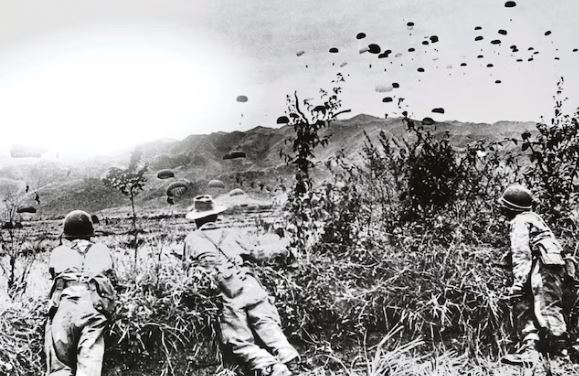
Military failure is everywhere. As managers and leaders, we can learn from classic instances of so-called military incompetence. There are many examples from the disastrous Allied landing at Gallipoli in World War I, to operation Barbarossa, the failed Nazi invasion of Soviet Union in World War II and to the 1954 Battle of Dien Bien Phu in French Indochina which resulted in catastrophic defeat for the French.

However, few examples could be more humorous, without loss of human life and just as instructive for managers on ‘what not to do’ as the Great Emu War of 1932.

What are the characteristics of an emu?

They are an enormous bird second in size to the African ostrich. They cannot fly and have an average height of over 2 metres, very strong legs, can run up to 50 kph, and naturally flock in large numbers.

Background to ‘the conflict’

Following the end of World War I, the Australian government ‘rewarded’ returning soldiers with farm land. In Western Australia the veterans or ‘soldier settlers’ were allocated farmland which was very marginal for the growing wheat. Very few were experienced in agriculture. To add to the farmers’ challenges a severe drought hit, and 20,000 starving emus came in from the desert and commenced in destroying the existing wheat crop. Furthermore, this occurred in the Great Depression with a background of rising unemployment and falling wheat prices

The veterans lobbied their local parliamentary representatives to provide assist to rid the country of the emu ‘menace’. A Western Australian Senator, Sir George Pearce, recommended that the veterans and troops should tackle the problem head-on and hunt the birds. The government needed to show support for the famers. As the saying goes, “never waste a good crisis”.

What better opportunity for politicians than to provide a well-publicised effort to protect the former veterans who were ‘doing it tough’ and call in the army?

So certain that the operation would be a success, a cinematographer was hired from Fox Movietone to cover the hunt.

On the first day of ‘war’ less than 50 birds were killed out of the thousands shot at. The biggest misconception about the Emu War is that it was a massive assault staged by the Australian military. It was just three soldiers, a small truck, two Lewis machine guns, and 10,000 rounds of ammunition. A machine gun was mounted on the truck, but the truck could only travel a 30 kph over rough land, no match for an emu who could run at 50 kph and the truck could only chase one emu at a time. Furthermore, the soldiers couldn’t stabilise a machine gun on the vehicle or shoot with any accuracy.

The Great Emu war lasted less than six weeks – 986 emus were killed, and 9,860 rounds of ammunition was expended. Ten rounds per dead emu – not a great kill ratio although the only loss for the soldiers was their pride!

A more effective plan was later introduced. Rather than use brute-force the government set aside money for bounties. The farmers did the hard work of tracking and shooting the emu menace. Two years later in 1934, nearly 58,000 bounties were claimed.

What lessons are there for us as managers in the ‘great emu war’?

Here are three worth considering.

  1. Be aware that politicians do not have the answers for problems of business. Many, in particular politicians today have no business or managerial experience. Governments overpromise and under deliver. The management of the COVID pandemic is a good example.  
  2. Technology is not the answer. Technology is an enabler and not the magic bullet to solve the problem. Having a motor vehicle and machine guns did not solve the problem as it was not clearly defined.
  3. The most successful solutions involve the parties directly involved in the problem. By offering bounties, the farmers had a direct incentive to make it work – and they made money out of the bounties and reduced the number of emus attacking their crops.

#thenetworkofconsultingprofessionals

So where is Werris Creek?

“Many times, the wrong train took me to the right place.”

Paulo Coelho – Brazilian lyricist and novelist

Whist undertaking post graduate studies many years ago, one of my fellow students and friend was a senior executive of Queensland Rail. He had started his career as a clerk in a rural railway station in outback Queensland and went on to hold senior executive positions in rail businesses in Australia. Clearly rail was in his blood, as his father had been a fettler on the railways.

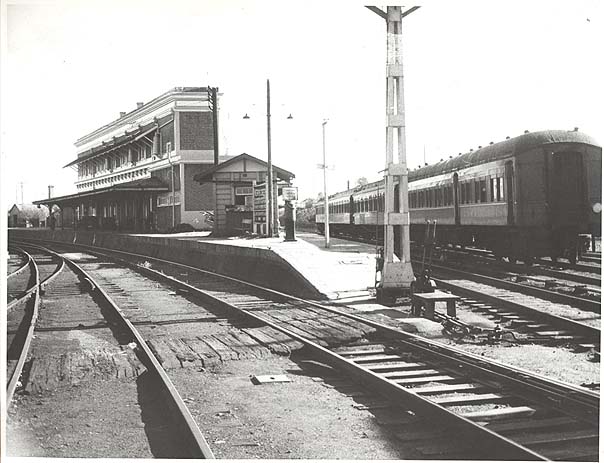
One of his father’s postings was to the tiny and declining town of Wallangarra on the Queensland New South Wales border. The town had been established in 1885 for the sole purpose of being the connecting link between the NSW rail system and the rural Queensland rail system. Wallangarra was the result of two state governments deciding to build railways of different gauges; narrow gauge in Queensland (1067 mm) and standard gauge in NSW (1435 mm). This meant that people travelling from Queensland to NSW had to alight at Wallangarra and change trains in the historic town of Tenterfield just across the border. Not surprisingly this ensured that the tiny settlement became a major railway junction.

In northwest NSW, there lies another important railway junction town called Werris Creek. Werris Creek like Wallangra did not exist until the late 1870s when the railway arrived. A town of approximately 2,000 people, this was where trains from Sydney could be diverted onto three branch lines to various locations in country NSW, with one branch line terminating in Tenterfield. By co-incidence, as a young farm boy I lived less than 20 minutes’ drive from Werris Creek.

Anyway, back to my friend and fellow student. During the school holidays, he worked as a casual railway porter moving luggage from Wallangarra to Tenterfield, just across the border. All the luggage was marked ‘To Werris Creek’. As a young, and obviously naïve lad, he thought that Werris Creek was one of the largest cities in NSW. Having lived near Werris Creek the irony of this was not lost on me.

What are the lessons here?

How often are we as managers given a picture of a situation that is unrealistic?

Today, in the age of the internet there are organisations that appear much larger and more substantial than they are in the real world. With the advent of social media, virtual organisations and people exist.

Doing your homework will certainly help and don’t take things on face value.

This what I call this the ‘Werris Creek Affect’

Can you think of examples of ‘Werris Creek Affect’ in your working life?

Post note: the last train left Tenterfield in 1988 and the last scheduled train to Wallangarra left in 1997.

#thenetworkconsultingprofessionals

Are you prepared for a ‘black swan’ event?

“The problem with experts is that they do not know what they do not know.”

― Nassim Nicholas Taleb, author of The Black Swan: The Impact of the Highly Improbable

What is a black swan event?

The phrase “black swan” derives from a Latin expression; “rara avis in terris nigroque simillima cygno” – “a rare bird in the lands and very much like a black swan”.

A black swan event is a rare event that is positive or negative, is deemed improbable yet has massive consequences and could not have been predicted even with the help of sophisticated modelling techniques. For example, an event that has a severe impact on the economy, social conditions, and overall well-being of a nation. The recent COVID pandemic has been called a ’black swan’ event or Russia’s invasion of Ukraine.

A characteristic of a black swan event is low probability and high impact. Often it becomes rationalised in hindsight, as if it could have been expected. Once again, the COVID example comes to mind. The so-called experts had been ‘predicting’ that the world was overdue for a worldwide pandemic as the last deadly one was the Spanish Flu pandemic, over 100 years ago. However there had also been other pandemics that were not as deadly as the Spanish Flu, namely the Hong Kong Flu in 1968 and the 1957 Asian Flu.

Apparently, the phrase was commonly used in 16th century London as a statement of impossibility. It derives from the presumption that all swans must be white as there were no records of swans having feathers that were NOT white. Therefore, a black swan was impossible or at least non-existent. However, in the late 17th century, Dutch explorers became the first Europeans to see black swans, in Western Australia.

Did this change the meaning of the term ‘black swan’ event?

Yes and no.

Nassim Taleb in his book The Black Swan: The Impact of the Highly Improbable said that black swan events have three characteristics:

1. Low predictability based on prior information

2. High consequence, and sometimes catastrophic impact

3. Explained in hindsight as if it were actually predictable

The main idea in Taleb’s book is not to attempt to predict black swan events, but to build robustness against negative ones that occur and to be able to exploit positive ones.

As a business, how can you prepare for a ‘black swan’ event?

This is a challenge for all business managers and leaders.

Some of the possible strategies for dealing with a black swan event include having a business continuity plan and testing it, diversification into unrelated industries, for example a mining company who is reliant on one commodity could move into other commodities, develop alternative supply chains and having adequate insurance cover.

The critical aspect for business to minimalise the impact is to build robustness in the business.

#thenetworkofconsultingprofessionals

A management lesson from Colonial Australia

“The roads are rare to travel, and life seems all complete;

The grind of wheels on gravel, the trot of horses’ feet,

The trot, trot, trot and canter, as down the spur we go —

The green sweeps to horizons blue that call for Cobb and Co”

From the poem – “The lights of Cobb and Co” by Henry Lawson

Who or what was Cobb & Co?

Cobb & Co was a coach company established in 1853 in Melbourne, Australia by a small group of Americans to service the Victorian goldfields. This was before the advent of railways. The company won mail contracts, gold escort, passenger and mail service contracts based on reliable and efficient schedules. The company pioneered transport routes, delivering mail, gold and passengers throughout the country and contributed greatly to social growth and the expansion of pastoral settlement across Australia.

The business grew rapidly up until the early 20th Century. At its peak, its coaches travelled 44,800km each week, over 11,200 km of regular routes with over 6,000 horses were harnessed every day. Its network of tracks extended further than those of any other coach system in the world. The network extended from far north Queensland to Victoria and South Australia in the south, covering all of eastern Australia, an area larger than Western Europe. The logistics of operating without the information technology of today defies belief.

In 1924, the last coach trip was completed between Yuleba and Surat in Queensland. Two years before the last trip, Qantas launched its first mail and passenger flight, signally the changes in transport technology such as railways, aeroplanes and motor vehicles. This meant Cobb & Co’s days were numbered.

Cobb & Co’s operational success mirrored my earlier days managing an interstate vehicle transport operation.

What are the lessons for managers today in the rise of Cobb & Co’s?

  • Technology

Cobb & Co: Coach design. The existing coaching companies used English vehicles that were heavy and had stiff metal springs. They were totally unsuitable for the rugged Australian landscape. Cobb & Co imported coaches from the American West, that were light weight, had leather straps as suspension systems and were far better suited to Australian conditions. This resulted in a faster and smoother ride.

Transport Company: The vehicle transport business was so successful that at the time it transported over 60% of all locally manufactured vehicles in Australia. Supported by on-board computers which were in their infancy, the significant difference to the competition was a revolutionary designed car carrying trailer that transported 10 cars instead of 8, with a revolutionary sliding axle and fifth wheel allowing the truck to travel off B-Double routes which the opposition could not match. Whereas Cobb & Co had the best coach design, we had the best technology in trailer design for vehicle transport.

  • Planning and Efficiency

Cobb & Co: The ability to regularly change horses provided the competitive edge over the company’s rivals.  Horse changing stations were placed every 16-32 km along their routes, whereas their competitors had much greater distances. Fresh horses meant the coaches could maintain high speeds across long distances. This allowed the business to grow quickly and win lucrative mail and gold escort contracts combined with the rapid increase in rural settlement across Australia. Horses, harnesses, stables, grooms and stock feed supplies were organised; booking offices were set up in major towns and inns, shanties and post offices were used to service the passengers enroute.

Transport Company: With motor car manufacturing sites in Melbourne and Adelaide and a strategically located hub based in rural NSW, the transport company was through careful planning and geographically located drivers was able to run trucks continuously for over 6 days per week. Drivers changed over every 10 hours, keeping within the legal driving hours whilst more than doubling the number of kilometres travelled per week that was considered the industry average. This was before GPS technology. Much like the change-stations in the Cobb & Co network of over 130 years ago.

  • People

Cobb & Co: The success of Cobb & Co was largely due to its people, from its coachbuilders to grooms, innkeepers, horse breeders, managers and drivers. The drivers, with their extraordinary skills with horses established the company’s reputation and ensured the service operated to the highest possible standard in all weathers, whether on bush tracks or well-maintained roads. At each changing station the grooms were responsible for 8-10 horses and their equipment.  Two kms out from the change station, the driver would sound a bugle alerting the groom, who would have a fresh horse team harnessed by the time the coach arrived.

Transport Company: If there is anything that makes a business successful, it’s the people. Like Cobb & Co we had a team that was prepared to ‘think outside the square’, customer and service focussed, understood what could be achieved and successfully planned the daily and weekly operations. This was backed up by choosing, training and rewarding our driving team who like Cobb & Co were proud of their position in the industry.

Post Note: Cobb & Co eventually failed through a combination of factors. If you are interested in the history of Cobb & Co, I would recommend the book Wild Ride: The Rise and Fall of Cobb & Co by Sam Everingham

#thenetworkofconsultingprofessionals

The Atlantic Conveyor Affect…

“It’s OK to have your eggs in one basket as long as you control what happens to that basket”
Elon Musk – billionaire businessman

Just over 40 years ago on 2nd April 1982, Argentina invaded the British overseas territory of the Falkland Islands. They are an island archipelago in the South Atlantic Ocean located over 12,000 kilometres away from the British Isles. The Falklands were a community of just 1,800 people, primarily rural sheep farmers, the majority of whom were of British descent.

In the face of this challenge, the British government under the leadership of Margaret Thatcher organised a Task Force of over 100 ships, including naval vessels, merchant ships, and a submarine all carrying supplies, military equipment and troops. An extraordinary feat considering the tight time frame and the huge distances involved.  

At the time Argentina was ruled by a brutal military dictatorship. Argentina had claimed sovereignty over the islands for many years and the ruling military junta did not believe that Britain would attempt to regain the islands by force. With falling popularity and failing economy, the junta saw the invasion as a diversion from their domestic problems.

On 21st May 1982 British forces landed on the islands. On 25th May the container ship, Atlantic Conveyor, a ship requisitioned by the Royal Navy was hit by two Exocet missiles fired by the Argentinian air force, killing 12 of the crew including captain. Due to the presence of both fuel and ammunition that were stored below decks, the incendiary effect of the unburnt propellant from the missiles caused an uncontrollable fire and the vessel sank three days later.

What else was lost?

Apart from fuel and ammunition the Atlantic Conveyor was carrying seven Westland helicopters, four Boeing Chinooks, and a Westland Lynx. Only one Chinook one Westland Wessex were saved. Almost all the Task Force helicopters were on this ship.

Did this influence the plan to retake the islands by the British forces?

Yes, the plan to ferry troops by helicopter could not be carried out, resulting in a significant change of strategy. The loss of these helicopters meant that British troops with the onset of winter had to march on foot across the wet and semi-frozen ground to recapture the island’s capital, Stanley. However, despite this setback, Stanley was captured on 14 June 1982 – the war having lasted only 74 days.

So, what do you think is the main management lesson from the sinking of the Atlantic Conveyor?

Do not put all your eggs in one basket. Having most of the helicopters on one ship making it vulnerable to a missile attack was a very poor decision!

Can you think of other management lessons from the sinking of Atlantic Conveyor?

#thenetworkofconsultingprofessionals

Another lesson from the farm…

“Our relationships will eventually grow stale unless we are diligent about directing and cultivating them”

Todd Henry – International speaker

Having grown up on a rural property in north-western New South Wales, Australia, I have written several blogs about lessons we can learn as managers based on growing up on a farm. There were many things I observed and experienced that can be related to business and life. From resilience, the importance of ongoing maintenance like chipping a weed called the Bathurst Burrs and the lessons of ‘the cow pat’.

Another lesson comes to mind.

The growing of crops. One crop my father grew was wheat. Wheat needs constant cultivation combined with adding fertiliser and weed control to get the best outcome. The ground needs to be ploughed to remove weeds and make the soil friable and ready to accept the planting of seeds. When seeding, fertiliser needs to be added at the same time to improve yield. And you need rain!

The growing of wheat is a great analogy that can be applied to being a successful manager. Spend time cultivating your connections, fertilise your contacts, provide help when needed, keep the weeds under control by not losing contact and maintain your contacts by watering them.

This has worked for me over the long term with amazingly positive outcomes. Thirty years ago, a recruitment consultant placed me in a job. Over the years I kept contact with him and 5 years ago another opportunity came up. He found a logistics consulting project for me, and I’m still involved with the business as a board member.

Another example relates back to when I was a casual university lecturer. I kept in touch with several of my former students. This resulted in one former student giving an important contract to our logistics business. Another was employed by me for one of my clients and this was after over 15 years since graduating.

The example with the most impact was a former work colleague and student. He convinced me to do my master’s degree. Later he told me about a job vacancy with his former employer. Much later he provided the conduit to sell our logistics business to an Asian based freight forwarder.

What are the considerations with networking?

Most importantly when cultivating your network, it needs to be mutually beneficial but with more give than take. No long-term relationship whether personal or business will endure if it is only one way. Managing is not about platitudes, big schemes and projects. It is about constant attention to relationships, continually seeking ways to interact with your network regularly and adding value.

Do you think that the cultivation analogy is a good one for you as a manager or business owner, both personally or professionally?

#thenetworkofconsultingprofessionals