
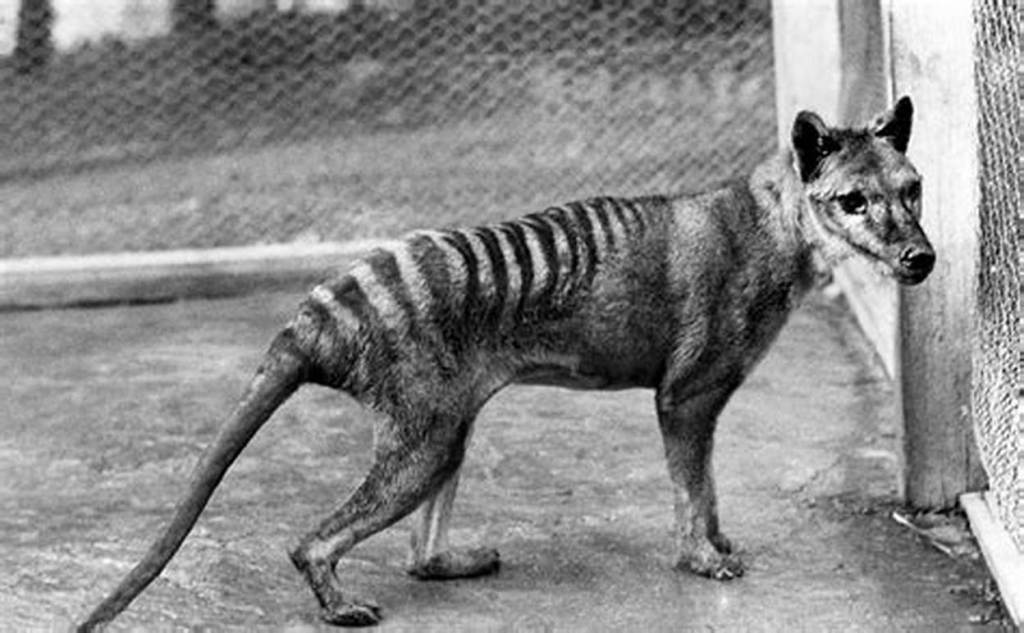
Many years ago, I was flicking through a photo album of my grandparent’s honeymoon in Tasmania in the late 1920s. In the album was a photo of a Tasmanian Tiger, or Thylacine at the Hobart Zoo, the last of the species to die in captivity in 1936. I was fascinated that they had seen an animal, that is now extinct.
What was the Tasmanian Tiger?
It was not a tiger, but a marsupial carnivore with a slender body, dog-like head, and distinct dark stripes across its back. Native to Tasmania, it once roamed the Australian mainland but disappeared from there around 3,000 years ago, probably due to the introduction of the dingo which was a more effective and efficient hunter. Confined to Tasmania, it was the largest carnivorous marsupial of modern times.
What happened to it?
As European settlers moved into Tasmania in late 18th and early 19th century, being a carnivore, it developed a reputation as a livestock killer. Whether this was justified is open to debate. However, it was seldom seen and historical reports suggested it roamed in open grasslands rather than dense forest.
While human activities played a significant role in the extinction of the Tasmanian Tiger, other contributing factors included intensive hunting, habitat destruction, and diseases introduced by the European settlers. More importantly, government and bureaucratic incompetence played a critical part. In particular, in the 19th and early 20th centuries the Tasmanian government implemented bounties to protect the livestock industry. The indiscriminate killing of Tasmanian Tigers led to a significant reduction in their population, accelerating their path towards extinction. Furthermore, legislation was enacted to safeguard the Thylacine, but the measures were implemented too late and proved insufficient to counter the threats it faced. While the last known Tasmanian Tiger died in 1936, the lack of understanding of Thylacine biology also prevented successful breeding.
Do you think there are any lessons for managers in the extinction of the Tasmanian Tiger?
Here are three to consider:
- Adaptability in the Face of Change:
The demise of the Tasmanian Tiger is, in part, a story of failure to adapt to changing circumstances. Businesses, like species in the natural world, must be adaptable to thrive. The introduction of new technologies, shifts in consumer behaviour, and evolving market dynamics require businesses to embrace change, innovate, and remain agile.
Example: Blockbuster Video’s failure to adapt to the rise of online streaming is a stark reminder of the consequences of not embracing change. In contrast, Netflix, recognising the shifting landscape, evolved its business model to dominate the streaming market.
- Sustainable Practices for Long-Term Success:
The extinction of the Tasmanian Tiger emphasises the importance of sustainable practices for long-term survival. In the business world, sustainability extends beyond environmental considerations to encompass ethical business practices, social responsibility, and long-term planning.
Example: Patagonia, a renowned outdoor apparel company, has embraced sustainability as a core principle. Their commitment to environmental and social responsibility has not only earned them customer loyalty but also positioned them as a leader in the sustainable business movement.
- Government Policies and Business Impact:
The tragic tale of the Tasmanian Tiger underscores the impact of government policies on the fate of a species. In the business regulatory frameworks, industry standards, and government policies can profoundly influence the success or failure of enterprises.
Example: The Australian government introduced bans on tobacco advertising, implemented laws on plain packaging with graphic health warnings and removed visible displays of tobacco at point of sale and implemented high taxes on tobacco products. Daily smoking rates declined from 24% of adults in 1991 to 11% today. However, cigarettes became so expensive at over $40 per pack (compared to an average of $10 in the USA) it provided an opportunity for organised crime to smuggle illegal cigarettes into Australia resulting in arson and murder in ‘tobacco turf wars’ which continue to this day. Government actions and their reliance on tobacco taxes created opportunities for organised crime.
In conclusion, the extinction of the Tasmanian Tiger is a reminder that human actions, bureaucratic incompetence, coupled with environmental pressures helped sealed its fate. In the world of business, lessons from the demise of the Tasmanian Tiger include the need to embrace adaptability, foster sustainable practices and ensure you understand the implications of government policies when planning for the future.
Can you think of any other lessons for businesses?
@thenetworkofconsultingprofessionals






 5-Dimensionz