“The world will be changed if we succeed, and we will succeed! We cannot help succeeding!”
– William Lane: radical journalist and founder of New Australia
Nearly 120 years ago an idealistic bunch of Australians set sail for South America to build their utopia.
In the early 1890s, the Australian colonies were in the grip of recession. It was a period of bitter industrial conflict particularly in the shearing sheds. The strikes resulted in victory for the pastoralists. With the defeat of the shearers and poor economic conditions, a group of 220 idealistic Australians left by ship in 1893 for a new life in Paraguay.
Why Paraguay?
Paraguay had lost a bitter war between 1867-1870 against Brazil, Argentina and Uruguay resulting in the loss of a quarter of the country and 90% of its male population. With only 14,000 men and 150,000 women there were not enough men to farm the land or partner with the women.
Faced with this dilemma, the Paraguayan government sought to encourage migration by providing land grants and tax breaks. In the 1880s a utopian socialist colony called Nueva Germania was established by Germans disillusioned with Germany’s recent unification. The scene had been set.
Background
Back in Australia, a firebrand journalist by the name of William Lane had championed the shearers’ cause. Lane was a utopian socialist and was a prominent figure in the Australian labour movement and had founded Australia’s first labour newspaper, the Queensland Worker in 1890.The shearers’ defeat left him bitter and deeply disillusioned
Refusing an offer of land to establish a utopian settlement by the Queensland Government, Lane began an Australia-wide campaign for the creation of a new society elsewhere in the world, peopled by rugged and sober Australian bushmen and their proud wives. He recruited shearers, stockmen and unionists for a new socialist utopian colony. It became known as New Australia.
Lane proposed a new society free from social and economic oppression and isolated from worldly corruption. This new society would be based upon shared wealth and work, women’s equality, and the prohibition of alcohol. However, it was also racist. Known as The Colour Line, the strict rules written by Lane were:
“It is right living to share equally because selfishness is wrong: To teetotal because liquor drinking is wrong; to uphold life marriage and keep white because looseness of living is wrong.”
With such rules and with shearer’s having a reputation for being hard drinkers and with more than 10 women for every man how could this ‘grand plan’ possibly work?
So, what happened?
Unsurprisingly it failed.
On its way to Paraguay, the ship called into Montevideo, the capital of Uruguay. After a long voyage the passengers were eager to step ashore. However, Lane forbade this but went ashore himself. This action was hardly the action of a leader and founder of a socialist colony. Several passengers defied Lane and went ashore and broke the ‘no alcohol’ rules. Once back on deck, a fight broke out between Lane’s supporters and the malcontents. This was a harbinger of things to come.
After a 1,000 km journey up the Paraguay River, the new settlers were finally settled on land granted to them by the government. Within six months, the settlers had cleared land, planted crops and built stockyards. A village began to take shape with a blacksmith’s shop, school and over 20 thatched cottages. However, it wasn’t long before the atmosphere started to deteriorate. Lane’s autocratic nature and inflexible attitude as demonstrated in the ‘Montevideo incident’ alienated many. Some settlers began to barter communal property for drink and began ‘associating’ with local ‘non-white’ women. Several were evicted from the colony with the help of the Paraguayan police after being caught drinking. The hypocrisy of this action by Lane who had rallied against the use of the police in the shearers’ strike split the colony.
In 1894, the arrival of a second batch of settlers didn’t have the effect Lane had hoped for. One was discovered in the possession of rum-laced milk, as payment from a local farmer and was expelled. Following the continued dissension in the community, Lane and a group of around 60 of his supporters left New Australia and established a breakaway settlement to the south called Cosme. Instead of recruiting new settlers from Australia for Cosme, Lane went to England. Although things started promisingly, they soon began to unravel, and the new English settlers were less able to adapt to frontier life. The strict and harsh way of life was taking its toll.
By 1899 Lane’s dreams were in tatters. He resigned as chairman of Cosme and he and his family left, relocating to New Zealand, where he became the editor of the New Zealand Herald.
What are the leadership lessons in the failure of the ‘New Australia’ venture?
Whilst the story of New Australia is a curious footnote in history are there any lessons in the story for leaders?
Here are some to consider:
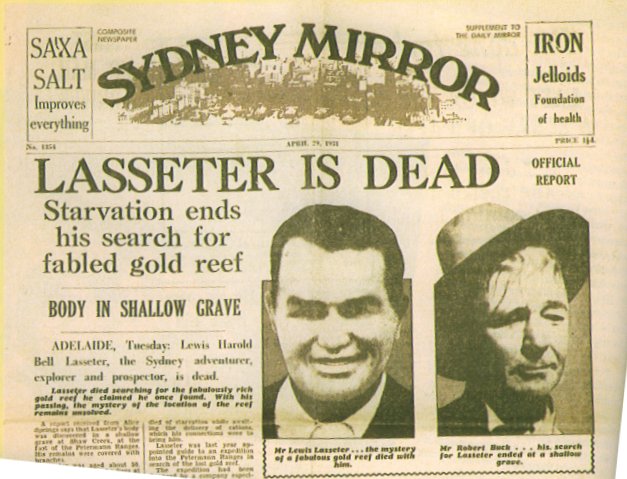
- Charismatic leadership has significant weaknesses, and many charismatic leaders are autocratic, lack organisational skills, and are too self-assured and narcistic. Certainly, William Lane was autocratic and inflexible, and he lacked true leadership skills, not dissimilar to the leader of the ill-fated Burke and Wills expedition.
- Top-down management is generally less successful than decentralised leadership more inclusive which was a one of the key factors in the defeat of the Luftwaffe in the Battle of Britain.
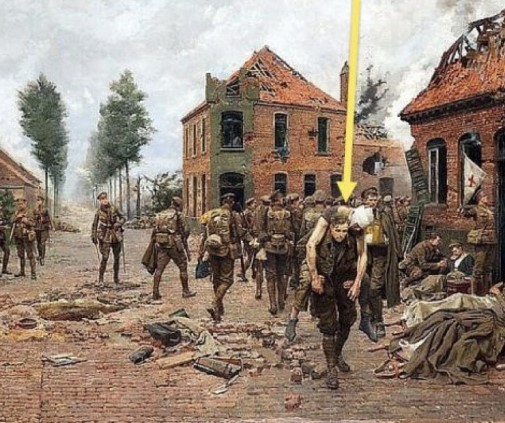
- Perfect is the enemy of good. I have found in business that the best results are achieved by determining where the greatest improvements can be made for less efforts than continually chasing perfection. The theory behind the 1905 Schlieffen Plan is a case in point, where German military planners devised the “perfect” plan to invade and take Paris. It failed spectacularly in Word War I.. Lane’s idealistic vision was of a perfect society based on socialist and communal values. Ironically the vision was imposed by inflexible and autocratic leadership which certainly assisted in the New Australia venture failing.
Do you think there are other lessons from the failure of New Australia?
If you would like to know more about the ill-fated socialist experiment New Australia, the following books are recommended:
A Peculiar People: the Australians in Paraguay by Gavin Souter
Paradise Mislaid by Anne Whitehead
Ticket to Paradise by Ben Stubbs
Youtube link:https://www.youtube.com/watch?v=Pb3DQ4uCJSc
#thenetworkofconsultingprofessionals










 5-Dimensionz