The Rise and Fall of Pet Rocks: A Lesson in Business Innovation

“How you sell is more important than what you sell.”
Andy Paul – sales author

Introduction

Fifty years ago in 1975, Gary Dahl an advertising executive and entrepreneur from California came up with the idea of a “pet rock”.  Few can rival the unexpected business success story of this quirky phenomenon known as the “Pet Rock”.

The Birth of an Idea

The concept was simple yet absurdly ingenious: a smooth, ordinary-looking rock was marketed as a low-maintenance, no-hassle pet. Dahl’s inspiration reportedly came during a conversation with friends about the hassles of traditional pet ownership, such as feeding, grooming, and training. He famously quipped, “I have a pet that doesn’t require any of that! A pet rock!”

Dahl’s idea was to offer people a humorous alternative to the responsibilities of caring for a living pet. He saw an opportunity to capitalise on the countercultural ethos of the 1970s, which embraced whimsical and anti-establishment ideas. Dahl believed that people would be willing to pay for a simple, amusing concept that poked fun at the conventional norms of pet ownership.

The Launch and Marketing

Each rock was carefully selected for its smoothness and appeal, placed inside a small cardboard box with breathing holes, and nestled on a bed of straw. The packaging was intentionally tongue-in-cheek, featuring a detailed “instruction manual” on how to care for your new “pet.” The manual humorously advised owners to ensure their pet rock received enough sunlight and encouraged them to name it.

Dahl’s marketing strategy was equally tongue-in-cheek and relied heavily on humour. He conducted interviews and promotional events, emphasising the simplicity of owning a pet rock compared to traditional pets. The novelty of the concept, combined with his witty advertising, caught the attention of the media and the public.

The Unexpected Phenomenon

What followed was nothing short of astounding. The Pet Rock quickly gained popularity, capturing the imagination of a broad audience. Despite its absurdity, the concept struck a chord with people seeking a light-hearted diversion from the complexities of life. The Pet Rock became a cultural sensation, gracing the pages of magazines and newspapers, and even making appearances on television talk shows.

Dahl’s entrepreneurial success with the Pet Rock was fuelled by several key factors:

  1. Timing: The Pet Rock emerged during a time when American society was experiencing a countercultural wave. People were open to unconventional and humorous ideas, making the concept of a pet rock particularly appealing.
  2. Simplicity: Dahl’s marketing emphasised the simplicity of owning a pet rock, offering a humorous contrast to the responsibilities of traditional pet ownership.
  3. Novelty: The Pet Rock was a novelty item that captured the public’s attention due to its uniqueness. It was something people had never seen before.
  4. Effective Marketing: Dahl’s witty and humorous marketing campaigns helped create buzz around the product and contributed to its success.

The Sales and Revenue

The Pet Rock’s popularity translated into impressive sales figures. At its peak, millions of Pet Rocks were sold, with an estimated 1.5 million sold in the first six months alone. Priced at $3.95 each, the revenue generated from the sale of Pet Rocks reached approximately $6 million, a significant sum in the mid-1970s.

The Decline and Lessons Learned

As with many fads, the Pet Rock’s popularity was short-lived. Within a year, the craze had begun to wane. The initial novelty had worn off, and the Pet Rock was no longer a hot commodity. Dahl’s business venture was a classic example of a short-lived trend, and he wisely recognised the decline in demand.

However, the story of the Pet Rock offers several valuable lessons for business owners and managers. Here are four lessons:

  1. Timing Is Crucial: The success of the Pet Rock was greatly influenced by the cultural context of the 1970s. Dahl’s timing was impeccable, as he tapped into the counterculture of the era. Understanding the timing of your product or service’s launch can significantly impact its success.
  2. Innovation and Uniqueness: The Pet Rock was a groundbreaking novelty item. Its uniqueness and innovation set it apart and captured the public’s imagination. Business owners should strive to offer products or services that stand out in the market.
  3. Effective Marketing: Dahl’s clever marketing strategies played a pivotal role in the Pet Rock’s success. Humour, irony, and effective storytelling can make a significant impact on how a product is perceived and received by consumers.
  4. Understanding Trends and Fads: Dahl recognised that the Pet Rock was a fad, and he wisely adapted to the changing market. Recognising when a trend is on the decline and having an exit strategy is crucial for long-term business sustainability.

In concluding, business owners and managers can glean valuable lessons from the Pet Rock phenomenon. Timing, innovation, effective marketing, and understanding market trends are all essential components of a successful business venture. While the Pet Rock may have been a short-lived craze, its legacy endures as a reminder that even the most unconventional ideas can find their place in the market when the timing is right.

What do you think?

@thenetworkofconsultingprofessionals

“Leadership Lessons from the Pied Piper of Hamelin: A Tale Beyond the Pied Piper’s Pipe”

“Once upon a time, there was pretty little town named Hamelin. Though Hamelin was charming, it had two faults. Its townspeople were very stingy, and there were too many rats.”

Introduction:

There’s nothing like a fairy tale to start the new year!

My mother was a teacher, and she placed great importance on reading. Before we could read, Mum would read to us every evening before going to bed. One of the stories that fascinated me was the story of the Piped Piper of Hamelin. Afterall, what happened to those children?

Was there any truth in this fairy tale?

The Origins of the Pied Piper:

The Pied Piper of Hamelin finds its roots in the town of Hamelin, Lower Saxony, Germany. The earliest known reference to this story dates back to the 14th century in the form of a stained-glass window in the Church of Hamelin. The tale was later popularised by the Brothers Grimm in their collection of fairy tales during the 19th century. One prevailing theory suggests that the story is a distorted account of a tragic event that unfolded in Hamelin during the Middle Ages.

The Historical Basis: (https://www.youtube.com/watch?v=fm22vddWPRQ)

In 1284, as the story goes, Hamelin suffered from a rat infestation, a common problem in medieval Europe. A mysterious figure, possibly a rat-catcher or pied piper, was hired to rid the town of the vermin. The Piper succeeded, but when the townspeople reneged on their payment, he enacted a terrible revenge. In a vengeful display, he played his pipe, leading the town’s children away, never to be seen again.

While the historical accuracy of this story remains speculative, there are some lessons that managers can draw from this age-old tale.

Three Leadership Lessons from the Pied Piper:

  1. Fulfilling Commitments and Honouring Agreements:

One of the central themes of the Pied Piper story revolves around the breach of an agreement. The townspeople, having benefited from the Piper’s service, reneged on their promise to compensate him for his efforts. For managers, this underscores the importance of honouring commitments and agreements in the business world. Whether it’s fulfilling contractual obligations or maintaining promises made to employees, clients, or stakeholders, a leader’s credibility hinges on their ability to uphold commitments.  Businesses thrive when leaders prioritise integrity and deliver on their promises.

  • Effective Communication and Influence:

The Pied Piper’s magical pipe had the power to captivate and influence both humans and animals. In the corporate landscape, effective communication is a leader’s proverbial pipe. Managers must master the art of conveying ideas, inspiring teams, and navigating through challenges. Just as the Piper’s melody led the children away, a leader’s ability to communicate persuasively can guide a team toward shared goals. Communication is a powerful tool for leaders. Whether it’s conveying a vision, addressing concerns, or leading change initiatives, effective communication is key to garnering support and fostering a collaborative environment.

  • Consequences of Short-Term Thinking:

In the Pied Piper tale, the townspeople’s shortsightedness led to dire consequences. By neglecting to honour their agreement with the Piper, they set in motion a chain of events that brought tragedy to their doorstep. Similarly, managers in the business world must be mindful of the long-term consequences of their decisions. Short-term gains at the expense of ethical considerations or sustainable practices can lead to reputational damage and diminished success in the long run. Leaders must adopt a holistic and forward-thinking approach. Prioritising ethical business practices, sustainability, and long-term strategic planning contributes to the enduring success and positive impact of an organization.

Can you think of any other lessons for managers in the tale of the Pied Piper of Hamelin?

@thenetworkofconsultingprofessionals

Aesop’s fable of The Ant and The Grasshopper

The grasshopper said to the ant,
“All you ants do is work all day.
You should be more like me and play, play, play!”

With Christmas and the new calendar year approaching, its often a great time to reflect on the previous year and plan for the next, which I have covered in previous blogs.

Rather than using a Christmas or end of year theme, I’ve elected to use Aesop’s fable, “The Ant and the Grasshopper.”

Who was Aesop?

Certainly not a brand of cosmetics! Aesop was a Greek storyteller, said to have lived around 600 BC, who is credited with a number of fables known as Aesop’s Fables, the most famous being the Hare and the Tortoise.

The Fable of the Ant and the Grasshopper.

In summary, a diligent ant works tirelessly throughout the summer to store food for the winter. In contrast, a grasshopper spends his days playing music and dancing, mocking the ant’s hard work and inviting it to join in the fun. The ant, however, remains focused on its task, warning the grasshopper of the harsh winter ahead. As the seasons change, the ant settles comfortably into its nest with ample food, while the grasshopper, unprepared for the cold and without food, faces a grim future.

With the end of year approaching do you think there are any lessons for managers in this fable?

As mentioned earlier, the end of year is certainly a time for reflection and an opportunity to plan for the future. Here are three lessons from the fable:

  1. Preparation and Foresight

The ant’s forward-thinking and preparation for the winter months underscore the importance of strategic planning in management. Leaders should anticipate future challenges and prepare accordingly, ensuring that their teams and organisations are not caught off-guard by unforeseeable events. This lesson emphasises the value of setting long-term goals and working steadily towards them, rather than being swayed by immediate gratifications or distractions.

  1. Resource Management

The careful collection and storage of food by the ant exemplifies effective resource management. For managers, this translates to the prudent allocation of resources, including time, budget, and manpower, to ensure sustainability and growth. Efficient resource management also involves making tough decisions about where to invest effort and assets, and prioritising activities that ensure the organisation’s survival and success in the long run.

  1. Work Ethic and Discipline

The ant’s unwavering commitment to its task, even when tempted to abandon its duties for temporary pleasures, highlights the virtues of work ethic and discipline. Managers should foster a culture that values hard work, responsibility, and persistence. Encouraging a strong work ethic and maintaining discipline within the team are crucial for achieving objectives and maintaining operational integrity, especially when facing adversity or tight deadlines.

In this fable, can you think of any other lessons for managers?

On behalf of my readers, I wish you and your families a Merry Christmas and a Happy New Year.

@thenetworkofconsultingprofessionals

Where’s my tractor?

“Sorry Minister, we know it left Hamilton, but it failed to arrive in Taumarunui.” – NZ Railway Executive

The above quote is attributed to an executive from the state-owned New Zealand Railways in the 1980s. A farmer had written to Richard Prebble, the then Minister for Railways complaining that the Railways had lost his tractor. After weeks of fruitless complaining and an offer to pay $20 to compensate the loss based on some obscure statutory railway regulation, he wrote to the Minister.

Prebble then ordered the railways to find the tractor. A reply came back stating that the tractor had failed to arrive in Taumarunui. The distance by rail between Hamilton and Taumarunui is just under 160 kms. At the time, the NZ Railways was a monopoly, had 22,000 employees and was losing a million dollars a day. It was also losing customers, freight and sometimes whole wagons. With 22,000 employees in a small country like New Zealand they could not find a tractor!

Prebble then wrote apologetically to the farmer stating that they could not find his tractor. Frustrated that the bureaucrats (and the Minister) in the railways could not help him, the farmer decided to take matters into his own hands. He got into his car and followed the railway line. In a week, he found his tractor and six missing rail wagons!

Following this sad account of poor customer service, consultants were engaged. Their final report found many of the railway ‘managers’ had been promoted “simply because they looked the part”, “have been “yes-men” to their superiors”, and “never take a decision for which, if it fails, they can be held to account”. The railways were later privatised.

What is the lesson for managers here?

An organisation with 22,000 employees, even with the direction of the Minister could not compel its employees to care enough for its customers to find something as big as a tractor. Clearly, not only did the employees not care, but management was also either ineffective, incompetent or had no authority or a combination of all of the above. This is also a great example of how sadly how poor culture ‘kills’ an organistion, in this case corporate culture! It can be defined as ‘how we do things around here’, and it is intangible but can be ‘felt’.

Successful organisations need clear goals. Management not only needs to be responsible, but held accountable and have the authority to act.

@thenetworkofconsultingprofessionals

An ongoing mystery….what can an early Australian explorer teach us about being a manager?

”Leichhardt, his men, their animals and mountains of equipment seem to have vanished without trace.”

John Bailey – Leichhart’s biographer

Who was Ludwig Leichhart?

Leichhart was a German born scientist and explorer who lived in colonial Australia in the 19th Century. In 1848 he set off from a sheep station in south-east Queensland with seven men, 20 mules, 40 bullocks and seven spare horses to cross Australia from east to west. He was never seen again.  Only one piece of equipment has ever been found and authenticated. A brass plate stamped with ‘Ludwig Leichhardt 1848′ that was originally attached to a rifle butt was found in a tree trunk. Countless expeditions have failed to find any trace of the expedition. It remains one of the most intriguing and unresolved mysteries of early Australian exploration.

Previous blogs published on this website about early Australian explorers in 1860s, Burke and Wills and John McDouall Stuart have examined the issues of leadership and management. However, Leichhardt was an enigma, an outsider and not British. This contrasted to other explorers at the time who were primarily from the British military.

Before his ill-fated final 1848 journey, Leichhart led an expedition in 1845-46 that took over 12 months travelling 4,800 kilometres, from south-east Queensland to Port Essington in the Northern Territory. At the time, the expedition was the longest colonial land exploration journey in Australia. This was a trek of about 3,000 miles through largely uncharted territory. Imagine the grit and determination it took to navigate, survive, and map such a vast and challenging landscape! It was a remarkable feat that greatly contributed to our understanding of Australia’s geography and natural history.

When Leichhart returned to Sydney by boat in 1846, he was awarded The Royal Geographical Society Patron’s Medal and hailed as the ‘Prince of Explorers’. His detailed maps and records, his assessments of good pastoral country, and botanical collections were widely acclaimed at the time. In contrast to other early European explorers, none of his expedition team members on his Port Essington expedition suffered from scurvy. They supplemented their diet with native greens and fruits.

Despite his recognition and success, today Leichhardt is primarily remembered for his mysterious disappearance. Furthermore, his reputation remains tainted. There are many theories. Did he die of thirst in the desert? Was his party massacred by Aboriginals? Were they washed away in a flash flood? Was he killed by mutineering companions, who in turn perished?

There’s nothing like failure, perceived or otherwise, or mystery to ruin a reputation.

Are there any lessons for managers here?

Here are three to consider:

  1. Pushing the boundaries. Leichhardt pushed into unknown territories and was prepared to do things differently than other explorers at the time. As a scientist, he challenged the orthodoxy of the time, an approach business managers should consider.
  2. The importance of thorough preparation and having a contingency plan. This was certainly the case in his expedition to Port Essington. Living off the land where possible and ensuring his team did not get scurvy.
  3. However, his final, ill-fated journey also serves as a cautionary tale. It underscores the need for careful planning and risk management. Venturing into the unknown is essential for growth and discovery, but so is recognising and preparing for potential dangers. The mystery of his disappearance also highlights the importance of communication and contingency planning – knowing when and how to keep stakeholders informed is crucial in any endeavor.

Can you think of other lessons?

@thenetworkofconsultingprofessionals

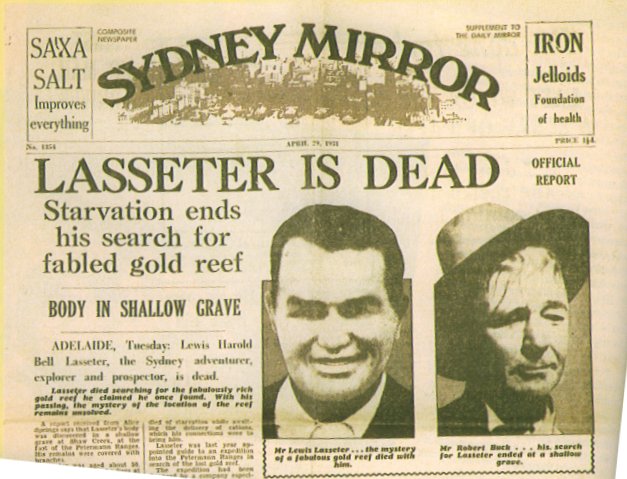
The legend of Lasseter’s Gold Reef…

“Truth, like gold, is to be obtained not by its growth, but by washing away from it all that is not gold” Leo Tolstoy – Russian writer

As a young boy I remember reading the book by Ion Idriess called “Lasseter’s Last Ride” about the 1930 search for a fabled reef with gold “as thick as plums in a pudding” in the deserts of Central Australia. A rich gold reef waiting to be discovered! I was hooked. And I was not the first. Lasseter’s Reef continues to fascinate even today. Since the fateful 1930 expedition where Lasseter died alone in the desert, many expeditions have been undertaken, and none have discovered the fabled reef.

Who was Harold Bell Lasseter?

Lasseter was born in 1880 in Victoria, Australia. In 1903 Lasseter married while living in the USA. In the USA he changed his name to Harold Bell Lasseter, ‘Bell’ being the surname of a popular American author of a book about a lost gold reef! Returning 5 years later he allegedly spent his time inventing and working in various jobs around Australia. Lasseter twice enlisted in the Australian Imperial Force (AIF) during World War I and was discharged both times without leaving Australia, once for being AWOL and for the second time for being engaged in a brawl. In 1927 he married again whilst still married to his first wife. In 1929 he claimed to have submitted the original design for the Sydney Harbour Bridge and sought compensation for his work. It was rejected. In around 1930 at the onset of the Great Depression, he began lobbying the government and trade union officials to mount an expedition to find a gold reef in the desert that he claimed he had discovered years earlier. Lasseter has been described as a bigamist, fantasist, an eccentric, a swindler, a crank and a difficult character with a reputation as a con man.  

The ‘discovery’ of Lasseter’s Reef

Lasseter claimed that in 1897 while travelling alone in the deserts of Central Australia he had come across a rich gold reef whilst travelling from a false ruby strike in South Australia. His horse had died, and he was miraculously rescued by an Afghan camel driver who nursed him back to health. Three years later with a surveyor called Harding, he relocated the reef, took the bearings but failed to peg the claim. Unfortunately, their watches were incorrect, and this made their bearings incorrect. Sadly, Harding died just before Lasseter left for America in 1903.

Testing the Story

Lasseter would have only been 17 when he ‘discovered’ his reef in the deserts of Central Australia. This is highly unlikely, and the false ruby strike was in 1887, not 1897! If Harding was a surveyor, he would not have made the error of the watches having the incorrect time or failing to peg the claim. Harding was in fact not a surveyor but a cattle thief (in Australian slang a ‘cattle duffer’). His ‘death’ was convenient. In the 1930-31 expedition Lasseter was unable to discover his reef and had a major falling out with the leader and some members of the expedition. He left them and died a lonely death in the desert.

Postnote:

It is highly unlikely, given the character of Harold Lasseter himself that the reef exists. Despite this, expeditions continue to be mounted. Never let the truth get in the way of a good story, especially about hidden treasure. In an ironic twist in Alice Springs, there is a casino and hotel called Lasseter’s!

Are there any management lessons with the story of Lasseter’s lost gold reef?

Here are three worth considering:

  1. Be aware of charlatans! We all meet them in our personal life and in business. It would appear that Lasseter was indeed a con man or a delusional liar. Despite this, people were willing to believe his story of his fabulous gold reef. Simple but hard questions would have revealed the implausibility of his story. How often are we as managers do we believe what we want to believe?
  2. Do your homework. The most basic research would have highlighted that Lasseter’s story was fantasy. Checking the dates of when he ‘discovered’ his reef would have revealed the implausibility of his story
  3. Be Aware of Myths that become Reality. A lie repeated enough becomes reality. Once again check the facts and test the logic.

Can you think of any other lessons from the myth of Lasseter’s Reef?

@thenetworkofconsultingprofessionals

What is the ‘Peter Principle’?

“In a hierarchy, every employee tends to rise to his level of incompetence.”

Laurence J. Peter – Canadian Educator and Author

What is the ‘Peter Principle’?

It is a concept in management developed by Laurence J. Peter, a Canadian educator who wrote a book in 1969 called The Peter Principle. His theory was that people in a hierarchy tend to rise to a level of incompetence. This was primarily due to their success in previous jobs however the skills in the previous job do not translate into the skills required in the new job. For example, a great engineer will be promoted from working as an engineer to management, where they do not possess management or leadership skills.

A variation of the Peter Principle is the Dilbert Principle. This is a satirical concept of management developed by Scott Adams the creator of the comic strip Dilbert. Here incompetent employees are intentionally promoted to prevent them from causing harm. In other words, getting them out of the way so they do not interfere with outcomes.

We have all worked for organisations where it would appear that both these ‘principles’ are at work!

Perhaps we are living proof of the Peter or Dilbert Principle?

I can certainly remember working for and with such managers. From the Managing Director’s son who got lost coming to work after living in the city for over 12 months to the Managing Director’s brother, who needed a phone call each morning to make sure he was at work. These were more probably cases of nepotism in combination with the Peter Principle.

A slight deviation from the Dilbert Principle is promoting ‘problem’ employees to get them out of the way. In an earlier career I worked for a manager who treated his staff appallingly and was not respected by them. Senior management knew this, so they removed the problem from the factory floor and promoted him! Another manager who I reported to, and was incompetent was offered a promotion and sent overseas to get him out of the way. He was later dismissed.

Managers will claim they always seek to hire people who are smarter than themselves. In many instances this does not happen, as this threatens their careers or dents their egos. Instead, they hire less capable people, so they are not threatened from below.

The Peter Principle can lead to disaster if an incompetent person is in a position of authority. The mismanagement of the COVID pandemic by public health officials in Victoria which resulted in hundreds of preventable deaths when the virus ‘escaped’ from hotel quarantine is one example. In an earlier blog senior management in a transport business caused the death of innocent people when a truck crashed into their car.

Can you think of examples of both the Peter Principle or the Dilbert Principle in your work life?

So how do organisations solve these problems?

I will cover this in a future management blog.

@thenetworkofconsultingprofessionals
80 years ago last month….

“Unless commitment is made, there are only promises and hopes; but no plans.”

– Peter F. Drucker: Management Thinker

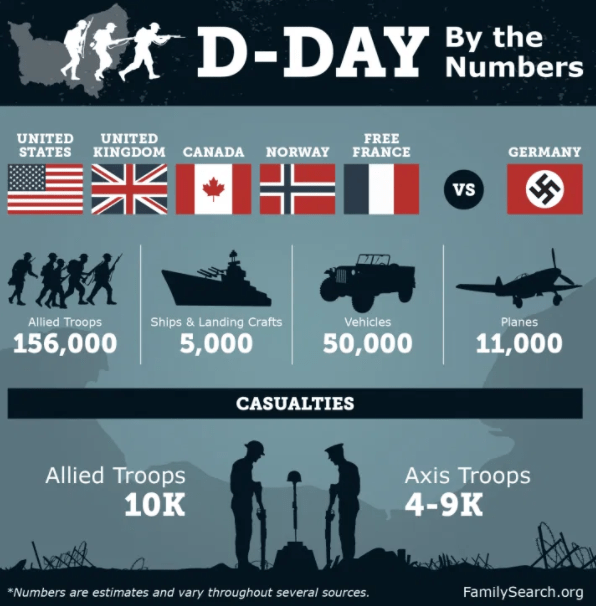
80 years ago last month, the largest sea borne invasion in history commenced. D-Day, June 6, 1944. It marked a pivotal moment in World War II when Allied forces launched Operation Overlord, aimed at liberating German-occupied Western Europe from Nazi tyranny. The operation launched from England crossed the English Channel onto the beaches of Normandy in northern France. It was a critical turning point in World War II.

Planning for D-Day was an immense undertaking that began as early as 1943. The operation involved extensive coordination between the United States, the United Kingdom, Canada, and other Allied nations. This planning included gathering intelligence, training troops, amassing supplies, and deceiving the Germans about the invasion’s location.

The scale of the D-Day invasion was unprecedented:

  • Troops: Over 156,000 Allied troops landed on the first day.
  • Military Equipment: This included 6,939 vessels: 1,213 naval combat ships, 4,126 landing ships and landing craft, and hundreds of auxiliary ships and merchant vessels.
  • Aircraft: About 11,590 aircraft were available, playing crucial roles in airborne assaults and providing air cover and support for the troops landing on the beaches.
  • Logistics: The operation involved detailed logistical planning to supply the massive number of troops, including food, ammunition, and medical supplies.

All this before computers! Many books have been written about D-Day. I cannot do justice to the sheer complexity of the undertaking, however I will try and provide a summary of the main lessons.

D-Day was a success. Within 12 months of the landing, Nazi Germany was defeated.

What factors contributed to the success of D-Day?

Here are three.

  1. Surprise and Deception: The Allies successfully deceived the Germans about the invasion’s location, leading them to believe it would occur at Pas de Calais. This deception, known as Operation Fortitude, was crucial in reducing German defences at Normandy.
  2. Air Superiority and Naval Support: The Allies had established air superiority, which was critical for both the initial landings and the subsequent campaign in Normandy. Naval bombardment also played a vital role in neutralising German defences.
  3. Allied Unity and Leadership: The operation exemplified the effectiveness of Allied unity and leadership. The coordination among nations and military branches was a key element in the operation’s success.

What are the three lessons from D-Day for Managers?

  1. The Importance of Planning and Preparation: D-Day demonstrated how meticulous planning and preparation can lead to success in complex operations. As managers we should value thorough preparation and the need to anticipate and mitigate potential challenges.
  2. Adaptability and Decision-Making: Despite the best planning, not everything went as expected on D-Day. The ability of commanders and soldiers to adapt to changing circumstances was crucial. In the business world, this highlights the importance of flexibility and decisive leadership in the face of unforeseen challenges.
  3. Teamwork and Collaboration: The success of D-Day was a result of unparalleled collaboration among the Allied nations. This underscores the importance of teamwork, joint effort, and effective communication in achieving common goals in any organisational context.

In conclusion, D-Day stands as a testament to strategic planning, international collaboration, and the resolve of the Allied forces. The lessons derived from this monumental event extend beyond military strategy, offering insights into leadership, teamwork, and the importance of planning, adaptability and resilience in the face of adversity. The successful execution of Operation Overlord not only marked a turning point in World War II but also serves as an enduring example of effective organisational and strategic planning.

@thenetworkofconsultingprofessionals


Sporting trivia from 75 years ago…

DID YOU KNOW? Rhodesia (now Zimbabwe) beat the All Blacks 10-8 in Bulawayo on 27 July 1949, and drew 3-3 with them three days later?

Last year the Rugby World Cup was held in France, with the South African Springboks triumphing over the New Zealand All Blacks 12-11. The All Blacks are considered the pinnacle of national Rugby excellence but 75 years ago they were defeated by a provincial side in southern Africa. The provincial side remains undefeated against the All Blacks, the only team in history to do so.

The team represented Northern Rhodesia (now Zambia) and Southern Rhodesia (now Zimbabwe). The first match, played in Bulawayo in front of 10,000 people, resulted in a surprising defeat for the All Blacks 10-8. At the time the All Blacks were (and still are) one of the most formidable teams in international rugby. The significance of this defeat was made more poignant in the return match three days later with a 3-3 draw in Salisbury (now Harare). And for my New Zealand readers, 1949 remains the worst years in All Black history, with losses of 4-0 to the Springboks and 2-0 to the Wallabies.

What were the factors contributing to the defeat?

  1. Complacency of the All Blacks: The All Blacks, being a top team, might have underestimated Rhodesia, leading to complacency. The All Blacks were surprised by the dash of the Rhodesians, who played a different, open, and attacking brand of Rugby, as distinct from the safety-first South African teams.
  2. Local Conditions: The All Blacks were possibly not fully acclimatised to the local conditions in Rhodesia. Local knowledge and adaptation to specific environments can be crucial in determining the outcome of a contest.
  3. Psychological Advantage: The Rhodesian team, motivated by the opportunity to make history, may have had a psychological advantage. They had everything to gain and nothing to lose, which can be a powerful motivator.

The Rhodesian rugby team’s victory over the New Zealand All Blacks in 1949 is a noteworthy event in the annals of sports history, particularly rugby.

Here are three lessons for managers that go beyond the realm of sports, offering valuable insights for managers in various fields.

  1. Never Underestimate the Underdog: In business, as in sports, complacency can be a downfall. Always respect your competitors, regardless of their size or perceived strength.
  2. Adaptability: The ability to adapt to different environments and conditions is crucial. Managers must be flexible and responsive to changing situations, whether in market conditions, consumer preferences, or competitive landscapes.
  3. Motivation and Team Spirit: The Rhodesian team’s victory underscores the importance of motivation and team spirit. In management, fostering a strong team culture and keeping the team motivated, especially during challenges, can lead to significant achievements.

The Rhodesia vs. All Blacks games of 1949 serve as a timeless reminder of the unpredictable nature of sports and, by extension, the competitive world of business. They highlight the importance of preparation, respect for all competitors, adaptability, and leadership.

Note: Rhodesia RFU were treated as a province of South Africa for rugby reasons. Their players were eligible for selection by the South African team. Many were selected to play for the Springboks. Rhodesia never won another game against a touring side before being reconstituted as Zimbabwe in 1980.

@thenetworkofconsultingprofessionals
Gritty leadership from 75 years ago…

“I am ready to try an airlift. I can’t guarantee it will work. I am sure that even at its best, people are going to be cold and people are going to be hungry. And if the people of Berlin won’t stand that, it will fail. And I don’t want to go into this unless I have your assurance that the people will be heavily in approval.”

Lucius D. Clay, June 1948

Military Governor of the United States Zone, Germany (1947 to 1949)

The Berlin Airlift. 75 years ago this month the Berlin Airlift ‘officially’ finished.

What was it?

After World War II, Germany was divided into four zones, Soviet Russia, Britain, France and the USA. Berlin was also divided into four zones but lay within the Soviet Russian zone. On 24 June 1948, Soviet forces blockaded all road, rail and water routes into Berlin’s Allied-controlled areas. This stifled the vital flow of food, coal and other supplies. More than 2 million Berliners were relying on the aid, which included much-needed food, fuel and medicine and would otherwise starve and freeze. Two thirds of what was needed was coal.

However, the Russians could not block the Allied airspace. On 24 June 1948. The Allies established an airbridge and began an airlift that lasted officially until 12 May 1949 when the Soviet Union lifted the blockade. The airlift continued until September after the lifting of the blockade as the Allies wanted to make sure that it was not reintroduced.

Why did it occur?

The blockade was an attempt by Soviet Russia to gain control over the entire city by cutting off all land and water routes to West Berlin, which was then under the control of the Western Allies.

Logistics of the Berlin Airlift

The success of the airlift depended on meticulous planning and execution. The planes were scheduled to land and take off at precise intervals, ensuring a continuous flow of supplies. This required exceptional coordination among pilots, ground crews, and logistics teams. To maximise efficiency, the cargo planes followed specific flight paths and adhered to strict timetables. This was all before the use of computers, GPS tracking and scheduling which we have today.

The airlift involved transporting a wide range of supplies, including food, coal, medicine, and machinery. Each type of cargo required different handling and storage conditions, which added complexity to the logistics operation.

Berlin Airlift – Facts & Figures

  • One aircraft landing per minute
  • Over 200 million miles flown
  • Each aircraft unloaded in 20-30 minutes
  • 2000 tonnes of food required per day
  • 400,000 tonnes of food, supplies and coal
  • Over 200,000 kms flown
  • 277,804 flights completed
  • 93 lives lost

The airlift cost the United States $350 million; the UK £17 million and Western Germany 150 million Deutschmarks.

What are three lessons for business leaders in the example of the Berlin Airlift?

  1. Innovative Problem-Solving: Leaders had to think creatively and act decisively to overcome the blockade. This required innovative strategies, such as the airlift, which had never been attempted on such a scale.
  2. Resilience and Determination: Leaders demonstrated resilience and determination in the face of adversity. The operation continued for over a year, and the leaders remained committed to their mission despite the challenges.
  3. Precision and Coordination: The operation demonstrated the critical role of precision and coordination in logistics. Timely delivery and efficient turnaround were essential for the success of the airlift.

In conclusion, the Berlin Airlift was not only a remarkable logistical achievement but also a powerful example of international cooperation, innovative problem-solving, and leadership under pressure. It provided invaluable lessons in both logistics management and leadership that are still relevant today.

What do you think?

Note: 39 British, 31 American and 13 German civilians lost their lives in the Berlin Airlift. They are remembered on the Berlin Airlift monument at Tempelhof. The pilots came from the USA, Britain and France and also from Australia, Canada, South Africa and New Zealand.

@thenetworkofconsultingprofessionals